- Call us 01444 237070

-
- Back
- Used Cameras
- Used Accessories
- Used Lenses
- Back
- Used Canon Lenses
- Used Nikon Lenses
- Used Fujifilm Lenses
- Used Sony Lenses
- Used Micro 4/3rds Lenses
- Used Leica Lenses
- Used Panasonic Lenses
- Used Pentax Lenses
- Used Samyang Lenses
- Used Sigma Lenses
- Used Tamron Lenses
- Used Tokina Lenses
- Used Voigtlander Lenses
- Used Zeiss Lenses
- Used Hasselblad Lenses
- Used Video
- Used Film Equipment
- Used Stock Alert
- Used Blank Test
- Sell or Part Exchange
- Used Clearance
- Recently Added Used Equipment
- Park Picks
- Faulty
- Trade-In
- Blog
- New in
- Call us
- Contact us
- Stores
- Sign in
Call us: 01444 237070
Search terms
Brands
Category
Products
[[{name}]]
[[{attributes.Price}]]
- Categories
- Tips & Inspiration
- Reviews
- News
- Events
- Features
- Buying Guides
- Competitions
UK Astrophotography Highlights August 2026
Images ©Jonathan Penberthy
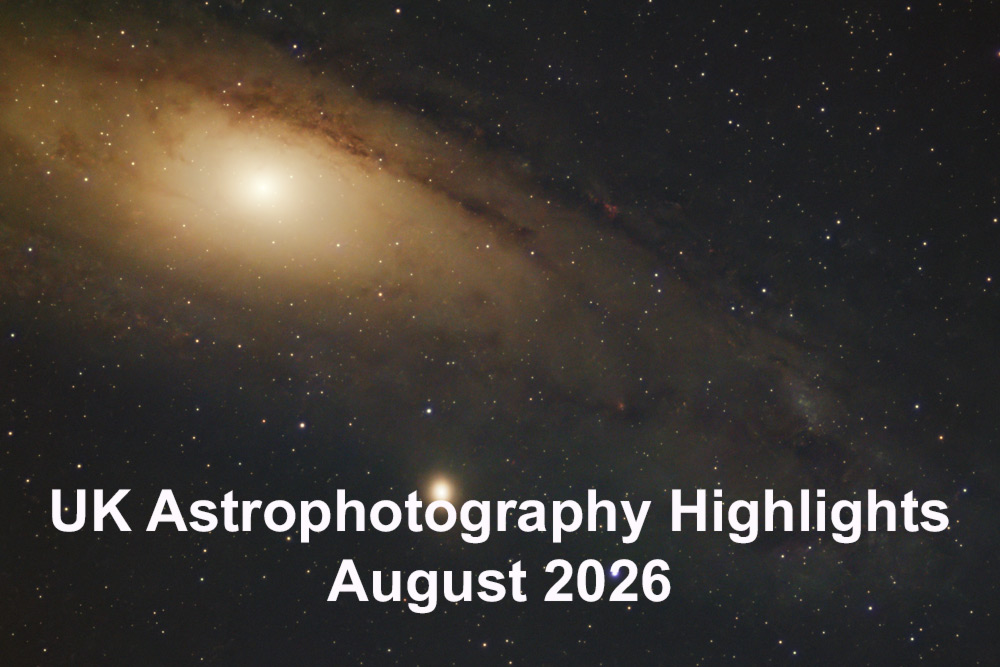
This month has some exciting prospects ahead. On 12th August we have the Solar Eclipse, my annual camping trip to a Dark Skies site in late August (this time I have checked the Lunar Calendar - you can read about last years adventure here, not to mention the Perseids Meteor Shower, and a Partial Lunar Eclipse starting from around 03:30 - 06:15 (Nick writes about Lunar Eclipse Photography Tips and how to capture it here).
As a new feature this month, I thought it would be rather nice if we have a calendar we can all look at with the Moon phases and big events on:
UK Astrophotography Calendar: August 2026
| Monday | Tuesday | Wednesday | Thursday | Friday | Saturday | Sunday |
|---|---|---|---|---|---|---|
|
27 Jul
🌔 Waxing Gibbous
☀️ Sun: 05:15 – 20:58
🌙 Moon: 18:24 – 02:29
🌌 Dark: 02:29 – 04:15
Perseids active
|
28 Jul
🌔 Waxing Gibbous
☀️ Sun: 05:17 – 20:56
🌙 Moon: 19:33 – 03:09
🌌 Dark: 03:09 – 04:17
|
29 Jul
🌕 Full Buck Moon
☀️ Sun: 05:18 – 20:55
🌙 Moon: 20:31 – 04:05
🌌 Dark: 04:05 – 04:18
Full Moon (15:36)
|
30 Jul
🌖 Waning Gibbous
☀️ Sun: 05:20 – 20:53
🌙 Moon: 21:14 – 05:16
🚫 No Dark Period
☄️ Delta Aquariids Peak 🧭 Look: SE to S ⏰ Time: 00:00 – 04:30 BST
|
31 Jul
🌖 Waning Gibbous
☀️ Sun: 05:21 – 20:52
🌙 Moon: 21:46 – 06:37
🚫 No Dark Period
|
1 Aug
🌖 Waning Gibbous
☀️ Sun: 05:23 – 20:50
🌙 Moon: 22:11 – 08:01
🌌 Dark: 21:50 – 22:11
|
2 Aug
🌖 Waning Gibbous
☀️ Sun: 05:24 – 20:48
🌙 Moon: 22:31 – 09:23
🌌 Dark: 21:48 – 22:31
|
|
3 Aug
🌖 Waning Gibbous
☀️ Sun: 05:26 – 20:47
🌙 Moon: 22:48 – 10:42
🌌 Dark: 21:47 – 22:48
|
4 Aug
🌘 Waning Gibbous
☀️ Sun: 05:27 – 20:45
🌙 Moon: 23:04 – 11:58
🌌 Dark: 21:45 – 23:04
|
5 Aug
🌘 Waning Crescent
☀️ Sun: 05:29 – 20:43
🌙 Moon: 23:21 – 13:12
🌌 Dark: 21:43 – 23:21
|
6 Aug
🌗 Third Quarter
☀️ Sun: 05:30 – 20:41
🌙 Moon: 23:41 – 14:26
🌌 Dark: 21:41 – 23:41
Phase Peak (03:21)
|
7 Aug
🌘 Waning Crescent
☀️ Sun: 05:32 – 20:40
🌙 Moon: None – 15:39
🌌 Dark: 21:40 – 04:32
|
8 Aug
🌘 Waning Crescent
☀️ Sun: 05:34 – 20:38
🌙 Moon: 00:07 – 16:51
🌌 Dark: 21:38 – 00:07
|
9 Aug
🌘 Waning Crescent
☀️ Sun: 05:35 – 20:36
🌙 Moon: 00:41 – 18:00
🌌 Dark: 21:36 – 00:41
|
|
10 Aug
🌘 Waning Crescent
☀️ Sun: 05:37 – 20:34
🌙 Moon: 01:27 – 19:00
🌌 Dark: 21:34 – 01:27
|
11 Aug
🌘 Waning Crescent
☀️ Sun: 05:38 – 20:32
🌙 Moon: 02:26 – 19:49
🌌 Dark: 21:32 – 02:26
|
12 Aug
🌑 New Moon
☀️ Sun: 05:40 – 20:30
🌙 Moon: 03:37 – 20:28
🌌 Dark: 21:30 – 03:37
☀️ Solar Eclipse 🧭 Look: W to WNW ⏰ Time: 18:15 – 20:10 BST
☄️ Perseids Peak 🧭 Look: All sky (Rad. NE) ⏰ Time: 23:00 – 05:30 BST
|
13 Aug
🌒 Waxing Crescent
☀️ Sun: 05:41 – 20:28
🌙 Moon: 04:57 – 20:58
🌌 Dark: 21:28 – 04:41
|
14 Aug
🌒 Waxing Crescent
☀️ Sun: 05:43 – 20:26
🌙 Moon: 06:19 – 21:22
🌌 Dark: 21:26 – 04:43
|
15 Aug
🌒 Waxing Crescent
☀️ Sun: 05:45 – 20:24
🌙 Moon: 07:41 – 21:42
🌌 Dark: 21:42 – 04:45
🪐 Venus Elong. 🧭 Look: Low West at Sunset
|
16 Aug
🌒 Waxing Crescent
☀️ Sun: 05:46 – 20:22
🌙 Moon: 09:02 – 22:00
🌌 Dark: 22:00 – 04:46
|
|
17 Aug
🌒 Waxing Crescent
☀️ Sun: 05:48 – 20:20
🌙 Moon: 10:21 – 22:18
🌌 Dark: 22:18 – 04:48
|
18 Aug
🌒 Waxing Crescent
☀️ Sun: 05:49 – 20:18
🌙 Moon: 11:39 – 22:37
🌌 Dark: 22:37 – 04:49
|
19 Aug
🌒 Waxing Crescent
☀️ Sun: 05:51 – 20:16
🌙 Moon: 12:58 – 23:01
🌌 Dark: 23:01 – 04:51
|
20 Aug
🌓 First Quarter
☀️ Sun: 05:53 – 20:14
🌙 Moon: 14:18 – 23:31
🌌 Dark: 23:31 – 04:53
Phase Peak (00:00)
|
21 Aug
🌔 Waxing Gibbous
☀️ Sun: 05:54 – 20:12
🌙 Moon: 15:37 – 00:00
🌌 Dark: 00:00 – 04:54
|
22 Aug
🌔 Waxing Gibbous
☀️ Sun: 05:56 – 20:10
🌙 Moon: 16:51 – 00:13
🌌 Dark: 00:13 – 04:56
|
23 Aug
🌔 Waxing Gibbous
☀️ Sun: 05:58 – 20:08
🌙 Moon: 17:54 – 01:08
🌌 Dark: 01:08 – 04:58
|
|
24 Aug
🌔 Waxing Gibbous
☀️ Sun: 05:59 – 20:06
🌙 Moon: 18:43 – 02:18
🌌 Dark: 02:18 – 04:59
|
25 Aug
🌔 Waxing Gibbous
☀️ Sun: 06:01 – 20:04
🌙 Moon: 19:19 – 03:39
🌌 Dark: 03:39 – 05:01
|
26 Aug
🌔 Waxing Gibbous
☀️ Sun: 06:02 – 20:01
🌙 Moon: 19:46 – 05:07
🌌 Dark: 05:07 – 05:02
|
27 Aug
🌔 Waxing Gibbous
☀️ Sun: 06:04 – 19:59
🌙 Moon: 20:06 – 06:36
🚫 No Dark Period
|
28 Aug
🌕 Sturgeon Full Moon
☀️ Sun: 06:06 – 19:57
🌙 Moon: 20:22 – 08:03
🚫 No Dark Period
🌘 Lunar Eclipse 🧭 Look: SW to WSW ⏰ Time: 03:33 – 06:15 BST
|
29 Aug
🌖 Waning Gibbous
☀️ Sun: 06:07 – 19:55
🌙 Moon: 20:36 – 09:28
🚫 No Dark Period
|
30 Aug
🌖 Waning Gibbous
☀️ Sun: 06:09 – 19:53
🌙 Moon: 20:49 – 10:49
🚫 No Dark Period
|
|
31 Aug
🌖 Waning Gibbous
☀️ Sun: 06:10 – 19:50
🌙 Moon: 21:03 – 12:09
🚫 No Dark Period
|
1 Sep
🌖 Waning Gibbous
☀️ Sun: 06:12 – 19:48
🌙 Moon: 21:18 – 13:27
🚫 No Dark Period
|
2 Sep
🌖 Waning Gibbous
☀️ Sun: 06:14 – 19:46
🌙 Moon: 21:37 – 14:44
🚫 No Dark Period
|
3 Sep
🌗 Third Quarter
☀️ Sun: 06:15 – 19:44
🌙 Moon: 22:01 – 15:59
🌌 Dark: 20:44 – 22:01
|
4 Sep
🌘 Waning Crescent
☀️ Sun: 06:17 – 19:41
🌙 Moon: 22:33 – 17:10
🌌 Dark: 20:41 – 22:33
|
5 Sep
🌘 Waning Crescent
☀️ Sun: 06:19 – 19:39
🌙 Moon: 23:17 – 18:13
🌌 Dark: 20:39 – 23:17
|
6 Sep
🌘 Waning Crescent
☀️ Sun: 06:20 – 19:37
🌙 Moon: None – 19:04
🌌 Dark: 20:37 – 05:20
|
Solar system
Sun
I imagine, like me you are gearing up for the Partial (~94%) Solar Eclipse on 12th August ~18:15 - 20:15 in the UK (please read Nick's excellent Guide To The Next UK Solar Eclipse here).
The plan is to run 3 rigs:
- Celestron Nexstar 8SE with Solar Filter
- Canon 7D with Canon EF-S 55-250mm on a Manfrotto 290 Lite tripod. With a custom made solar filter.
- Altair Starwave 70ED Telescope (Call for pricing), Juwei 17 Mount (Similar to ZWO AM5) on a ZWO TC40 tripod, with a Pier Extension. With a custom made solar filter and ZWO 585MC Pro
These rigs should give me the best chance of being able to capture the event, with the 8SE I aim to get close up images of the Sun and Moon during different phases. The 70ED will be tracking it live also, but offering a different field of view, and lastly the 7D will offer a much wider whole disc perspective. Of course you'll have to wait till next month to find out how well my plan went!
Lunar
One of our dear customers reached out as he was having trouble getting his Celestron 6SE to work as intended. The trouble with Astro is that it needs to be dark, and as much as we can try to do it during the day, it is very difficult to set up and see results for a new comer, even in exceptional conditions. This pursuit is hard. As such I agreed to meet Jamie in a dark skies location on the South downs for an all night session. We arrived a few hours before sunset so that we could take the time to set up our equipment and get to grips with the 6SE. Essentially we went through understanding the concepts in this article.
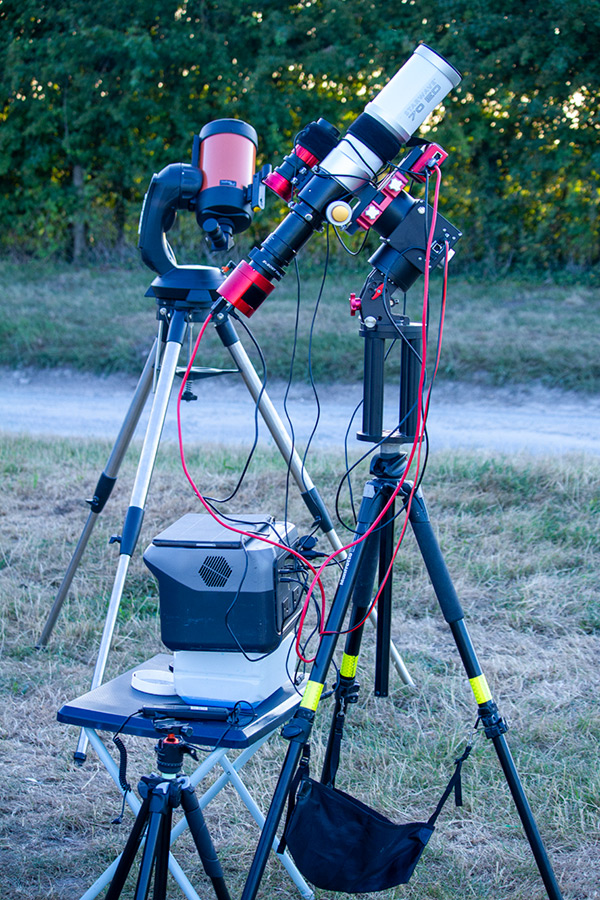
Once we were up and running, there was enough time for a chat about my rig, and as you can see in the photo, I was between tripods and seriously over the weight limit for the one I was using, but as a nod to the build quality of Manfrotto it did a wonderful job - as did the screenwash container raising the height of the power station (EcoFlow River 2 - Latest version)!
I will never forget the look on Jamies face when he saw the Moon through his scope for the first time, it really is a magical experience. As a memento, I cobbled together my trusty Canon 7D and attached an adapter which fit the Celestron diagonal on the scope and took a picture. This is that photo.
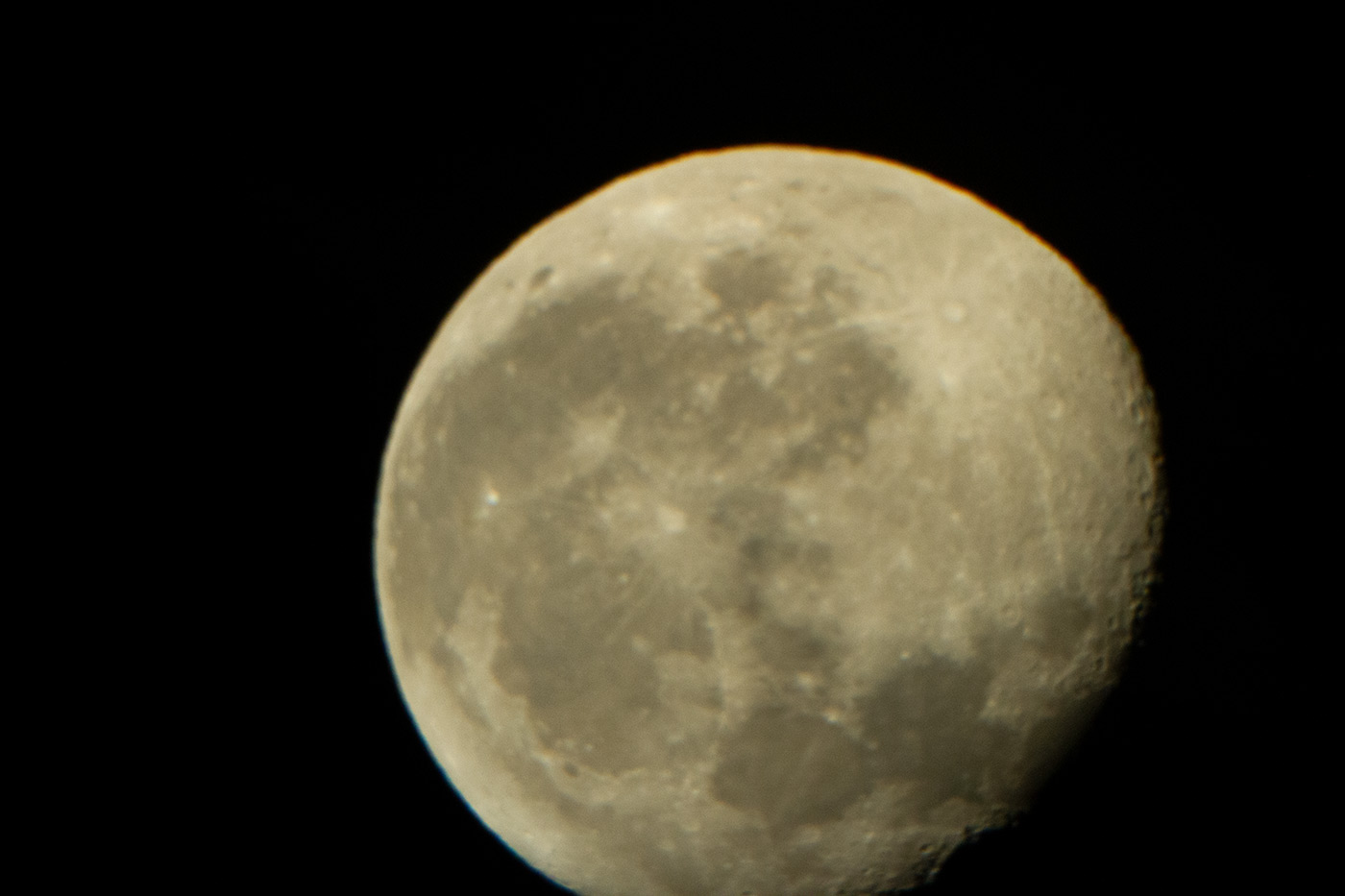
EXIF:
Exposure: 1/400 Sec, ISO 400.
You may wonder about this images sharpness. The reason it looks not so sharp is because of the atmosphere. It creates a wavy water like appearance over the Moon, which distorts the image. Our eyes are pretty good and seeing through this, but a camera can capture the truth! To get round this we use a technique called 'lucky imaging' and I have written about how to do it here. Using this technique, on my rig I took this image:
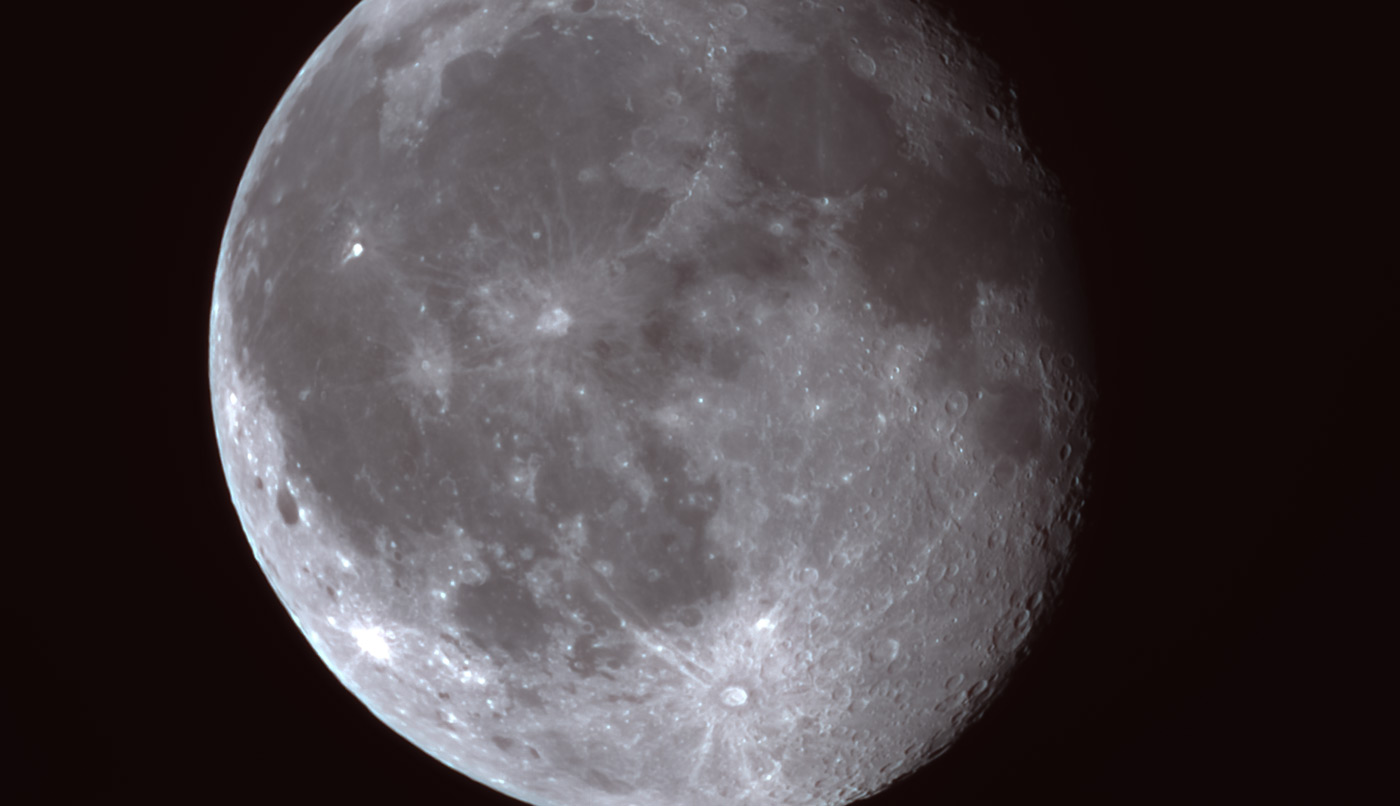
EXIF:
Camera: ZWO ASI585MC Pro.
Telescope: Altair Astro 70ED Telescope (420mm).
Mount: Juwei 17 Mount Similar: ZWO New AM5N Harmonic Drive AZ-EQ
Filter: Optolong L eNhance
Guide Camera: ZWO ASI120mm-s
Guide Scope: SVBony 30mm (f4)
Computer: ZWO ASIAIR pro
Method:
Lights: 60s video.
Darks: 0
Flats: 0
Bias: 0
Stacked in AutoStakkert, tweaked in Photoshop.
Milkyway
This past month I have been experimenting once again with taking images of our Galaxy. I guess messing about with the settings is part of the fun, but sometimes (often) leads to disappointment. It is having the resolve, determination and strength to get back out there and try again. So this part is to demonstrate that we all go through these struggles. I had in mind a simple shot of a gate with the Milkyway positioned behind it. So I set up my camera etc. and snapped 399 images, then used the best 30 either side of the dream position shot, if that makes sense. When I had finished processing, I was very disappointed. I have improved on my images from last month by light painting the foreground but the Milkyway was very faint.
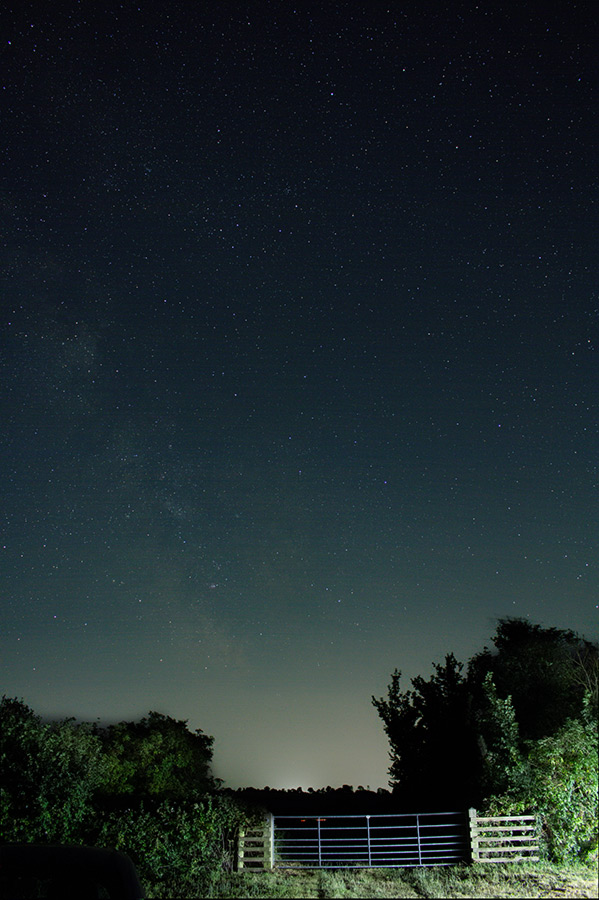
Exif
Camera: Canon EOS 7D
Lens: Canon EF-S 18-55mm IS.
Tripod: Manfrotto 290 lite
Method:
Lights: 60 x 6 secs, ISO 1600, f4 (for sharper stars).
Darks: 20 x 10 seconds
Flats: 0
Bias: 0
Stacked in Sequator, Stretched in Photoshop.
I thought what has changed from my shots that I took last month, where the detail in the galaxy was far more present. I noticed my exposure time per shot was only 6 secs, where as before I had done 10 secs. So the next night I had opportunity, I headed back out to the same spot - Unfortunately some inconsiderate (in my opinion!) bat watchers had parked where I wanted to be and so I couldnt re-create the same shot exactly, but got close enough.
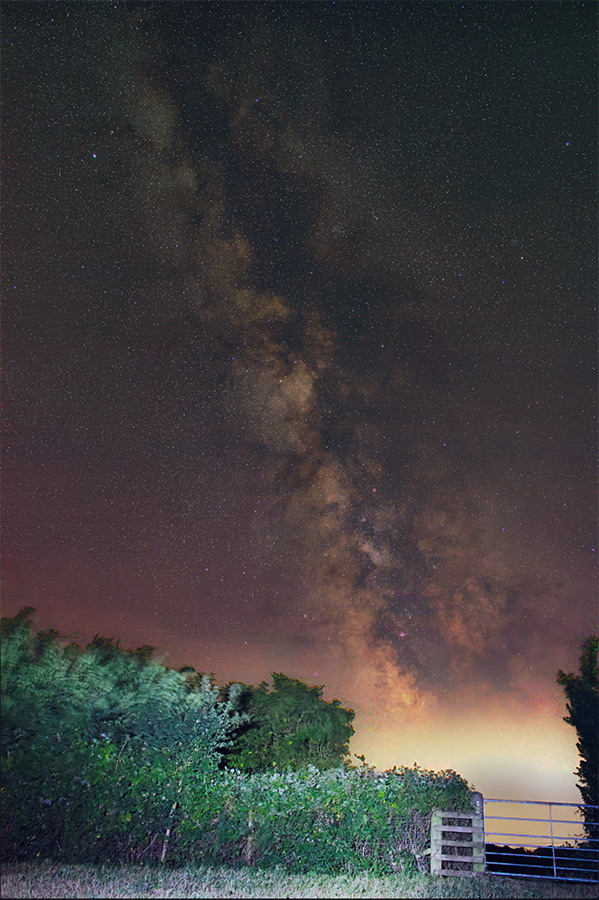
Exif
Camera: Canon EOS 7D
Lens: Canon EF-S 18-55mm IS.
Tripod: Manfrotto 290 lite
Method:
Lights: 60 x 10 secs, ISO 1600, f4 (for sharper stars).
Darks: 20 x 10 seconds
Flats: 0
Bias: 0
Stacked in Sequator, Stretched in Photoshop.
You can see how strong the wind was that night by looking at the bushes. I am really pleased with how this came out. Now I think I have got a platform I can build on... so next month I will look at composition. Watch out Richard Tatti here I come! Joking aside, beyond any doubt the videos and teachings of Richard have been instrumental in getting to grips with this discipline. Thank you Mr Tatti!
Deep sky
Andromeda Galaxy (M31)
The Andromeda Galaxy, catalogued as Messier 31 (M31), is our nearest major galactic neighbour and a monumental spiral system containing roughly a trillion stars. For centuries, sky watchers observed this faint, glowing patch in the night sky and categorised it simply as a cloud of interstellar gas and dust—frequently referred to as the "Great Andromeda Nebula." This long-standing perception persisted until the 1920s, when astronomer Edwin Hubble resolved individual variable stars within its outer arms. By calculating the immense distance to those stars, Hubble conclusively demonstrated that the system lay far beyond the boundaries of the Milky Way, fundamentally shifting human understanding of the universe to reveal a cosmos filled with distinct, independent galaxies.
Today, M31 is one of the most celebrated and popular targets for astrophotographer's. Because of its massive scale and relative proximity to Earth, it spans an unusually large area of the night sky—several times wider than the full moon. Its bright central core, delicate dust lanes, and vast spiral arms make it a stunning subject that yields impressive detail for both beginners using standard camera lenses and experienced imagers working with advanced telescope setups. It is fascinating to know that this was one of the first Astro targets imaged, yet they didn't really know what it was!. History of Astrophotography.
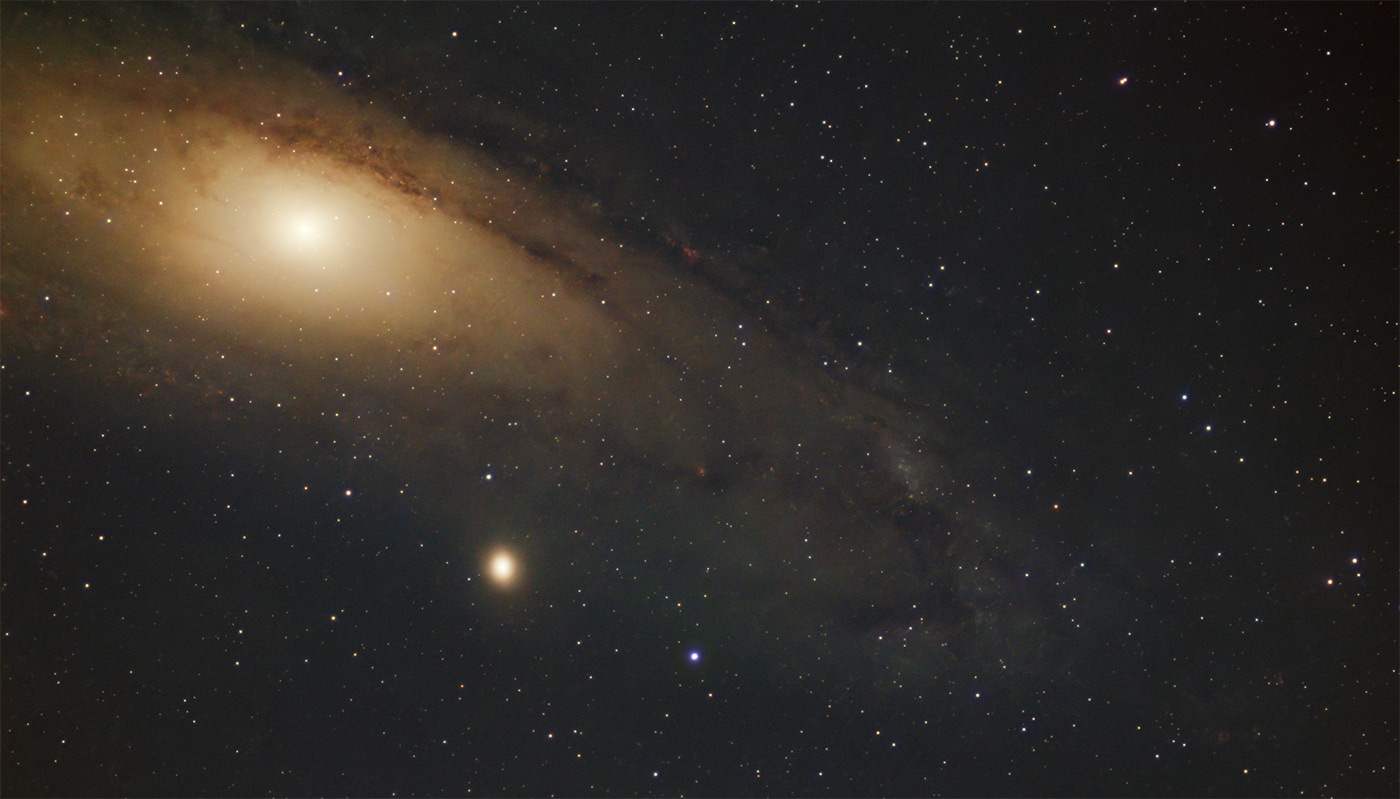
EXIF
Camera: ZWO ASI585MC Pro.
Telescope: Altair Astro 70ED Telescope (420mm).
Mount: Juwei 17 Mount Similar: ZWO New AM5N Harmonic Drive AZ-EQ Dual-Purpose Mount Head Only
Filter: Optolong L eNhance / Askar Colour Magic C2
Guide Camera: ZWO ASI120mm-s
Guide Scope: SVBony 30mm (f4)
Computer: ZWO ASIAIR pro
Method:
Lights: 20 x 120 sec Gain 251 - Optolong L eNhance
10 x 120 sec Gain 251 - UV/IR Cut filter
Darks: 0
Flats: 0
Bias: 0
Stacked in DSS, Processed in Pixinsight with RC-Astro Suite of tools.
NGC 6823
An open star cluster embedded within the glowing emission nebula NGC 6820, located roughly 6,000 light-years away in the constellation Vulpecula. Amazingly despite having such wondrous details it doesn't have a nickname, so I shall dub it 'The Finger' - I doubt it will stick! Formed only a few million years ago, this youthful cluster is dominated by blazing, high-mass stars whose intense ultraviolet radiation and stellar winds continuously carve away at the surrounding interstellar gas and dust. This energetic feedback has created dramatic, pillar-like structures reminiscent of the famous "Pillars of Creation" which we looked at last month along with the Pelican Nebula where denser pockets of material resist erosion and spark new generations of star formation.
For astrophotographers, NGC 6823 and its surrounding cloud offer a fantastic target, particularly when captured using narrowband filters like H-alpha, OIII, and SII. The intricate contrast between the dark, towering dust pillars, the delicate wisps of ionised gas, and the bright, compact star cluster at its core yields striking images that reward long-exposure deep-sky imaging setups.
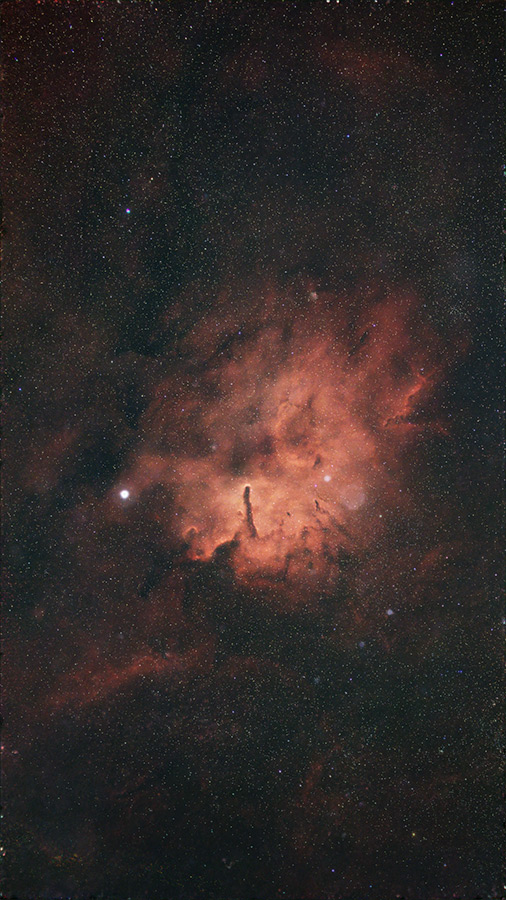
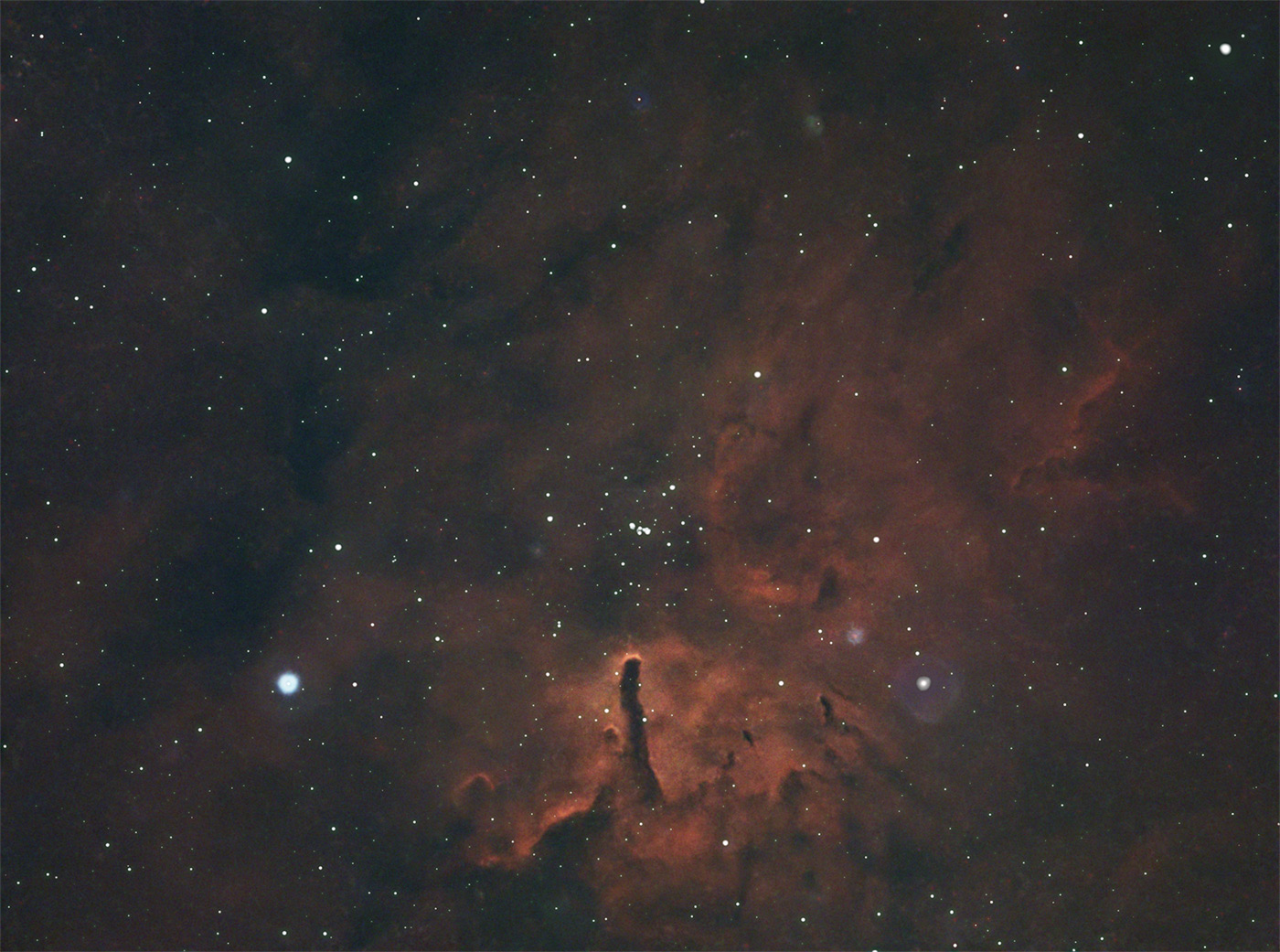
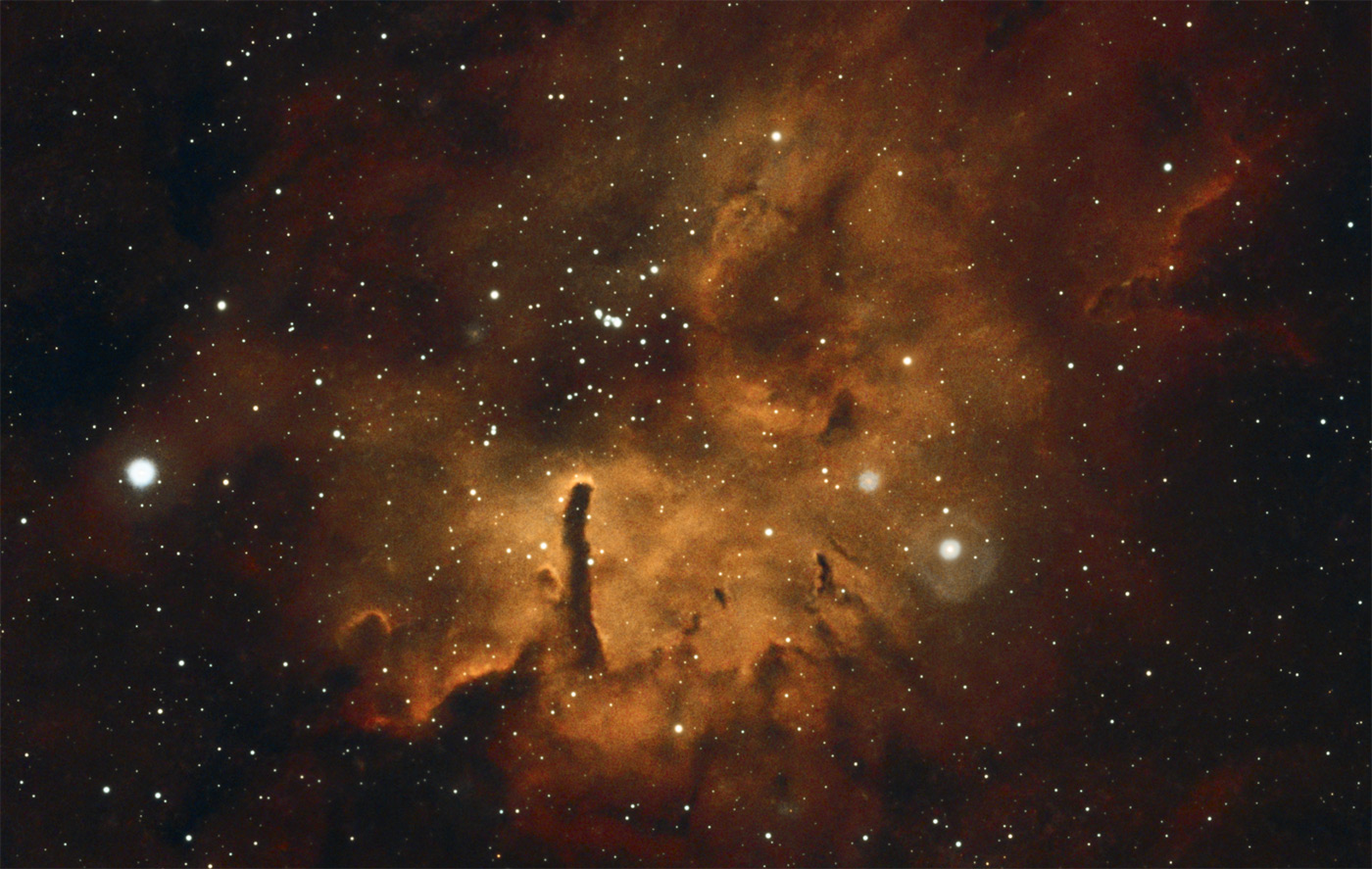
EXIF
Camera: ZWO ASI585MC Pro.
Telescope: Altair Astro 70ED Telescope (420mm).
Mount: Juwei 17 Mount Similar: Similar
Filter: Optolong L eNhance / Askar Colour Magic C2
Guide Camera: ZWO ASI120mm-s
Guide Scope: SVBony 30mm (f4)
Computer: ZWO ASIAIR pro
Method:
Lights: 45 x 120 sec Gain 251 - Optolong L eNhance
Darks: 0
Flats: 0
Bias: 0
Stacked in DSS, Processed in Pixinsight with RC-Astro Suite of tools.
The Swan Nebula (M17)
Located roughly 5,500 light-years away in the constellation Sagittarius, Messier 17 (M17)—most commonly known as the Swan Nebula—is one of the most active and luminous star-forming regions in the Milky Way.
First discovered in 1745 by Swiss astronomer Jean-Philippe Loys de Chéseaux and later cataloged by Charles Messier, M17 earned its popular moniker because its brightest central ridge, when viewed through small telescopes or visual eyepieces, forms a distinct, sweeping hook that closely resembles a swan floating gracefully on dark water. Over time, as different observers sketched its intricate light and dark structures, it accumulated a variety of descriptive nicknames. Astronomer John Herschel noted that its curved outer loops resembled the capital Greek letter $\Omega$, popularising the title Omega Nebula, while others dubbed it the Horseshoe, Checkmark, or Lobster Nebula.
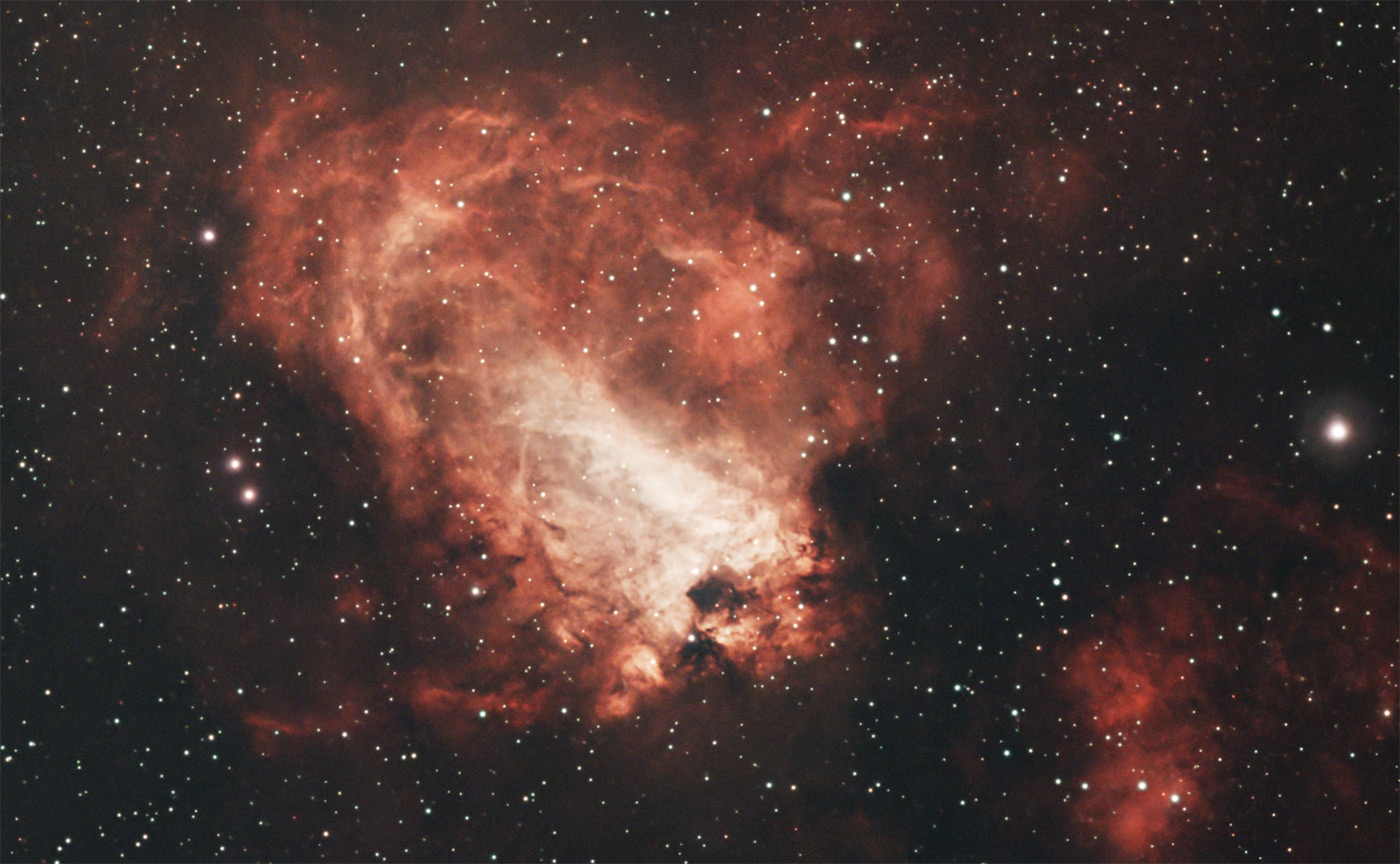
Exif
Camera: ZWO ASI585MC Pro.
Telescope: Altair Astro 70ED Telescope (420mm).
Mount: Sky-Watcher EQ5 Pro
Filter: Optolong L eNhance filter.
Guide Camera: ZWO ASI120mm-s
Guide Scope: SVBony 30mm (f4)
Computer: ZWO ASIAIR pro
Method:
Lights: 60 x 120 sec Gain 252.
Darks: 0
Flats: 0
Bias: 0
Stacked in DSS, Processed in Pixinsight with RC-Astro Suite of tools. Finishing touches in Photoshop.
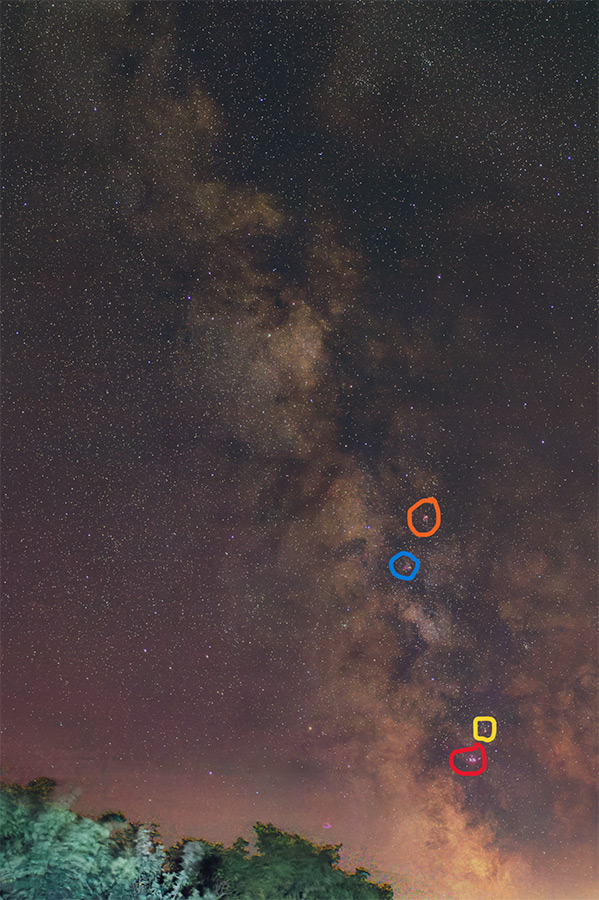
In the Milky Way photo above you can see some of these targets, M16 (Eagle Nebula) in orange, M17 (Swan Nebula) in blue, M20 (Triffid Nebula) in yellow and M8 (Lagoon Nebula) in red. Among many others!
The Veil Nebula (C33 / NGC 6992)
Did I hear you say "Wait, didn't we image this last month?" - Yes, we did, but the other half, so if you want to read about what it is here is a link. This month I thought it would be nice to image the Eastern portion of the nebula which has the nickname 'The Bat'. It amazes me just how vast this target is. The whole thing much like Andromeda Galaxy takes up about 5 full moons width in our night sky! It is almost like you can hear the supernova exploding because the shock waves in both this and last months image are so prevalent. Sadly, I only managed about an hour on this target due to cloud, but still I think it makes a lovely image.
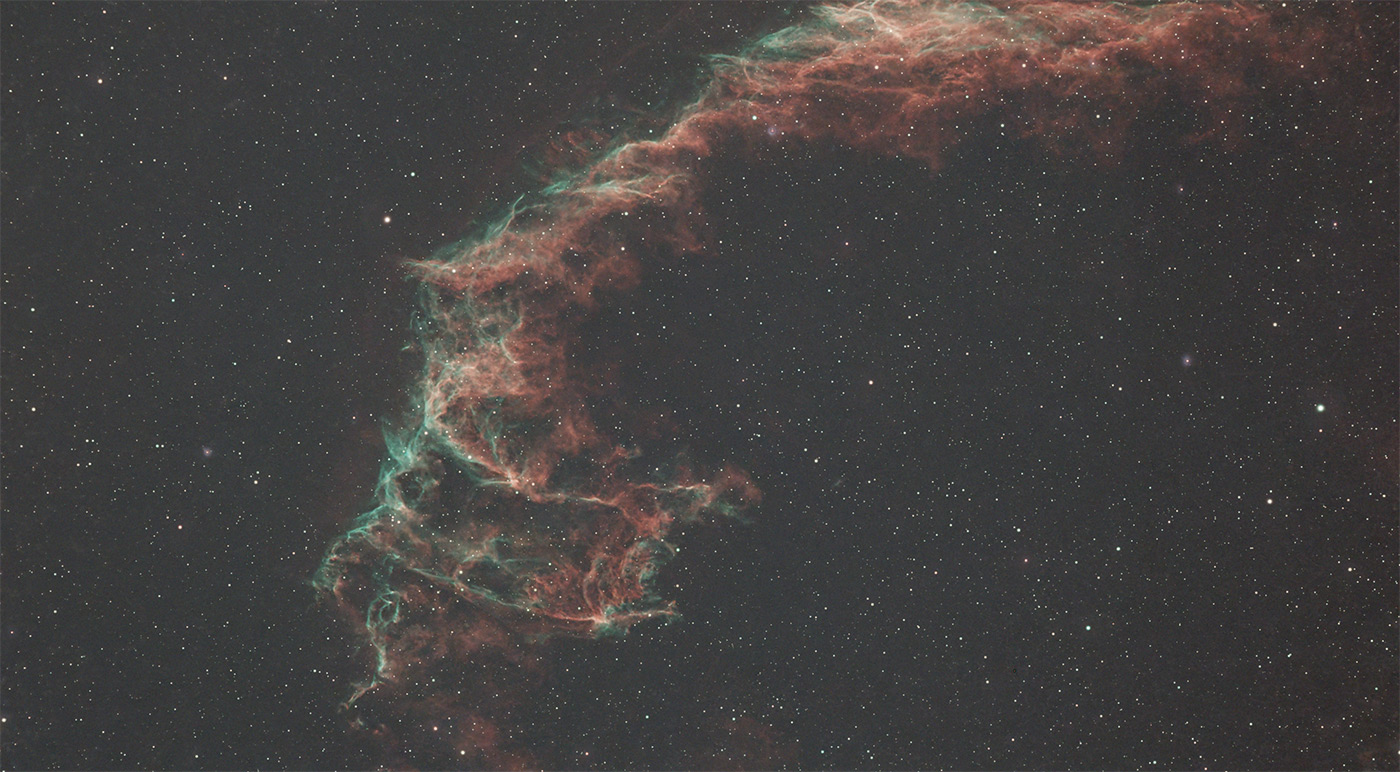
Exif
Camera: ZWO ASI585MC Pro.
Telescope: Altair Astro 70ED Telescope (420mm).
Mount: Sky-Watcher EQ5 Pro
Filter: Optolong L eNhance filter.
Guide Camera: ZWO ASI120mm-s
Guide Scope: SVBony 30mm (f4)
Computer: ZWO ASIAIR pro
Method:
Lights: 30 x 120 sec Gain 252.
Darks: 0
Flats: 0
Bias: 0
Stacked in DSS, Processed in Pixinsight with RC-Astro Suite of tools.
We live in exciting times, I really am looking forward to the Solar Eclipse on 12th Aug, as well as my camping trip to a Bortle 2 location, and to be able to take my Milky Way photography to the next level. Until next month, clear skies and may the photons rest gracefully on the sensor of your camera!
Share this post:
By Jonathan Penberthy on 27/07/2026

Jonathan Penberthy
Cosmic Shutter Seeker and Star Programmer
Jonathan Penberthy is the Cosmic Shutter Seeker and Star Programmer at Park Cameras, with over 20 years of experience as a software engineer. His career journey has spanned industries, but a move to Park Cameras sparked a passion for astrophotography. Jonathan’s interest began while working on a lens selection app, leading him to explore the night sky with a Canon 7D. When he’s not programming or photographing the stars, he enjoys sailing and navigating by the cosmos. Learn more on his profile page.
Trade in your old equipment
Fast and easy trade in service ensures your old gear is collected efficiently and you are paid quickly! It's very simple to trade in your unwanted photography gear. Just head over to our dedicated Sell or Part Exchange page, fill out the details, and we'll get back to you with an offer for your old gear. Take the cash, or put it towards the cost of your new gear. It's up to you! Find out more
sign up to the newsletter
Keep up to date on the latest photography news, events and offers. Sign up now