- Call us 01444 237070

-
- Back
- Used Cameras
- Used Accessories
- Used Lenses
- Back
- Used Canon Lenses
- Used Nikon Lenses
- Used Fujifilm Lenses
- Used Sony Lenses
- Used Micro 4/3rds Lenses
- Used Leica Lenses
- Used Panasonic Lenses
- Used Pentax Lenses
- Used Samyang Lenses
- Used Sigma Lenses
- Used Tamron Lenses
- Used Tokina Lenses
- Used Voigtlander Lenses
- Used Zeiss Lenses
- Used Hasselblad Lenses
- Used Video
- Used Film Equipment
- Used Stock Alert
- Used Blank Test
- Sell or Part Exchange
- Used Clearance
- Recently Added Used Equipment
- Park Picks
- Faulty
- Trade-In
- Blog
- New in
- Call us
- Contact us
- Stores
- Sign in
Call us: 01444 237070
Search terms
Brands
Category
Products
[[{name}]]
[[{attributes.Price}]]
- Categories
- Tips & Inspiration
- Reviews
- News
- Events
- Features
- Buying Guides
- Competitions
UK Astrophotography Highlights September 2026
Images ©Jonathan Penberthy
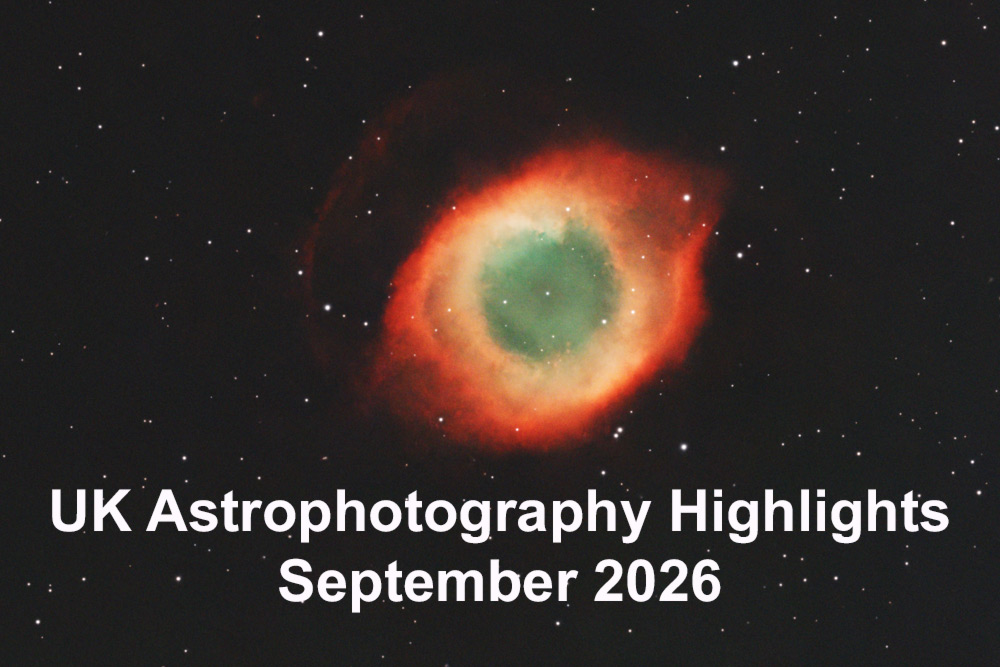
We have so much to talk about this month, camping trip to a dark sky site, Solar Eclipse, up coming Lunar Eclipse and not to mention the normal array of astronomy wonders, and for me at least some very sad news!
| Monday | Tuesday | Wednesday | Thursday | Friday | Saturday | Sunday |
|---|---|---|---|---|---|---|
|
31 Aug
🌖 Waning Gibbous
☀️ Sun: 06:10 – 19:50
🌙 Moon: 21:03 – 12:09
🚫 Moon Up at Dark
|
1 Sep
🌖 Waning Gibbous
☀️ Sun: 06:14 – 19:45
🌙 Moon: 21:18 – 13:27
🚫 Moon Up at Dark (21:28)
|
2 Sep
🌖 Waning Gibbous
☀️ Sun: 06:15 – 19:43
🌙 Moon: 21:37 – 14:44
🚫 Moon Up at Dark (21:25)
|
3 Sep
🌖 Waning Gibbous
☀️ Sun: 06:17 – 19:41
🌙 Moon: 22:01 – 15:59
🌌 Dark: 21:22 – 22:01
|
4 Sep
🌗 Third Quarter
☀️ Sun: 06:18 – 19:39
🌙 Moon: 22:33 – 17:10
🌌 Dark: 21:20 – 22:33
|
5 Sep
🌘 Waning Crescent
☀️ Sun: 06:20 – 19:36
🌙 Moon: 23:17 – 18:13
🌌 Dark: 21:17 – 23:17
|
6 Sep
🌘 Waning Crescent
☀️ Sun: 06:22 – 19:34
🌙 Moon: 00:13 – 19:04
🌌 Dark: 21:14 – 00:13
|
|
7 Sep
🌘 Waning Crescent
☀️ Sun: 06:23 – 19:32
🌙 Moon: 01:18 – 19:43
🌌 Dark: 21:11 – 01:18
|
8 Sep
🌘 Waning Crescent
☀️ Sun: 06:25 – 19:30
🌙 Moon: 02:29 – 20:12
🌌 Dark: 21:08 – 02:29
|
9 Sep
🌘 Waning Crescent
☀️ Sun: 06:26 – 19:27
🌙 Moon: 03:42 – 20:34
🌌 Dark: 21:05 – 03:42
|
10 Sep
🌘 Waning Crescent
☀️ Sun: 06:28 – 19:25
🌙 Moon: 04:56 – 20:51
🌌 Dark: 21:02 – 04:40
|
11 Sep
🌑 New Moon
☀️ Sun: 06:29 – 19:23
🌙 Moon: 06:10 – 21:06
🌌 Dark: 20:59 – 04:42
|
12 Sep
🌒 Waxing Crescent
☀️ Sun: 06:31 – 19:20
🌙 Moon: 07:25 – 21:20
🌌 Dark: 21:20 – 04:44
|
13 Sep
🌒 Waxing Crescent
☀️ Sun: 06:33 – 19:18
🌙 Moon: 08:42 – 21:35
🌌 Dark: 21:35 – 04:46
|
|
14 Sep
🌒 Waxing Crescent
☀️ Sun: 06:34 – 19:16
🌙 Moon: 10:01 – 21:52
🌌 Dark: 21:52 – 04:48
✨ Venus Occultation 🧭 Look: Low West at Dusk ⏰ Time: Daytime / Evening
|
15 Sep
🌒 Waxing Crescent
☀️ Sun: 06:36 – 19:14
🌙 Moon: 11:22 – 22:13
🌌 Dark: 22:13 – 04:50
|
16 Sep
🌒 Waxing Crescent
☀️ Sun: 06:37 – 19:11
🌙 Moon: 12:42 – 22:42
🌌 Dark: 22:42 – 04:52
|
17 Sep
🌒 Waxing Crescent
☀️ Sun: 06:39 – 19:09
🌙 Moon: 13:58 – 23:22
🌌 Dark: 23:22 – 04:54
|
18 Sep
🌓 First Quarter
☀️ Sun: 06:41 – 19:07
🌙 Moon: 15:05 – 00:15
🌌 Dark: 00:15 – 04:57
|
19 Sep
🌔 Waxing Gibbous
☀️ Sun: 06:42 – 19:04
🌙 Moon: 16:01 – 01:21
🌌 Dark: 01:21 – 04:57
|
20 Sep
🌔 Waxing Gibbous
☀️ Sun: 06:44 – 19:02
🌙 Moon: 16:45 – 02:38
🌌 Dark: 02:38 – 04:59
|
|
21 Sep
🌔 Waxing Gibbous
☀️ Sun: 06:45 – 19:00
🌙 Moon: 17:18 – 04:01
🌌 Dark: 04:01 – 05:01
|
22 Sep
🌔 Waxing Gibbous
☀️ Sun: 06:47 – 18:57
🌙 Moon: 17:44 – 05:25
🌌 Dark: 05:25 – 05:03
|
23 Sep
🌔 Waxing Gibbous
☀️ Sun: 06:49 – 18:55
🌙 Moon: 18:05 – 06:48
🚫 Moon Up All Night
🍂 Autumnal Equinox 🧭 Equal Day & Night ⏰ Peak: 01:06 BST
|
24 Sep
🌔 Waxing Gibbous
☀️ Sun: 06:50 – 18:53
🌙 Moon: 18:22 – 08:08
🚫 Moon Up All Night
🪐 Neptune Opposition 🧭 Look: SE in Aquarius ⏰ Time: All Night
|
25 Sep
🌔 Waxing Gibbous
☀️ Sun: 06:52 – 18:51
🌙 Moon: 18:38 – 09:27
🚫 Moon Up All Night
|
26 Sep
🌕 Harvest Full Moon
☀️ Sun: 06:53 – 18:48
🌙 Moon: 18:54 – 10:45
🚫 Moon Up All Night
🌕 Peak: 18:48 BST
|
27 Sep
🌖 Waning Gibbous
☀️ Sun: 06:55 – 18:46
🌙 Moon: 19:12 – 12:02
🚫 Moon Up All Night
|
|
28 Sep
🌖 Waning Gibbous
☀️ Sun: 06:57 – 18:44
🌙 Moon: 19:33 – 13:17
🚫 Moon Up All Night
|
29 Sep
🌖 Waning Gibbous
☀️ Sun: 06:58 – 18:41
🌙 Moon: 20:00 – 14:28
🚫 Moon Up All Night
|
30 Sep
🌖 Waning Gibbous
☀️ Sun: 07:00 – 18:39
🌙 Moon: 20:34 – 15:32
🚫 Moon Up at Dark (20:12)
|
1 Oct
🌖 Waning Gibbous
☀️ Sun: 07:02 – 18:36
🌙 Moon: 21:18 – 16:24
🌌 Dark: 20:09 – 21:18
|
2 Oct
🌗 Third Quarter
☀️ Sun: 07:03 – 18:34
🌙 Moon: 22:13 – 17:03
🌌 Dark: 20:06 – 22:13
|
3 Oct
🌘 Waning Crescent
☀️ Sun: 07:05 – 18:32
🌙 Moon: 23:17 – 17:31
🌌 Dark: 20:03 – 23:17
|
4 Oct
🌘 Waning Crescent
☀️ Sun: 07:07 – 18:29
🌙 Moon: 00:25 – 17:55
🌌 Dark: 20:00 – 00:25
🪐 Saturn Opposition 🧭 Look: SE to S ⏰ Time: All Night
|
Solar system
Sun
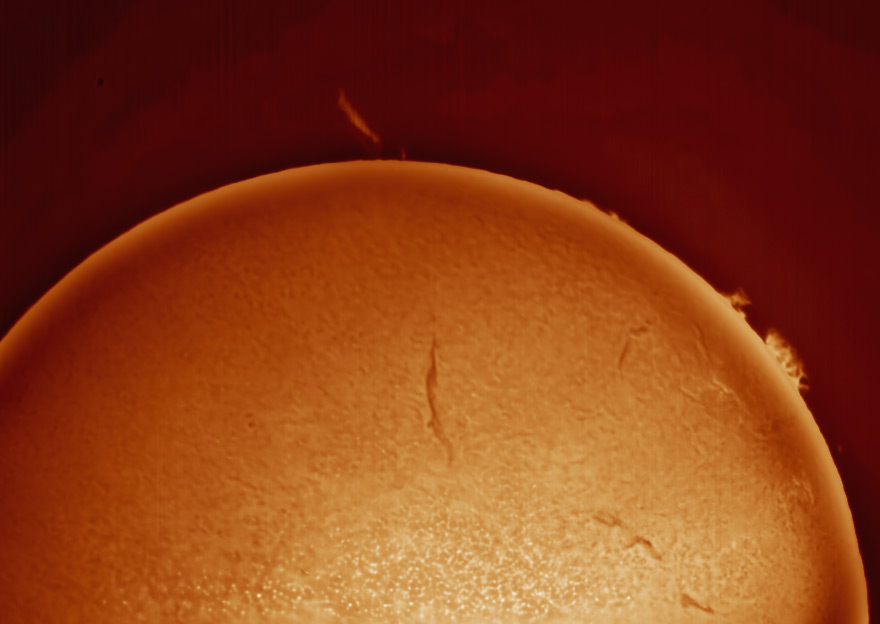
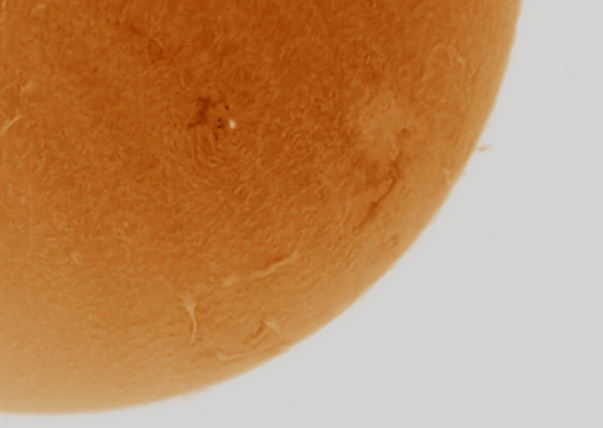
In prep for the Eclipse I have been experimenting with a Lunt telescope. I have struggled to fully correct the Newtonian rings and so just accept them as part of the image. Here are my best two:
EXIF
Lunt 40mm Ha SolarScope and B400 Etalon.
ZWO ASI120mm Mini camera.
Juwei 17 Mount.
ZWO TC40 Tripod.
Method: 30 second video using SharpCap on my laptop. Stacked in AutoStakkert and colourised from Mono to RGB in Photoshop to taste.
EXIF
Same as photo above, but inverted the Mono image before colourising in Photoshop.
Solar Eclipse
When great events like the Solar Eclipse happen, it really sparks interest in astronomy. Here in the South of England we were blessed with almost completely clear skies in which to image this event. My fiancé and I pitched our gazebo at the celebration organised by Worthing Astronomers at Goring Gap, West Sussex. I am very pleased to say 1,000s came, and I feel like I spoke to everyone of them! We had the ambition of four rigs to be on the go, but due to a few operational issues this was reduced to 3. Don't worry if you missed it, you can see it again over the coming century...
| Date | UK Type | Peak UK Sun Coverage (%) | Best UK Viewing Locations |
|---|---|---|---|
| 2 August 2027 | Partial | 30% – 60% | Cornwall & South West England (~60%) |
| 26 January 2028 | Partial | 40% – 50% | South East England (sunset view) |
| 12 June 2029 | Partial | 20% – 35% | Northern Scotland |
| 1 June 2030 | Partial | 50% – 70% | South & South East England |
| 20 March 2034 | Partial | 15% – 30% | Southern England |
| 21 August 2036 | Partial | 60% – 75% | Scotland & Northern England |
| 10 June 2037 | Partial | 50% – 65% | Scotland & Northern Ireland |
| 5 January 2038 | Partial | 10% – 20% | South West England |
| 12 September 2053 | Partial | ~40% | Southern England & Channel Coast |
| 17 December 2066 | Partial | ~60% | Southern UK |
| 13 July 2075 | Partial | ~70% | Most of the UK |
| 3 September 2081 | Deep Partial | Up to ~99% | South Coast & Cornwall |
| 21 April 2082 | Partial | ~70% | Southern UK |
| 21 April 2088 | Partial | ~40% | South West England |
| 23 September 2090 | Total | 100% | Cornwall, Devon, South Coast |
| 23 July 2093 | Annular | ~95% | Northern Scotland & NW England |
Our Solar Imaging Station:
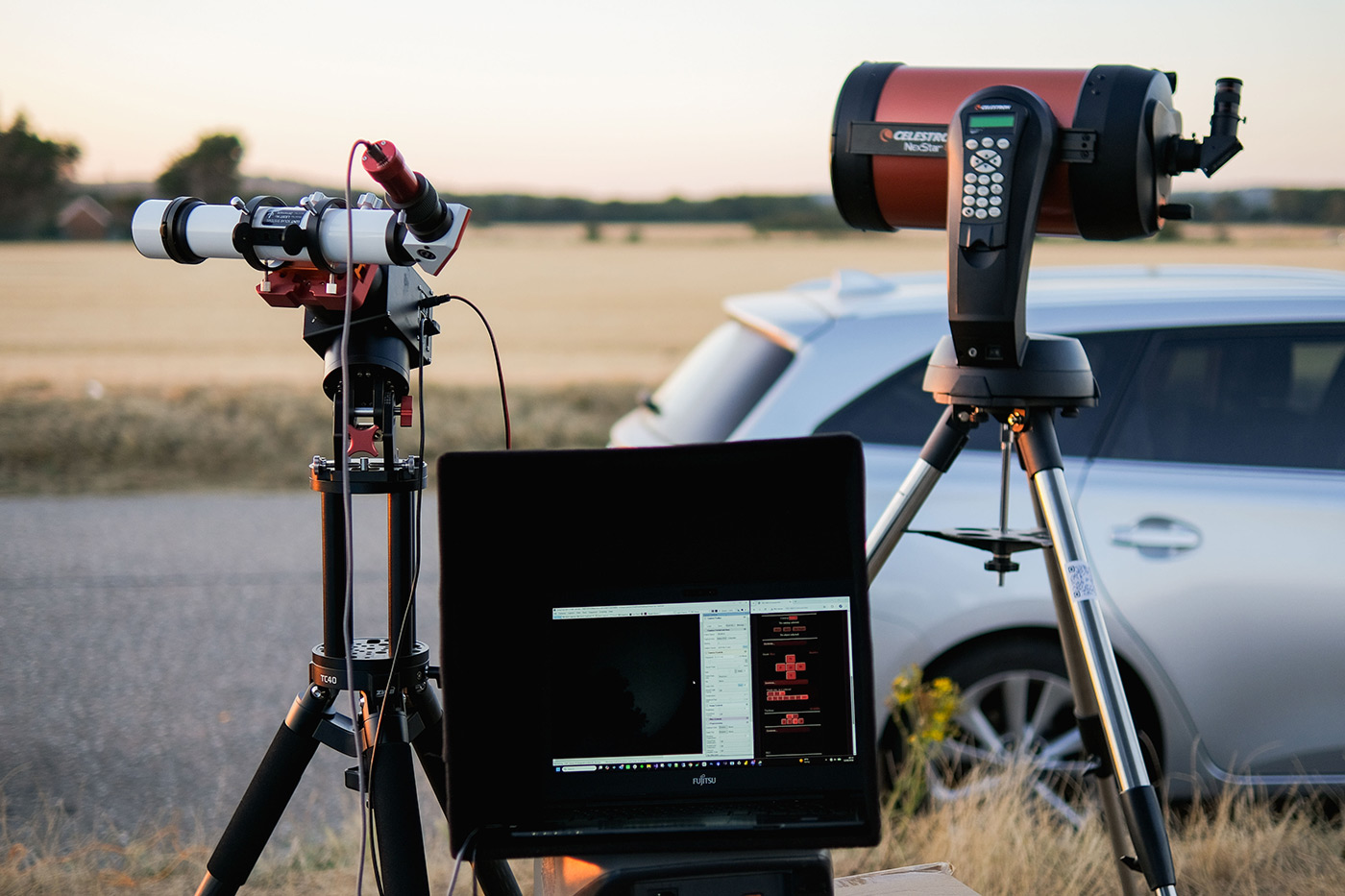
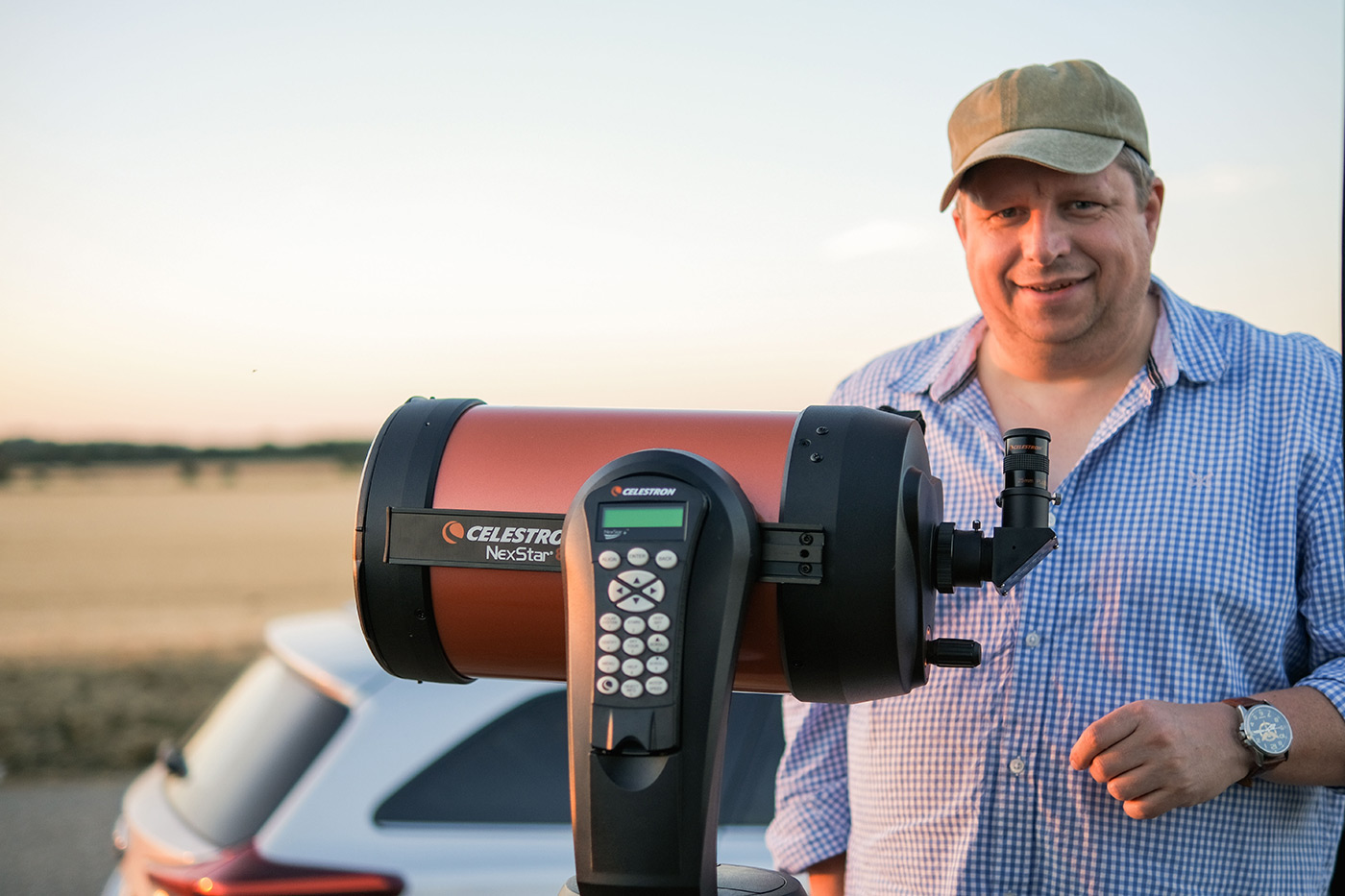
© Copyright Kayla Drummond
EXIF
33mm f/1.4 1/500 sec ISO 160 EXP 0 No flash
The rigs:
1. Celestron 8SE with solar filter for visual.
2. 40mm Lunt with B400 etalon (call for pricing), with a ZWO ASI120mm Mini Camera on a Juwei 17 Mount (similar), ZWO TC40 Tripod, connected to my laptop for live streaming
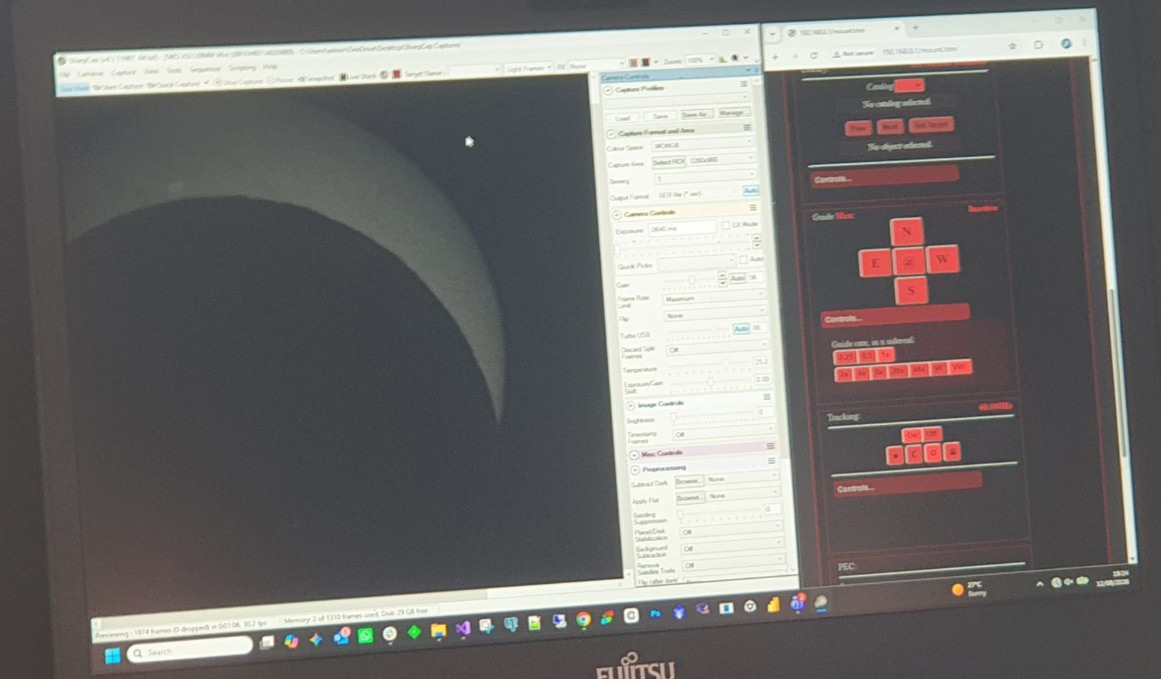
3. Canon 7D with EF-S 18-55mm lens on a Manfrotto 290 Lite tripod.
Celestron very kindly supplied the solar filter for the 8SE, and so many were able to observe the sun safely, in person at very close magnification. It really made the event. I will never tire of seeing peoples faces light up with amazement when they visualise something so spectacular with their own eyes... the 8SE is on display in the Burgess Hill store, so if you ever fancy seeing this wonder for yourself it can be arranged I am sure!
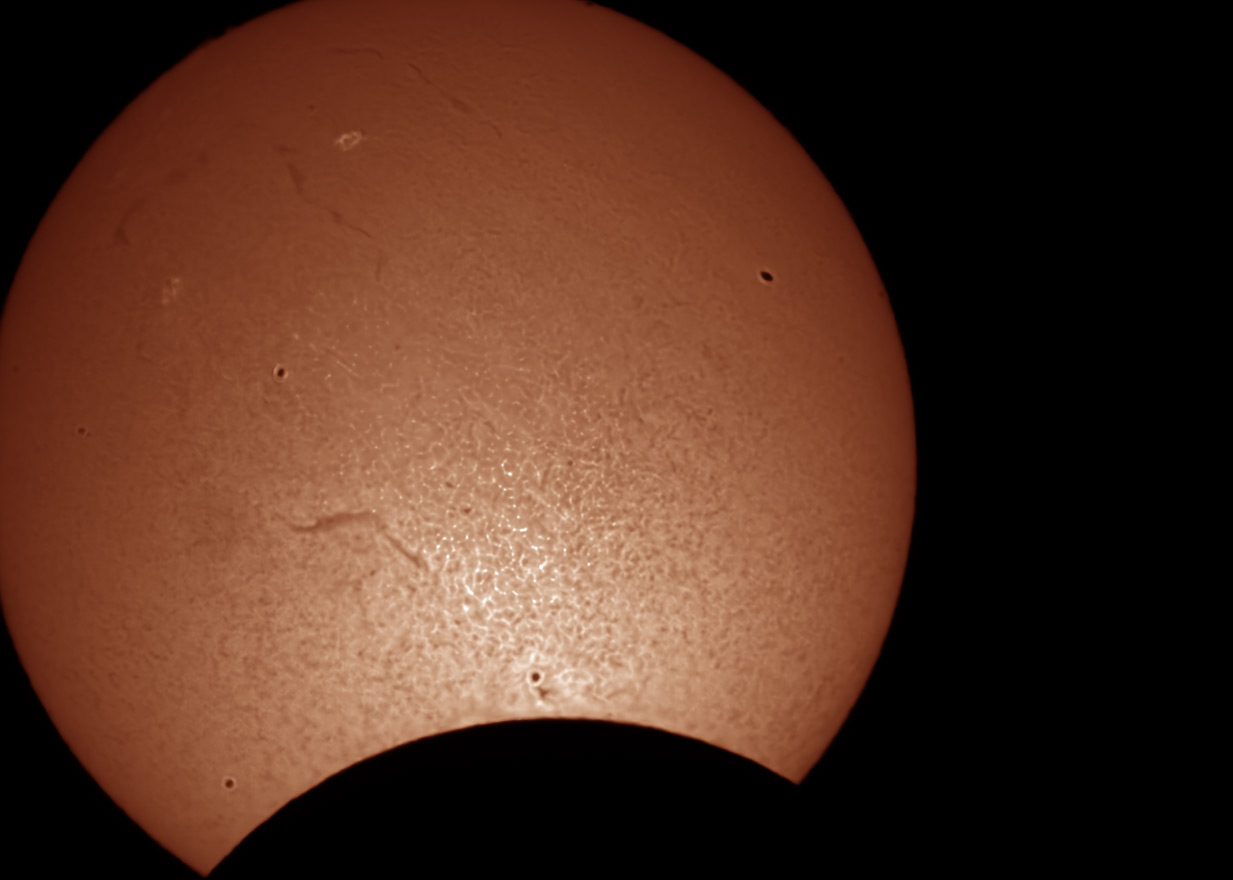
The Lunt performed amazingly well, and I am very grateful for having been loaned such an amazing piece of kit. I have to be honest I took hundreds of videos during the eclipse and am yet to process them all, but here is a sneak peak of the kind of results (please forgive the black spots which may or may not be sun spots - the people next to us (all 4000 of them) were having a BBQ!).
The mighty 7D was left to its own devices, I attached a solar filter which my friend had 3D printed, and an intervalometer, and took 1 exposure every 18 seconds for the entire duration of the eclipse, ISO 100, f8 1/800 sec at 35mm.
Here is a timelapse video, superimposed on a static image I took at the end of the session. I kept the tripod kick in as a reminder to how busy it was!
A tripod kick corrected still image of the timelapse made from every 20th frame or so:
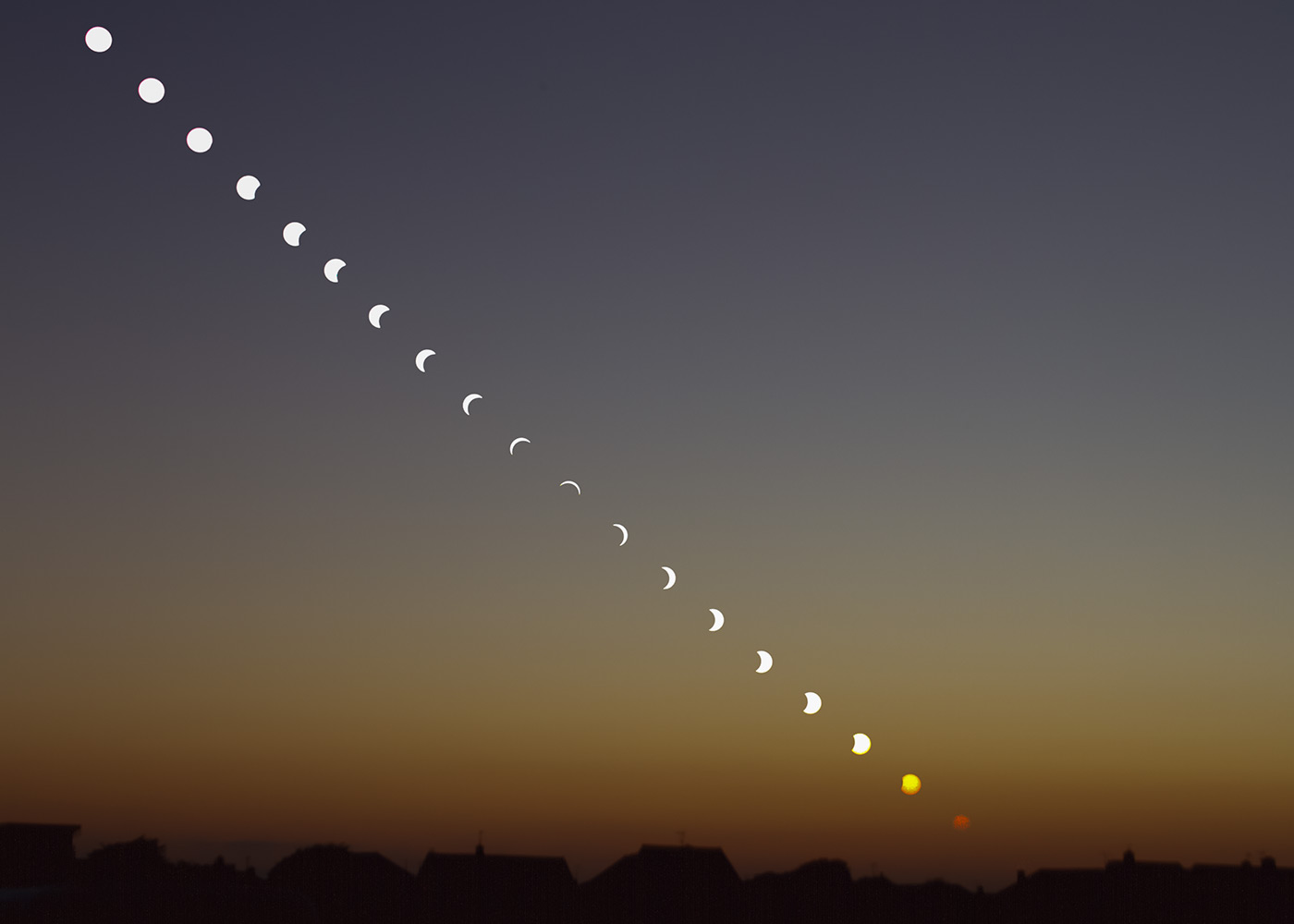
Added each frame as a layer in Photoshop and then used 'lighten' to superimpose it on the next.
If you would like to read further about how to capture it please read Nick's excellent guide here www.parkcameras.com/blog/tips-and-inspiration/guide-to-the-next-uk-solar-eclipse_sun06.
Did you capture a shot of the Solar Eclipse? Or maybe you captured the atmosphere of the event with your friends or family? If so, why not share your photos with us and you could be in with a chance to win a £50 Park Cameras Gift Voucher! Tap the button below for full details and to submit your entry. Closes 14.09.2026.
Enter our FREE Solar Eclipse Competition
Lunar
Some dear friends of mine got married in late July, and so I took this photo of the Moon to celebrate their union. They now have an A1 copy of this image hanging on their bedroom wall!
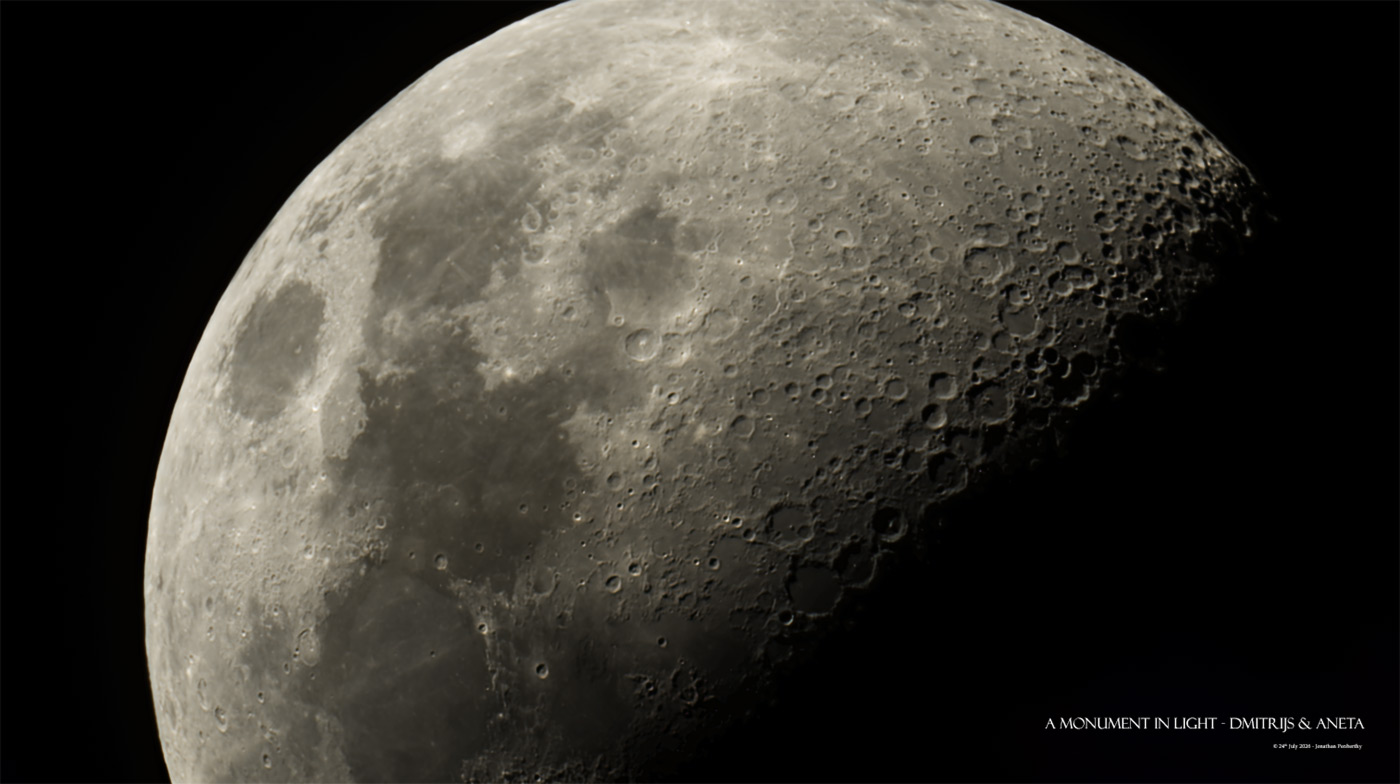
At the time of writing this blog, we are expecting to see a partial Lunar Eclipse on the night of the 27th - 28th August around 03:30 - 06:15. I captured the one we had last year, and you can read about the best way to capture it here https://www.parkcameras.com/blog/tips-and-inspiration/lunar-eclipse-photography-tips_tutorial-27-07-2018-1 and also how I personally go about capturing sharp images of the Moon here www.parkcameras.com/blog/tips-and-inspiration/lunar-photography-tips-from-jonathan-penberthy_lun-01
This time, cloud dependent, I intend to try and get some close up shots of it rather than the full disc everyone else does. Here are a few of my practise attempts:
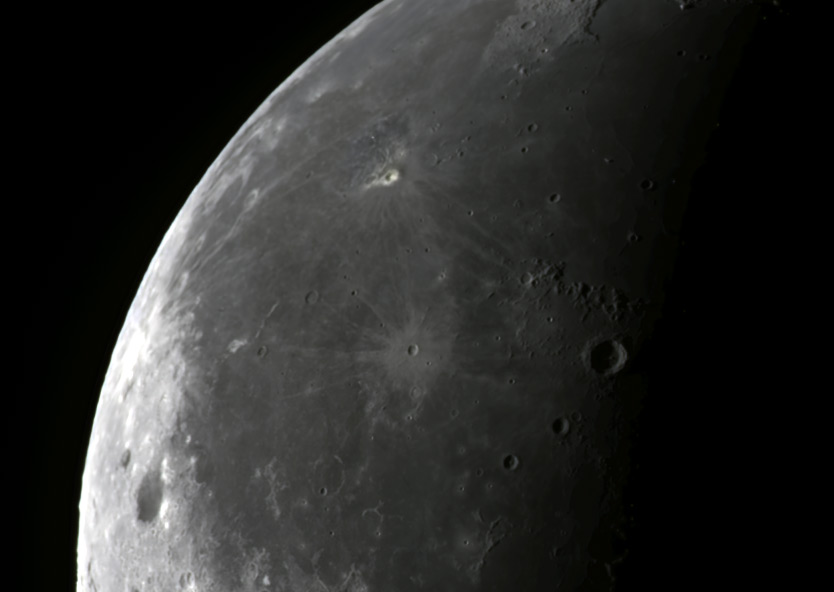
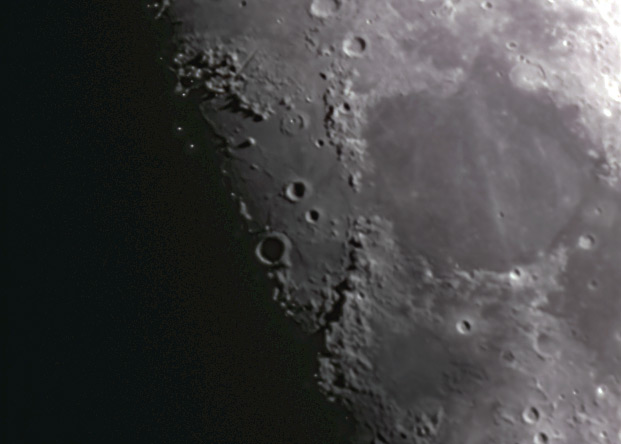
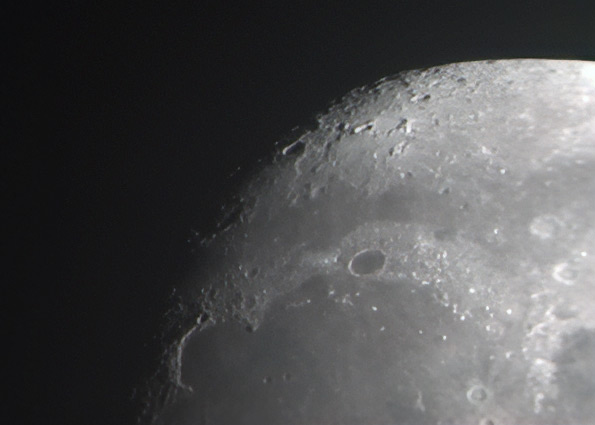
All lunar images capture as follows:
EXIF:
Camera: ZWO ASI585MC Pro.
Telescope: Altair Astro 70ED Telescope (420mm).
Mount: Juwei 17 Mount Similar: (www.parkcameras.com/shop/zwo-new-am5n-harmonic-drive-az-eq-dual-purpose-mount-head-only_9800939w)
Filter: Optolong L eNhance
Guide Camera: ZWO ASI120mm-s
Guide Scope: SVBony 30mm (f4)
Computer: ZWO ASIAIR pro
Method:
Lights: 30s video.
Darks: 0
Flats: 0
Bias: 0
Stacked in AutoStakkert, tweaked in Photoshop.
Milkyway
On route to our dark skies campsite in West Cornwall, we stopped off at Stonehenge, where I captured this image. However, I wasnt to know that this would be the very last Astro image I would capture with my 7D.
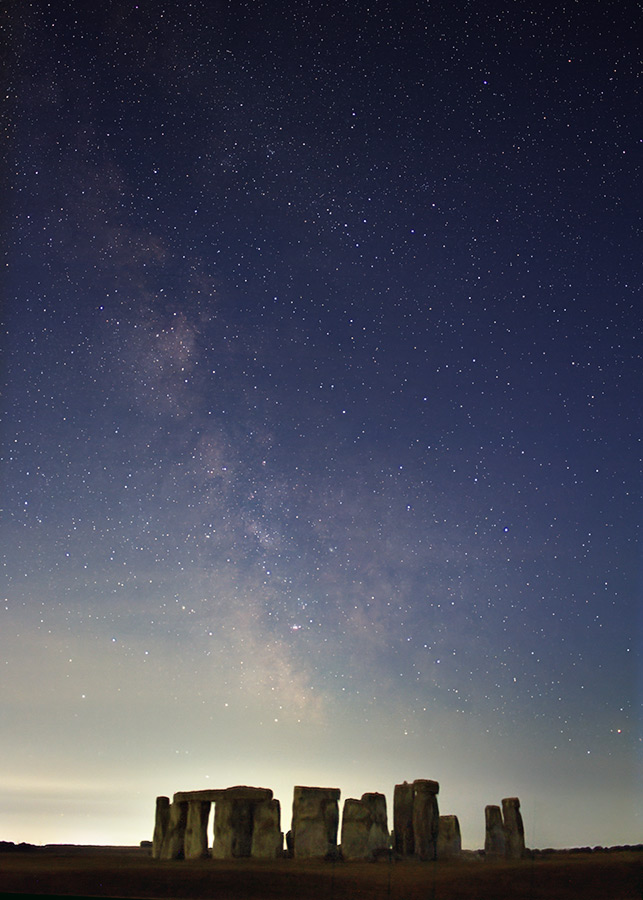
Exif
Camera: Canon EOS 7D
Lens: Canon EF-S 18-55mm IS.
Tripod: Manfrotto 290 lite
Method:
Lights: 20 x 10 secs, ISO 1600, f4 (for sharper stars).
Darks: 0
Flats: 0
Bias: 0
Stacked in Sequator, Stretched in Photoshop.
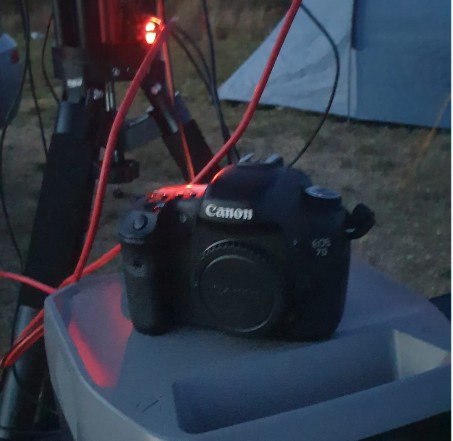
Sadly, a few days later the 7D suffered a catastrophic failure when I incorrectly inserted the CF card and managed to bend a few of the pins. Despite my best attempts to straighten them, the camera still shows an error. Sadly, the USB port on the 7D was already broken from a pervious incident when I kicked the tripod over in the dark and it snapped the lens clean off, with the USB cable and port taking the full brunt of the fall. Don't get me wrong, these were all accidents, I dearly love that 7D, it was my first proper camera, and one that I have used to take many a photo, Astro and otherwise alike.
It has drifted across the deck whilst out sailing, been completely soaked by a breaking wave or five, dropped it too many times to mention, and always it returned to service, but this was the last straw, I finally broke it. It shall now take its place on my desk as a paperweight and a reminder to the strength and durability of that model, and for the reason we all love cameras so much, the wonderful memories it captured. For anyone venturing into this hobby, I would beyond any doubt recommend the 7D as a starting place, well a working one I mean!
A replacement?
The knee jerk response is to treat myself to another 7D, but there are some things which despite its very capable feature list and extremely affordable price point, I would like to remedy. When out yacht racing for example, it was hit and miss whether I would get a sharp image, so something with quicker auto-focus, and may I dare to say, perhaps a full frame sensor and even step into the world of mirrorless. Of course the obvious choice is the Canon Ra, as much as I would love one, I need it for everyday photography too, and I know with a filter this can be achieved with the Ra, but I want something not too specialist, something that performs, is strong, not rare and fairly rugged, or as some might say Jonathan proof and above all not too expensive in case as I have with 2 drones, lose it overboard. A lot to think about, a lot of reading to do, and no doubt compromises to be made. So watch this space!
Thank you for your service old friend, sorry to see you go, you will be sadly missed...
Deep sky
This month, with the abundance of clear skies I have been very busy, imaging some great targets...
Helix Nebula (NGC 7293)
Located approximately 650 light-years away in the constellation Aquarius, the Helix Nebula (NGC 7293) is one of the closest and most visually striking planetary nebulae to Earth.
Despite the historical name, planetary nebulae have nothing to do with planets. The Helix is actually a preview of our own Sun's distant future—a dying, Sun-like star that exhausted its nuclear fuel, shed its outer gaseous layers, and left behind a dense, cooling white dwarf core. This is an image of that explosion.
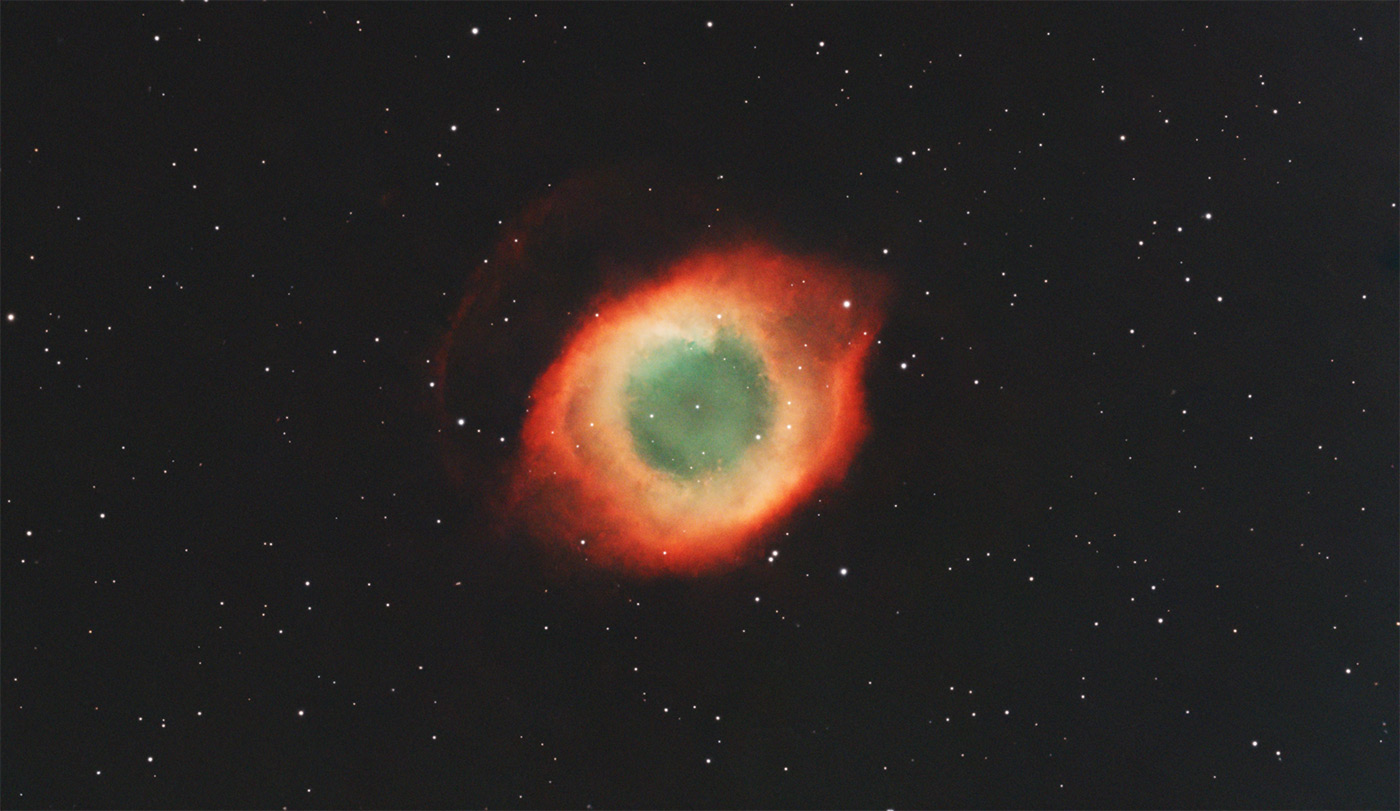
EXIF
Camera: ZWO ASI585MC Pro.
Telescope: Altair Astro 70ED Telescope (420mm).
Mount: Juwei 17 Mount Similar
Filter: Optolong L eNhance / Askar Colour Magic C2
Guide Camera: ZWO ASI120mm-s
Guide Scope: SVBony 30mm (f4)
Computer: ZWO ASIAIR pro
Method:
Lights: 30 x 120 sec Gain 251 - Optolong L eNhance
Darks: 0
Flats: 0
Bias: 0
Stacked in DSS, Processed in Pixinsight with RC-Astro Suite of tools.
Iris Nebula (NGC 7023)
Located roughly 1,300 light-years away in the circumpolar constellation Cepheus, it is one of the most famous and striking reflection nebulae in the night sky. Unlike emission nebulae, which glow from ionized gas, NGC 7023 does not generate its own light. Instead, a central, massive variable star (HD 200775) acts as a powerful cosmic spotlight, illuminating a vast surrounding cloud of interstellar dust.
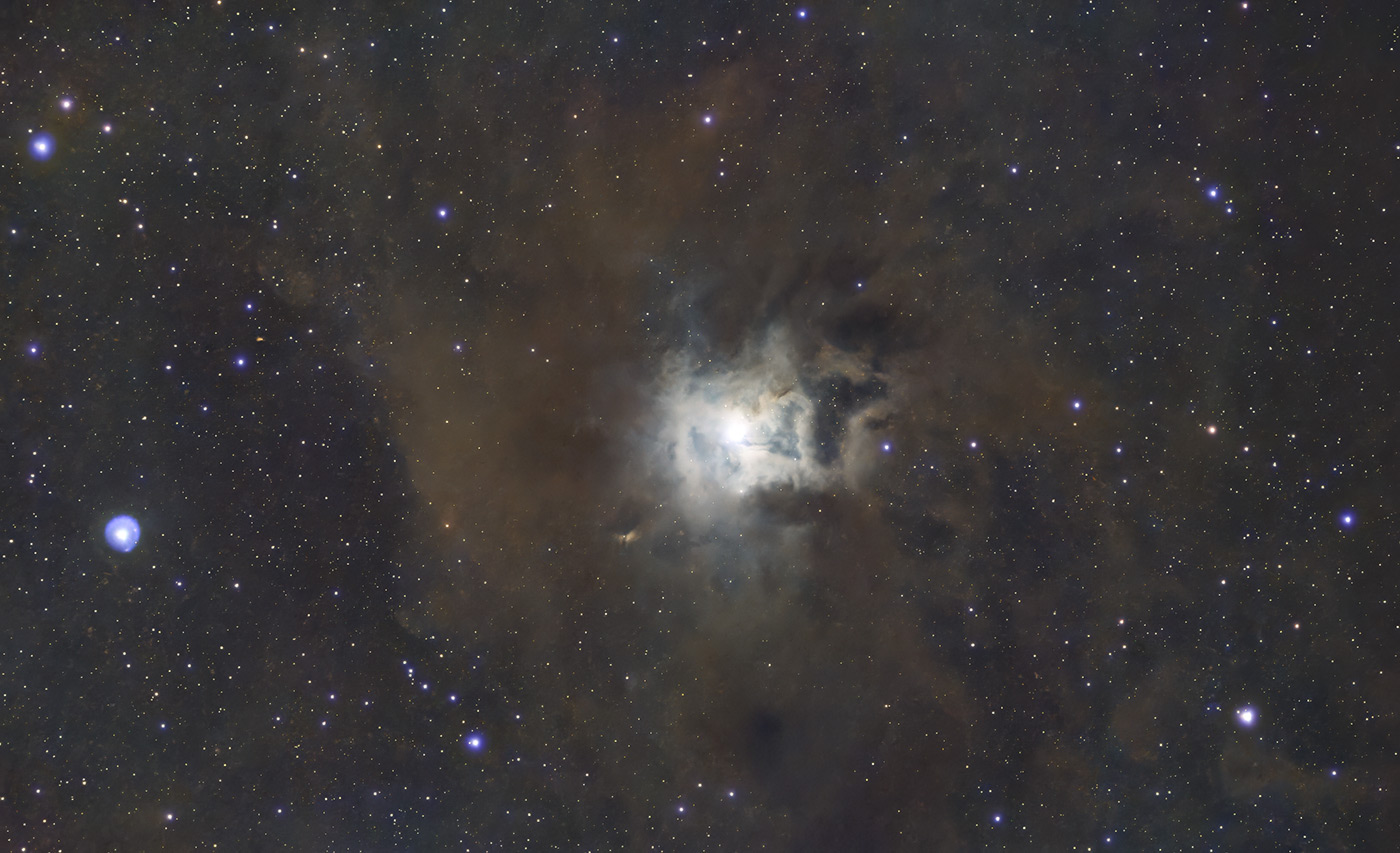
EXIF
Camera: ZWO ASI585MC Pro.
Telescope: Altair Astro 70ED Telescope (420mm).
Mount: Juwei 17 Mount Similar: (www.parkcameras.com/shop/zwo-new-am5n-harmonic-drive-az-eq-dual-purpose-mount-head-only_9800939w)
Filter: UV/IR Cut filter.
Guide Camera: ZWO ASI120mm-s
Guide Scope: SVBony 30mm (f4)
Computer: ZWO ASIAIR pro
Method:
Lights: 67 x 240 sec Gain 120.
Darks: 0
Flats: 0
Bias: 0
Stacked in DSS, Processed in Pixinsight with RC-Astro Suite of tools.
Sadr Region (Sadr star, Cygnus)
Situated right at the intersection of the Northern Cross in Cygnus, the Sadr Region (catalogued as IC 1318, or the Gamma Cygni Nebula) is a sprawling, chaotic complex of glowing gas, dark dust clouds, and rich star fields centred around the bright star Sadr. While Sadr appears directly in the middle of this glowing cosmic landscape, it is actually a foreground star lying roughly 1,800 light-years away, whereas the massive diffuse nebula complex sits much further back in the Cygnus spiral arm at a distance of around 3,000 to 5,000 light-years.
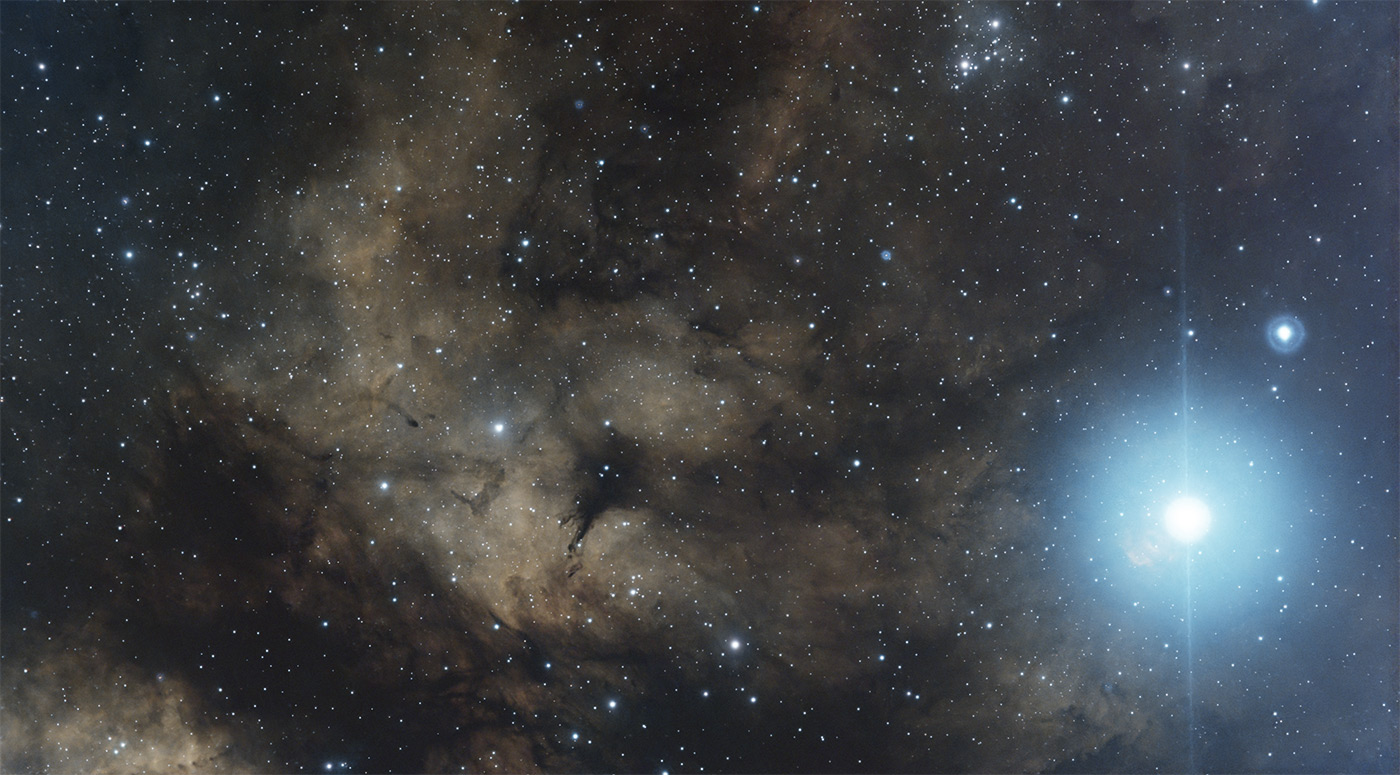
Exif
Camera: ZWO ASI585MC Pro.
Telescope: Altair Astro 70ED Telescope (420mm).
Mount: Sky-Watcher EQ5 Pro
Filter: Optolong L eNhance filter.
Guide Camera: ZWO ASI120mm-s
Guide Scope: SVBony 30mm (f4)
Computer: ZWO ASIAIR pro
Method:
Lights: 60 x 120 sec Gain 252.
Darks: 0
Flats: 0
Bias: 0
Stacked in DSS, Processed in Pixinsight with RC-Astro Suite of tools. Finishing touches in Photoshop.
The Heart of the Heart Nebula (LDN 1373)
Located roughly 7,500 light-years away in the Perseus Arm of the Milky Way (in the constellation Cassiopeia), the Heart Nebula (IC 1805) is an immense emission nebula famous for its distinct, glowing cosmic heart shape.
While the nebula as a whole is designated IC 1805, LDN 1373 refers specifically to one of the prominent dark dust catalogue entries woven into its complex structure—a dense, opaque cloud of interstellar material carved out by stellar winds.
This was my first attempt at using the Weighted Batch Preprocessor in Pixinsight rather than Deep Sky Stacker, considering the lack of data and the conditions (it was very cloudy), I can say this is my chosen path now... it takes longer, but look at the results!
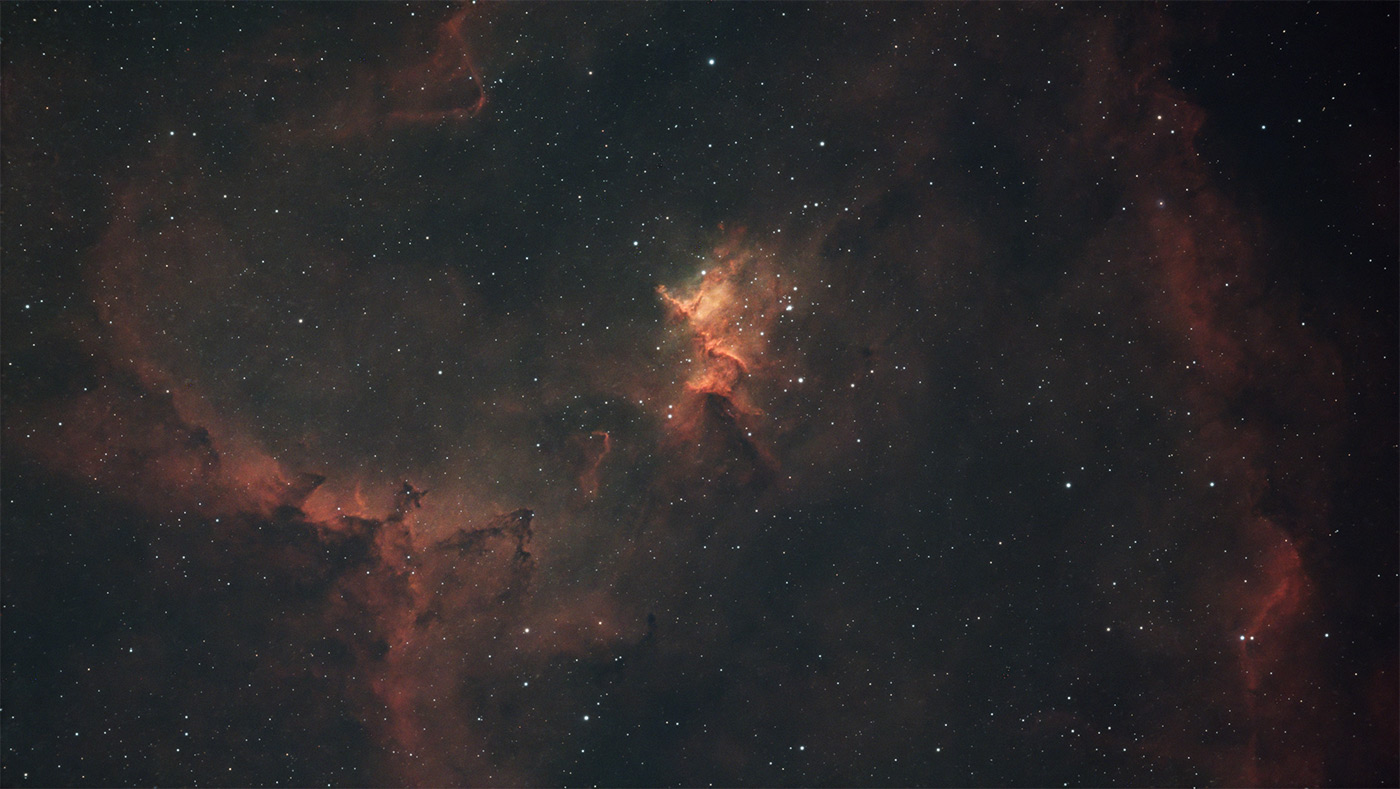
Exif
Camera: ZWO ASI585MC Pro.
Telescope: Altair Astro 70ED Telescope (420mm).
Mount: Sky-Watcher EQ5 Pro
Filter: Optolong L eNhance filter.
Guide Camera: ZWO ASI120mm-s
Guide Scope: SVBony 30mm (f4)
Computer: ZWO ASIAIR pro
Method:
Lights: 48 x 120 sec Gain 252.
Darks: 0
Flats: 0
Bias: 0
Stacked using Weighted Batch Processing and Processed in Pixinsight with RC-Astro Suite of tools.
Share this post:
By Jonathan Penberthy on 25/08/2026

Jonathan Penberthy
Cosmic Shutter Seeker and Star Programmer
Jonathan Penberthy is the Cosmic Shutter Seeker and Star Programmer at Park Cameras, with over 20 years of experience as a software engineer. His career journey has spanned industries, but a move to Park Cameras sparked a passion for astrophotography. Jonathan’s interest began while working on a lens selection app, leading him to explore the night sky with a Canon 7D. When he’s not programming or photographing the stars, he enjoys sailing and navigating by the cosmos. Learn more on his profile page.
Trade in your old equipment
Fast and easy trade in service ensures your old gear is collected efficiently and you are paid quickly! It's very simple to trade in your unwanted photography gear. Just head over to our dedicated Sell or Part Exchange page, fill out the details, and we'll get back to you with an offer for your old gear. Take the cash, or put it towards the cost of your new gear. It's up to you! Find out more
sign up to the newsletter
Keep up to date on the latest photography news, events and offers. Sign up now