XF 100-400mm
Versatile all-rounder
View XF 100-400mm
Call us: 01444 237070
With the September 2026 release of the XF 400mm F4.5 R LM OIS WR, Fujifilm X System users have four super telephoto lenses to choose between.
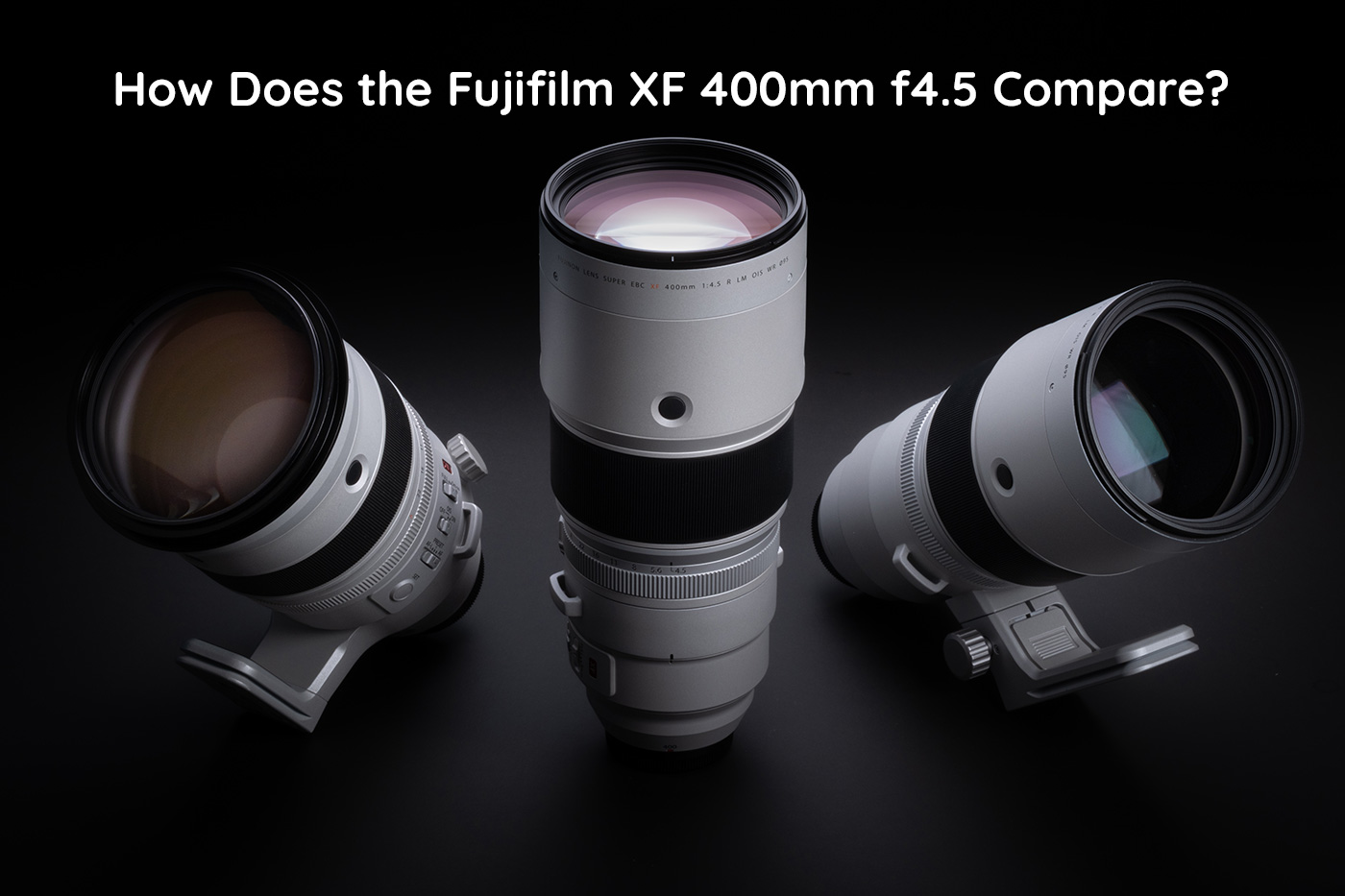
The latest prime combines a number of features that set it apart from the existing options, but how can you tell which is best for your needs? Our guide includes a specifications comparison along with the key features that separate them. We also provide insight into the most suitable subjects and who might benefit from each model.
Let’s begin with a look at pricing for the four lenses included in our comparison.

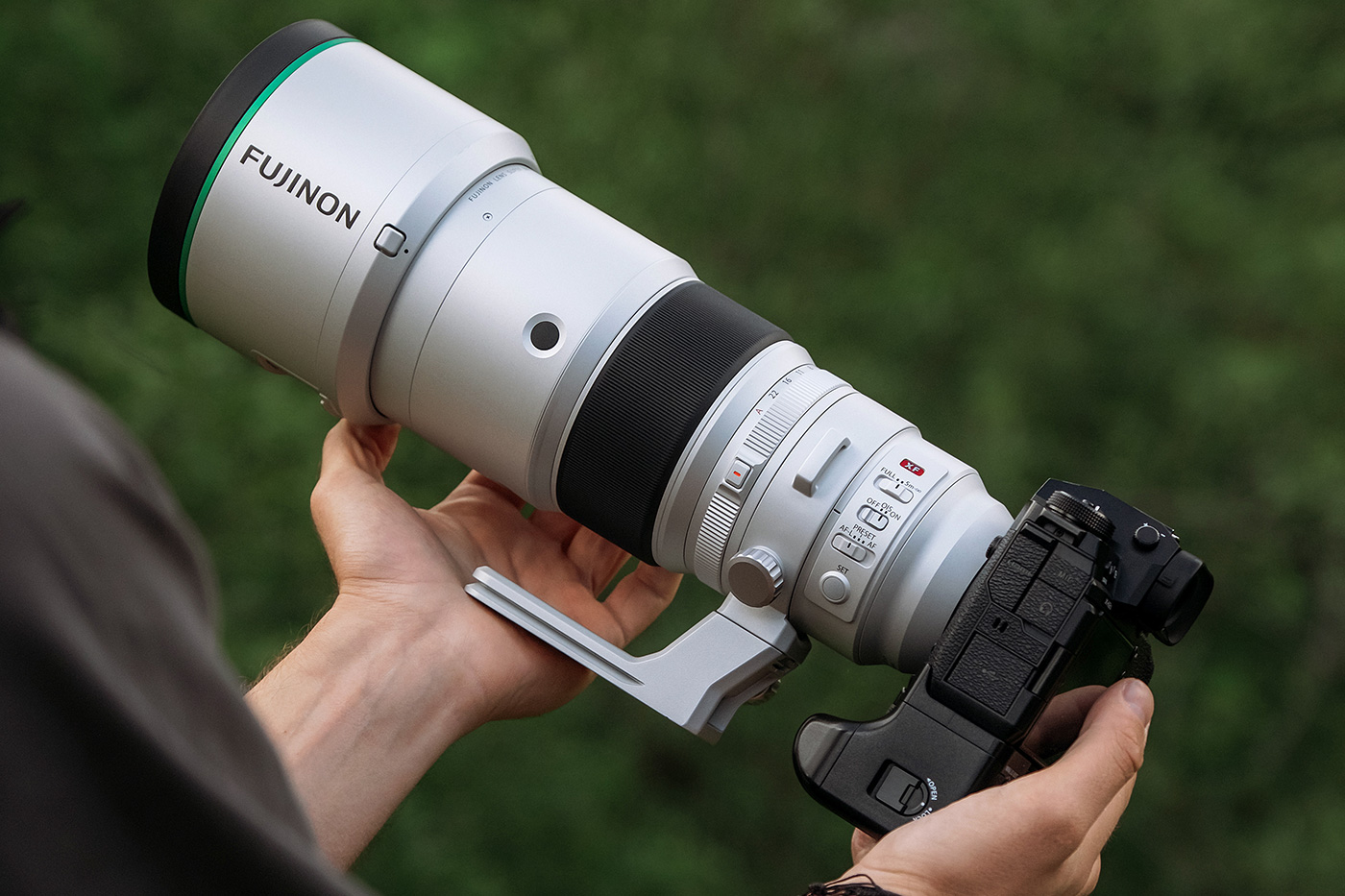
Giacomo De Franchis in the field with the 400mm
With 10 years between them, this table highlights some of the similarities and differences, so you can see how they compare on paper.
| Specification | XF 400mm F4.5 R LM OIS WR | XF 500mm F5.6 R LM OIS WR | XF 150-600mm F5.6-8 R LM OIS WR | XF 100-400mm F4.5-5.6 R LM OIS WR |
|---|---|---|---|---|
| Model number | XF400mmF4.5 R LM OIS WR | XF500mmF5.6 R LM OIS WR | XF150-600mmF5.6-8 R LM OIS WR | XF100-400mmF4.5-5.6 R LM OIS WR |
| Release year | 2026 | 2024 | 2022 | 2016 |
| Type | Prime | Prime | Zoom | Zoom |
| Focal length | 400mm | 500mm | 150-600mm | 100-400mm |
| 35mm equivalent | 609mm | 762mm | 229-914mm | 152-609mm |
| Angle of view | 4.1° | 3.3° | 10.8°-2.7° | 16.2°-4.1° |
| Maximum aperture | F4.5 | F5.6 | F5.6-F8 | F4.5-F5.6 |
| Minimum aperture | F22 | F22 | F22 | F22 |
| Optical construction | 21 elements in 14 groups | 21 elements in 14 groups | 24 elements in 17 groups | 21 elements in 14 groups |
| Special glass | 4 ED, 2 Super ED | 5 ED, 2 Super ED | 3 ED, 4 Super ED | 5 ED, 1 Super ED |
| Aperture blades | 9, rounded | 9, rounded | 9, rounded | 9, rounded |
| Minimum focusing distance | 2.75m | 2.75m | 2.4m | 1.75m |
| Maximum magnification | 0.16x | 0.20x | 0.24x | 0.19x |
| Optical stabilisation | 5.5 stops | 5.5 stops | 5 stops | 5 stops |
| AF drive | Linear motor | Linear motor | Linear motor | Twin linear motors |
| Teleconverter compatibility | XF1.4X TC WR and XF2X TC WR | XF1.4X TC WR and XF2X TC WR | XF1.4X TC WR and XF2X TC WR | XF1.4X TC WR and XF2X TC WR |
| Filter size | 95mm | 95mm | 82mm | 77mm |
| Dimensions | Ø104.5 x 239.5mm | Ø104.5 x 255.5mm | Ø99 x 314.5mm | Ø94.8 x 210.5mm wide / 270mm tele |
| Weight | 1,245g | 1,335g | 1,605g | 1,375g |
| Weather resistant | Yes | Yes | Yes | Yes |
| RRP | £2,499 | £2,899 | £1,899 | £1,699 |
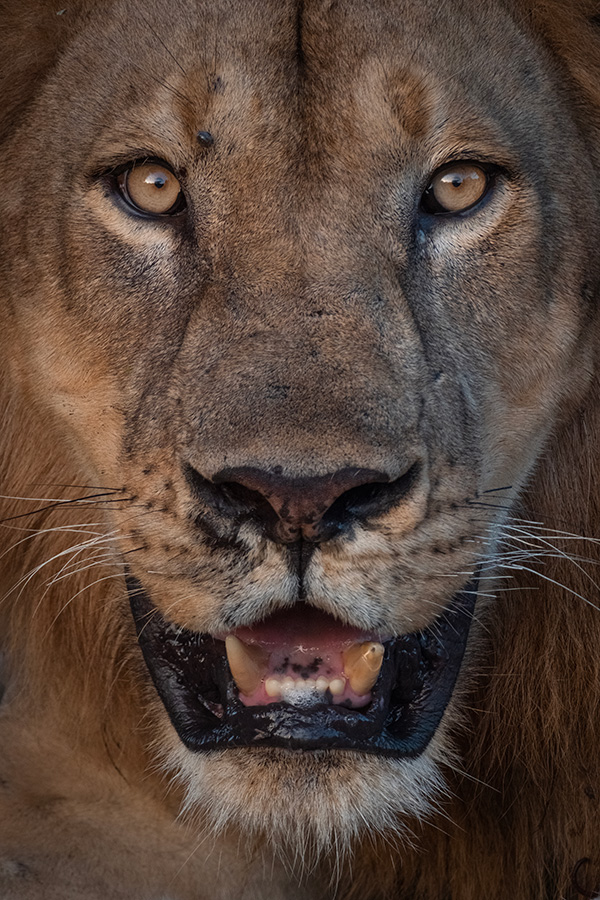
Sample Lion by Ian Dawson with X-H2. Settings: 1/200. f/9. ISO 1600
The 400mm prime also shares the distinctive green ring around the hood seen on the XF500mm F5.6 and earlier XF200mm F2, making these high-end models instantly recognisable to those that know.

Sample Gold Coast Big Waves by Benjamin Charles Trickey. No EXIF data
At 1,245g, it’s 90g lighter than the other prime and 360g lighter than the longest zoom. That’s quite an achievement for a bright super telephoto prime. On top of this, it’s shorter, offers half a stop more stabilisation than two of the others, and includes a number of controls that make shooting smoother. These include Preset Focus Recall, a Focus Control Button and a focus limiter.
There is a trade-off, which is maximum magnification. If you regularly shoot tele-macro or close-ups, the XF 150-600mm zoom is perhaps the most useful option.
The table and interactive guides below reveal which subjects each lens is best suited to. Naturally, there’s plenty of crossover between all four, but each one carves out its own niche thanks to differences in zoom flexibility, weight and reach.
To summarise:
Choose what you photograph to compare the four lenses.
Select a subject to see the ratings.
Versatile all-rounder
Flexible maximum reach
Lightweight action prime
Long-range prime
Here's an old skool table if you prefer
|
Subject |
100-400mm F4.5-5.6 |
150-600mm F5.6-8 |
400 F4.5 |
500mm F5.6 |
|
Birds in flight |
★★☆ |
★★★ |
★★★ |
★★☆ |
|
Small/distant birds |
★☆☆ |
★★★ |
★★☆ |
★★★ |
|
General wildlife |
★★☆ |
★★★ |
★★☆ |
★★☆ |
|
Safari |
★★☆ |
★★★ |
★★☆ |
★☆☆ |
|
Field sports |
★★★ |
★★☆ |
★★★ |
★★☆ |
|
Motorsport |
★★☆ |
★★★ |
★★★ |
★★☆ |
|
Aviation |
★★☆ |
★★★ |
★★★ |
★★★ |
|
Events |
★★★ |
★☆☆ |
★★☆ |
★☆☆ |
|
Press/paparazzi |
★★☆ |
★☆☆ |
★★★ |
★★☆ |
|
Distant landscapes |
★★★ |
★★★ |
★★☆ |
★★☆ |
|
Close-ups |
★★★ |
★★★ |
★☆☆ |
★★☆ |

Sample Gold Coast Surfing by Benjamin Charles Trickey. No EXIF data
If you’re new to the X System or putting together your dream long lens kit, any of these telephoto lenses will give you plenty of options. However, some bodies are better matched than others when it comes to fast-paced action.
The X-H2S and X-H2 are particularly well suited to this kind of demanding photography. The X-H2S is all about speed and subject tracking, while the 40.2MP X-H2 brings additional resolution for capturing fine detail and cropping in tight.
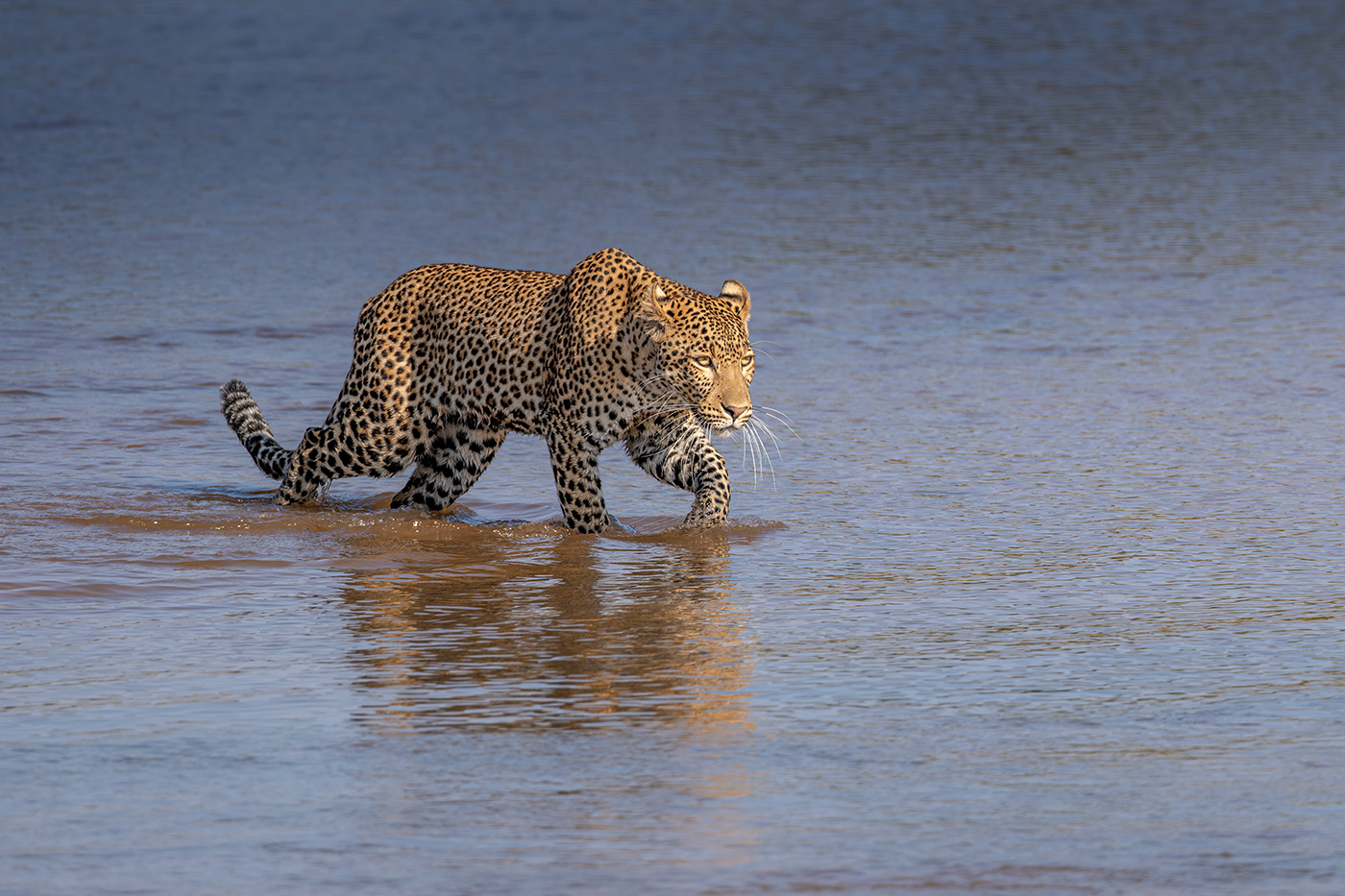
Sample Leopard by Ian Dawson with X-H2. Settings: 1/640. f/4.5. ISO 125
Clearly there's no single definitive choice, and that's rather the point. The original XF 100-400mm remains an incredibly versatile all-rounder, while the XF 150-600mm adds considerably more reach while keeping the flexibility of a zoom.
The XF 500mm F5.6 is a more specialised option, and the newest XF 400mm F4.5 slots neatly in between them with a compelling combination of reach, bright aperture and low weight.
Whichever suits your photography, explore our complete range of Fujifilm X Mount lenses to find the perfect option for your kit.
Share this post:
By Nick Dautlich on 04/09/2026

Nick Dautlich is the Senior Content Writer and Product Reviewer at Park Cameras, with over 15 years of photography experience. A Sony Imaging Professional and expert reviewer, Nick has worked with major brands such as Canon, Sony and Nikon. His work is also featured on Vanguard World UK’s website, Capture Landscapes, and Shutter Evolve. Nick’s photography includes National Trust projects and magazine covers and he is passionate about landscapes and storytelling. Nick also enjoys hiking and teaching his children about nature. Learn more on his profile page.
Trade in your old equipment
Fast and easy trade in service ensures your old gear is collected efficiently and you are paid quickly! It's very simple to trade in your unwanted photography gear. Just head over to our dedicated Sell or Part Exchange page, fill out the details, and we'll get back to you with an offer for your old gear. Take the cash, or put it towards the cost of your new gear. It's up to you! Find out more
Keep up to date on the latest photography news, events and offers. Sign up now