- Call us 01444 237070

-
- Back
- Used Cameras
- Used Accessories
- Used Lenses
- Back
- Used Canon Lenses
- Used Nikon Lenses
- Used Fujifilm Lenses
- Used Sony Lenses
- Used Micro 4/3rds Lenses
- Used Leica Lenses
- Used Panasonic Lenses
- Used Pentax Lenses
- Used Samyang Lenses
- Used Sigma Lenses
- Used Tamron Lenses
- Used Tokina Lenses
- Used Voigtlander Lenses
- Used Zeiss Lenses
- Used Hasselblad Lenses
- Used Video
- Used Film Equipment
- Used Stock Alert
- Used Blank Test
- Sell or Part Exchange
- Used Clearance
- Recently Added Used Equipment
- Park Picks
- Faulty
- Trade-In
- Blog
- New in
- Call us
- Contact us
- Stores
- Sign in
- Categories
- Tips & Inspiration
- Reviews
- News
- Events
- Features
- Buying Guides
- Competitions
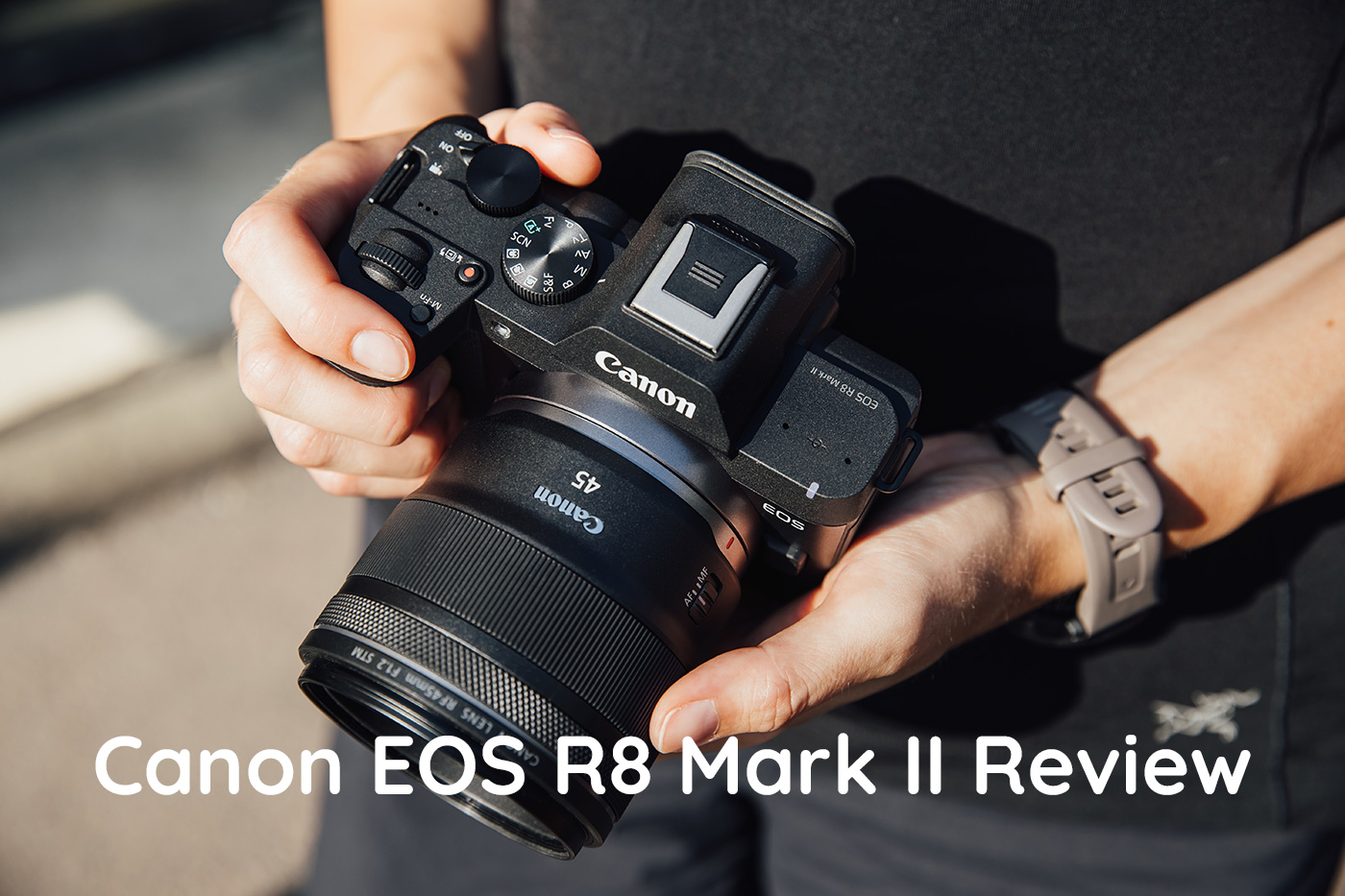
Canon EOS R8 Mark II Review
The original EOS R8 packed a surprising full-frame punch into one of Canon's smallest mirrorless bodies. It was quick, capable and easy to bring, with autofocus and image quality that appealed to photographers and hybrid creators.
Our Canon EOS R8 Mark II review looks at what the next-gen model brings. It is also small, and can do nearly everything.
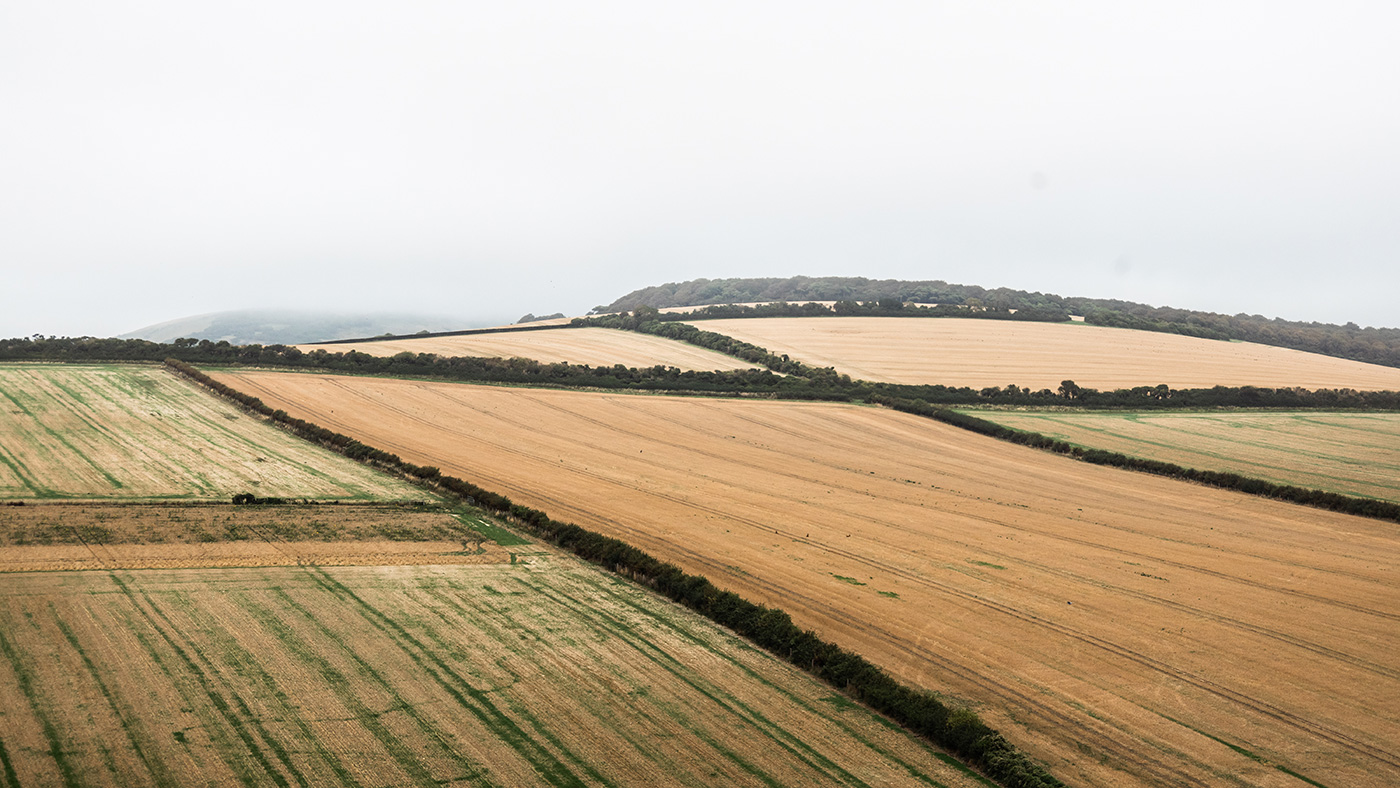
Resolution stays at 24.2MP and top speed is still a blisteringly quick 40fps in electronic shutter mode. There are some major upgrades, however, the most notable of which benefits real-world performance, and is the addition of in-body stabilisation, enhanced AF, pre-continuous shooting and a reworked body that's still small and robust.
Gareth has been hands-on with this model for our review and video, and his overriding impression is that it's very good at everything it can do.
While it may not have the headline specs of an EOS R5 Mark II, it is an excellent compact full-frame camera that's well worth considering for any keen photographer or hybrid creator.
With that in mind, let's find out how much it costs.
How much is it and are there any lens kits?
At launch there's a body-only option and a couple of useful lens kits. The EOS R8 Mark II body-only costs £1729.00, the R8 Mark II with RF 24-105mm F4-7.1 Lens Kit is £2119.00 and the R8 Mark II with RF 45mm F1.2 Lens is £2208.00.
This means that there's something for everyone, whether you already own glass, want a versatile zoom kit or a lightweight and bright prime to get you started.
Specs comparison
This table outlines the most important differences between the two generations, so you can see how these two models look on paper.
|
|
EOS R8 Mark II (new) |
EOS R8 |
|
Sensor |
24.2MP full-frame CMOS |
24.2MP full-frame CMOS |
|
Image processor |
DIGIC X |
DIGIC X |
|
ISO range |
100-102,400, expandable to 50-204,800 |
100-102,400, expandable to 50-204,800 |
|
In-body stabilisation |
5-axis IBIS, up to 7.5 stops centre / 7.0 stops peripheral |
No IBIS, lens IS and Movie Digital IS only |
|
Autofocus |
Dual Pixel CMOS AF II with refined subject tracking and Register People Priority |
Dual Pixel CMOS AF II |
|
Low-light AF |
Down to -7.5 EV |
Down to -6.5 EV |
|
Subject detection |
People, animals and vehicles Dogs, cats, birds and horses Cars, motorbikes, aircraft and trains |
People, animals and vehicles Dogs, cats, birds and horses Cars, motorbikes, aircraft and trains |
|
People detection |
Eye, face, head and body + Register People Priority |
Eye, face, head and body |
|
Electronic burst |
Up to 40fps |
Up to 40fps |
|
Electronic 1st-curtain burst |
Up to 6fps |
Up to 6fps |
|
Pre-continuous shooting |
20 frames at 40fps, covering the previous 0.5 sec |
RAW Burst at 30fps, covering up to the previous 0.5 sec |
|
Electronic shutter |
Up to 1/16,000 sec |
Up to 1/16,000 sec |
|
Electronic-shutter buffer |
Approx. 190 JPEG / 73 RAW |
Approx. 120 JPEG / 56 RAW |
|
Video resolution |
4K UHD up to 60p |
4K UHD up to 60p |
|
4K capture |
6K oversampled |
6K oversampled |
|
Slow motion |
Full HD up to 180p |
Full HD up to 180p |
|
Canon Log |
Canon Log 3 |
Canon Log 3 |
|
HDR video |
PQ / HLG via Custom Picture |
HDR PQ |
|
Audio |
Up to four-channel audio |
Stereo / compatible external audio |
|
Focus breathing correction |
Yes, with compatible lenses |
Yes, with compatible lenses |
|
USB streaming / video calls |
Up to 4K/60p via UVC/UAC |
Webcam support |
|
EVF |
2.36m-dot OLED, 0.70x, up to 120fps |
2.36m-dot OLED, 0.70x, up to 120fps |
|
Rear screen |
3.0-inch vari-angle touchscreen, 1.62m dots |
3.0-inch vari-angle touchscreen, 1.62m dots |
|
Memory card |
1x UHS-II SD |
1x UHS-II SD |
|
Card access |
Dedicated side compartment |
Battery compartment |
|
Wi-Fi |
2.4GHz / 5GHz |
2.4GHz |
|
Bluetooth |
5.3 |
4.2 |
|
USB |
USB 3.2 Type-C |
USB 3.2 Type-C |
|
Mic / headphones |
3.5mm / 3.5mm |
3.5mm / 3.5mm |
|
HDMI |
Micro HDMI Type D |
Micro HDMI Type D |
|
Multi-function shoe |
Yes, 21-pin + 5-pin |
Yes, 21-pin + 5-pin |
|
AF Multi-controller |
Yes |
No |
|
Battery |
LP-E17 |
|
|
Battery life |
Approx. 220 EVF / 340 LCD |
Approx. 220 EVF / 370 LCD |
|
Weather resistance |
Yes |
Yes |
|
Dimensions |
131.4 x 90.0 x 79.7mm |
132.5 x 86.1 x 70.0mm |
|
Weight with battery/card |
Approx. 546g |
Approx. 461g |
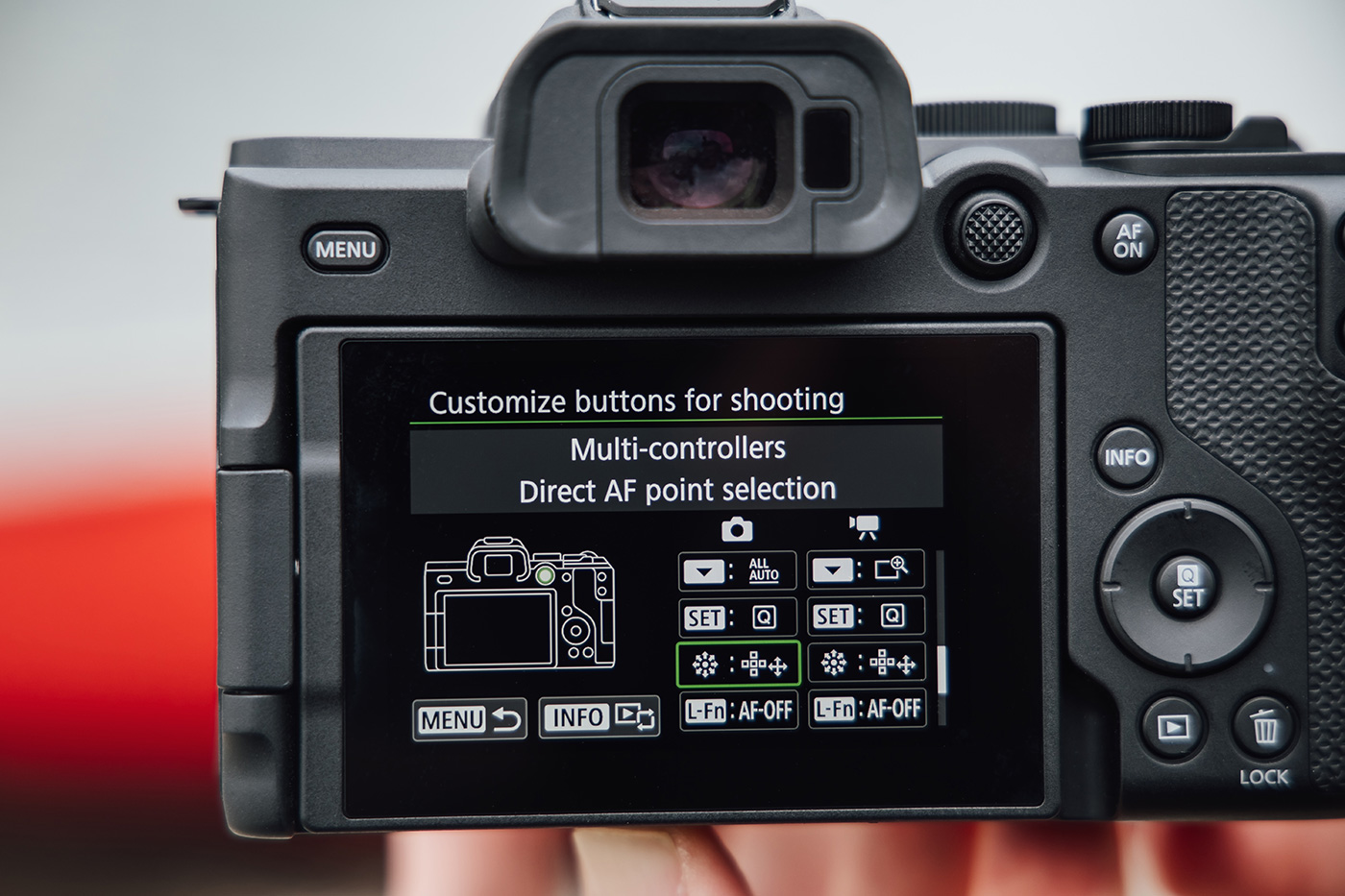
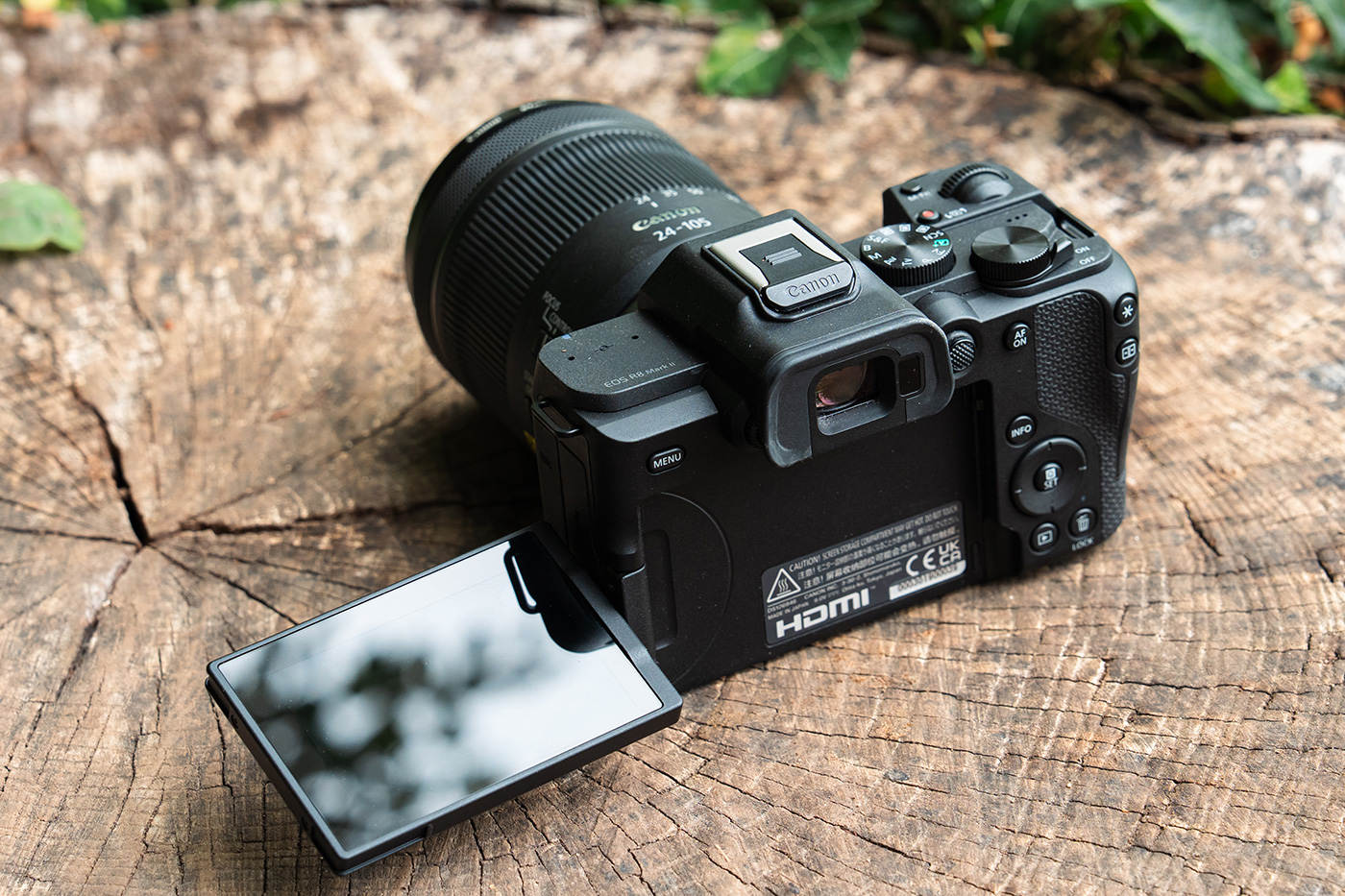
These specifications show what's been updated, but they don't tell you that Canon has also reworked the body quite extensively. It's still a compact full-frame design, but now sports a deeper grip, a dedicated AF Multi-controller, and dedicated side-access to the memory card compartment.
Those ergonomic changes are a real improvement over the original, and Gareth noted that it feels very solid and reliable in the hands. There's also a dedicated EG-E2 Extension Grip, which extends the base for more purchase while still leaving access to the battery chamber. Some users prefer the extra grip, while others like to keep things as light as possible. It really comes down to personal preference, but at 546g there's certainly room to grow while still staying lightweight.
Where does the R8-series fit in the range?
It occupies an interesting spot in the EOS R line-up. It’s a mid-level full-frame option that packs way more punch than it appears at first glance. The series is aimed at creators who want a lightweight, portable setup, who want great results without necessarily diving into complicated menus, and who need to create compelling content with better image quality than any current phone can offer.
It's clearly for photographers who want more than an entry-level body, while staying smaller and easier to use than cameras further up the range.
The addition of in-body stabilisation, improved controls and more capable autofocus removes several of the reasons why an enthusiast might otherwise have looked at the R6 line-up instead.
That said, there are still distinctions. The R6 Mark II is a more substantial body with dual card slots, while the newer R6 Mark III has a 32.5MP sensor and more advanced video including 7K RAW.
The R8 Mark II, though, is a much more complete all-rounder than the first model.
Build and handling
Gareth felt the design was better overall. The body is slightly larger and heavier than before, but it's still a genuinely lightweight full-frame camera.
The deeper grip is noticeably more comfortable in the hand, and the new AF Multi-controller brings direct focus-point selection to the rear. The top controls have been rearranged too, and the SD card now has its own side-access compartment rather than sharing space with the battery underneath.
It's still lightweight and portable, but now it's all grown up.
How has the Autofocus changed?
Autofocus was one of the first generation's strengths, so this is a case of improving on an already powerful system. Dual Pixel CMOS AF II is now on board, making focus easier to control and more dependable in difficult situations. It covers virtually the entire frame, with user-selectable AF zones so you can track a subject more tenaciously.
Low-light sensitivity goes down to -7.5 EV, and Register People Priority lets you choose which person should take precedence when several faces appear in frame. Tracking has been refined too, which helps when subjects are momentarily obscured or moving unpredictably.
The addition of an AF Multi-controller also gives you a much faster way to position the focus point while looking through the viewfinder. The original relied on cross keys or Touch and Drag AF for manual positioning, so this is a welcome upgrade for quicker AF.
It’s gone from reliable AF to super reliable AF, which is good news whatever type of content you create.
What types of content is this good for?
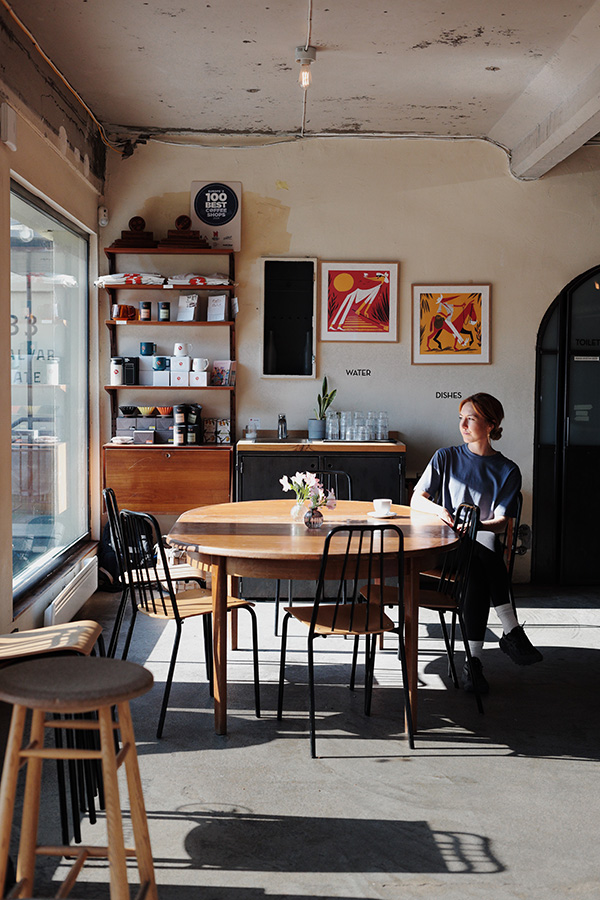
This is definitely a hybrid all rounder, so it has you covered for vlogging and storytelling. The 3-inch vari-angle touchscreen faces forward, and face/eye tracking with Movie Servo AF keeps focus locked on when you're in front of the lens, while Movie Digital IS supplements the physical stabilisation for handheld shots.
- For short-form and social content, it supports movie rotation information, which helps orientate vertically shot footage, though there isn't dedicated vertical-video found on models like the R50 V or R6 V.
- Livestreaming is core. Wi-Fi enables streaming through Camera Connect and Live Switcher Mobile, and USB UVC/UAC supports 4K/60p, 4K/30p, Full HD/60p and Full HD/30p for calls and streams, which is a substantial upgrade from the previous Full HD/30p webcam mode.
- 2.4GHz and 5GHz Wi-Fi plus Bluetooth handle wireless transfers and remote control, with automatic backups available via image.canon.
- Creative looks come courtesy of Filmtone Colour Filters, Picture Styles, scene-based colour modes, Custom Picture and Look File/LUT support. This means you can create everything from an in-camera look to a colour grading workflow, depending on your level.
- 40fps burst shooting and pre-continuous capture handle action, and for more advanced filmmaking you get oversampled 4K/60p, FHD/180p, Canon Log 3, HDR, four-channel audio, 2.35:1 Cinema View, breathing correction and external mic/headphone support.
It's a breathless list because this really is a very capable hybrid.
In terms of connectivity, unfortunately there's no full-sized HDMI port, but it does have a Micro HDMI Type D, which can output 4K up to 60p to an external monitor. When Canon Log 3/HDR PQ is enabled, HDMI can also output YCbCr 4:2:2 10-bit to a compatible monitor.
There's a 3.5mm microphone input for an external mic, a 3.5mm headphone output for monitoring, and a Multi-function shoe.

Stabilisation
Where the original needed lenses for optical stabilisation, now you benefit from IBIS, or in-body image stabilisation, at the sensor level.
That makes a difference whether shooting with a small unstabilised prime or a longer telephoto that shows shake really easily at longer lengths.
It means you can lower your ISO and still shoot handheld at slower shutter speeds, and the difference is appreciable if you're coming from an unstabilised body, especially in low light.
Video benefits from IBIS, with physical stabilisation that works with lens IS (where supported), and Movie Digital IS is available when you really need the smoothest footage possible.
IBIS obviously helps with image quality, which is what we look at next.
How is image quality?
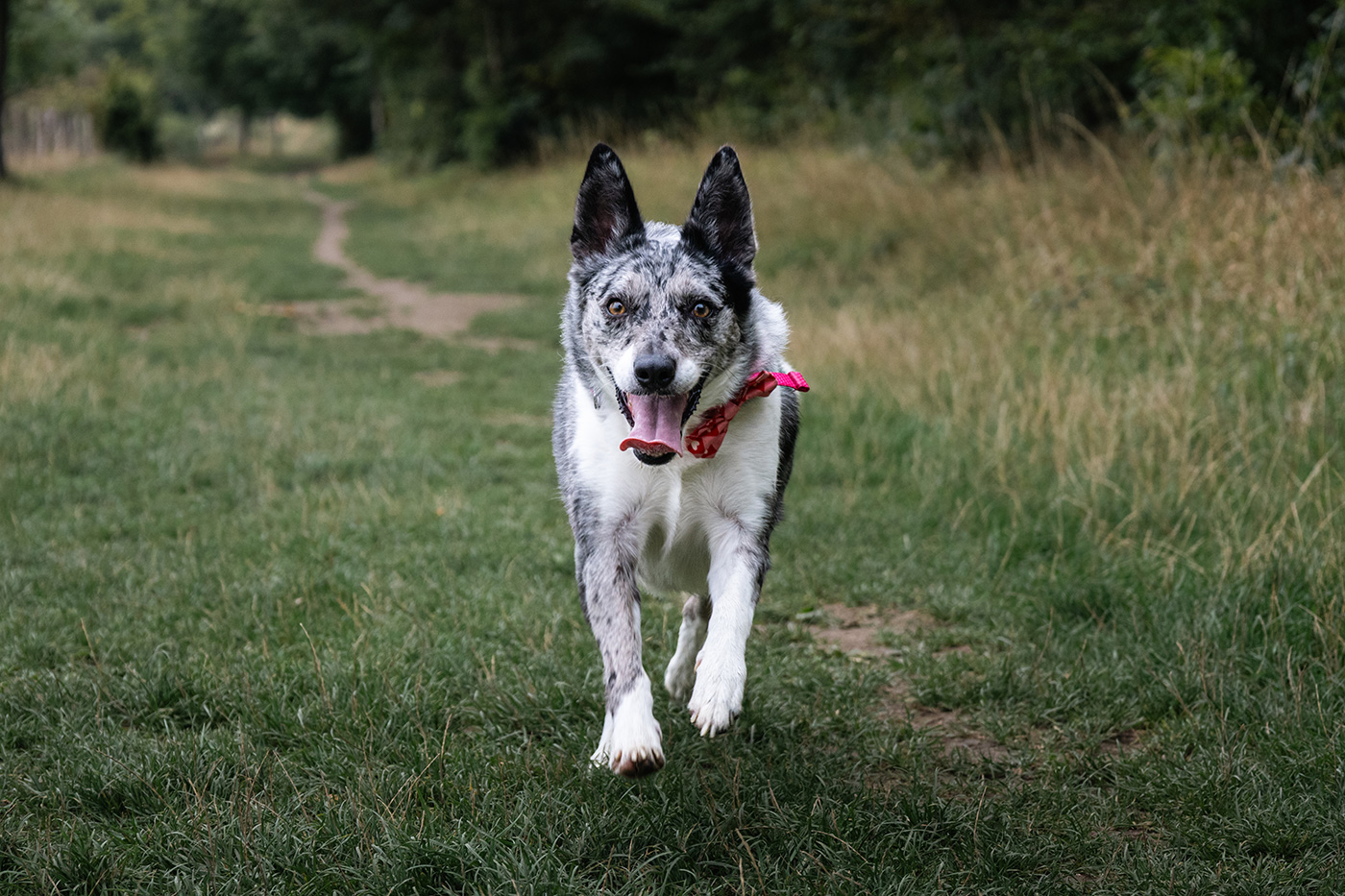
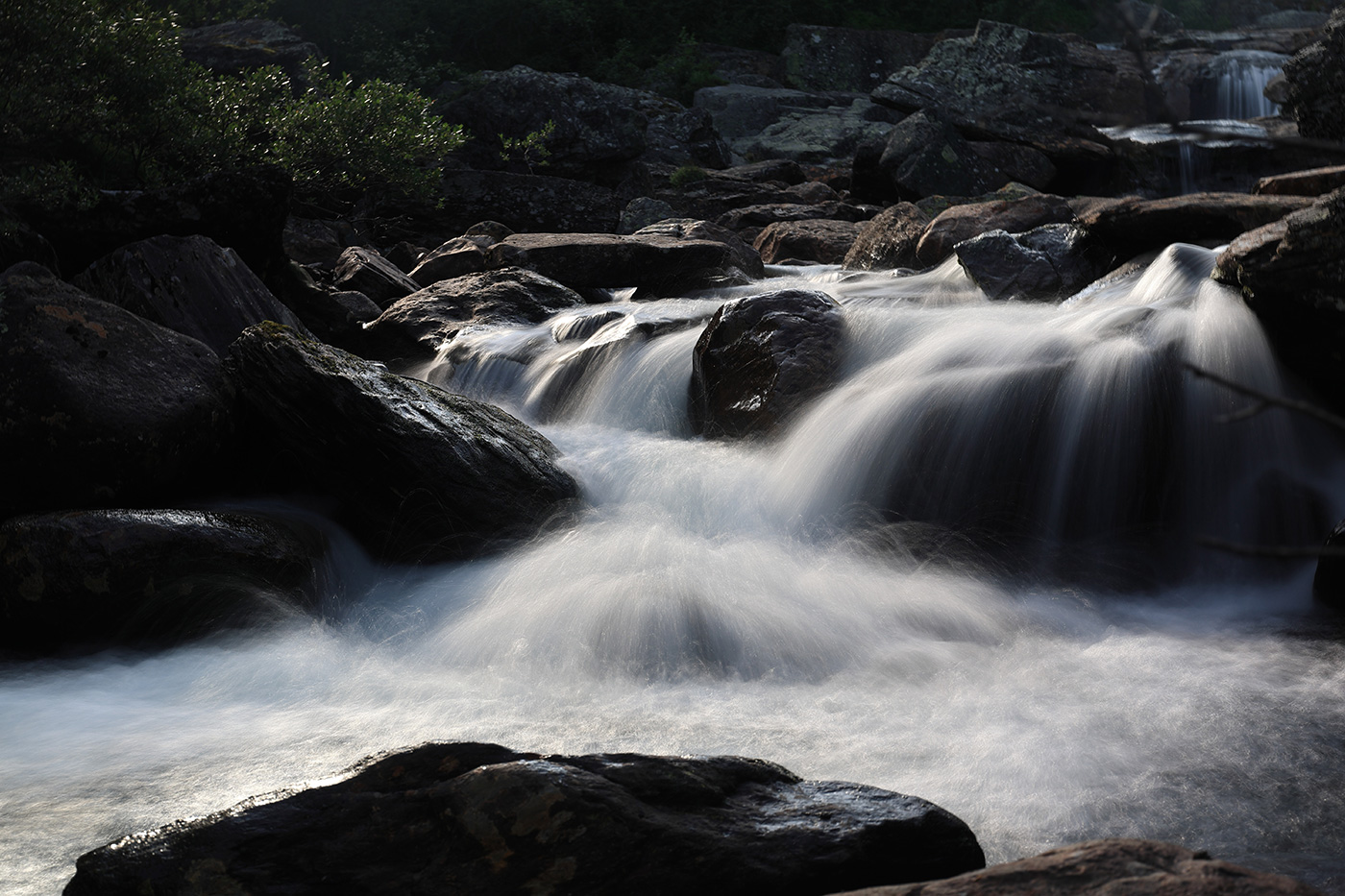
24.2MP is still a sweet spot for an all-rounder like this. That's enough resolution to capture anything from landscapes to portraits and be able to crop some when needed.
Photos can be captured in 14-bit RAW and C-RAW, which are both malleable for post-processing, and native ISO is 100 to 102,400, so it works in a wide range of lighting conditions. If you'd rather not edit, you can shoot in HDR PQ / 10-bit HEIF and apply your own look before sharing.
It's more than good enough for moviemaking too, with 4K/60p oversampled from 6K, 10-bit and Log 3 for grading.
Which accessories are there?
-
The EG-E2 Extension Grip adds extra height to the body for a more solid grip, particularly with larger lenses.
- A new Canon Speedlite EL-5 Flash Version 2 is a flash for portraits, events and controlled lighting, with fast recycling and wireless flash capability.
Who is the EOS R8 Mark II for?
This is a good choice for anyone who wants more than an entry-level camera gives, and sees the benefits of full-frame but doesn't want a bigger, more expensive body.
It's ideal for hybrid creators who shoot stills photography, travel content, social and livestream.
A beginner can develop with it, and enthusiasts are likely to find it inspiring. It isn't trying to be a flagship, it's just very good at a broad range of things, including paid work, if that's your thing.
Explore the mirrorless EOS R range to compare the lineup and find the right one for your content creation.
Share this post:
By Park Cameras on 16/09/2026
Trade in your old equipment
Fast and easy trade in service ensures your old gear is collected efficiently and you are paid quickly! It's very simple to trade in your unwanted photography gear. Just head over to our dedicated Sell or Part Exchange page, fill out the details, and we'll get back to you with an offer for your old gear. Take the cash, or put it towards the cost of your new gear. It's up to you! Find out more
sign up to the newsletter
Keep up to date on the latest photography news, events and offers. Sign up now