- Call us 01444 237070

-
- Back
- Used Cameras
- Used Accessories
- Used Lenses
- Back
- Used Canon Lenses
- Used Nikon Lenses
- Used Fujifilm Lenses
- Used Sony Lenses
- Used Micro 4/3rds Lenses
- Used Leica Lenses
- Used Panasonic Lenses
- Used Pentax Lenses
- Used Samyang Lenses
- Used Sigma Lenses
- Used Tamron Lenses
- Used Tokina Lenses
- Used Voigtlander Lenses
- Used Zeiss Lenses
- Used Hasselblad Lenses
- Used Video
- Used Film Equipment
- Used Stock Alert
- Used Blank Test
- Sell or Part Exchange
- Used Clearance
- Recently Added Used Equipment
- Park Picks
- Faulty
- Trade-In
- Blog
- New in
- Call us
- Contact us
- Stores
- Sign in
product
BX1
Call us: 01444 237070
Search terms
Brands
Category
Products
[[{name}]]
[[{attributes.Price}]]
- Categories
- Tips & Inspiration
- Reviews
- News
- Events
- Features
- Buying Guides
- Competitions
Panasonic Lumix SHX1 vs S1 II Box Cinema or Mirrorless Hybrid
Five years on from the original BS1H, and Panasonic returns to the box-camera format with the SHX1. Full-frame filmmakers now face a tougher choice. Do you build your setup around a modular cinema box, or stay with an all-in-one hybrid like the flagship-class Lumix S1 II?
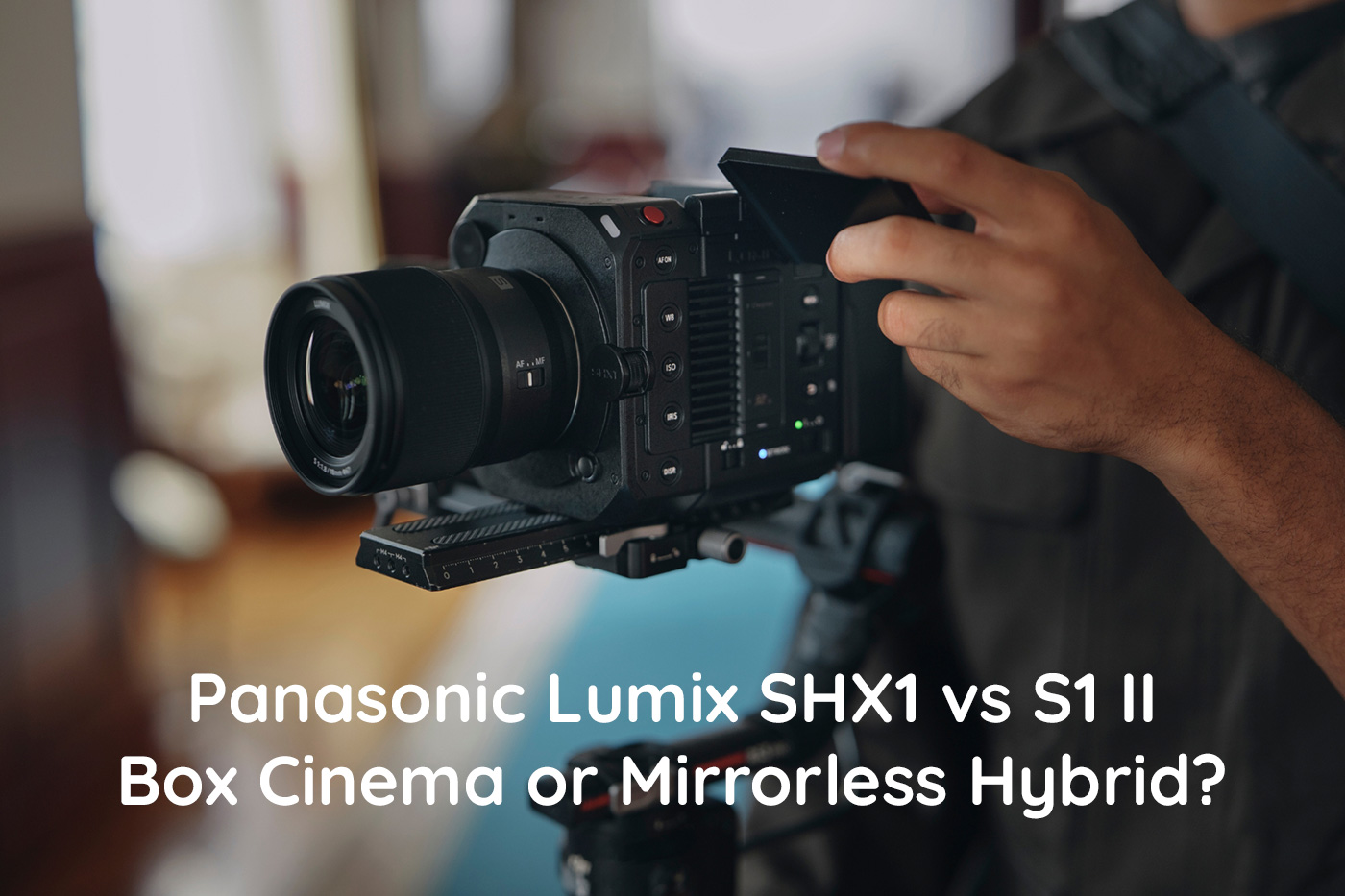
The SHX1 develops the box-format line with 6K open-gate recording, Phase Hybrid autofocus, in-body stabilisation and a built-in touchscreen, alongside pro-AV connections. However, the S1 II offers much of the same core capability while combining photography and video in a more familiar mirrorless system.
Drawing from official specifications, this buying guide compares features, rigging options and setup costs to help you choose the right L-Mount video camera for your workflow.
Price and Kit Options
Choosing between these two highlights a significant price gap, especially once you factor in pro audio accessories:
- Lumix SHX1 Body Only: £4,399.00
- Lumix SHX1 + Grip & XLR Handle Kit: £4,999.00 (saves £368 compared with buying the £419 grip and £549 AU-XHU1 handle separately)
- Lumix S1 II Body Only: £2,899.00 (£1,500 less than the SHX1)
- Lumix S1 II + DMW-XLR2 XLR Adapter: £3,398.00 (£1,601 less than the SHX1 XLR kit, though there’s no top handle)
Because the S1 II already has a built-in handgrip, going the hybrid route frees up between £1,500 and £1,601 for lenses, lighting, microphones, or CFexpress media, the latter of which can be pricey at the moment.
With so much overlapping technology, what does the box camera’s higher price actually get you? To answer we look at how each fits into a production setup.
Two Distinct Approaches to Video Production
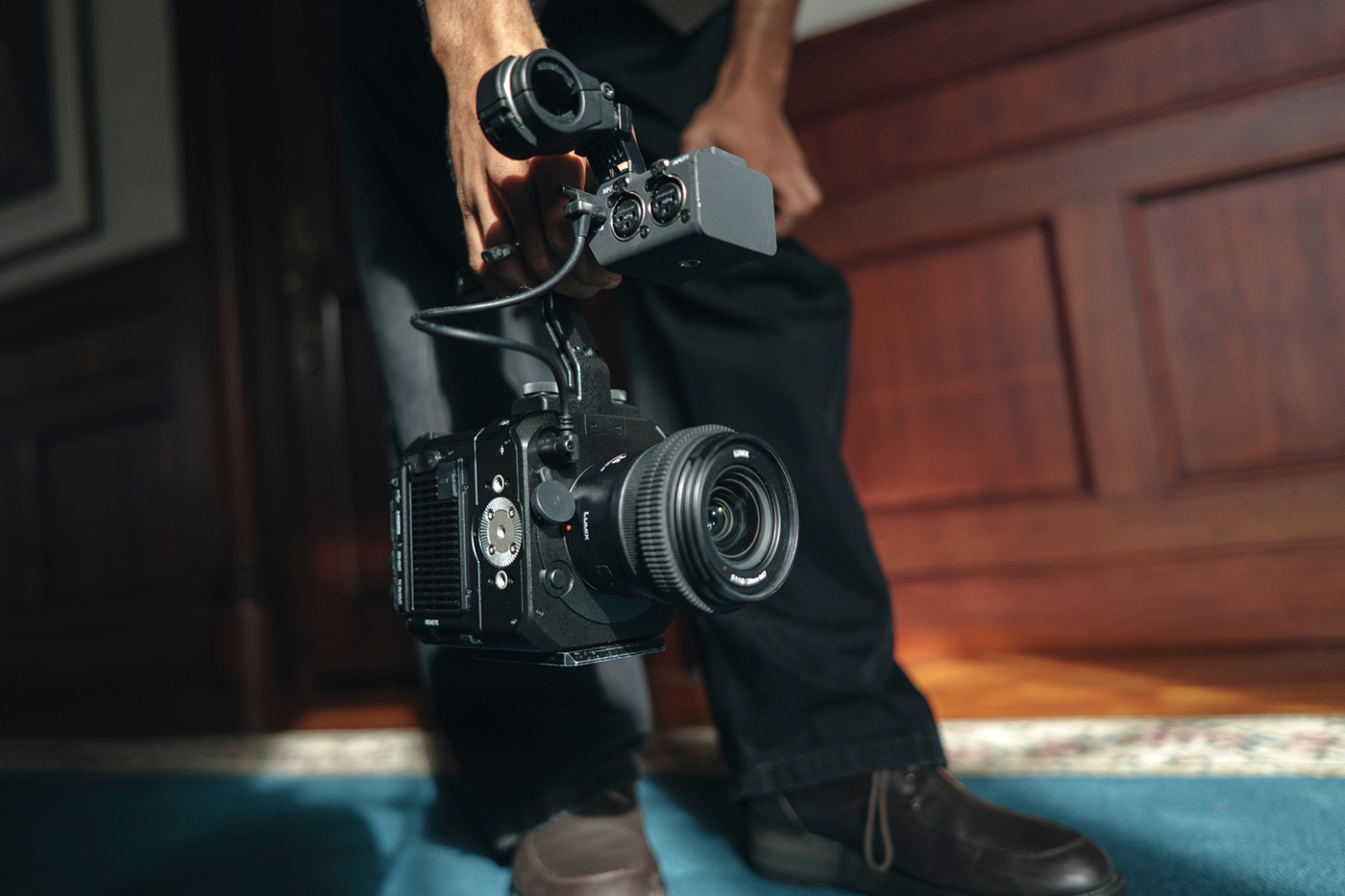
These two approach video production from different starting points. Both full-frame 6K open-gate recording, hybrid autofocus and in-body stabilisation, so the distinction lies elsewhere.
The SHX1 puts filmmaking and production connections into an expandable box-style body, while the S1 II combines video recording with photography in a conventional mirrorless design. Although both can be rigged out, the SHX1’s chassis includes direct mounting points, reducing the need for a third-party cage, while giving you the option to add a dedicated grip and XLR handle unit.
The table below compares key differences.
|
Feature |
Lumix SHX1 (Box-style) |
Lumix S1 II (Hybrid mirrorless) |
|
Body and handling |
Box-style body; separate grip and XLR top handle available |
Mirrorless body with integrated handgrip and electronic viewfinder |
|
Photography |
Designed for video production |
24.1MP RAW and JPEG photography alongside video |
|
ARRI LogC3 |
Supported out of the box |
Requires optional DMW-SFU3A activation key and compatible firmware |
|
Blackmagic RAW |
Records directly to an external USB SSD |
Requires a compatible external HDMI recorder |
|
Production connections |
12G-SDI, full-size HDMI and BNC timecode IN/OUT |
Full-size HDMI, HDMI timecode output and Bluetooth timecode sync |
|
32-bit float audio |
Supported in MOV with a 3.5mm mic or optional AU-XHU1 handle |
Supported in MOV with the optional DMW-XLR2 adapter |
|
Power |
Micro V-Mount battery support; USB-C PD at 20V/5A |
DMW-BLK22 battery; USB-C power supply and charging |
|
Live production |
Built-in streaming; optional AU-LPU1 adds Genlock, PoE++ LAN and IP video/control |
Built-in USB-tethered and Wi-Fi streaming |
|
Body weight |
Approx. 984g (body only) |
Approx. 718g (body only) |
Shared Capabilities
Both offer the same core imaging and stabilisation, including:
- 24.1MP full-frame imaging on the L-Mount
- Up to 15 stops of dynamic range in V-Log with Dynamic Range Boost
- 6K up to 30p and 5.1K up to 60p open-gate recording
- Cinema 4K / UHD 4K up to 120p
- Internal ProRes and ProRes RAW recording
- Phase Hybrid AF with subject detection and tracking
- 5-axis in-body stabilisation with Dual I.S. 2 support
- 3-inch tilt free-angle touchscreen
- Dual card slots (one CFexpress Type B and one SDXC)
Which Should You Buy?
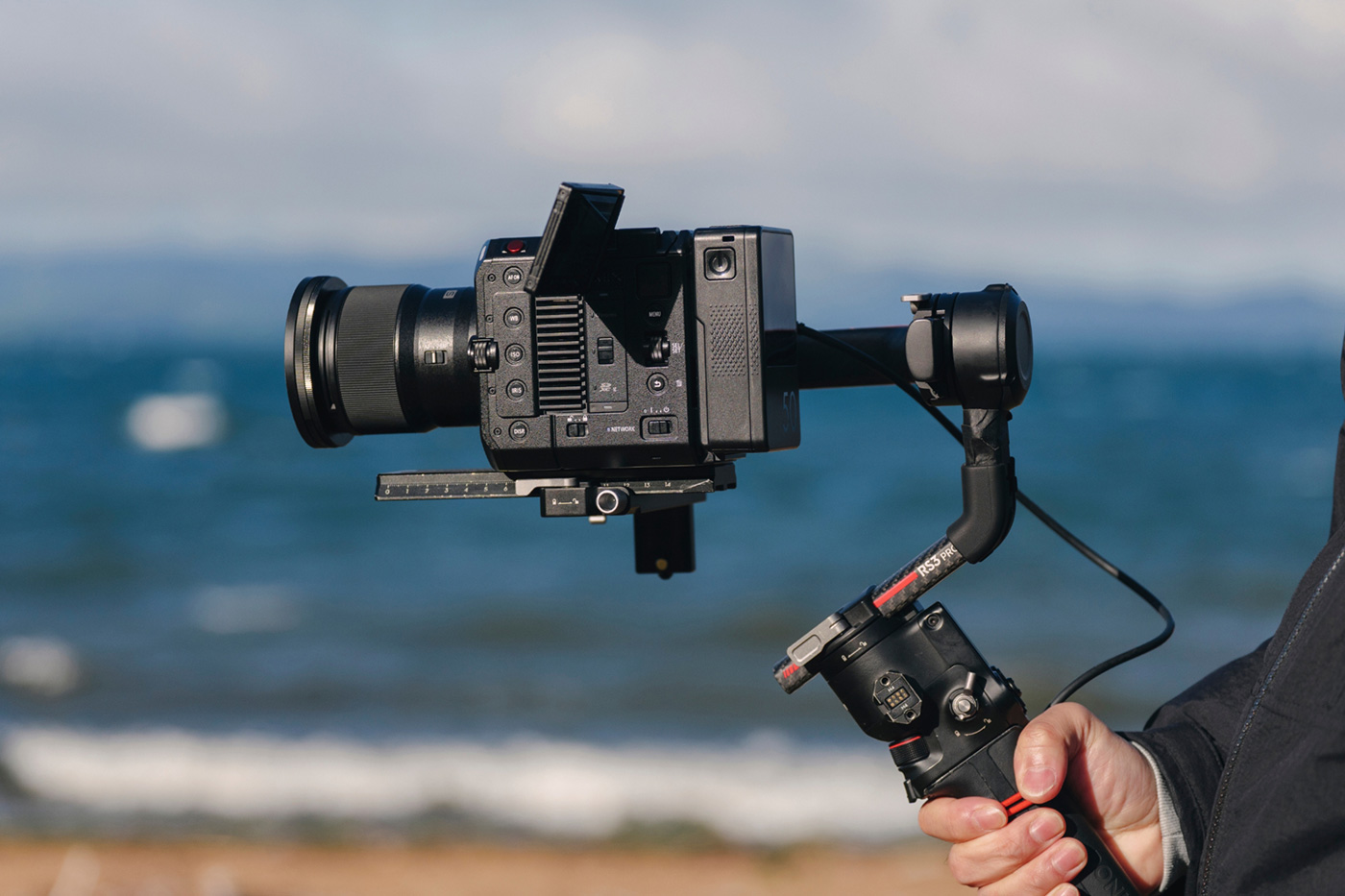
The decision revolves around how you want to rig or connect your kit.
Choose the Lumix SHX1 if you need to incorporate it into a dedicated, expandable cinema or multi-camera workflow. 12G-SDI, BNC timecode, Micro V-Mount power, Blackmagic RAW recording to SSD, and optional Genlock and PoE++ expansion bring tangible advantages for productions, that will justify the extra spend to target users.
Choose the Lumix S1 II if you want a versatile hybrid body for video and stills. You still get many of the headline video specs, plus a built-in viewfinder, handgrip, and save £1,500 at RRP to boot. That leaves you budget available for some video-centric L-Mount lenses, audio, or lighting.
Panasonic’s series of five full-frame 18mm–85mm F1.8 prime series are especially well regarded with video features that include uniform sizing and balance, shared filter thread sizes and minimised focus breathing.
Whichever you choose, these are both compelling options for video-first creators, with access to an expansive lens and accessory ecosystem for pro-video content creation. Explore our professional cinema camera range here, or browse LUMIX Mirrorless Cameras if that’s your preferred setup.
Share this post:
By Nick on 17/11/2026

Trade in your old equipment
Fast and easy trade in service ensures your old gear is collected efficiently and you are paid quickly! It's very simple to trade in your unwanted photography gear. Just head over to our dedicated Sell or Part Exchange page, fill out the details, and we'll get back to you with an offer for your old gear. Take the cash, or put it towards the cost of your new gear. It's up to you! Find out more
sign up to the newsletter
Keep up to date on the latest photography news, events and offers. Sign up now