- Call us 01444 237070

-
- Back
- Used Cameras
- Used Accessories
- Used Lenses
- Back
- Used Canon Lenses
- Used Nikon Lenses
- Used Fujifilm Lenses
- Used Sony Lenses
- Used Micro 4/3rds Lenses
- Used Leica Lenses
- Used Panasonic Lenses
- Used Pentax Lenses
- Used Samyang Lenses
- Used Sigma Lenses
- Used Tamron Lenses
- Used Tokina Lenses
- Used Voigtlander Lenses
- Used Zeiss Lenses
- Used Hasselblad Lenses
- Used Video
- Used Film Equipment
- Used Stock Alert
- Used Blank Test
- Sell or Part Exchange
- Used Clearance
- Recently Added Used Equipment
- Park Picks
- Faulty
- Trade-In
- Blog
- New in
- Call us
- Contact us
- Stores
- Sign in
- Categories
- Tips & Inspiration
- Reviews
- News
- Events
- Features
- Buying Guides
- Competitions
Wildlife Photography the Best Sony Cameras and Lenses
Wildlife photography rewards patience, timing and the ability to react quickly, whether you’re working in the countryside or capturing local wildlife closer to home. The right camera and lens can make a real difference when subjects are distant, unpredictable or fast moving.
Sony has built a particularly strong system for this type of work, with fast autofocus, rapid burst shooting, portable bodies and a wide choice of telephoto options across the E-Mount range.
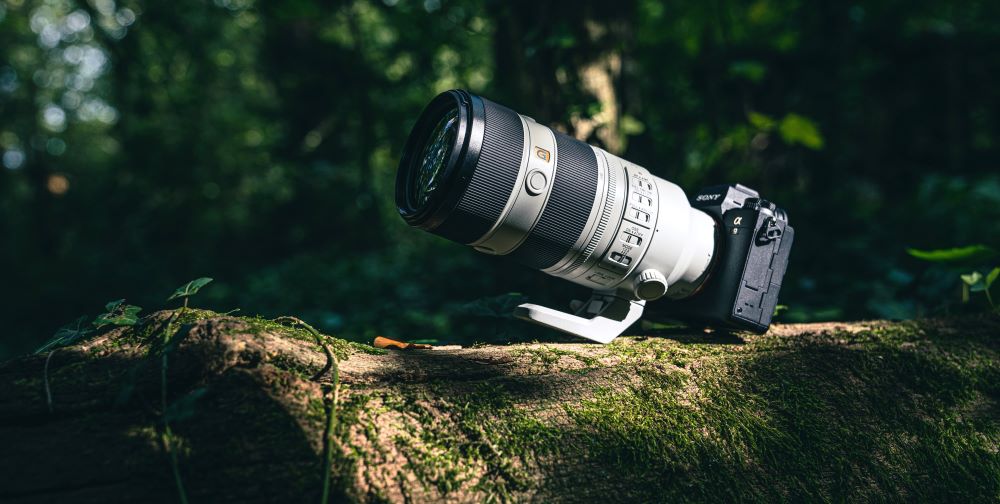
Whether you’re just getting started or upgrading an established setup, the following features are worth considering when choosing equipment for unpredictable and fast-moving subjects.
What Features Are MOst Important?
Resolution affects both detail and how much freedom you have to crop, which can be particularly useful when a subject is too distant to fill the frame. Higher resolution isn’t essential, however, and needs to be balanced against speed and overall performance.
Autofocus is equally important when movement is unpredictable. Modern subject recognition and tracking can identify animals and birds, maintain focus as they move through the frame and reduce the need for constant manual intervention.
Continuous shooting, sensor readout and processing speed also become important for fast action, helping to capture brief moments such as birds in flight or sudden changes in behaviour.
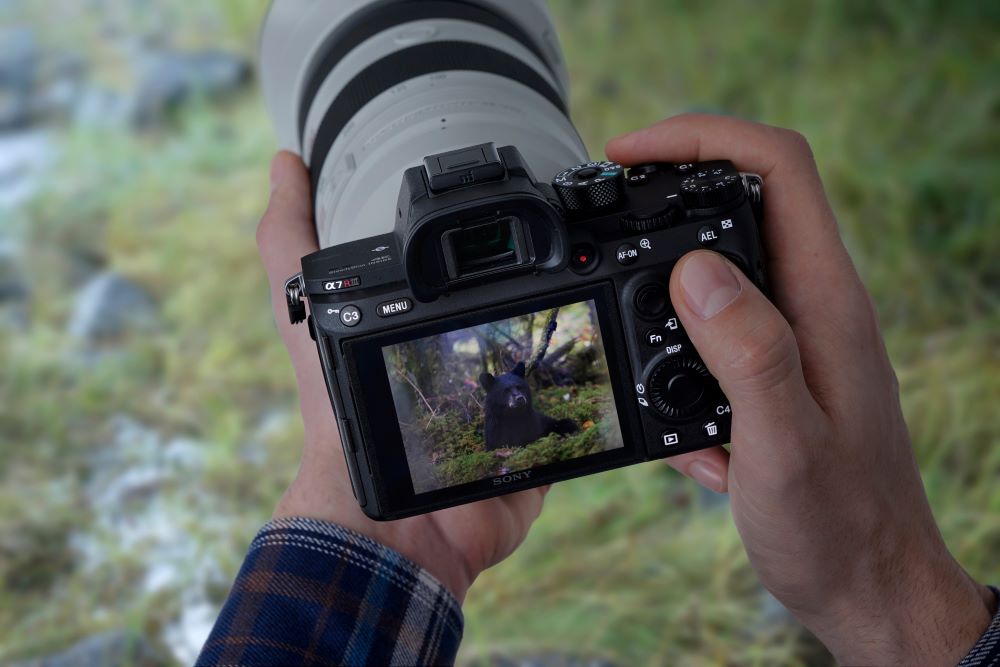
Our Top Selections
The Alpha range includes options at several price points, with subject recognition, tracking and fast continuous shooting available across much of the current line-up. There is also an extensive choice of compatible glass, including the accessible FE 200-600mm F/5.6-6.3 G OSS for subjects that require significant reach.
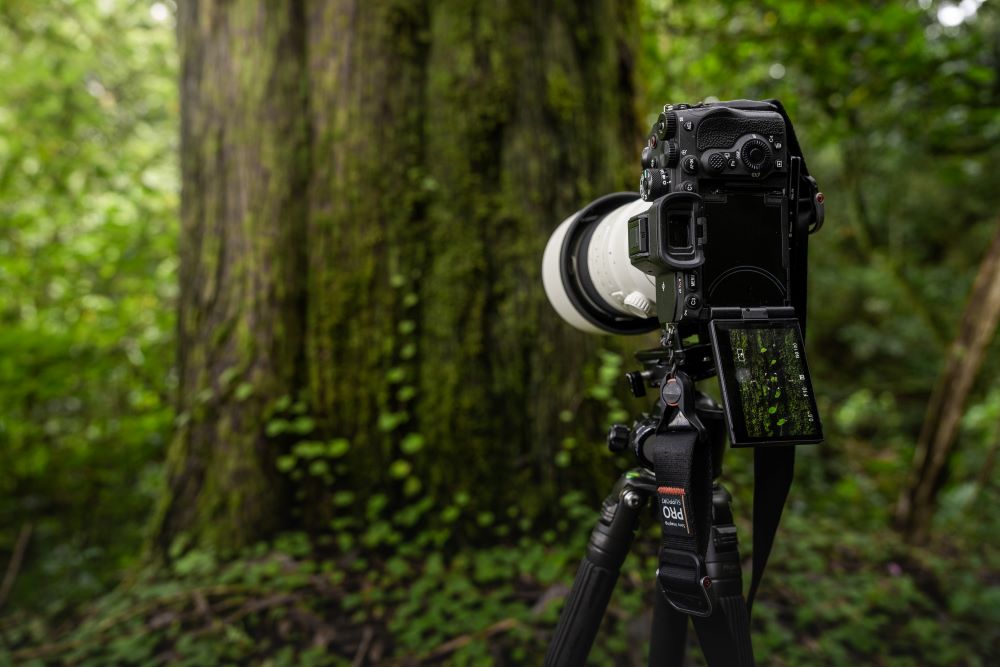
There are strong choices at several price points, including previous-generation models available through our used Sony range. Our current recommendations are:
- A7 V: launched at the end of 2025, this is probably the best wildlife camera for most Sony users right now. It delivers around 90% of what the A1 II offers at a considerably lower price, with 33MP RAW shooting at up to 30fps, blackout-free viewing, pre-capture, a partially stacked sensor and AI-based subject recognition and tracking. It’s good, really good.
- A9 III: the specialist choice when outright speed takes priority. Its full-frame global shutter virtually eliminates rolling-shutter distortion, while blackout-free shooting at up to 120fps and shutter speeds to 1/80,000 sec provide extraordinary scope for capturing extremely fast action.
- A7R VI: the high-resolution choice no longer comes with the same compromise in speed. Its 66.8MP fully stacked sensor provides exceptional detail and considerable freedom to crop distant subjects, while supporting blackout-free bursts at up to 30fps with AF/AE tracking. Integrated AI processing adds advanced subject recognition, making this an exceptionally capable option when both resolution and fast action are priorities.
- A1 II: combines a 50MP stacked sensor with the fast readout needed for high-speed continuous shooting. This is the premium all-rounder for users who want high resolution and speed in the same body, rather than prioritising one over the other.
- A6700: a compelling APS-C choice, combining a 26MP sensor with sophisticated subject recognition in a smaller body. The cropped sensor size also provides a narrower field of view from any given focal length, which can be useful when working with distant subjects.
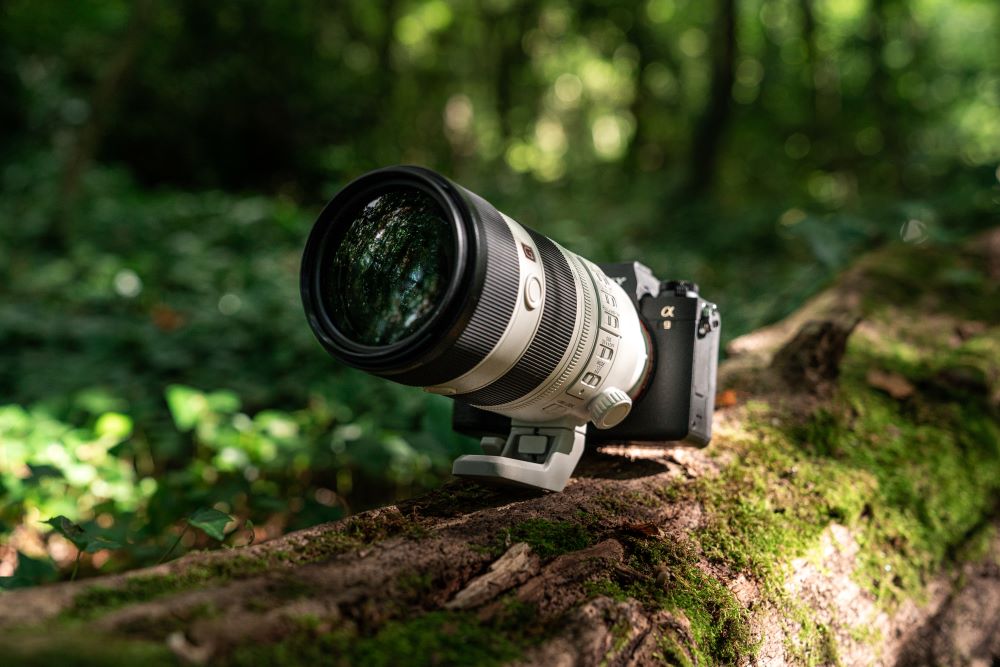
What to Look for in a Telephoto Lens
Reach is often the starting point when photographing birds and other distant or easily disturbed subjects, but focal length is only part of the equation. Other features can make a significant difference in the field:
- Focal length – ranges such as 100-400mm and 200-600mm provide considerable reach while retaining the flexibility of a zoom.
- Stabilisation – helps maintain sharper results when shooting handheld, particularly as light levels fall.
- Maximum aperture – a wider aperture gathers more light and can help separate subjects from their surroundings. Our Sony FE 70-200mm F2.8 GM OSS Mark II Lens review explores the advantages of a shorter, faster telephoto zoom.
- Size and weight – lighter equipment is easier to carry and manoeuvre during long periods outdoors.
- Autofocus – fast, responsive focusing helps when tracking unpredictable movement.
- Weather sealing – useful when working outdoors in changing conditions.
Accessible Telephoto Options
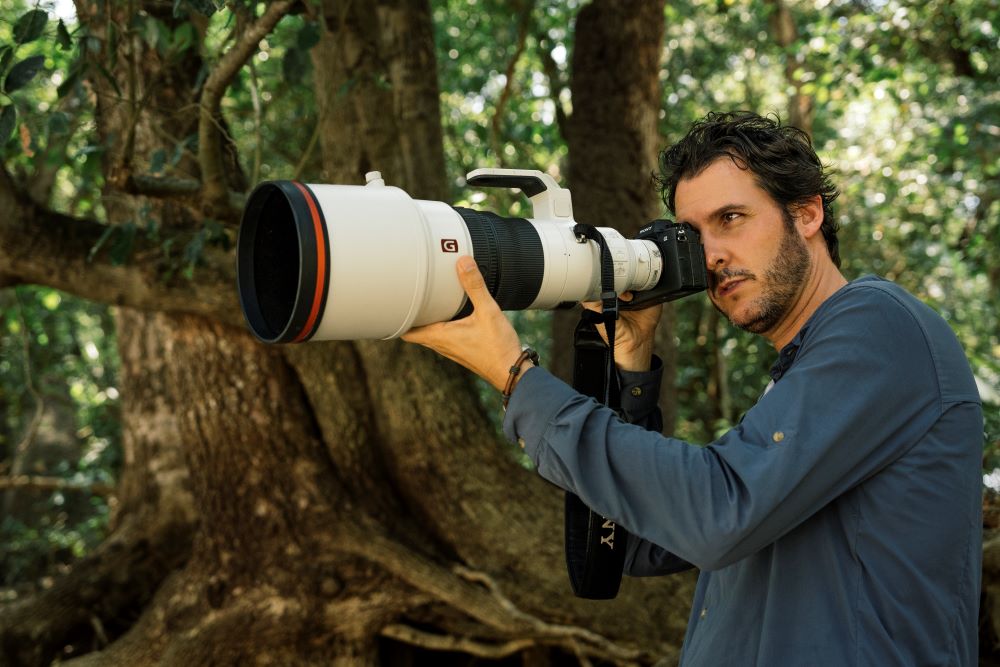
Zooms are a practical starting point because they provide flexibility for finding and framing unpredictable subjects without committing to the cost or fixed focal length of a specialist prime.
The FE 70-300mm f/4.5-5.6 G OSS combines a useful range with relatively low weight, making it an approachable option for anyone building their first longer-reach setup.
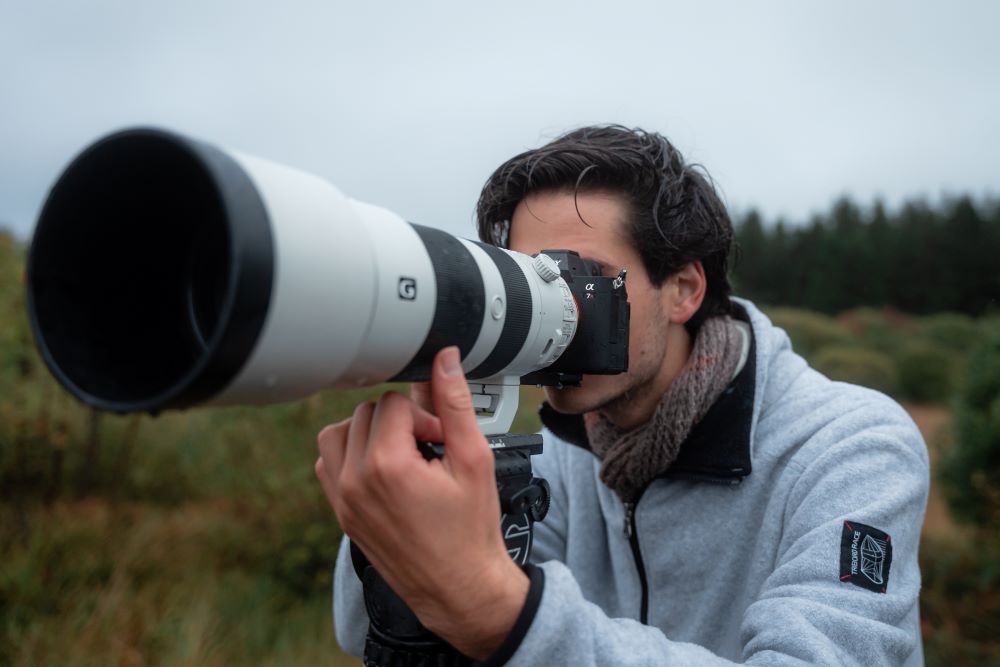
For considerably more reach, the FE 200-600mm f/5.6-6.3 G OSS covers everything from medium telephoto to super-telephoto without changing equipment, making it particularly useful for birds and distant subjects.
APS-C users can consider an E 70-350mm f/4.5-6.3 G OSS, which provides a 105-525mm equivalent range while weighing just 625g. It can also be mounted on compatible full-frame bodies when using APS-C crop mode.
For tighter budgets, the E 55-210mm f/4.5-6.3 OSS provides an inexpensive route to greater reach. We also explore an A6700 and Sigma 100-400mm combination in our guide to budget-friendly wildlife photography with Sony.
Premium and Lightweight Zooms
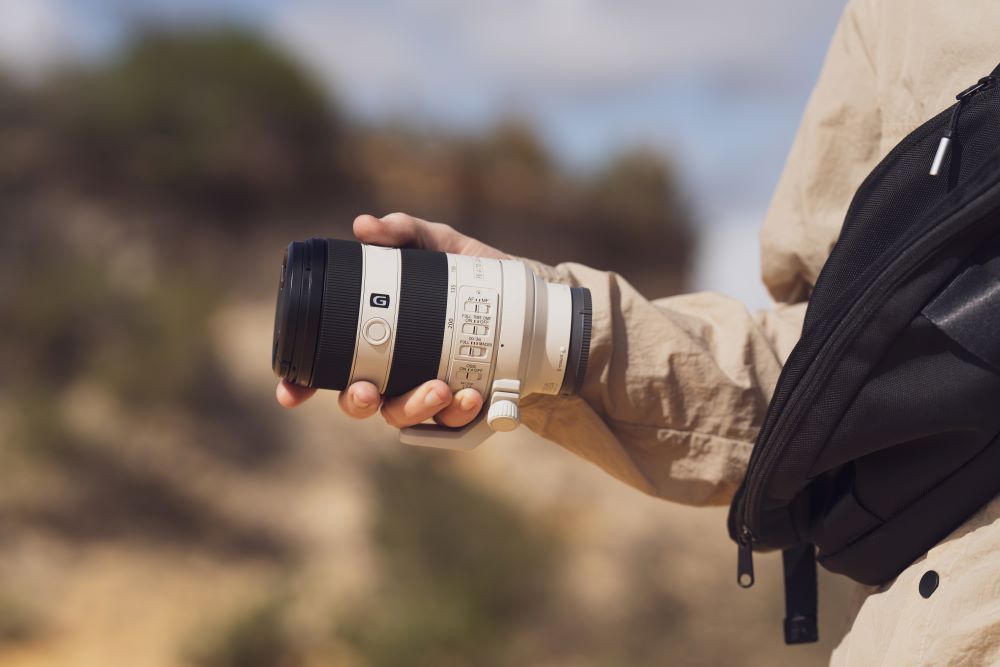
There are now several ways to cover longer focal lengths, ranging from an accessible lightweight option to professional G Master models. Our guide to photographing with G Master lenses explores some of the advantages of the premium range in more detail.
The new FE 100-400mm F5.6-8 OSS provides the most accessible route to this focal range. Its lightweight design, Optical SteadyShot, fast autofocus and teleconverter compatibility make it particularly appealing when budget and portability take priority.
Moving up the range, the FE 100-400mm f/4.5-5.6 GM OSS combines a brighter variable aperture with G Master optics in a 1,395g body. You can see how it performs across a variety of subjects in our 100-400mm F4.5-5.6 GM OSS Review.
The newer FE 100-400mm F/4.5 GM OSS sits at the professional end, adding a constant f/4.5 aperture and internal zoom design for more demanding use.
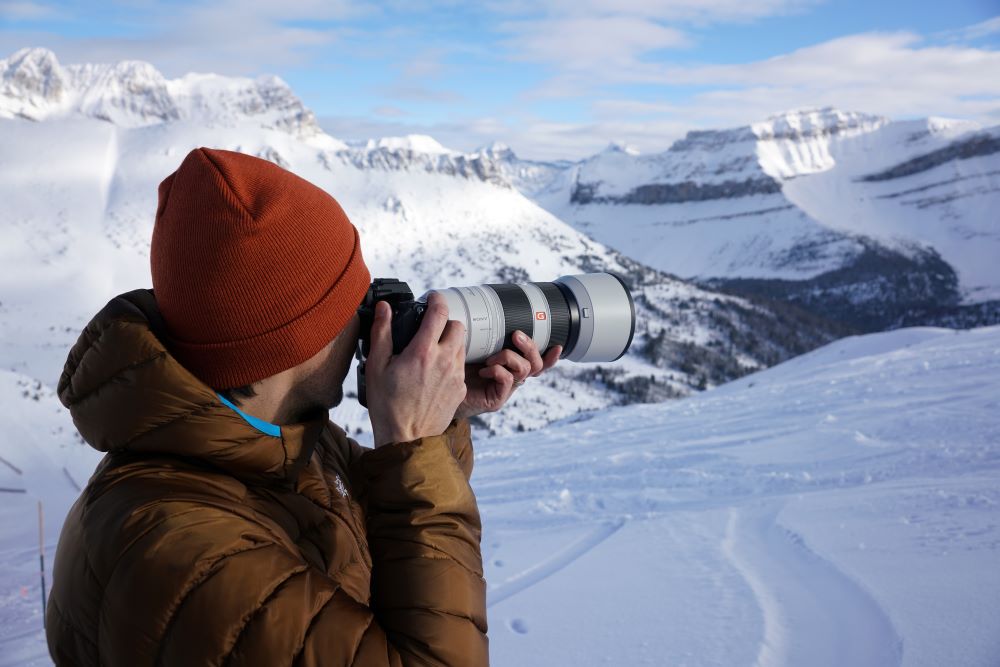
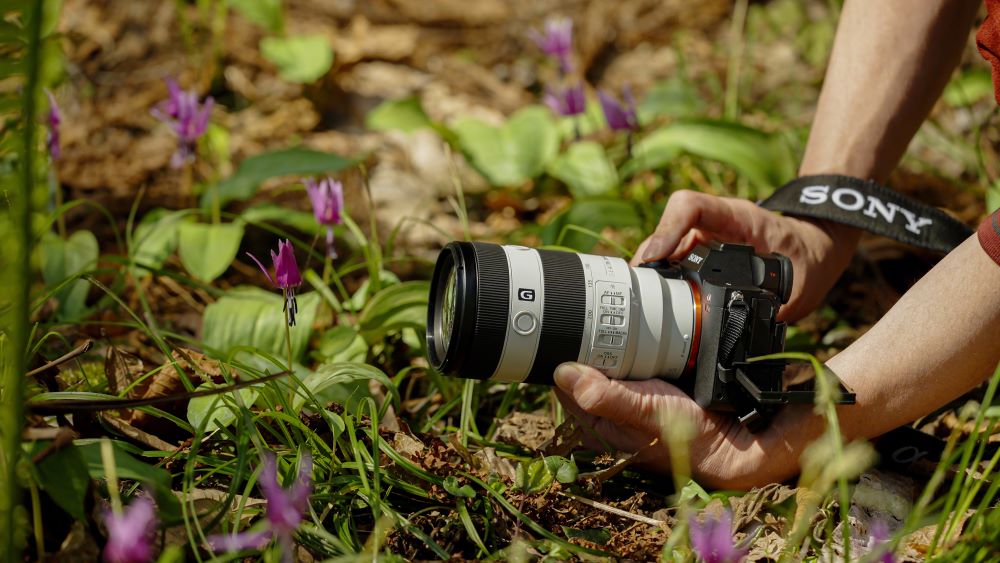
For a shorter but faster alternative, the FE 70-200mm f/2.8 GM OSS II offers an f/2.8 aperture for lower light and greater control over depth of field. It is also nearly half a kilogram lighter than the previous generation, with improved close focusing and faster, quieter autofocus.
The FE 70-200mm F/4 G OSS Mark II and Mark I provide lighter and less expensive alternatives where an f/2.8 aperture isn't essential.
Telephoto Primes
Fast apertures and high optical performance make primes particularly appealing when subject separation, low-light performance and detail are priorities. The range includes the Sony FE 300mm f/2.8 GM OSS, Sony FE 400mm f/2.8 GM OSS and Sony FE 600mm f/4 GM OSS, providing progressively greater reach for demanding professional use.
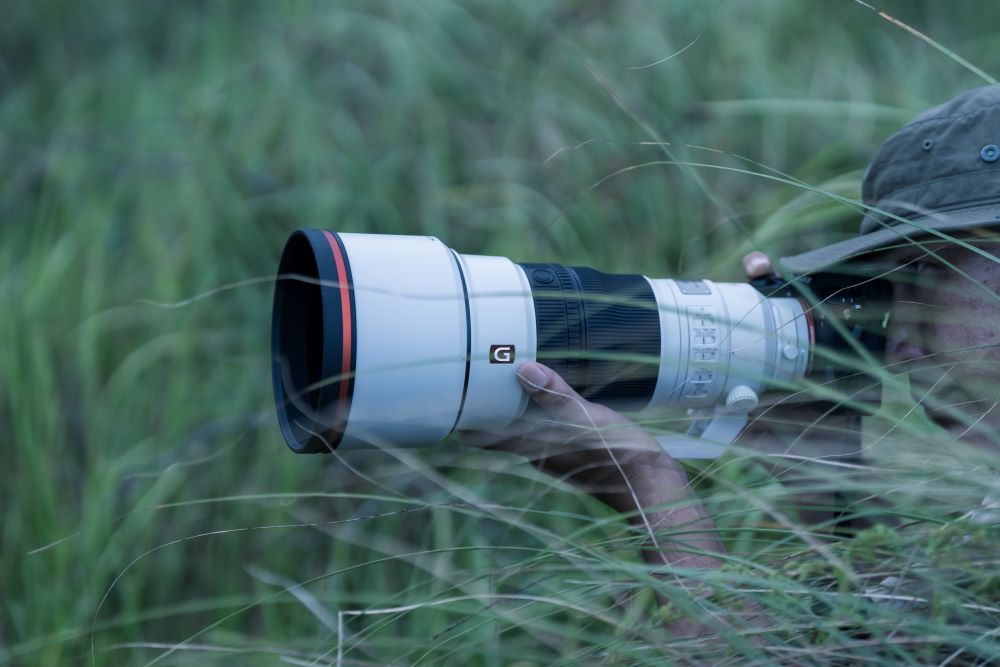
All three combine wide maximum apertures with optical stabilisation, while the 600mm f/4 weighs just over 3kg despite offering the longest reach of the group.
For Close-Up Subjects
Smaller subjects provide very different opportunities, as explored in our guide to nature macro photography.
The Sony FE 90mm f/2.8 G OSS provides 1:1 magnification, stabilisation and quick switching between auto and manual focus. The FE 50mm Macro f/2.8 offers a more compact alternative with a 16cm minimum focusing distance, while APS-C users can consider the lightweight Sony E 30mm Macro f/3.5.
Third-Party Alternatives
A broad choice of third-party options provides additional focal lengths and price points. Sigma is particularly well represented, including the Sigma 500mm f/5.6 DG DN OS Sports, which combines significant reach with five stops of stabilisation in a relatively portable prime.
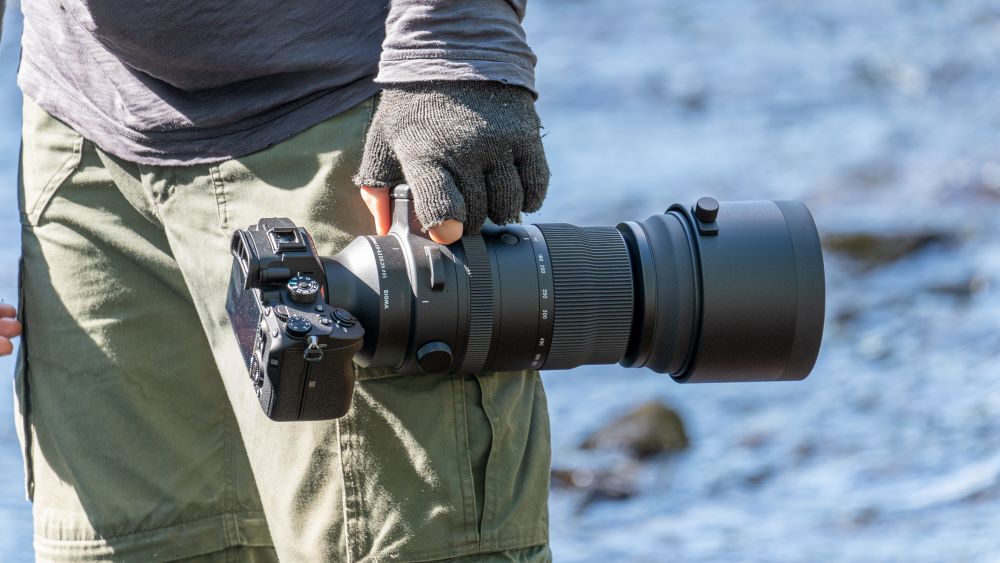
Sigma offers several useful zooms, including the fast Sigma 70-200mm F/2.8 DG DN OS Sports, versatile Sigma 60-600mm F/4.5-6.3 DG DN OS and longer-reaching Sigma 150-600mm F/5-6.3 DG DN OS.
Tamron provides further alternatives at different price points. The Tamron 18-300mm F/3.5-6.3 Di III-A VC VXD and Tamron 50-400mm F/4.5-6.3 Di III VC VXD provide broad focal ranges for varied subjects, while the Tamron 150-500mm F/5-6.7 Di III VC VXD prioritises greater reach.
Extending Your Reach
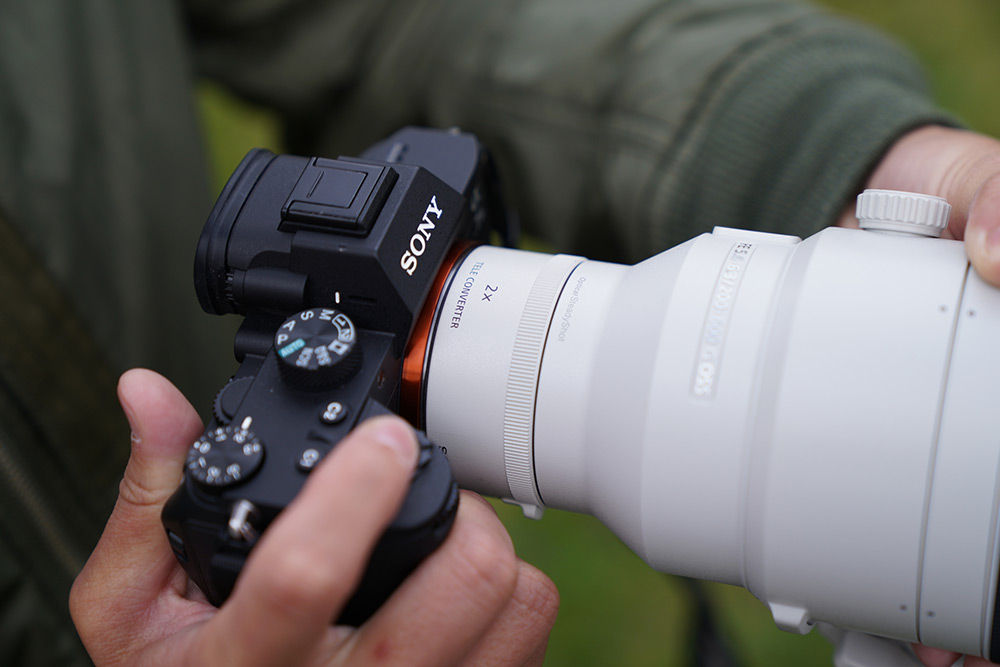
Teleconverters provide additional reach without adding another large piece of equipment. The 1.4x Teleconverter increases focal length by 1.4x with a one-stop reduction in maximum aperture, while the FE 2x Teleconverter doubles focal length with a two-stop reduction. Compatibility varies, so check support for your specific setup before choosing.
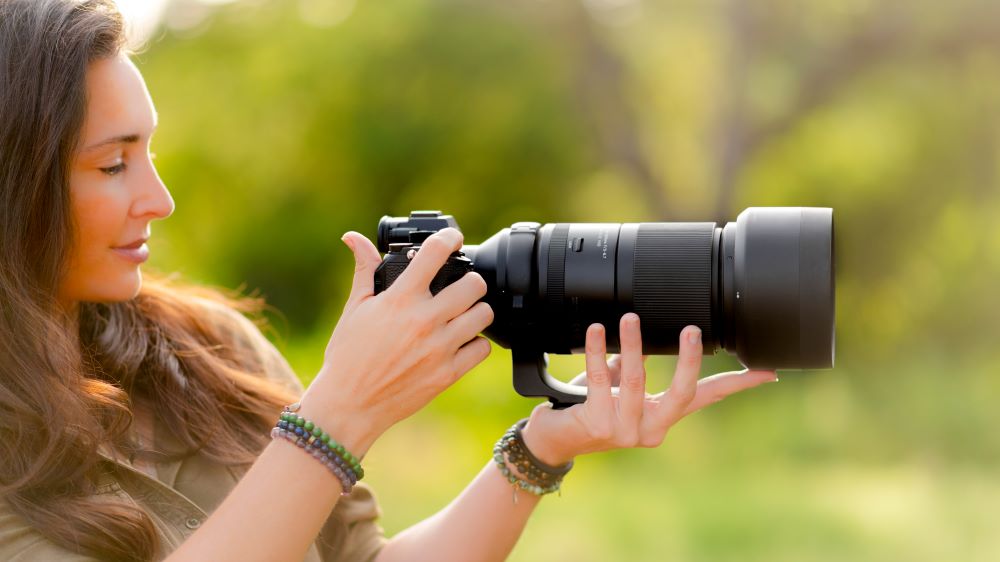
Park Cameras is an official Sony UK retailer. Explore the latest range, including new and used options, along with compatible accessories to complete your setup.
Share this post:
By Nick Dautlich on 08/05/2024

Nick Dautlich
Senior Content Writer and Product Reviewer
Nick Dautlich is the Senior Content Writer and Product Reviewer at Park Cameras, with over 15 years of photography experience. A Sony Imaging Professional and expert reviewer, Nick has worked with major brands such as Canon, Sony and Nikon. His work is also featured on Vanguard World UK’s website, Capture Landscapes, and Shutter Evolve. Nick’s photography includes National Trust projects and magazine covers and he is passionate about landscapes and storytelling. Nick also enjoys hiking and teaching his children about nature. Learn more on his profile page.
Trade in your old equipment
Fast and easy trade in service ensures your old gear is collected efficiently and you are paid quickly! It's very simple to trade in your unwanted photography gear. Just head over to our dedicated Sell or Part Exchange page, fill out the details, and we'll get back to you with an offer for your old gear. Take the cash, or put it towards the cost of your new gear. It's up to you! Find out more
sign up to the newsletter
Keep up to date on the latest photography news, events and offers. Sign up now