- Call us 01444 237070

-
- Back
- Used Cameras
- Used Accessories
- Used Lenses
- Back
- Used Canon Lenses
- Used Nikon Lenses
- Used Fujifilm Lenses
- Used Sony Lenses
- Used Micro 4/3rds Lenses
- Used Leica Lenses
- Used Panasonic Lenses
- Used Pentax Lenses
- Used Samyang Lenses
- Used Sigma Lenses
- Used Tamron Lenses
- Used Tokina Lenses
- Used Voigtlander Lenses
- Used Zeiss Lenses
- Used Hasselblad Lenses
- Used Video
- Used Film Equipment
- Used Stock Alert
- Used Blank Test
- Sell or Part Exchange
- Used Clearance
- Recently Added Used Equipment
- Park Picks
- Faulty
- Trade-In
- Blog
- New in
- Call us
- Contact us
- Stores
- Sign in
- Categories
- Tips & Inspiration
- Reviews
- News
- Events
- Features
- Buying Guides
- Competitions
How to Choose the Best Travel Tripod
The most important considerations can change when it comes to travelling with your camera. If you are flying, you will probably want to make sure your gear is carry-on compliant, and a tripod that is lightweight, compact and portable enough to carry all day becomes far more appealing.
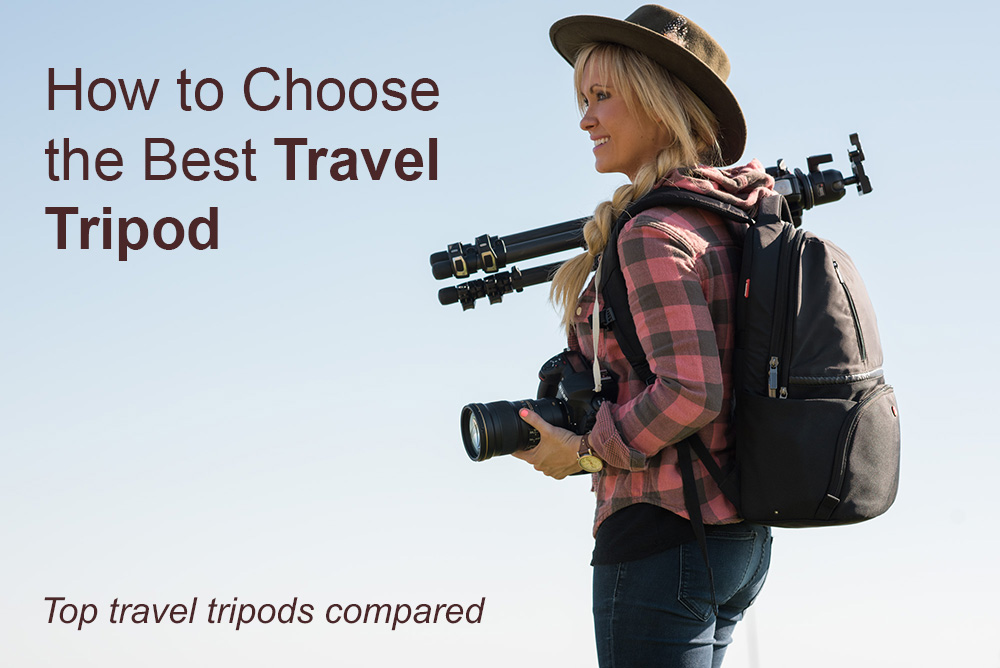
In this 2026 guide we explain how to choose the best travel tripod for photography, covering the key features that matter most when shooting on the move. From weight and folded size through to stability and load capacity, understanding these details will help you choose the best travel tripod for your camera and shooting style.
We also compare several of the most popular travel tripod models to help you narrow down the options. Whether you are jetting off to sunnier climes, heading away for a continental city break, or exploring the UK on a staycation, this guide will help you choose a travel tripod you can buy with confidence.
Quick Links
- Are travel tripods worth it?
- Can I bring a tripod on a plane?
- What to look for in a travel tripod
- Why are tripods sometimes not allowed?
- What is the best height for a travel tripod?
- Ergonomics and usability
- Build quality and durability
- How do you carry a tripod with a backpack?
- Top 7 travel tripods of 2024 compared
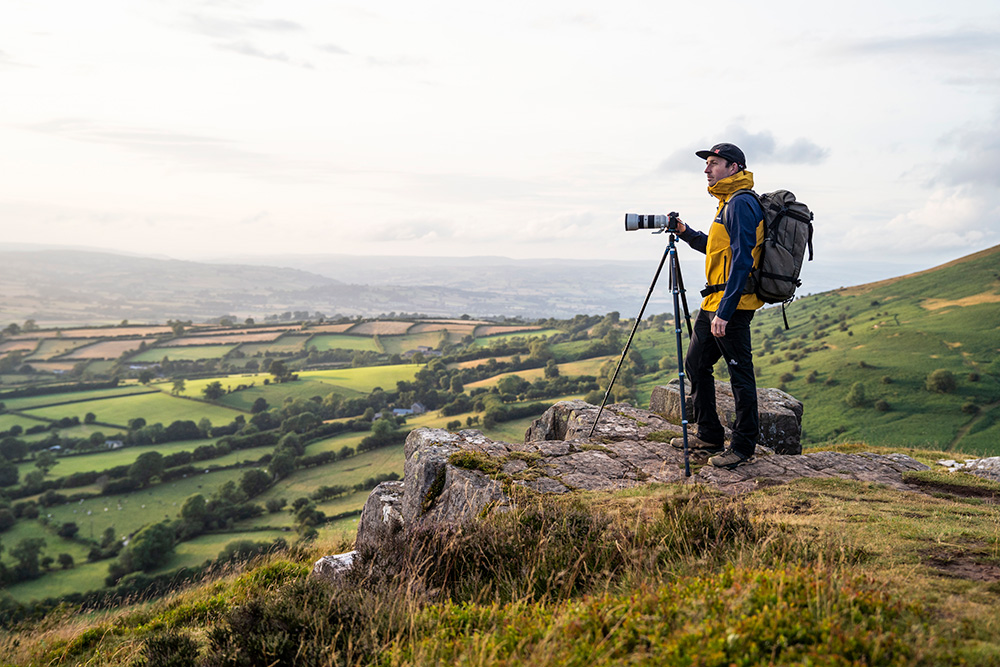
Are travel tripods worth it?
Is it even worth getting a travel tripod when most of today’s cameras have such effective image stabilisation? Although not for everyone and every situation, there are plenty of scenarios where the best travel tripod makes a difference, and a good lightweight camera tripod might become one of the most useful accessories in your kit.
- The primary reason for using a tripod for camera photography is to reduce ISO settings and capture the cleanest possible image, especially when shooting at slower shutter speeds during sunrise or sunset. It’s often overlooked that as camera ISO increases, the available dynamic range decreases, reducing image quality. A tripod ensures you get the best results possible.
- For long exposure photography, when you want to smooth motion and create effects such as silky water or moving clouds.
- Night and astro photography. Cityscapes with atmospheric street lighting, landscapes under starry skies and even aurora all benefit from having a tripod.
- For focus stacking, time-lapse, hyper-lapse, panoramas and other types of content a tripod is essential for capturing images over extended periods.
- Selfies or group shots in front of memorable landmarks need a tripod without relying on a stranger to take the photo.
- Even if you mainly shoot stills, a tripod can be useful for recording video when travelling, helping to keep the camera stable for static scenes.
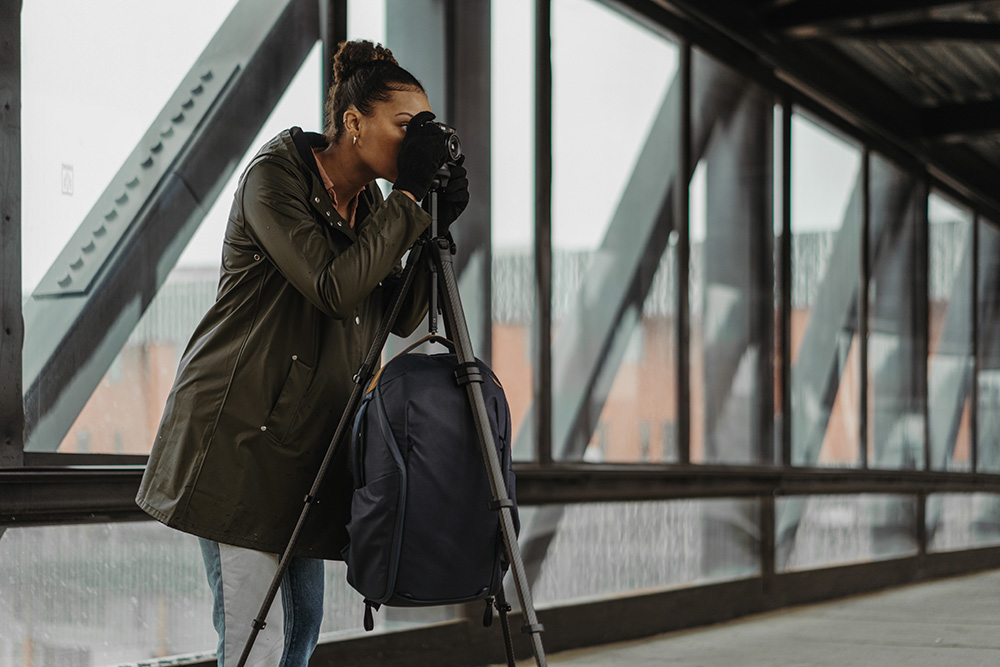
Can I bring a tripod on a plane?
We always recommend checking with your airline before travelling, however most airlines do not restrict passengers from bringing a tripod. As long as it fits within your carry-on luggage and meets weight restrictions, you can usually take a travel tripod or compact camera tripod on a plane.
What to look for in a travel tripod
When choosing the best travel tripod we look for slightly different features compared with selecting a general tripod for photography. Top criteria include:
- Being lightweight is the number one feature for most photographers, which is why a lightweight camera tripod is usually preferred for travel.
- Compact when folded down. Reverse folding tripods score an extra point here as a compact tripod is easier to pack in luggage or attach to a backpack.
- Sturdy and stable despite being lightweight.
- Ease of use with a quick setup.
- Robust and durable construction.
- Versatile features, such as the ability to hold a phone, accessories, or transform into a tabletop tripod or monopod.
- Adequate load capacity to support your camera and lens combination safely.
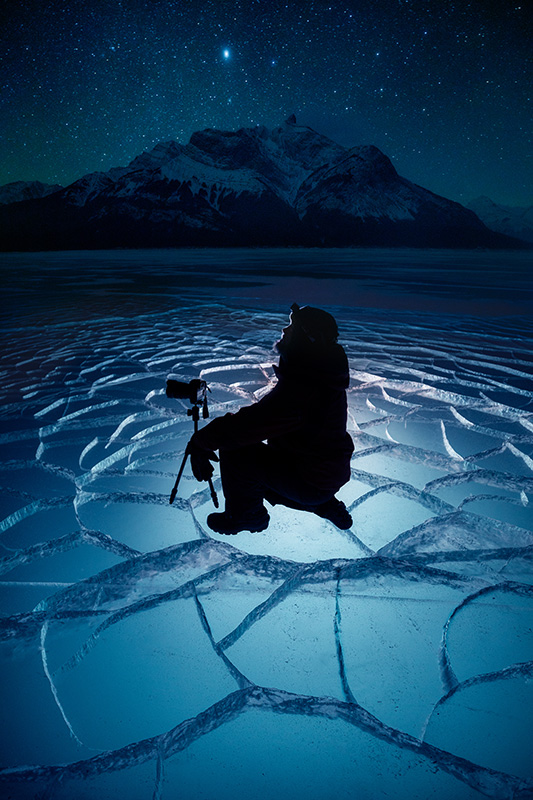
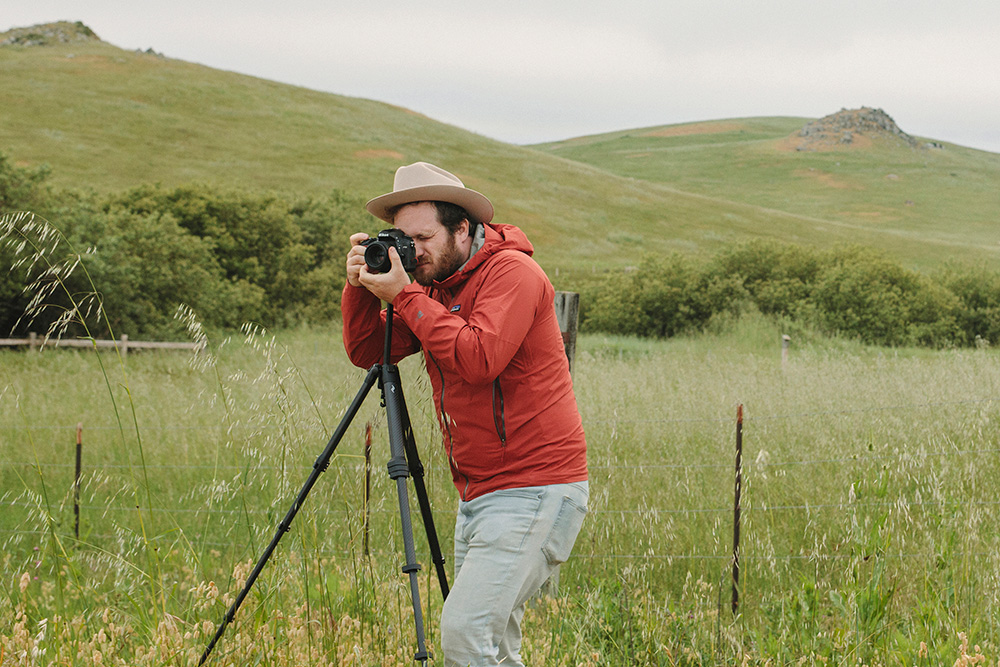
The Manfrotto BeFree GT tripod with Paul Zizka
What Is The Difference Between A Travel Tripod And A Regular Tripod?
You may be wondering how a travel tripod is different. A travel tripod is lighter and more compact than a regular camera tripod, making it easier to carry while exploring cities, hiking or travelling somewhere by airplane. While a standard tripod typically aims for maximum stability and a higher load capacity, a travel tripod is intended to be more portable, while still providing enough support for everyday shooting.
One of the biggest differences is weight, as a lightweight camera tripod for travel typically weighs between 1 and 1.5 kg, which is significantly easier to carry over the course of a day. Full-size tripods usually weigh more, particularly when they have to support long lenses.
Folded size is another factor to consider and many travel tripods feature reverse-folding legs in order to pack down to around 40cm or shorter. At this length it will fit inside carry-on bins and attach to the side of your camera backpack easily.
Load capacity also differs, and a travel tripod is usually for mirrorless cameras or a smaller DSLR, whereas larger models are better suited to heavy telephoto lenses and professional loads. Popular options include the Peak Design travel tripod, Gitzo Traveler series, Manfrotto travel tripods and Benro tripod models, all of which strike a balance between stability and portability. The table towards the end of this guide compares some of the most popular options, and includes these specs.
Why are tripods sometimes not allowed?
Even if you have the smallest and lightest tripod, you may still be asked to pack it away when shooting in certain tourist hotspots, busy city squares, museums or galleries. This is usually to avoid trip hazards caused by tripod legs, or to enforce restrictions on commercial tripod photography.
In the eyes of some local authorities, using a tripod can elevate a casual tourist to a commercial photographer, which may require you to obtain a permit. Some natural locations may also prohibit the use of tripods in order to protect sensitive habitats.
Regardless of the rationale, always respect the situation you are in, no matter how keen you are to capture a unique or specific shot.
What is the best height for a travel tripod?
When picking a travel tripod, the maximum shooting height it can reach is often where the biggest compromise is made. Ideally, try to choose one which reaches around the same height as you, in order to avoid bending down, getting a bad back and general discomfort.
Most models have a centre column, which extends to allow your camera to sit higher. While this is very useful, a fully extended centre column is prone to minor shake and movement caused by wind, so try to avoid extending it to the maximum height where possible.
The Gitzo Traveler Series 1, 4-section extends the highest of all the models we compare in the table below, and it only has four leg sections, which adds to stability. The downside to fewer leg sections is that it will not pack away as short as a five-section tripod such as either of Peak Design’s travel tripods, which are both a mere 39.1cm when folded down.
How Much Weight Should A Travel Tripod Support?
How much a tripod holds, or ‘load capacity’, is an important specification to check when choosing a tripod for the camera. Even the best travel tripod needs to support the combined weight of your camera body, lens and any attached accessories.
Most hold between 6 and 12 kg, which is plenty. A typical mirrorless camera with a standard zoom lens usually weighs between 1 and 2 kg, while a DSLR with a mid-range zoom lens may weigh closer to 3–4 kg.
A good rule is to choose a load capacity that exceeds the weight of your camera and lens combination by a decent margin, which will improve stability when shooting long exposures or in windy conditions. You want to avoid any movement or sagging, even if you change orientation or point the camera up or down, which is where load capacity becomes most important.
Some lightweight travel tripods offer lower payloads, allowing you to stay nimble, but be sure to check the load capacity before buying. Gitzo, Manfrotto and Peak Design are generally a great choice, effectively combining load, size and weight very successfully.
Ergonomics and usability
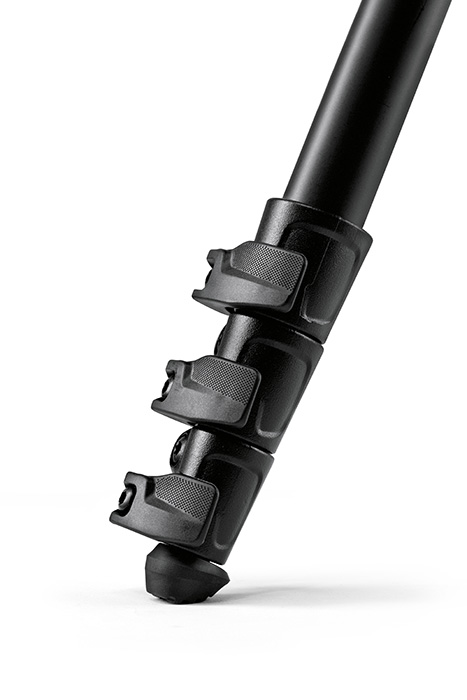
Although tripods all perform the same basic functions, how they achieve this can make or break usability. Each of the travel models compared below uses either twist or flip leg locks for quick setup, with the Gitzo and Manfrotto options featuring twist locks, while the other models utilise flip locks.
Leg locks are subjective, as both options offer similar durability and setup times. Favourable points go to designs allowing simultaneous release of all leg joints, which streamlines setup and takedown, particularly when you are working quickly in changing light.
Another factor in usability is the option to shoot with your smartphone, which both of the Peak Design models allow thanks to a storable mobile mount. Likewise, having mounting options for video recording is useful when you need to attach a video monitor, microphone, LED light or other accessory. Premium models tend to add features and utilise more durable materials, which we explore below.
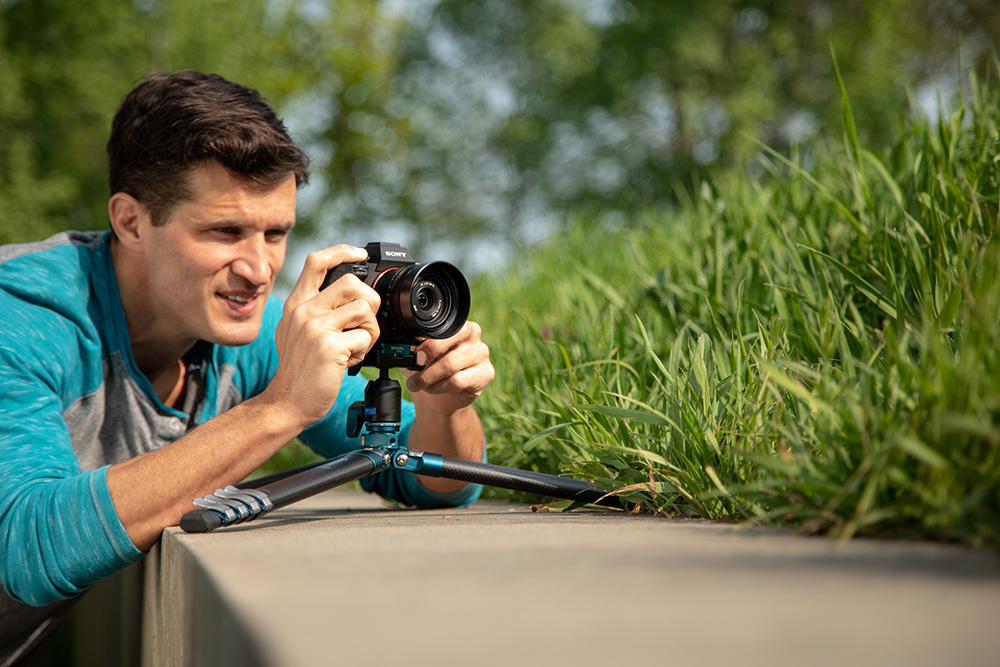
Composing an image low to the ground with Benro Cyanbird
Build quality and durability
When strapped to your camera backpack and subjected to the occasional bump, a tripod must be durable and resilient enough to withstand the daily rigours of travel. Each of the models we compare below is crafted from aluminium, carbon fibre, or a combination of both of these tried-and-tested materials.
Each material has its pros and cons, which we explore in more detail in the section below comparing aluminium and carbon fibre travel tripods.
Overall build quality is also impacted by the materials used for leg locks and other smaller components. Plastic leg closures may be lighter, but they are also more prone to failure over time. This is where warranty length can come into play, and all of the models we compare feature a five-year or longer warranty for peace of mind.
Aluminium vs Carbon Fibre Travel Tripods
One of the biggest decisions when choosing the best travel tripod for photography is the choice between aluminium or carbon fibre. Both are common and each offers their own set of advantages.
Photographers who want the lightest possible load typically choose a carbon fibre tripod, as it is easier to carry over long distances or when taking baggage allowances into consideration.
Aluminium tripods are usually more affordable than carbon, yet still provide excellent stability and durability. While often heavier, many photographers find the weight difference acceptable, especially when they only use a compact tripod for occasional travel. Aluminium tripods can feel very solid, which helps when shooting with heavier cameras, or on unstable terrain. If you ever shoot at the beach or in water, aluminium tends to wear better than carbon too, and as your initial investment was lower, you tend to be less precious about it.
Many popular travel tripod models are available in both materials, such as the Peak Design travel tripod. There are several Benro tripod options in both, and brands such as Manfrotto produce aluminium travel tripods that are a more budget-friendly entry point. For many photographers the choice comes down to budget versus weight, with aluminium tripods offering excellent value while carbon fibre models are more about portability.
How do you carry a tripod with a backpack?
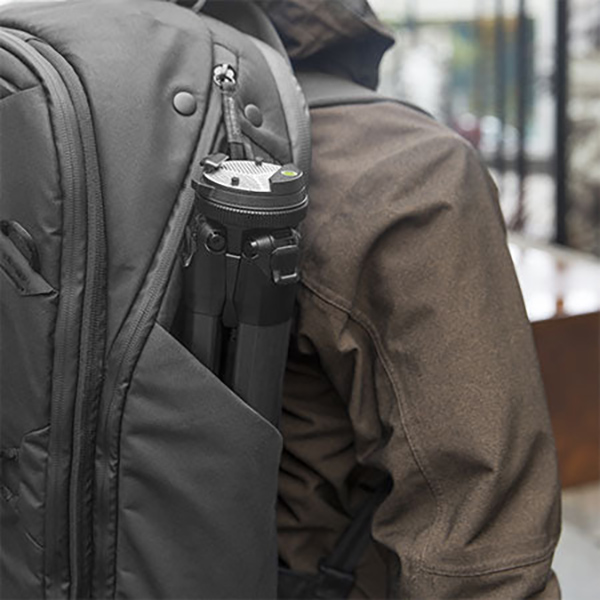
Photographers who carry gear in a backpack will often strap a tripod to the side or rear of the pack. Where it can be stowed depends on the folded height of the tripod and which backpack you own. Longer legs may require rear panel mounting, whereas shorter legs can usually fit in a side pocket.
Neither option is particularly quick, as it requires you to remove the pack from your back. An alternative is to travel with a sling bag or messenger bag, which can hold a compact tripod underneath. This will not carry as much equipment, but it can be a great solution for day trips while travelling and offers quicker access to gear than a backpack.
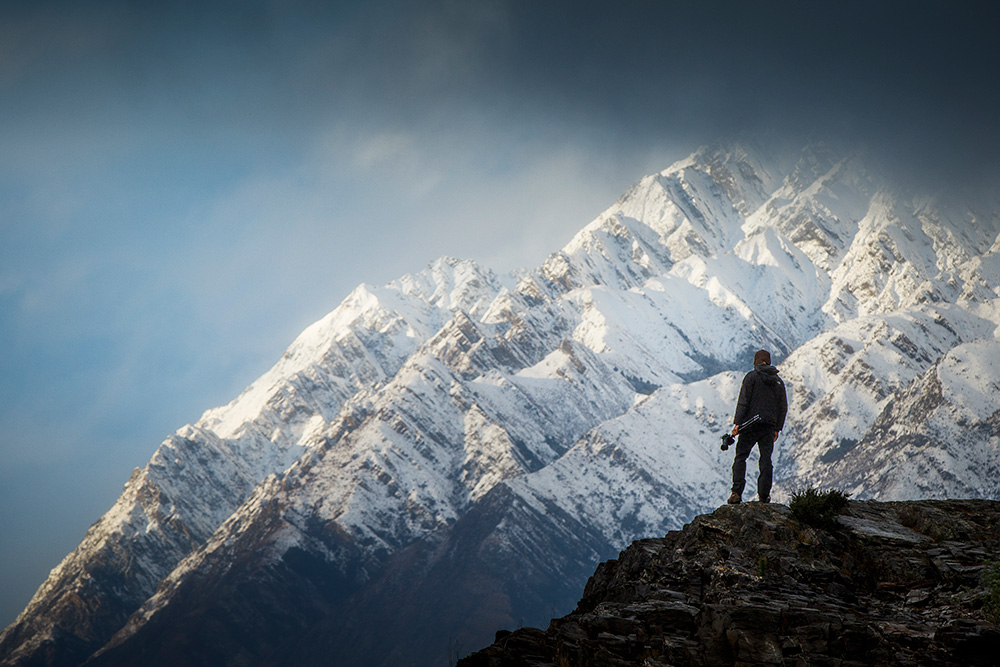
Head on epic adventures with Manfrotto Befree and Philip Thurston
Best travel tripods compared
Below we compare several popular travel tripod models so you can quickly see the differences in weight, folded size, load capacity and price.
|
|
||||||||
|
Weight |
1.56 kg |
1.27 kg |
1.49 kg |
1.05kg |
1.45kg |
1.27 kg |
1.49 kg |
1.89kg |
|
Max. load |
9.1 kg |
9.1 kg |
9.0 kg |
4 kg |
10 kg |
9 kg |
9 kg |
8 kg |
|
Incudes ball head |
Yes |
Yes |
Yes |
Yes |
Yes |
Yes |
Yes |
Yes |
|
No. leg sections |
5 |
5 |
4 |
5 |
4 |
4 |
4 |
4 |
|
Folded length |
39.1 cm |
39.1 cm |
40 cm |
46cm |
42.5 cm |
40 cm |
40 cm |
48 cm |
|
Max. shooting height |
152.4 cm |
152.4 cm |
150 cm |
155cm |
163.5 cm |
150cm |
150cm |
166cm |
|
Min. shooting height |
14 cm |
14 cm |
40 cm |
17cm |
32.4 cm |
41 cm |
40 cm |
48cm |
|
Special features |
|
|
|
|
|
|
|
|
|
Warranty |
Includes a Lifetime guarantee |
Includes a Lifetime guarantee |
Warranty 2 years + 8 year extension |
5 year warranty available |
Warranty 2 years + 5 year extension |
Warranty 2 years + 8 year extension |
Warranty 2 years + 8 year extension |
6 years |
|
Price |
£379.00 |
£599.00 |
£169.00 |
£219.00 |
£539.00 |
£211.00 |
£139.00 |
£99.00 |
The perfect choice when selecting a travel tripod lies in striking a balance between portability, weight, folded size and maximum shooting height. It also needs to support the weight of your camera and lens combination. All of the models above will hold a DSLR with a shorter zoom lens attached, aside from the Benro CyanBird, which has the lowest payload but is also the lightest by far. A good travel tripod should feel easy to carry while still providing the stability needed for long exposures, landscapes and other types of travel photography.
Explore our range of camera tripods to find the perfect one for your needs, and remember that the best option for travel is likely to be different from the best one for wildlife or other genres, where load capacity becomes a crucial factor.
Share this post:
By Nick Dautlich on 19/03/2024

Nick Dautlich
Senior Content Writer and Product Reviewer
Nick Dautlich is the Senior Content Writer and Product Reviewer at Park Cameras, with over 15 years of photography experience. A Sony Imaging Professional and expert reviewer, Nick has worked with major brands such as Canon, Sony and Nikon. His work is also featured on Vanguard World UK’s website, Capture Landscapes, and Shutter Evolve. Nick’s photography includes National Trust projects and magazine covers and he is passionate about landscapes and storytelling. Nick also enjoys hiking and teaching his children about nature. Learn more on his profile page.
Trade in your old equipment
Fast and easy trade in service ensures your old gear is collected efficiently and you are paid quickly! It's very simple to trade in your unwanted photography gear. Just head over to our dedicated Sell or Part Exchange page, fill out the details, and we'll get back to you with an offer for your old gear. Take the cash, or put it towards the cost of your new gear. It's up to you! Find out more
sign up to the newsletter
Keep up to date on the latest photography news, events and offers. Sign up now