- Call us 01444 237070

-
- Back
- Used Cameras
- Used Accessories
- Used Lenses
- Back
- Used Canon Lenses
- Used Nikon Lenses
- Used Fujifilm Lenses
- Used Sony Lenses
- Used Micro 4/3rds Lenses
- Used Leica Lenses
- Used Panasonic Lenses
- Used Pentax Lenses
- Used Samyang Lenses
- Used Sigma Lenses
- Used Tamron Lenses
- Used Tokina Lenses
- Used Voigtlander Lenses
- Used Zeiss Lenses
- Used Hasselblad Lenses
- Used Video
- Used Film Equipment
- Used Stock Alert
- Used Blank Test
- Sell or Part Exchange
- Used Clearance
- Recently Added Used Equipment
- Park Picks
- Faulty
- Trade-In
- Blog
- New in
- Call us
- Contact us
- Stores
- Sign in
Call us: 01444 237070
Search terms
Brands
Category
Products
[[{name}]]
[[{attributes.Price}]]
- Categories
- Tips & Inspiration
- Reviews
- News
- Events
- Features
- Buying Guides
- Competitions
Nikon Z 70-200mm f/2.8 VR S II Initial Review
As a relatively young mount from 2018, Z system lenses are only now undergoing second-generation updates, and Nikon is concentrating on its professional f/2.8 zoom line-up to begin with. The Nikon Z 70-200mm f/2.8 VR S II is the second lens to be updated, following the Z 24-70mm f/2.8 S II, which arrived in August 2025.
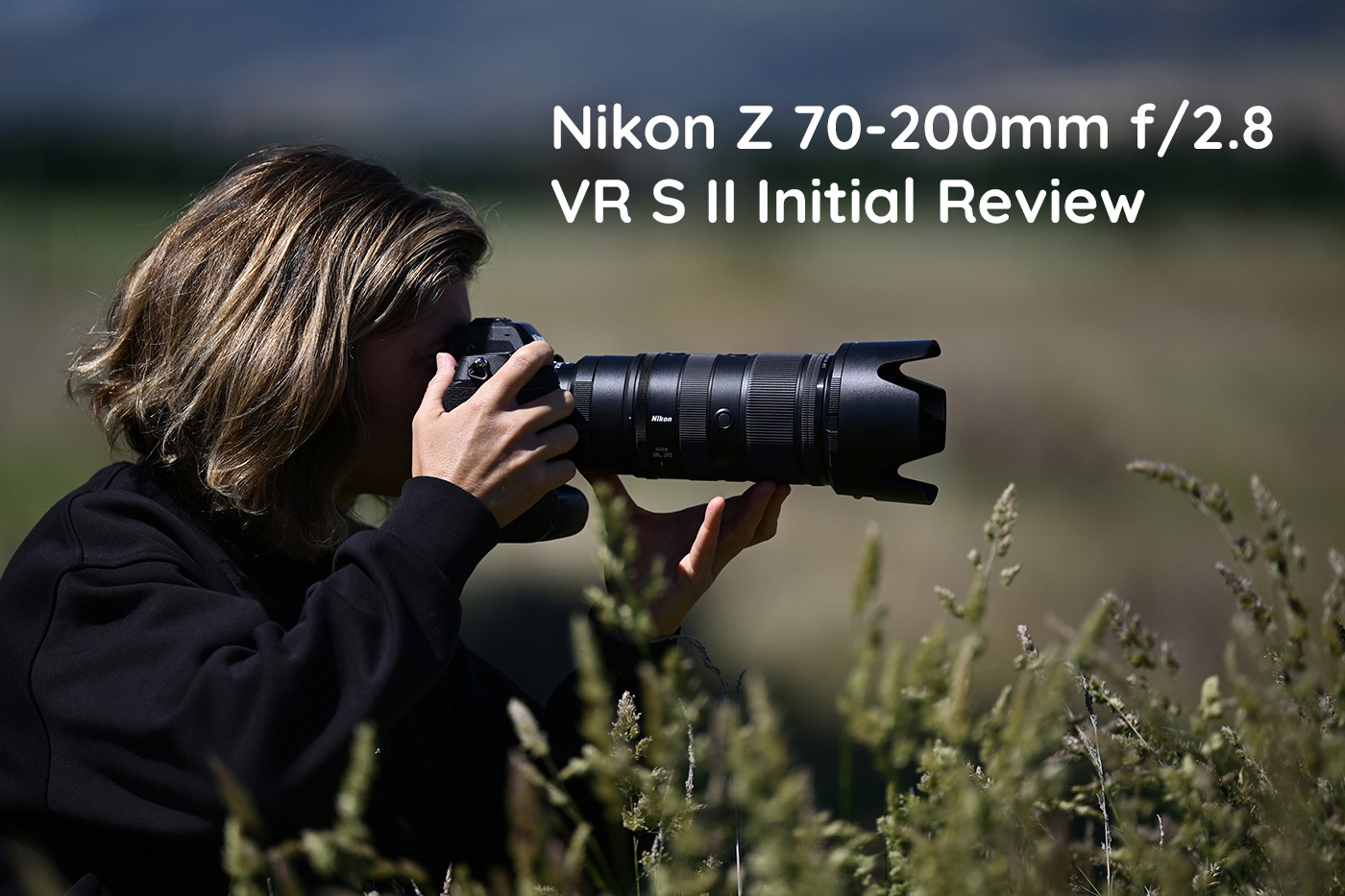
Our Nikon Z 70-200mm f/2.8 VR S II initial review compares the first and second-generation models, with a close look at key improvements to autofocus speed, ergonomics and image quality.
This is an important model, positioned as an advanced enthusiast and professional Nikon zoom lens within the key ‘holy trinity’ of three fast f/2.8 lenses that span 14-200mm between them.
But is the new model worth it? Should you upgrade? What improvements does it offer? Find out the answers to these questions and more in our first look review, so you can decide whether it suits your needs, starting out with the price.
Release dates and price
The updated Z 70-200mm f/2.8 VR S II lens costs £2,999.00, which is around £500.00 more than the original. For professional users this is par for the course, but if you’re a beginner or enthusiast you may want to consider a different Nikon Z lens from the range.
This could mean the Z 70-180mm f/2.8, which I was fortunate to have for a hands-on review, or the Nikon Z 24-200mm VR Lens may be right for you, depending on your needs. Professional users are likely to be considering this update, but what exactly is new in this generation? Let’s find out next.

Sample 01 @70mm. Camera settings: 1/13 sec. f/22. ISO 32
What has been updated?
Nikon has completely redesigned the professional 70-200mm zoom lens from the inside out, using the latest optical technology available. Updates for this generation include:
- 12mm shorter lens barrel
- At just under 1kg, it is 26% lighter
- Refreshed optics with a new S-Line configuration
- New lens coatings
- A new 11-blade aperture unit
- A new autofocus mechanism, which Nikon claims is its ‘best AF system to date’, translating into faster, quieter and more accurate performance while zooming
- Shorter minimum focusing distance, with higher magnification
- Half-stop improved vibration reduction
- Enhanced control with a focus limit switch
In essence it is faster, sharper and lighter, which is impressive considering how good the original version already was. How does this translate into specs and numbers? Our comparison table sets this out next.

Sample 02 No Exif
Nikon Z 70-200mm f/2.8 VR S II vs Original Specification Comparison
If you’re considering upgrading to the newer Nikon telephoto lens, the table below compares key features and specifications between these pro zooms, so you can see how they differ on paper.
|
Specification |
Z 70-200mm f/2.8 VR S II (new) |
|
|
Type |
Nikon Z mount |
Nikon Z mount |
|
Format |
FX/35mm |
FX/35 mm |
|
Focal length |
70–200 mm |
70–200 mm |
|
Maximum aperture |
f/2.8 |
f/2.8 |
|
Minimum aperture |
f/22 |
f/22 |
|
Lens construction |
18 elements in 16 groups (including 1 ED glass, 1 Super ED glass, 2 aspherical lenses, 1 aspherical ED glass, 1 fluorite lens and 1 SR lens element) |
21 elements in 18 groups (including 6 ED, 2 aspherical, 1 fluorite, 1 SR, Nano Crystal and ARNEO coats, fluorine-coated front element) |
|
Lens coatings |
Meso-amorphous, ARNEO coats, Fluorine |
Nano Crystal, ARNEO, Fluorine |
|
Angle of view |
FX: 34°20′–12°20′DX: 22°50′–8° |
FX: 34°20′–12°20′DX: 22°50′–8° |
|
Focusing system |
SSVCM, Multi-Focus, Internal |
Internal focusing system |
|
Minimum focus distance |
0.38–0.8 m (70–200 mm) |
0.5–1.0 m (70–200 mm) |
|
Maximum reproduction ratio |
0.3x (70 mm), 0.3x (200 mm) |
0.2x |
|
Vibration Reduction |
6-stop (Synchro VR available) |
Yes (lens shift using VCMs) |
|
No. of diaphragm blades |
11 (rounded diaphragm opening) |
9 (rounded diaphragm opening) |
|
Telconverter Compatible |
Yes |
Yes |
|
Filter attachment size |
77 mm |
77 mm |
|
Dimensions (max diameter x length) |
Approx. 90 mm x 208 mm |
Approx. 89 mm x 220 mm |
|
Weight |
Approx. 998 g (without tripod collar ring or protective cover) Approx. 1030 g (with protective cover)Approx. 1180 g (with tripod collar ring and protective cover) |
Approx. 1360 g (without tripod collar) Approx. 1440 g (with tripod collar) |
|
Focus limit switch |
Full (∞ to 0.38 m at wide end / ∞ to 0.8 m at tele end) and Limit (5 m to ∞) |
N/A |
|
Focusing |
Auto, Manual |
Auto, Manual |
|
Price |
£2,999.00 |
£2,499.00 |
While these two lenses are clearly similar, the improvements Nikon has introduced combine to make a significant difference. If a 70-200mm is one of your most-used lenses, this update will be welcome, especially for certain key subjects, which we explore next.

What is a 70-200mm f/2.8 lens best for?
The newly developed Nikon Z 70-200mm f/2.8 VR S II is an extremely versatile lens, largely thanks to the broad coverage a 70-200mm zoom range offers, combined with a fast aperture and quick, quiet autofocus. You may already know the types of subjects this lens is best suited to, which include:
- Portraits, family and lifestyle photography
- Weddings and events
- Concerts and live performances
- Indoor / outdoor sports and action
- Closer wildlife
- Landscapes
- Video
With this expansive list of suitable genres, a 70-200mm lens really is a must-have for working photographers, and a ‘want to have’ for enthusiasts, who benefit from the same size and weight savings as professionals.
Next, we look at specific updates to image quality and the autofocus system to see what Nikon has implemented.

Sample 03 No Exif
How do the new S-Line optics improve image quality?
The newer version includes a new S-Line optical formula, featuring 18 elements in 16 groups. Nikon has introduced a mix of aspherical, ED, Super ED, SR and fluorite elements, which are all there to control aberrations more effectively across the frame.
That means high contrast edges will show less colour fringing with better sharpness consistency from centre to corner, especially at longer focal lengths.
Flare resistance has also been improved with the custom Meso Amorphous coating used alongside ARNEO and Super Integrated coatings. That’s a lot of technology on one lens, but the benefit is that when shooting towards strong light sources, contrast increases while ghosting is reduced.
Backlit portraits and sports under lights should look cleaner and less washed out with the new lens.
Lastly, the updated 11-blade aperture design also plays a part in image quality. Out-of-focus areas should appear smoother, and specular highlights will be rendered more naturally, particularly at wider apertures.
These updates will be barely noticeable in everyday snapshots; however, for paying clients the end results will be better, especially in large portrait prints, pristine wedding images and video content. That covers image quality, but how has autofocus improved for real world shooting?

Sample 04 @70mm. Camera settings: 1/4000 sec. f/2.8. ISO 2000
What do improvements to autofocus mean?
Nikon has been clear about the new AF system used in the Z 70-200mm f/2.8 VR S II Lens, which they state is the best system to date. That is backed by figures provided by Nikon, including comparisons to the original version:
- 3.5x faster autofocus
- 50% quieter even for high-speed video
- 45% reduced scan time at the telephoto end*
- 40% more accurate focus tracking while zooming
*Scan time refers to the time it takes to find the point of maximum sharpness as the lens scans forwards and backwards near the subject.
This sounds impressive and means that the combination of Silky Swift VCM and Nikon’s multi-focus system work in tandem to make autofocus faster, quieter and more accurate. If you capture moving subjects, these are all excellent attributes for any lens and should make a noticeable difference during real-world use, while also making it the fastest focusing Nikon telephoto zoom lens to date.
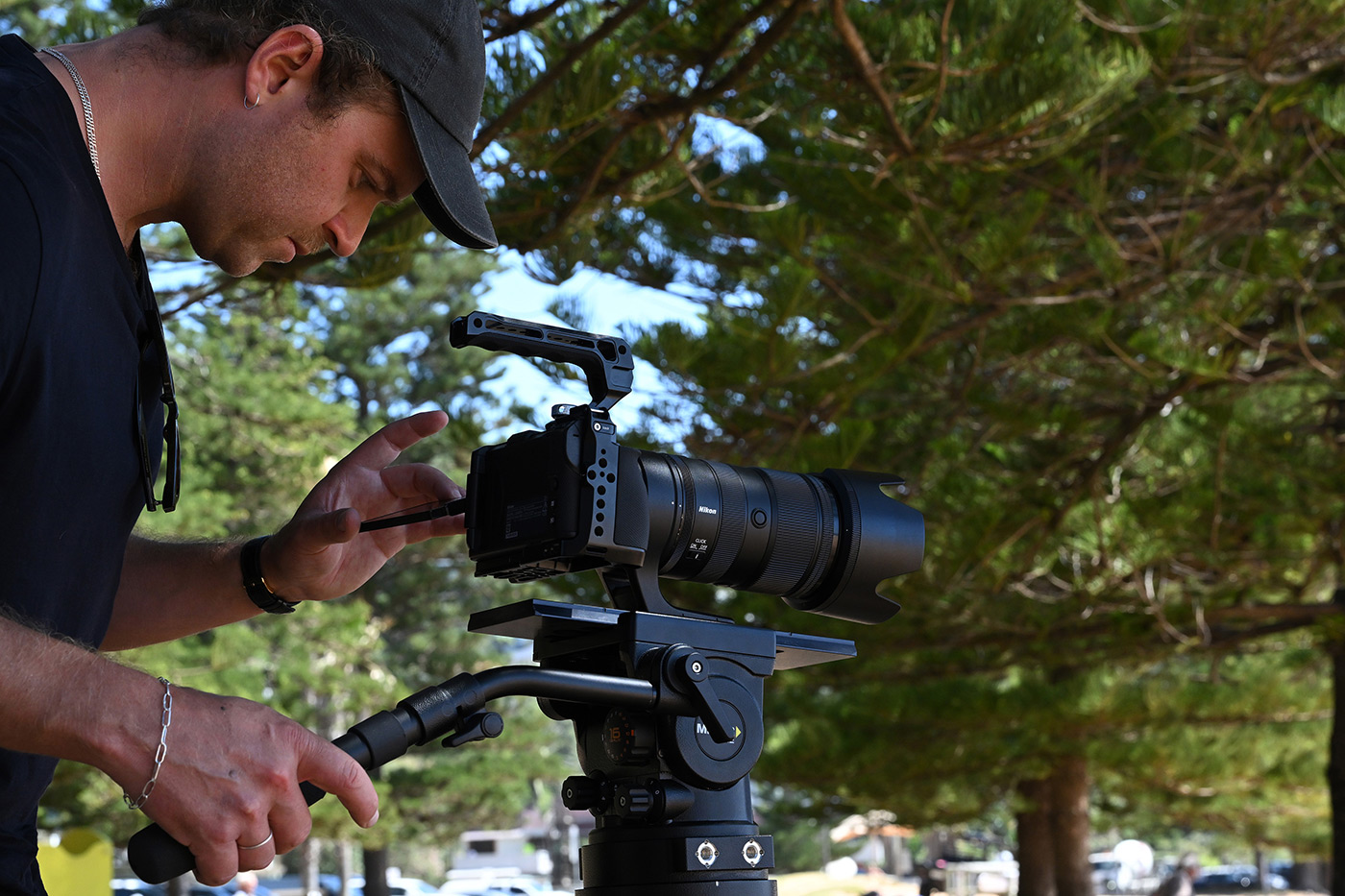
Best accessories
To get the most from any lens, it’s worth considering what the best lens filters and accessories are. The Z 70-200mm f/2.8 has the same 77mm filter thread as the original, and you can source cost effective screw-in filters for any stills and video shooting scenario.
You can also add magnetic systems and other handy accessories that can help to streamline your workflow. Consider the following:
- Urth 77mm Magnetic Essentials Filter Kit With 4 Filters Plus+
- Hoya 77mm HD II Circular Polarising Filter
- Z 1.4x Teleconverter or the Z 2.0x Teleconverter
- VSGO Optical Cleaning Kit Travel Edition
- PolarPro 77mm Shortstache Everyday Mist Light/PL Filter
This Nikon lens is all about refinement and tackles every aspect that professional users expect from premium, high-performance lenses, which are essentially bread-and-butter tools of the trade.
It is smaller and lighter, with better balance. It makes balancing on gimbals easy thanks to the internal zoom mechanism, and offers improved focus breathing. The focus system is better than anything Nikon has made previously, and it incrementally updates vibration reduction, image quality and overall handling.
As updates go, this is as good as it could possibly be, which will be more than enough to appeal to a variety of users looking to gain an edge for their images in an increasingly competitive market.
Reserve your Nikon Z 70-200mm f/2.8 VR S II lens today and discover how this telephoto zoom can help you elevate your content.
If upgrading, why not grab an instant quote to find out the value of your unwanted equipment. If you go ahead use the money made to offset against the newer 70-200mm from Nikon.
Share this post:
By Nick Dautlich on 24/02/2026

Nick Dautlich
Senior Content Writer and Product Reviewer
Nick Dautlich is the Senior Content Writer and Product Reviewer at Park Cameras, with over 15 years of photography experience. A Sony Imaging Professional and expert reviewer, Nick has worked with major brands such as Canon, Sony and Nikon. His work is also featured on Vanguard World UK’s website, Capture Landscapes, and Shutter Evolve. Nick’s photography includes National Trust projects and magazine covers and he is passionate about landscapes and storytelling. Nick also enjoys hiking and teaching his children about nature. Learn more on his profile page.

Trade in your old equipment
Fast and easy trade in service ensures your old gear is collected efficiently and you are paid quickly! It's very simple to trade in your unwanted photography gear. Just head over to our dedicated Sell or Part Exchange page, fill out the details, and we'll get back to you with an offer for your old gear. Take the cash, or put it towards the cost of your new gear. It's up to you! Find out more
sign up to the newsletter
Keep up to date on the latest photography news, events and offers. Sign up now