- Call us 01444 237070

-
- Back
- Used Cameras
- Used Accessories
- Used Lenses
- Back
- Used Canon Lenses
- Used Nikon Lenses
- Used Fujifilm Lenses
- Used Sony Lenses
- Used Micro 4/3rds Lenses
- Used Leica Lenses
- Used Panasonic Lenses
- Used Pentax Lenses
- Used Samyang Lenses
- Used Sigma Lenses
- Used Tamron Lenses
- Used Tokina Lenses
- Used Voigtlander Lenses
- Used Zeiss Lenses
- Used Hasselblad Lenses
- Used Video
- Used Film Equipment
- Used Stock Alert
- Used Blank Test
- Sell or Part Exchange
- Used Clearance
- Recently Added Used Equipment
- Park Picks
- Faulty
- Trade-In
- Blog
- New in
- Call us
- Contact us
- Stores
- Sign in
- Categories
- Tips & Inspiration
- Reviews
- News
- Events
- Features
- Buying Guides
- Competitions
Canon RF 14mm VCM and 7-14mm Fisheye First Look
Canon has launched two ultra-wide lenses for the RF line-up, catering to photographers and filmmakers who capture extremely wide perspectives. The Canon RF 14mm f/1.4L VCM is the widest in the hybrid VCM range and costs £2399, while the even more specialised Canon RF 7-14mm f/2.8-3.5L fisheye is priced at £1719.00.
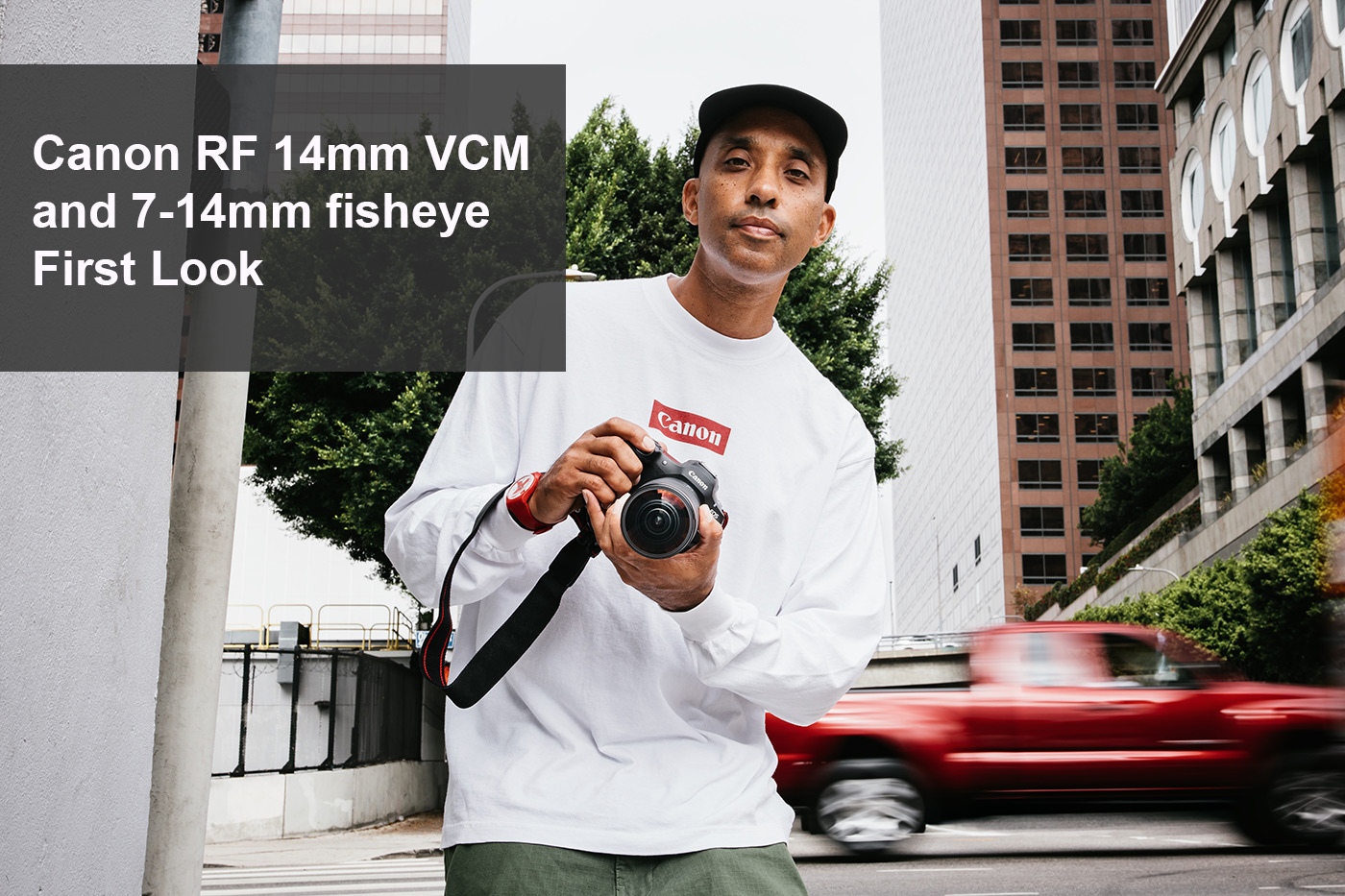
The RF 14mm f/1.4L VCM is a rectilinear lens, which means you’ll get straight lines rather than curves, which are typical fisheye lenses. It joins Canon’s growing Hybrid Prime range with a fast f/1.4 aperture and a focal length often used for astrophotography, landscapes, interiors, and wide-angle video, without fisheye distortion.
The RF 7-14mm f/2.8-3.5L fisheye on the other hand captures both circular fisheye and full-frame fisheye views, opening up creative opportunities for exaggerated perspectives, immersive images and more experimental shots. It also features support for 2D 180º VR workflows on compatible Canon cameras, which will be of particular interest to video creators who work in immersive formats.
This first look is for you if you want to know more about what these lenses can do, how they are different in use, and who they are for. So join us as we begin with the RF 14mm f/1.4L.
Canon RF 14mm f/1.4 L VCM Lens Video Review by Gareth Evans
Canon RF 14mm f/1.4L VCM First Look
The Canon RF 14mm f/1.4L VCM joins existing Hybrid VCM primes as the widest model in the unified range, which consists of:
- RF 14mm
- RF 20mm
- RF 24mm
- RF 35mm
- RF 50mm
- RF 85mm
In this first look, we focus on what that ultra-wide perspective means for shooting, how the fast f/1.4 aperture works at these focal lengths, and where the lens fits within Canon’s RF-mount. We also touch on video use, handling and the types of photography this lens lends itself to.
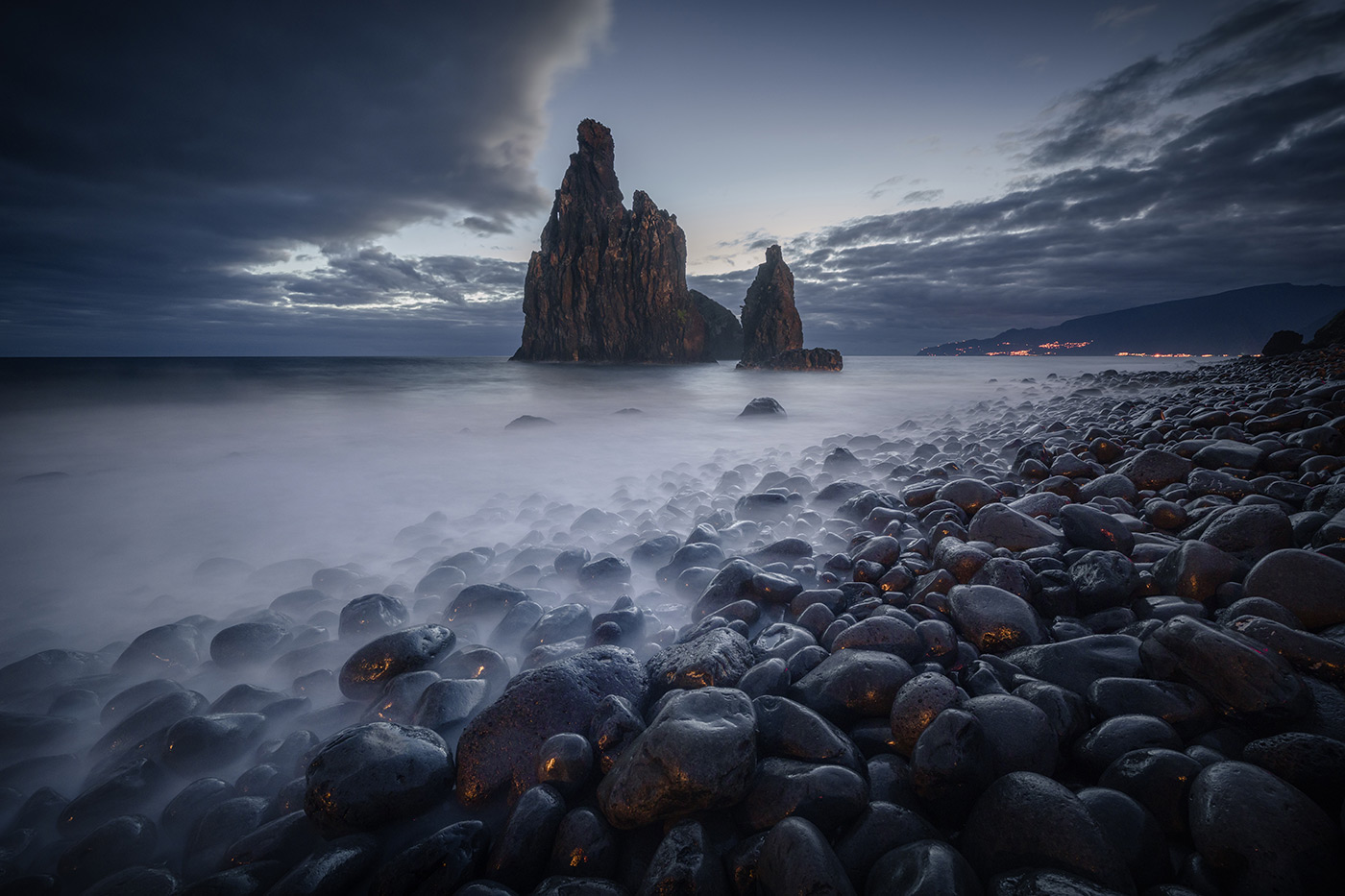
© Radoslav Sviretsov
What does rectilinear ultra-wide rather than a fisheye mean?
The RF 14mm f/1.4L VCM is a rectilinear ultra-wide lens, which means straight lines stay (mostly) straight. Buildings do not bow outwards, horizons don’t curve, and verticals look like you expect them to.
This is essentially the opposite to the RF 7-14mm fisheye, where distortion is part of the effect. Even at 14mm, Canon has managed to keep barrel and pincushion distortion to a minimum, so the sense of scale comes from the field of view rather than curvature. In practice, this makes the lens more predictable when using it for architecture, interiors and any wider environmental scenes.

© Radoslav Sviretsov
What is a fast 14mm lens for?
A fast 14mm lens of this kind is useful for capturing very wide scenes while controlling ISO, and reducing the need for very long shutter speeds. At this focal length the f/1.4 aperture allows more light onto the sensor than slow ultra-wide lenses, which extends how and when the lens can be used.
It’s ideal for subjects like astrophotography for example, where the combination of 14mm and wide aperture helps to keep exposure times shorter to avoid streaks. For interiors and architecture it allows shooting in available light, with straight lines and consistent colour.
The faster aperture also supports lower ISO for video, creating smoother motion in low light and more flexibility during recording.
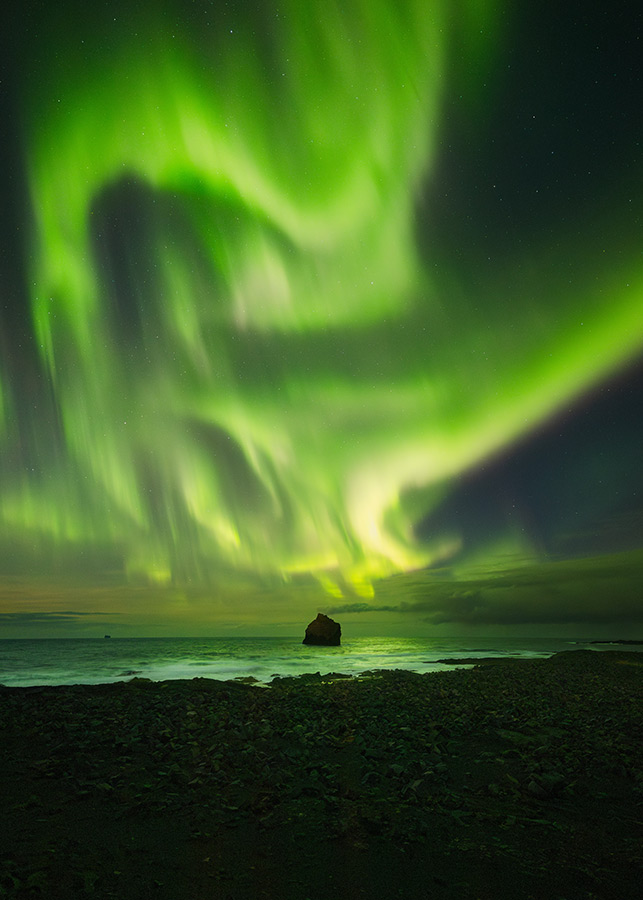
© Radoslav Sviretsov
Who is the RF 14mm f/1.4L VCM best for?
This lens makes best sense for photographers and filmmakers who regularly shoot at very wide focal lengths and want premium results. It is also suitable for landscape photographers, interior and architectural photographers, and astrophotographers who benefit from the wide coverage and fast f/1.4 aperture.
It’s not the best choice for many beginners as there are better alternatives in the RF lineup, which are easier to use and less specialised than this option. The Canon RF 14-35mm F/4L IS USM Lens is a good alternative to consider, especially as it provides the versatility of a zoom, at a lower cost. Where this lens makes most sense is for hybrid creators who shoot one or more ultra-wide genres, as well as video content.
It will appeal to video creators who shoot in smaller interiors, studios or low-light environments, where a wide field of view and fast aperture are useful. It is less likely to suit casual wide-angle use or photographers who prefer the exaggerated look of fisheye lenses.
With that said, let’s look at the Canon fisheye lens next.
Canon RF 7-14mm f/2.8-3.5L Fisheye Lens First Look Video by Gareth Evans
Canon RF 7-14mm f/2.8-3.5L fisheye First Look
As a specialist tool, the Canon RF 7-14mm f/2.8-3.5L fisheye is very different from the 14mm ultra-wide lens. It finally replaces Canon’s older EF fisheye zoom, while offering both circular and full-frame fisheye views from a single lens.
In this first look, we explore how those two perspectives differ, what a fisheye lens is useful for (beyond novelty shots), and how this lens fits into creative stills, video and VR workflows. We also look at close focusing, handling, and who this type of lens makes sense for.
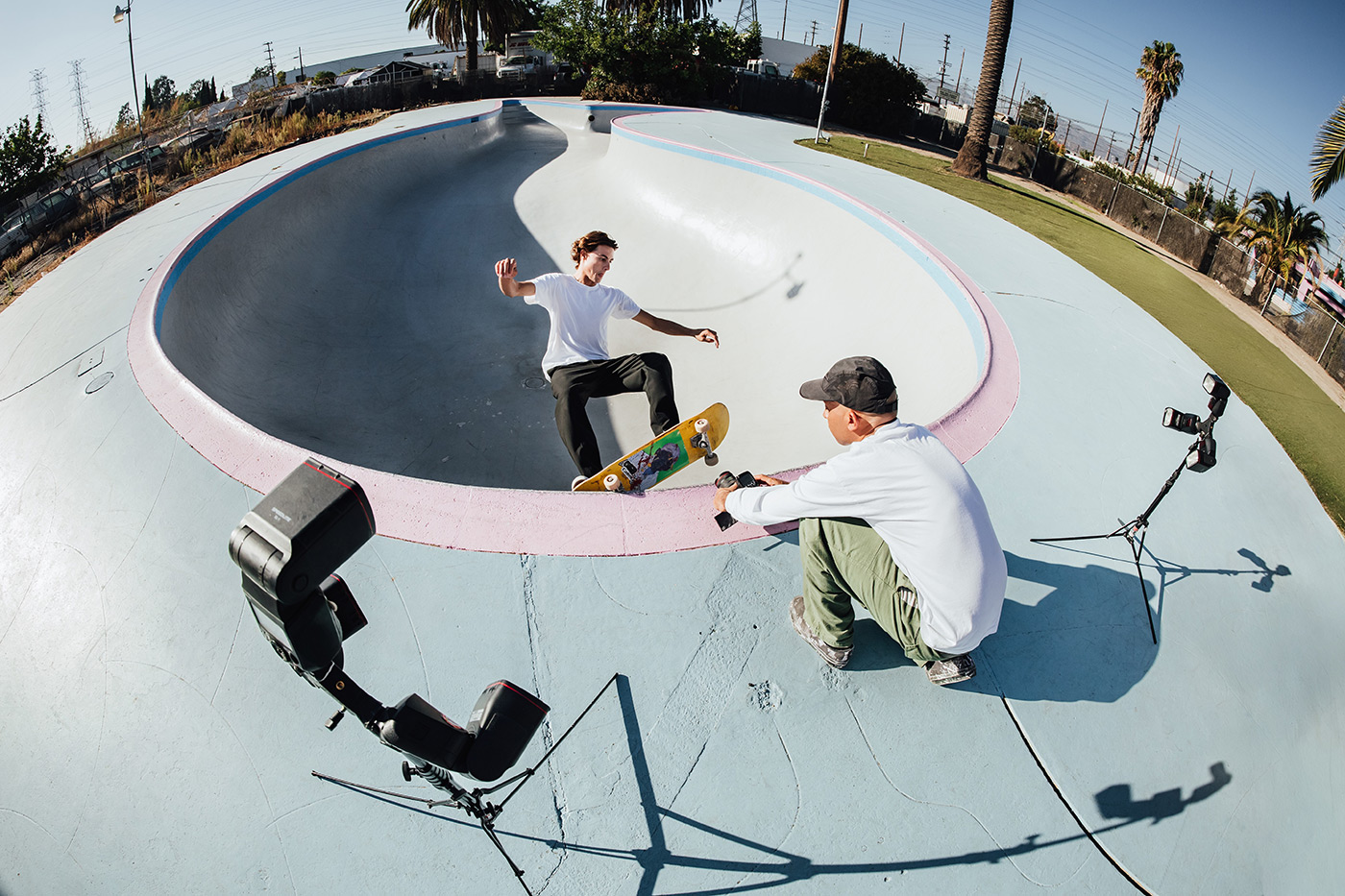
What makes a fisheye lens different?
A fisheye lens records an extremely wide field of view by allowing distortion rather than correcting it. Straight lines are intended to curve away from the centre of the frame, horizons bend, and scale is exaggerated when objects are closer to the lens.
Unlike rectilinear ultra-wide lenses like the 14mm VCM, a fisheye renders curvature as part of the appeal. This makes fisheye lenses less predictable but far more expressive, particularly when distortion is used deliberately by the photographer to depict movement or action for example.
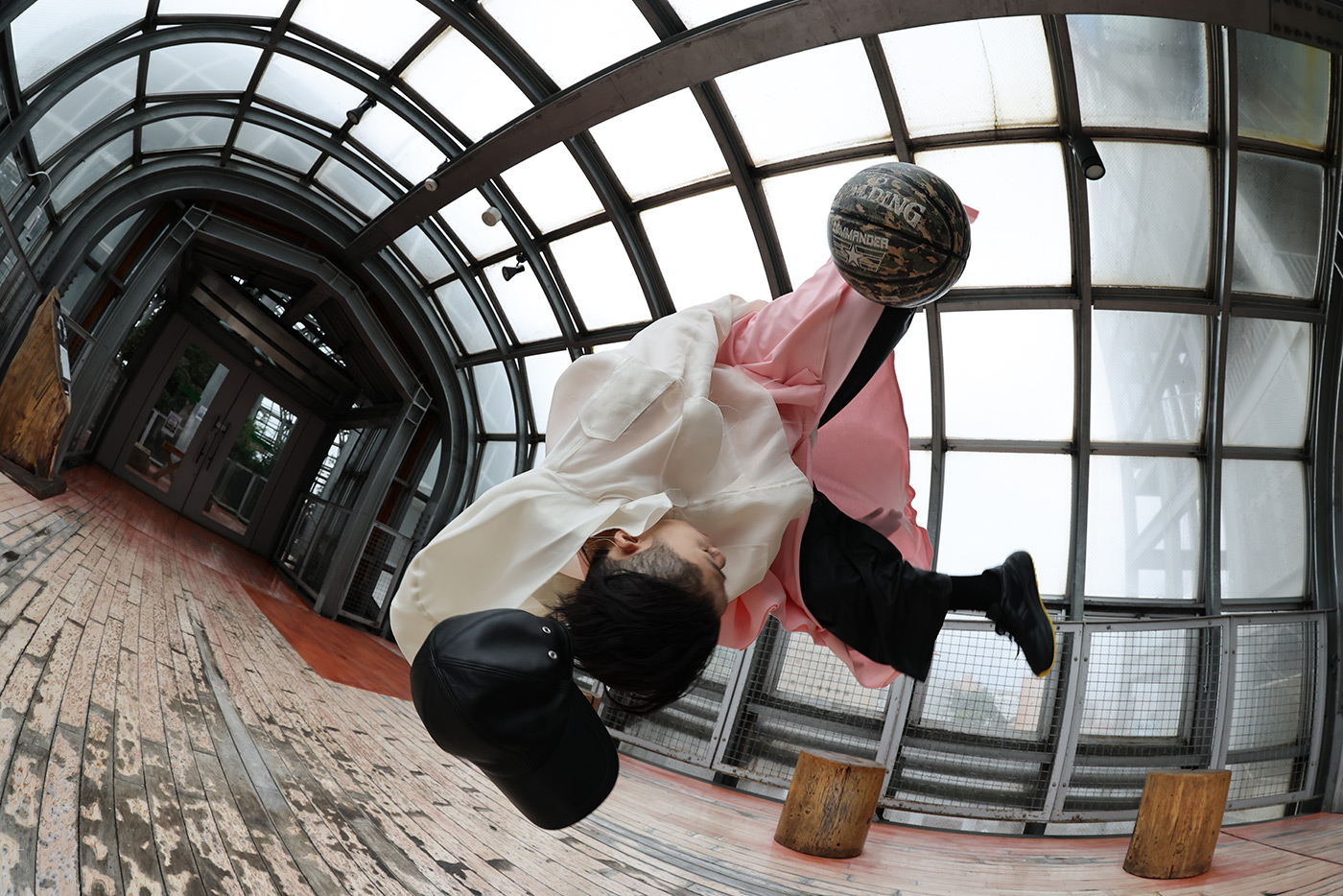
Sample image in the street using the fisheye RF 7-14mm f/2.8-3.5L
What’s the difference between circular vs full-frame fisheye?
A circular fisheye renders a round image within the frame, showing the full 180º in all directions, with black borders around the edge. A full-frame fisheye fills the entire sensor, still capturing an extremely wide view, but without the circular border.
Both produce curved lines and exaggerated perspective, but circular fisheye images are perhaps more abstract, while full-frame fisheye images are easier to use in stills and video.
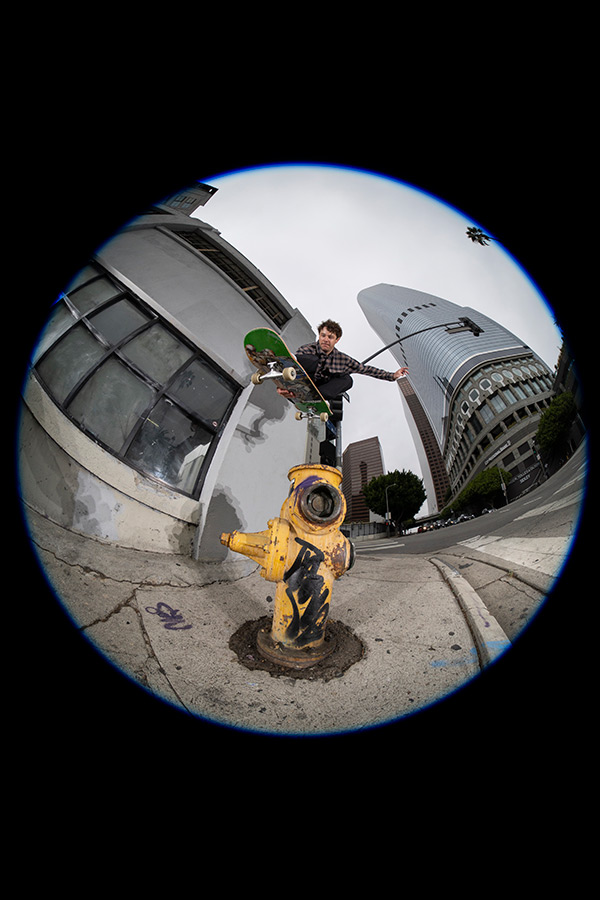
Example of circular fisheye image
What are the creative and immersive uses for a fisheye lens?
fisheye lenses are best when distortion is deliberate rather than avoided. The extreme field of view creates a sense of immersive space, placing the viewer inside the scene. This is suitable for subjects such as action sports, urban shots, environmental scenes and experimental video, where proximity and movement can add impact.
On compatible Canon cameras, circular fisheye footage can also be converted into 2D 180º VR video, opening up immersive viewing formats that are hard to achieve with conventional ultra-wide lenses.
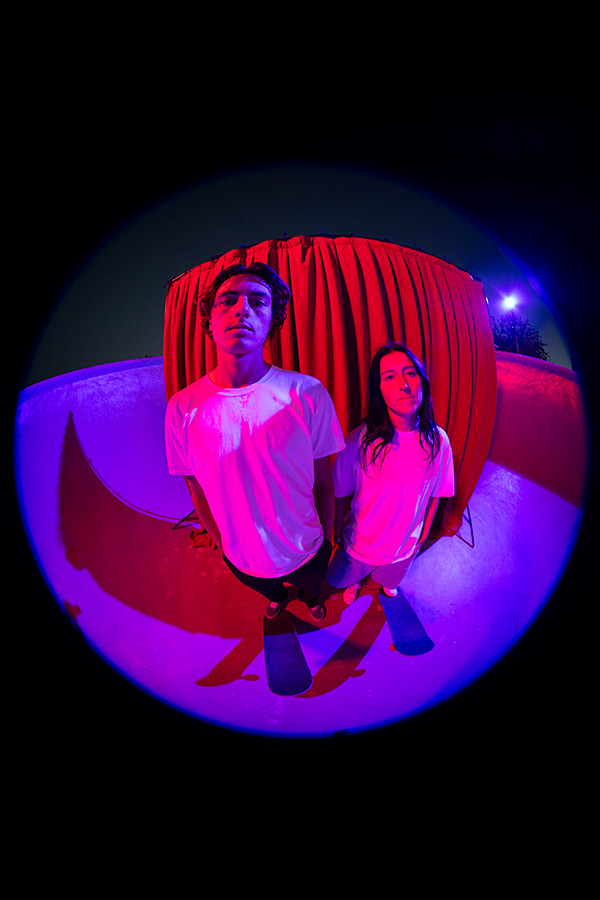
Another creative circular fisheye image
Who is a specialist lens of this type best for?
The RF 7-14mm f/2.8-3.5L fisheye is definitely not a general-purpose ultra-wide lens and is unlikely to be an everyday choice for most photographers. It is suitable for creators who want that distinct fisheye distortion and understand how to use it as part of their creative language.
It may also make sense for photographers who already have a rectilinear wide-angle and are looking to add a very different lens to their kit for inspirational moments. A regular wide-angle lens will usually be the better option for most situations outside of these.
RF 7-14mm f/2.8-3.5L fisheye Vs RF 14mm f/1.4L VCM Specs Comparison
The comparison table below includes key specs so you can compare these two lenses and how they differ for your type of content creation, helping to decide which is the best option.
|
|
||
|
Image size |
Full frame |
full frame |
|
Focal length range |
14mm |
7-14mm |
|
Maximum aperture |
f/1.4 |
f/2.8-3.5 |
|
Minimum aperture |
f/16 |
f/22-29 |
|
Angle of view |
104° horizontal, 81° vertical, 114° diagonal |
from 190 º circular to 180 º diagonal |
|
Lens construction |
18 elements in 13 groups |
16 elements in 11 groups |
|
Special optics |
Fluorite, UD, BR, GMo aspherical elements |
five UD elements and two replica aspherical elements |
|
Number of diaphragm blades |
11 |
9 |
|
Closest focusing distance |
0.24m |
0.15 metres |
|
Maximum magnification |
0.11x |
0.35x at 14mm at the centre |
|
Autofocus system |
Voice Coil Motor |
STM |
|
Image stabilisation |
Optical IS with coordinated IBIS support |
supported via coordinated IBIS |
|
Filter |
Rear gelatin filter 36.7 x 29.4mm |
Rear drop-in filter system |
|
Maximum diameter |
76.5 |
76.5 millimetres |
|
Length |
112mm |
109.4 millimetres |
|
Weight |
578g |
476 grams |
To recap, these two lenses are at opposite ends of the creative ultra-wide spectrum. The RF 14mm f/1.4L VCM is about control, low-light performance and sharp results, while the RF 7-14mm f/2.8-3.5L fisheye is all about distortion, perspective and immersive looks.
Explore both of these Canon RF lenses in more detail by visiting the links below and remember to try our trade-in service if you’re selling unwanted gear when buying either of these.
Shop for the Canon RF 14mm f/1.4L VCM or the Canon RF 7-14mm f/2.8-3.5L fisheye and see where these ultra-wide creative lenses take your content creation.
Share this post:
By Nick Dautlich on 05/02/2026

Nick Dautlich
Senior Content Writer and Product Reviewer
Nick Dautlich is the Senior Content Writer and Product Reviewer at Park Cameras, with over 15 years of photography experience. A Sony Imaging Professional and expert reviewer, Nick has worked with major brands such as Canon, Sony and Nikon. His work is also featured on Vanguard World UK’s website, Capture Landscapes, and Shutter Evolve. Nick’s photography includes National Trust projects and magazine covers and he is passionate about landscapes and storytelling. Nick also enjoys hiking and teaching his children about nature. Learn more on his profile page.
Trade in your old equipment
Fast and easy trade in service ensures your old gear is collected efficiently and you are paid quickly! It's very simple to trade in your unwanted photography gear. Just head over to our dedicated Sell or Part Exchange page, fill out the details, and we'll get back to you with an offer for your old gear. Take the cash, or put it towards the cost of your new gear. It's up to you! Find out more
sign up to the newsletter
Keep up to date on the latest photography news, events and offers. Sign up now