- Call us 01444 237070

-
- Back
- Used Cameras
- Used Accessories
- Used Lenses
- Back
- Used Canon Lenses
- Used Nikon Lenses
- Used Fujifilm Lenses
- Used Sony Lenses
- Used Micro 4/3rds Lenses
- Used Leica Lenses
- Used Panasonic Lenses
- Used Pentax Lenses
- Used Samyang Lenses
- Used Sigma Lenses
- Used Tamron Lenses
- Used Tokina Lenses
- Used Voigtlander Lenses
- Used Zeiss Lenses
- Used Hasselblad Lenses
- Used Video
- Used Film Equipment
- Used Stock Alert
- Used Blank Test
- Sell or Part Exchange
- Used Clearance
- Recently Added Used Equipment
- Park Picks
- Faulty
- Trade-In
- Blog
- New in
- Call us
- Contact us
- Stores
- Sign in
- Categories
- Tips & Inspiration
- Reviews
- News
- Events
- Features
- Buying Guides
- Competitions
Nikon AF-S 200-500mm f/5.6E VR on Z Mount
With many photographers moving from DSLR to mirrorless, one of the questions we get asked is whether you can use a Nikon DSLR lens on a mirrorless camera using the Nikon FTZ adapter. More specifically people wonder whether the Nikon AF-S 200-500mm f/5.6E ED VR lens is worth buying for Z mount cameras.
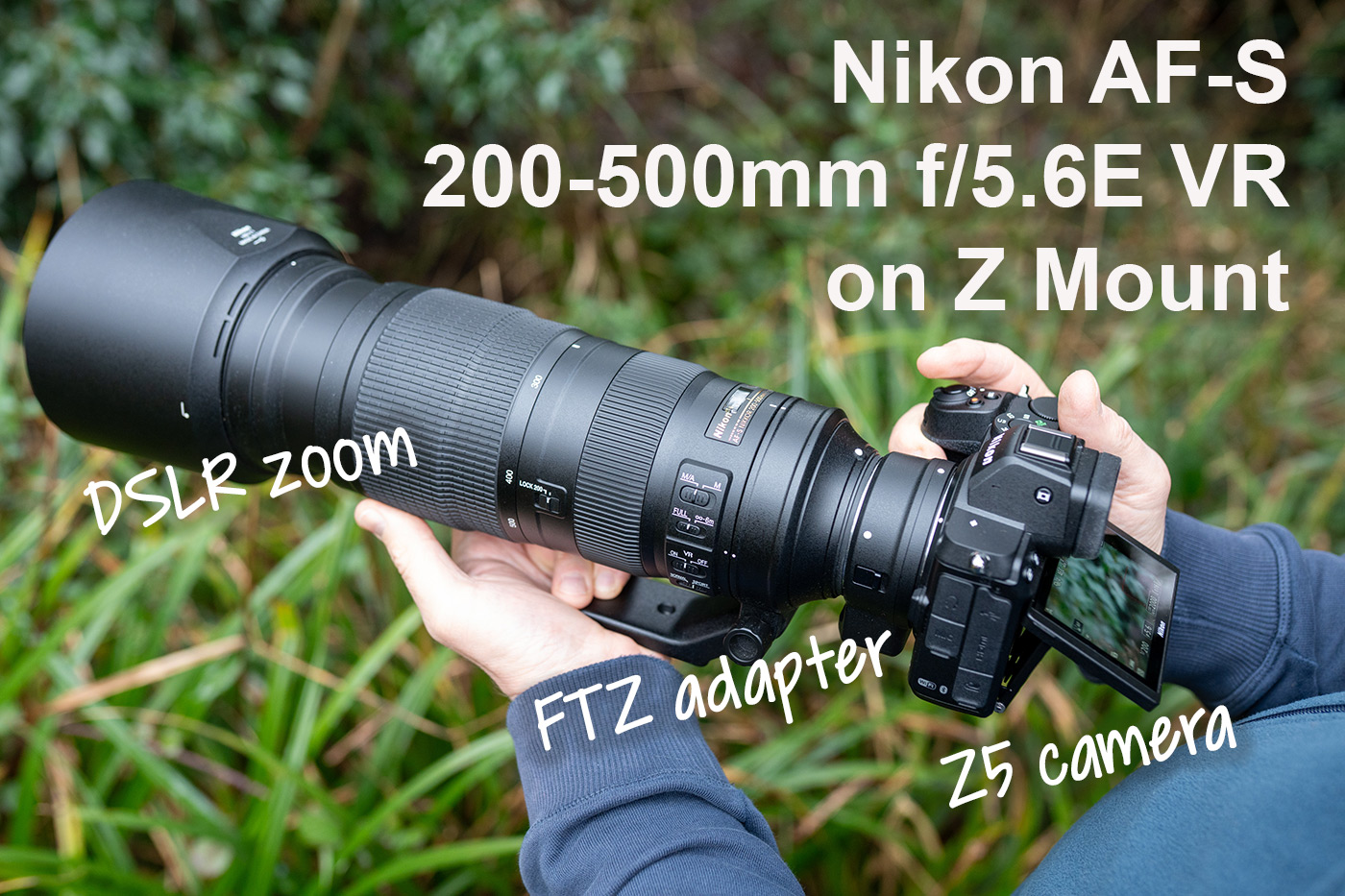
For Used Week, I got hands-on with this popular super-telephoto Nikon zoom lens to answer the key concerns that come up, including how autofocus is affected, whether VR is impacted, whether there is a crop, and more.
This guide includes sample images of birds, which we hope will help you decide whether an adapted DSLR lens on a Nikon mirrorless camera is the best solution for your photography, or whether you should go native with a Z mount lens.
We also weigh up buying used Nikon lenses and whether that is the best route versus buying new, so join us as we begin by answering the first question, which relates to new and used prices.
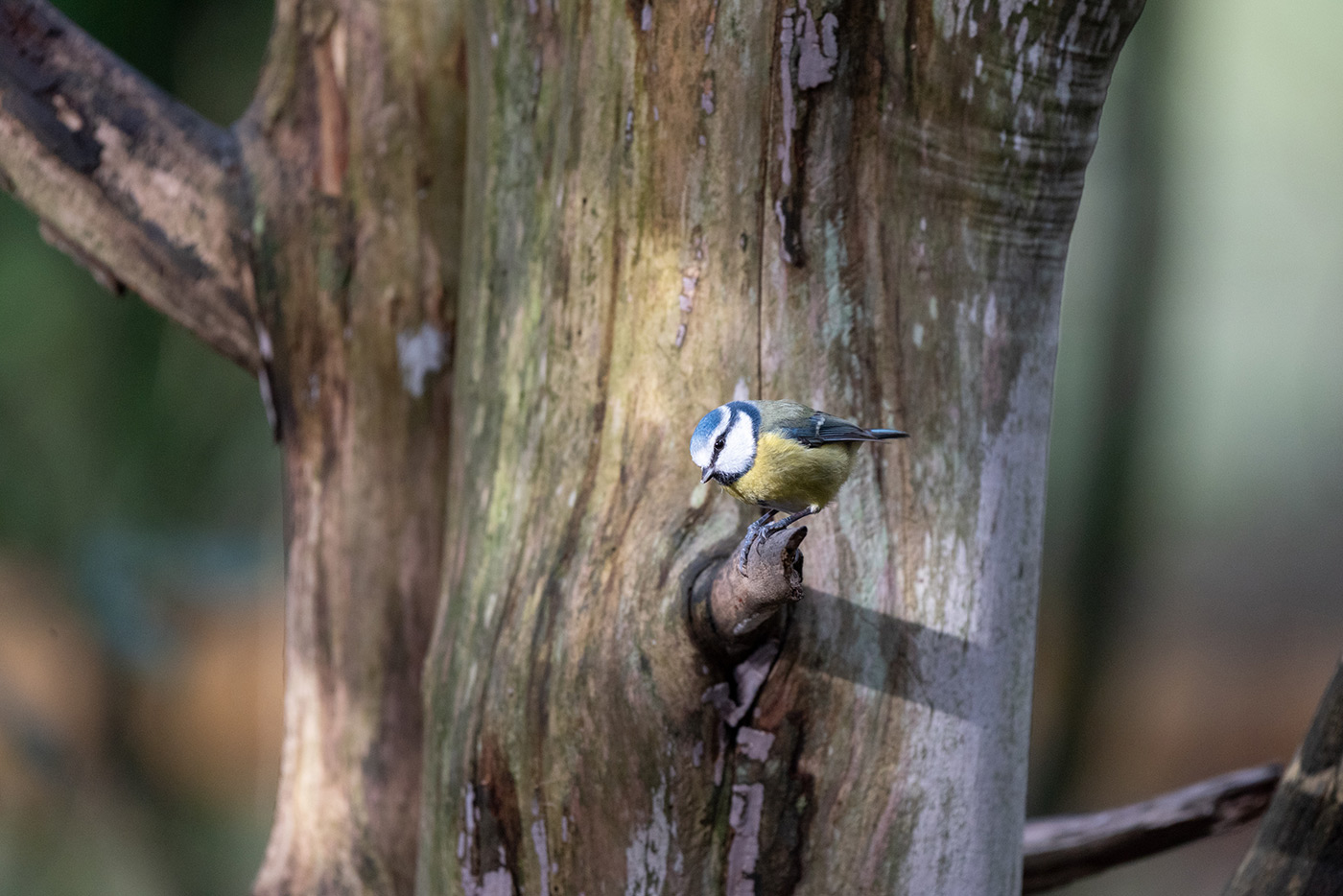
Sample 01 Blue tit AF-S 200-500mm f/5.6E VR @500mm with Nikon Z5. Camera settings: 1/1000 sec. f/5.6. ISO 2500 (right click to open larger)
How much is the AF-S 200-500mm f/5.6E ED VR lens?
A new Nikon AF-S 200-500mm f/5.6E ED VR lens costs £1,249.00, while for a used Nikon 200-500mm F/5.6E VR expect to pay around £600.00 - £700.00. Both are surprisingly good value, especially taking into account comparable mirrorless lenses, such as the Nikon Z 180-600mm F/5.6-6.3 VR, which costs £1,799.00, albeit with an extra 100mm range.
When purchased second-hand, the setup for this guide would cost approximately:
- Z5 camera body: £509.00
- Zoom lens: £644.00
- FTZ adapter: £169.00
- Total: £1322.00
For just over £1,300, this gives you a 200-500mm full-frame wildlife setup on Z mount, which is considerably less than many native mirrorless alternatives of similar focal lengths.
While some photographers may already own the AF-S 200-500mm f/5.6E ED VR lens and be wondering how well it works on a mirrorless camera they’re considering, others may be looking at it the other way round, looking for the best value Nikon zoom for a Z mount camera. We cover both situations in the following sections, weighing up some of the pros and cons to help you decide.
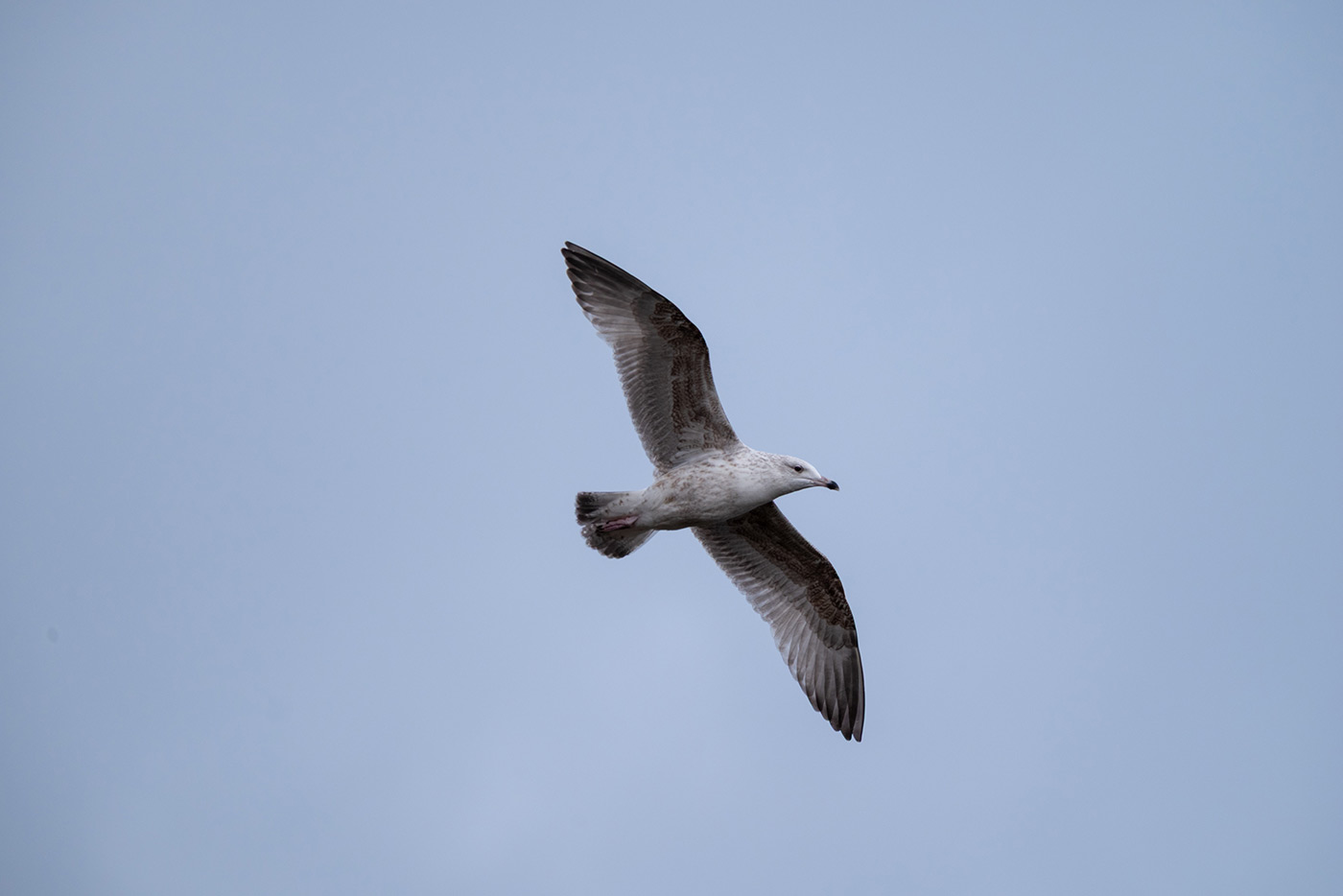
Sample 02 Seagull in flight AF-S 200-500mm f/5.6E VR @500mm with Nikon Z5. Camera settings: 1/1000 sec. f/5.6. ISO 500 (right click to open larger)
Nikon AF-S 200-500mm f/5.6E ED VR sample images
A range of sample images were captured by Nick Dautlich with the Nikon AF-S 200-500mm f/5.6E ED VR over the course of two to three days as part of Used Week. It was mounted on the original Z5 camera (released in 2020) via a Nikon FTZ adapter.
A combination of fully Manual, Shutter Priority and Aperture Priority modes with Auto ISO was used for the images, which have been lightly edited using basic adjustments. Conditions were quite good overall, with some brighter spells mixed in with typical winter cloud, giving a fair idea of how this adapted DSLR lens performs in everyday wildlife situations in the UK.
Hopefully, the selection of birds offers a realistic look at what you can expect when using a Nikon DSLR lens on a mirrorless camera, which we explore in more detail next.
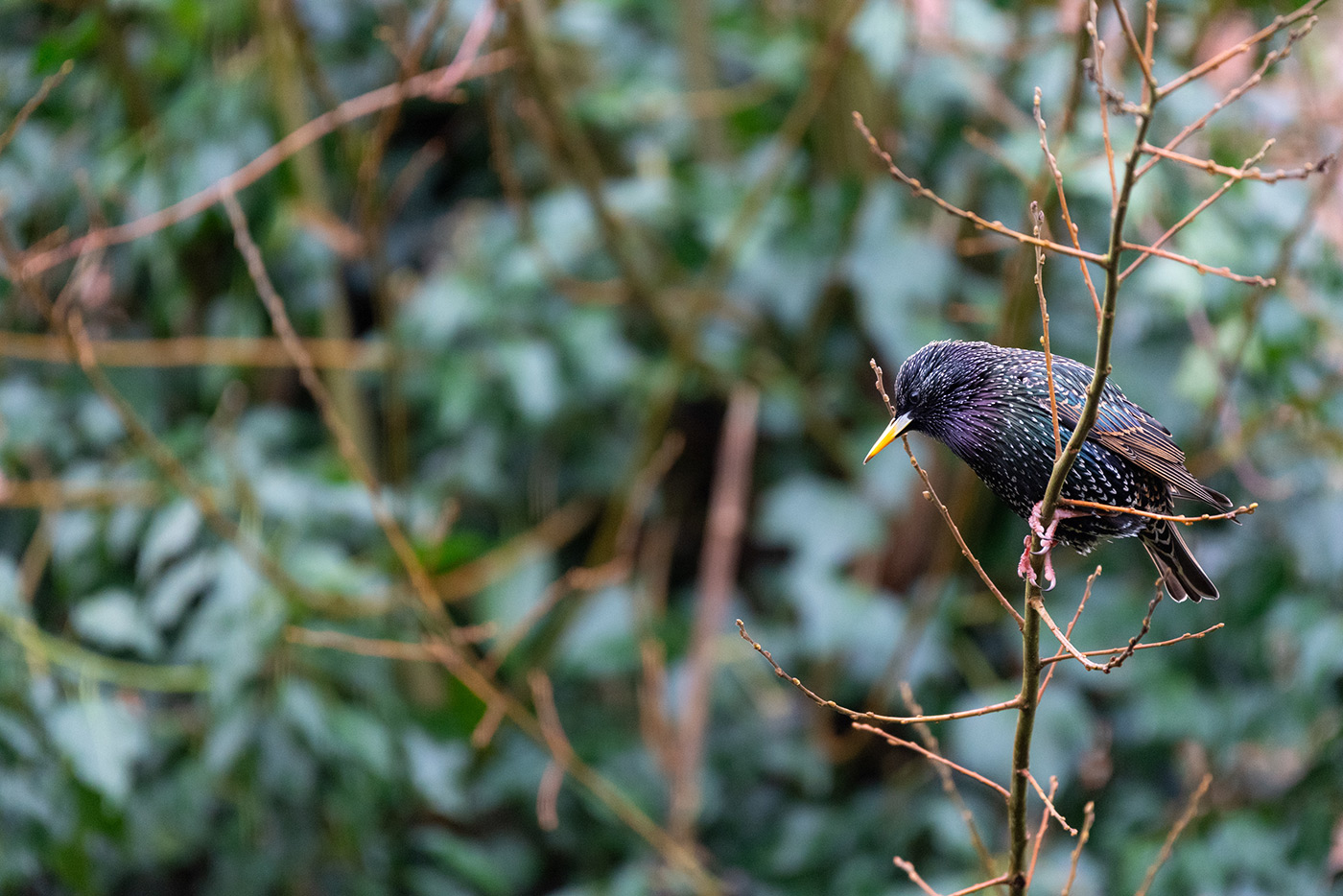
Sample 03 Starling AF-S 200-500mm f/5.6E VR @500mm with Nikon Z5. Camera settings: 1/500 sec. f/5.6. ISO 3600 (right click to open larger)
Can you use a Nikon DSLR lens on a mirrorless camera?
Yes, you can use a Nikon DSLR lens on a mirrorless camera, but only with a Nikon lens adapter for mirrorless bodies. In Nikon’s case, that means using the Nikon FTZ adapter, which allows F mount lenses to attach to Z mount cameras.
Is Nikon Z mount compatible with F mount?
Not directly. The Nikon Z mount is physically different from the older F mount used on DSLR cameras. To bridge the two systems, you need a Nikon DSLR to mirrorless lens adapter, which is exactly what the FTZ adapter does.
Once attached, most modern AF-S and AF-P lenses work well on Z mount bodies, including full-frame models like the Z5.
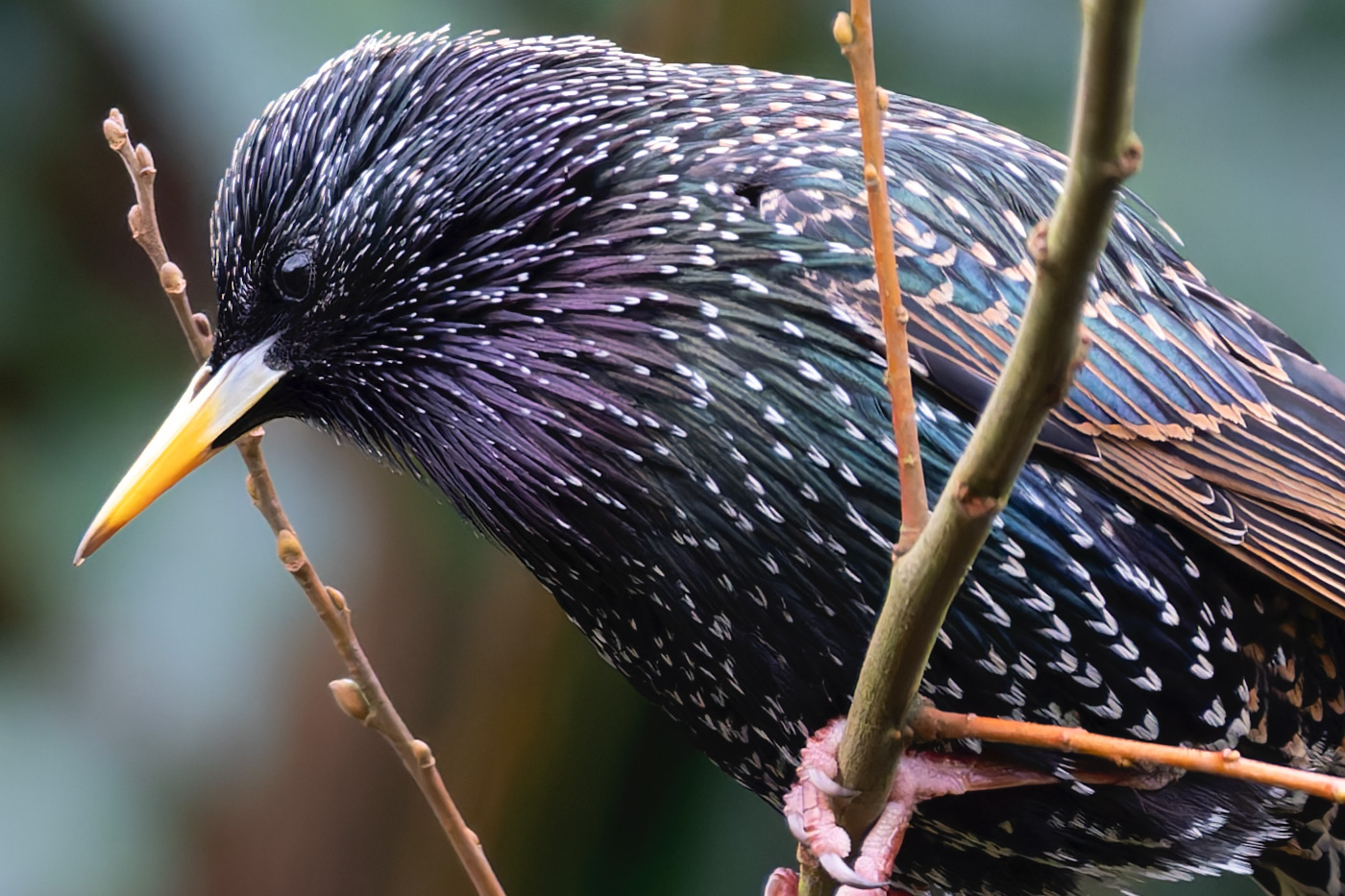
100% crop showing great detail from previous image (noise reduction and sharpening applied)
What is the Nikon FTZ adapter?
The Nikon FTZ adapter is a mount converter that lets you attach F mount DSLR lenses to Nikon Z mount cameras. It maintains electronic communication between the lens and camera, so autofocus, aperture control and vibration reduction continue to function.
It does not contain optics, so there is no impact on image quality.
Does autofocus work?
With AF-S lenses like the Nikon AF-S NIKKOR 200-500mm f/5.6E ED VR, autofocus works on Z mount cameras. Performance depends slightly on the camera body you are using. On the Z5, autofocus is reliable for static subjects and capable for birds in flight, though it doesn’t match the latest generation Z bodies for subject tracking.
Does VR work?
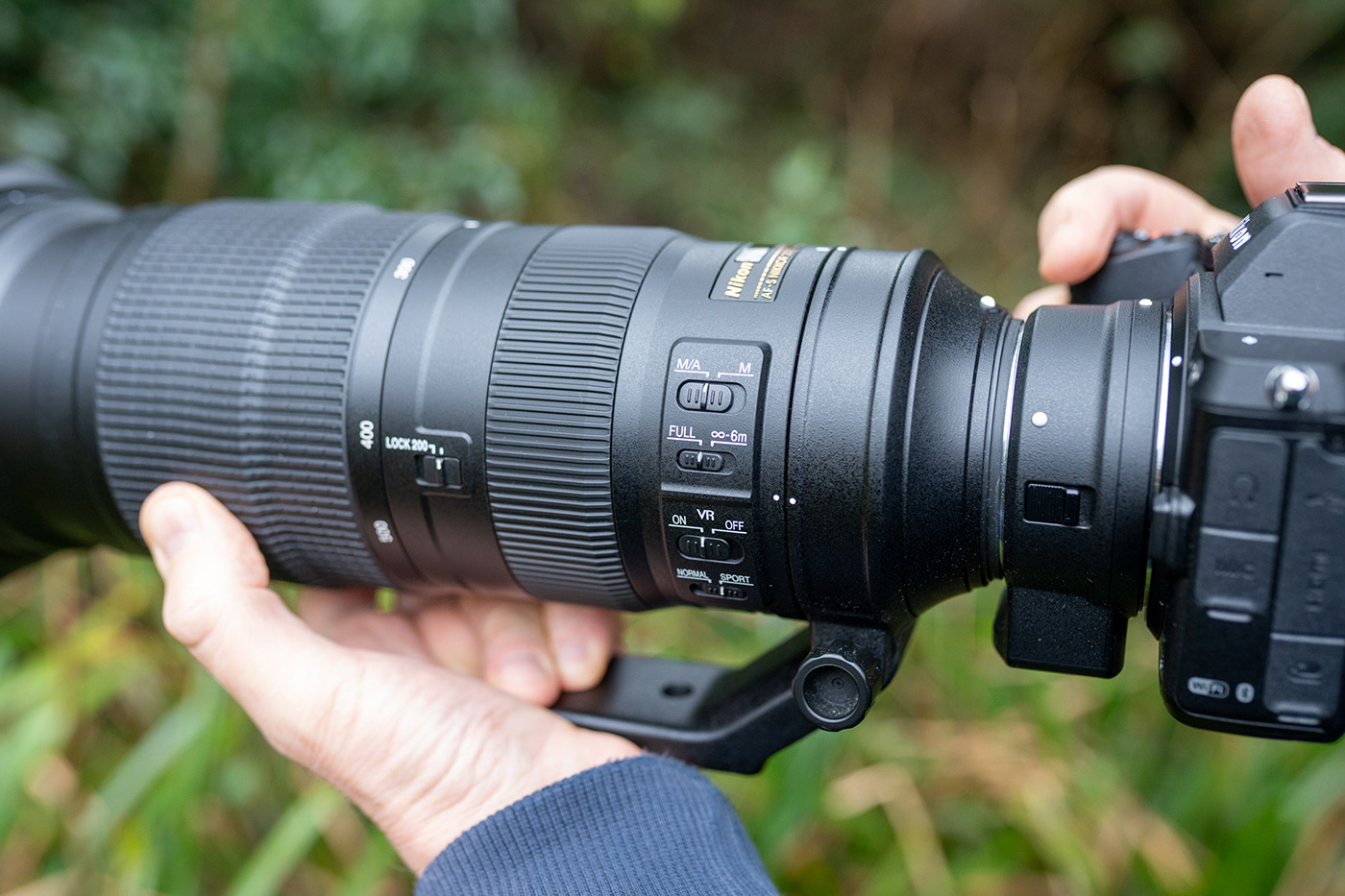
Yes. Vibration Reduction continues to operate regardless of the FTZ adapter. In practice, I was able to handhold at the longest focal range and achieve sharp results at 1/250 second or even slower, which confirms the 4-5 stops it provides. Additionally, the ‘sports’ mode proved suitable for birds in flight.
Is there a crop?
No. There is no automatic crop when using an F mount full-frame lens on a full-frame Z camera. The 200-500mm remains a true 200-500mm equivalent field of view.
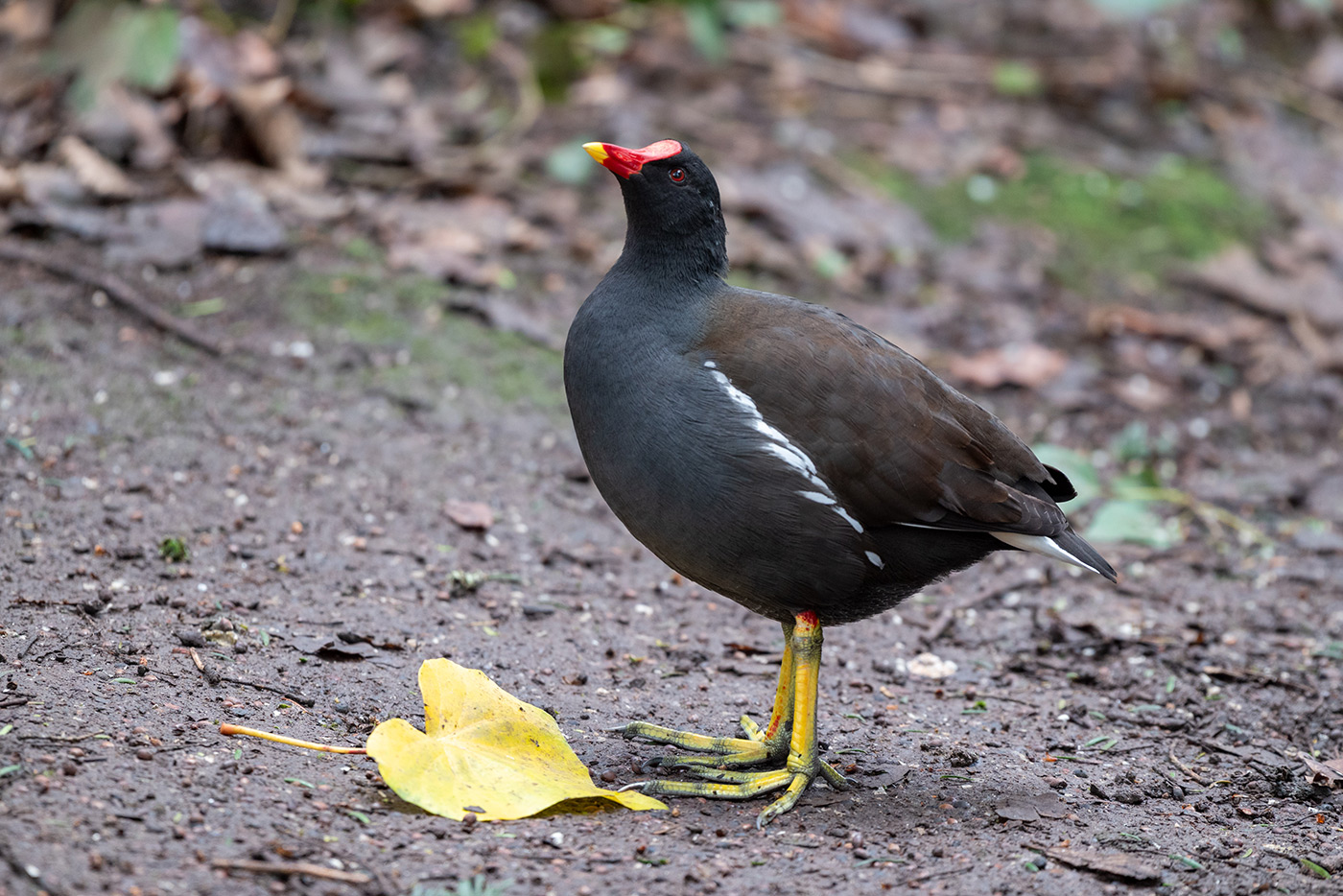
Sample 04 Moorhen AF-S 200-500mm f/5.6E VR @410mm with Nikon Z5. Camera settings: 1/160 sec. f/5.6. ISO 1400 (right click to open larger)
Is there any performance loss?
There is no optical penalty when using the FTZ adapter. Autofocus performance may feel slightly different compared to native Nikon Z mount lenses, and handling changes due to the added adapter length, but image quality remains the same as it was on DSLR.
What’s the difference between FTZ vs FTZ II?
There are two versions of the Nikon FTZ adapter. The original FTZ includes a tripod foot, while the newer FTZ II removes the foot and has a slimmer design, which works better with cameras that have built-in vertical grips. In terms of performance, autofocus, aperture control and image stabilisation work the same on both versions.
With all of those questions out of the way, let’s explore the 200-500mm f/5.6E ED VR lens handling in more detail.

Sample 05 Long-Tailed Tit AF-S 200-500mm f/5.6E VR @440mm with Nikon Z5. Camera settings: 1/320 sec. f/5.6. ISO 2500 (right click to open larger)
Nikon AF-S 200-500mm f/5.6E ED VR on a Z5 camera
If you’re used to smaller Nikon Z mount lenses (which I had been while looking at whether the Nikon Z 24-200mm VR Lens is right for you), this pairing will feel substantial. The lens weighs around 2,300g, with 135g for the FTZ adapter and 590g for the Z5 body, so you’re carrying about 3kg.
This is pretty standard for wildlife photographers, but it’s not lightweight for an everyday setup, which is one reason mirrorless adoption has been so successful, as the optics are generally lighter overall.
Handling with the FTZ adapter feels fine considering the larger super-telephoto zoom, increasing the weight and length slightly, but without much noticeable impact. The combination does become quite front-heavy, especially at 500mm when the barrel is fully extended, although balance is still manageable.
I found myself resting it on fences or branches to get steady, and while I did shoot entirely handheld, a monopod or tripod with a gimbal would make longer sessions more comfortable for many photographers.
The zoom ring on the barrel is smooth and precise, though it has a fairly long throw. Manual focus is useful when you need to fine-tune, for example when focusing through foliage or when autofocus struggles with busy backgrounds.
A tripod collar is included, which isn’t Arca-Swiss compatible, so you’ll need to attach a plate if you’re using a compatible head, although it does make for a convenient carrying handle.
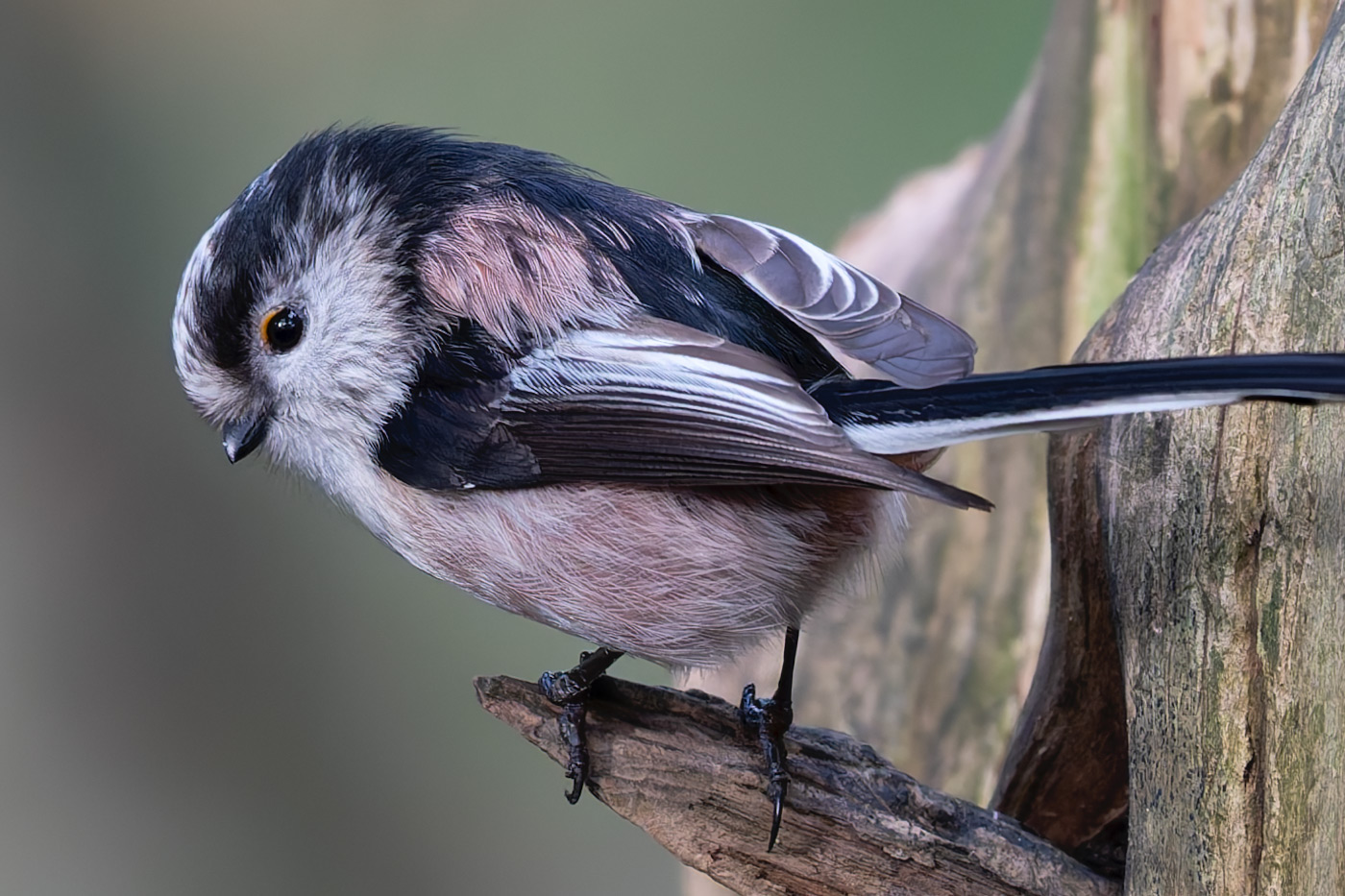
100% crop showing great detail from previous image (noise reduction and sharpening applied)
One thing to budget for is large 95mm lens filters, which can be relatively expensive compared to smaller filters.
If you’ve been asking ‘can I use my DSLR lens on a mirrorless camera Nikon?’, the answer is yes, but expect a more traditional DSLR shooting experience compared to using native Z mount glass, which we look at further on in this guide.
Take the Nikon Z 180-600mm f/5.6-6.3 VR as another example. It offers 100mm greater reach, yet weighs around 0.5kg less, which is noticeable when you’re shooting for extended periods.
If you’re interested in how the Z5 itself performs with native lenses too, you can also read our guide; Is the Original Nikon Z5 Worth Buying? which goes into more detail.
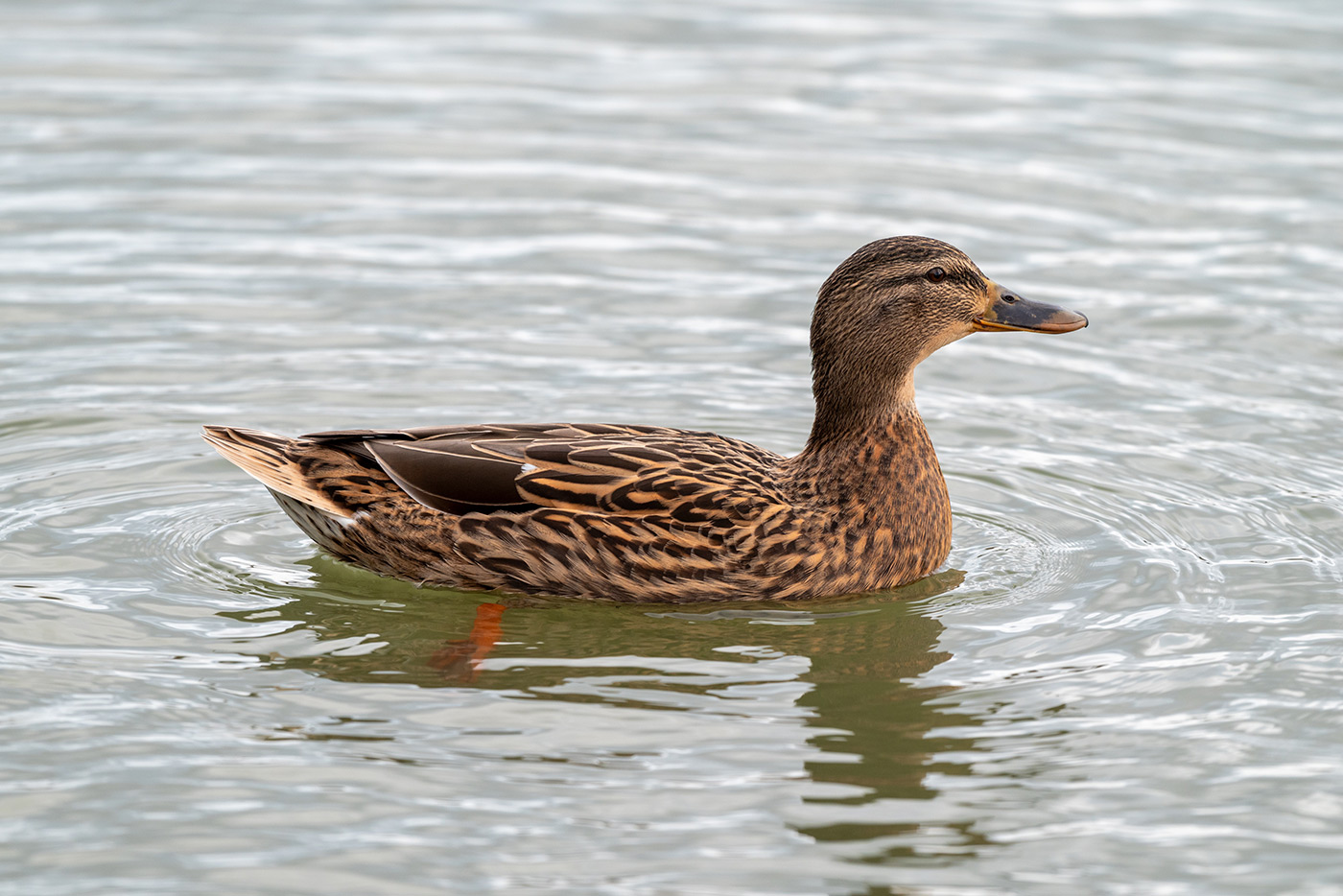
Sample 06 Duck AF-S 200-500mm f/5.6E VR @340mm with Nikon Z5. Camera settings: 1/640 sec. f/5.6. ISO 450 (right click to open larger)
Autofocus performance on mirrorless
Despite the modest price, the AF-S 200-500mm f/5.6E VR delivers accurate autofocus when mounted via the Nikon FTZ adapter. While it isn’t as quick as newer Nikon mirrorless lenses with dual-motor systems, it was capable in the field, even on the older Nikon Z5, which lacks the latest subject-tracking.
Subject detection was sometimes hit and miss in darker environments, but when capturing seagulls in flight, woodland birds and other relatively straightforward subjects, the camera and lens combination had no trouble acquiring focus, and subsequently tracking the subject well.
I didn’t get the chance to shoot motorsport or similar fast-paced genres, but I would imagine this setup could manage it with some pre-focusing and other techniques. There’s also a focus limiter which reduces hunting time if your subject is consistently more or less than 6m away.
I wouldn’t let autofocus hold you back if considering this Nikon DSLR lens on mirrorless, as it performs like a champ. Next up let’s look more closely at the image quality the lens offers on a Z5 body.

Sample 07 Robin AF-S 200-500mm f/5.6E VR @500mm with Nikon Z5. Camera settings: 1/250 sec. f/5.6. ISO 560 (right click to open larger)
Image quality
Image quality is where this lens excels. It's sharp, very sharp, with excellent resolving power and little noticeable distortion or vignetting. I was also pleased with the colour rendition with the Z5 camera, with neutral results, which makes a great starting point for editing.
I like the transitions between in and out of focus areas in most shots, the subject popping from the frame with a 3D effect when the background is suitably distant to melt away. I’m no wildlife expert as you can see, but I’m certain in the right hands you could achieve excellent results for distant subjects. It also lends itself to portrait-styled wildlife shots, with decent foreground background separation easily achievable.
While the aperture isn’t the fastest it is certainly fast enough to shoot in relatively low light, and results were clean enough up to around ISO 3,600. I ran a couple of shots through de-noise applications and you can see the results for yourself in these examples.
If your main concern is image quality there’s every reason to choose this super telephoto lens over any other, but how does it stack up against similar Z-mount models? Let’s see next.

Sample 08 Chaffinch AF-S 200-500mm f/5.6E VR @500mm with Nikon Z5. Camera settings: 1/320 sec. f/5.6. ISO 3200 (right click to open larger)
Is it better to buy this DSLR lens or a native Z mount?
This is a tricky question and depends on a few factors. The Nikon AF-S 200-500mm f/5.6E ED VR offers:
- Lower new and used prices. On the second-hand market in particular, this lens represents really strong value compared to similar Nikon Z mount lenses.
- Great optical performance. Image quality is very good, with excellent sharpness for wildlife and similar subjects.
- Works well with the Nikon FTZ adapter. Autofocus, VR and aperture all work properly when using the FTZ adapter on Z mount cameras.
- Constant f/5.6 aperture. Unlike variable aperture zooms, you get a consistent maximum aperture throughout the range.
- Solid reach. 500mm is a popular focal length for super telephoto subjects such as wildlife, sports, action and bird photography.
A native Nikon Z mount zoom may be more appealing for these reasons:
- Lighter weight. Options like the Z 180-600mm f/5.6-6.3 VR and Z 600mm f/6.3 VR S offer longer reach while weighing less.
- Faster autofocus. Newer Nikon Z mount lenses are made for mirrorless bodies and generally offer quicker and more refined AF.
- Better ergonomics. Native lenses tend to be smaller and don’t need a lens adapter, and often include Arca-Swiss tripod feet, customisable buttons and control ring.
- Optical performance. Regardless of how good the reviewed lens was, newer optics are more refined and generally deliver superior optical performance.
Our Ultimate guide to Nikon Z super telephoto lenses compares many of the best and most versatile zooms for the platform, which will be useful when weighing up the pros and cons of going native.

Sample 09 Near miss AF-S 200-500mm f/5.6E VR @500mm with Nikon Z5. Camera settings: 1/320 sec. f/5.6. ISO 3200 (right click to open larger)
So, is the Nikon AF-S 200-500mm f/5.6E ED VR lens worth buying for Z mount cameras? If you want a budget-friendly super-telephoto for your mirrorless camera, this is a great choice, especially if you’re moving from DSLR and need to save every penny for all of the accessories you’ll need.
Just be prepared to budget for a suitable camera backpack, a large lens filter, and possibly a monopod, depending on how jacked you are. You may also need more reach, in which case consider adding an F-mount teleconverter, as you won’t be able to use Z-mount TCs with the FTZ adapter.
However, if weight, ergonomics and the fastest autofocus are essential, a native Nikon Z mount lens such as the 180-600mm may be a better choice for you.
Save today with a Used Nikon AF-S 200-500mm F/5.6E ED VR lens, add a used Nikon FTZ adapter (version 1) or an FTZ II, and enjoy using your Nikon DSLR lens on a mirrorless camera.
Share this post:
By Nick Dautlich on 12/02/2026

Nick Dautlich
Senior Content Writer and Product Reviewer
Nick Dautlich is the Senior Content Writer and Product Reviewer at Park Cameras, with over 15 years of photography experience. A Sony Imaging Professional and expert reviewer, Nick has worked with major brands such as Canon, Sony and Nikon. His work is also featured on Vanguard World UK’s website, Capture Landscapes, and Shutter Evolve. Nick’s photography includes National Trust projects and magazine covers and he is passionate about landscapes and storytelling. Nick also enjoys hiking and teaching his children about nature. Learn more on his profile page.
Trade in your old equipment
Fast and easy trade in service ensures your old gear is collected efficiently and you are paid quickly! It's very simple to trade in your unwanted photography gear. Just head over to our dedicated Sell or Part Exchange page, fill out the details, and we'll get back to you with an offer for your old gear. Take the cash, or put it towards the cost of your new gear. It's up to you! Find out more
sign up to the newsletter
Keep up to date on the latest photography news, events and offers. Sign up now