- Call us 01444 237070

-
- Back
- Used Cameras
- Used Accessories
- Used Lenses
- Back
- Used Canon Lenses
- Used Nikon Lenses
- Used Fujifilm Lenses
- Used Sony Lenses
- Used Micro 4/3rds Lenses
- Used Leica Lenses
- Used Panasonic Lenses
- Used Pentax Lenses
- Used Samyang Lenses
- Used Sigma Lenses
- Used Tamron Lenses
- Used Tokina Lenses
- Used Voigtlander Lenses
- Used Zeiss Lenses
- Used Hasselblad Lenses
- Used Video
- Used Film Equipment
- Used Stock Alert
- Used Blank Test
- Sell or Part Exchange
- Used Clearance
- Recently Added Used Equipment
- Park Picks
- Faulty
- Trade-In
- Blog
- New in
- Call us
- Contact us
- Stores
- Sign in
- Categories
- Tips & Inspiration
- Reviews
- News
- Events
- Features
- Buying Guides
- Competitions
Understanding UK Drone Flying Rules
In the last decade, technological advancements have made drones hugely popular among photographers and videographers, with industry names like DJI and others taking the forefront with new state-of-the-art drones and accessories. Understanding drone flying rules UK is essential to those wanting to get started with aerial photography and footage – this guide details all you need to know for anyone asking are there laws about flying drones.
UK Drone Rule Changes From 1 January 2026
From 1 January 2026, the UK Civil Aviation Authority has introduced updated requirements for drone users in the UK. These changes primarily apply to recreational and non-commercial flying within the Open category and are intended to improve pilot accountability and airspace awareness.
Anyone flying a drone with a take-off weight of 100g or more must now hold a valid Flyer ID, regardless of whether the drone is owned, borrowed, or flown purely for leisure. The Flyer ID confirms that the pilot has passed the CAA’s basic online theory test and understands the Drone Code.
From the same date, certain drones are also required to support Remote ID. Remote ID enables a drone to broadcast identification information during flight, similar to a digital number plate, allowing authorised parties to identify what is operating nearby. The requirement applies depending on the drone’s classification and the type of operation, and is being introduced in line with updated CAA guidance.
The CAA Drone Code and official documentation have been updated to reflect these changes. Drone pilots should check the current requirements for their specific drone and ensure they are compliant before flying.
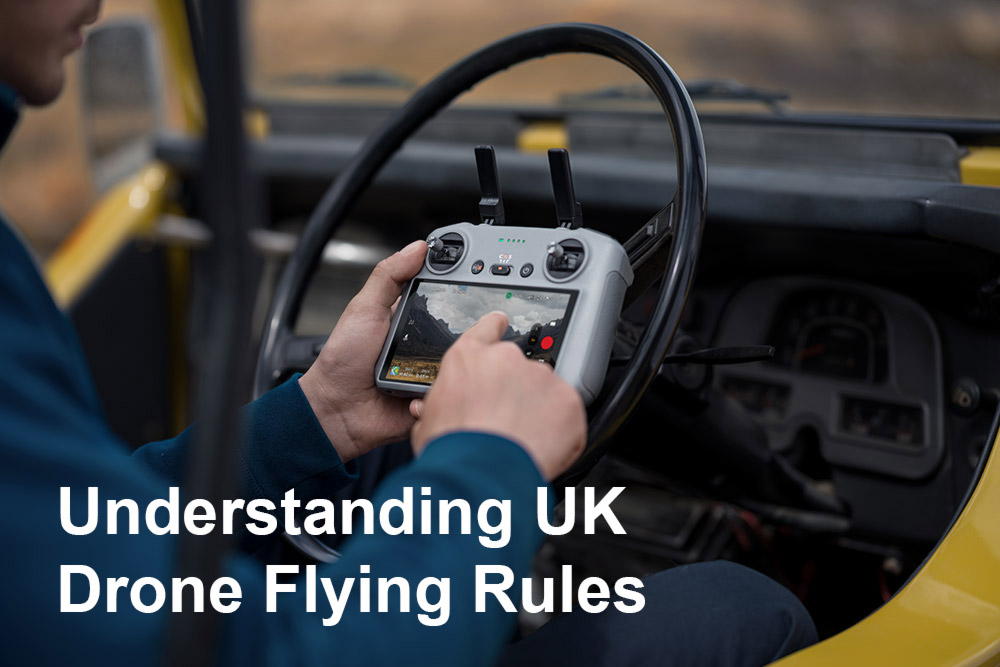
Drone Flying Rules UK
We’ve got you covered with everything you need to know to start flying drones in the UK and capturing some brilliant aerial shots and footage. While useful, drones need to be used cautiously to avoid causing a nuisance, so before flying, you must understand drone flying laws to ensure your drone use is safe and doesn’t intrude on others’ property or space.
Our guide runs through your role and responsibility as a drone pilot; the rules you must obey when flying over others’ property; registration; certification; and restrictions on specs like drone size and weight. Park Cameras stocks a wide range of different drones, and we encourage you to learn and adhere to the different regulations relating to each one to ensure you get the best (and safest) experience using your product.
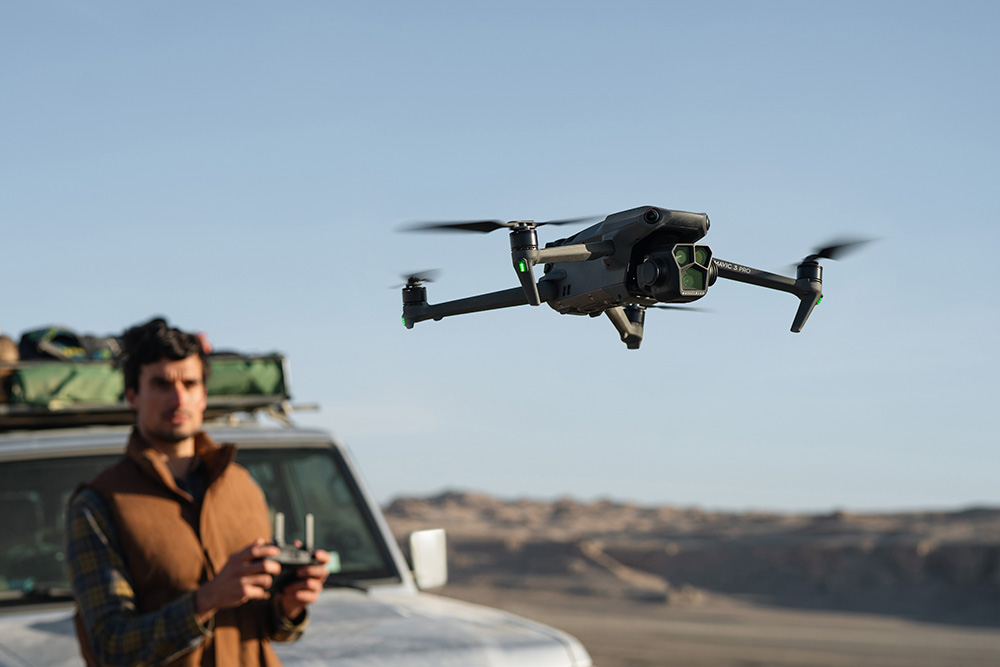
What is a drone?
A drone refers to a remotely controlled aircraft - the term now primarily pertains to the commercially available systems equipped with a camera, with a strong focus on photography and content creation.
There are a variety of options you can choose from, including budget options like the lightweight DJI Mini 4, which is perfect for beginners and comes with convenient features like Auto Take-Off that make drone control a breeze. The tiny DJI Neo 2 (Drone Only) is another good budget choice that folds into the palm of your hand.
For those looking for professional content, DJI’s Mavic 4 Pro takes care of all scenarios with three powerful 4K cameras. Pro filmmakers will look to the Inspire 3 for professional cinematography, which includes a full interchangeable-lens camera and outstanding performance, processing 8K footage and implementing Apple ProRes RAW codecs with ease.
It isn’t hard to see why their presence is growing - drones are easy to control, enjoyable to use and provide a unique viewpoint for both beginner and professional content. However, the nature of a drone means it can present a real hazard to people, aircraft and natural areas if not used within the laws for flying drones.
Rules on flying drones over private property UK
UK drone rules do not give landowners automatic control of the airspace above their property, but they do place clear responsibilities on the drone pilot to fly safely, lawfully, and with respect for people on the ground.
When flying in the Open category, separation distances depend on your drone’s weight, classification, and the type of flight being carried out. In general, you must keep a safe distance from uninvolved people and avoid creating any risk to those around you. There is no single rule that requires drones to remain a fixed distance from all private property at all times, but pilots must ensure their flight does not endanger people, vehicles, buildings, or animals.
Flying over or close to someone’s home can raise privacy and nuisance concerns, even if the flight is legal from an aviation perspective. Property owners may take civil action if a drone is used in a way that interferes with their privacy or enjoyment of their land. For this reason, flying close to homes or gardens without a clear and lawful reason is best avoided.
Some landowners and organisations restrict or prohibit drone take-offs and landings on their land. For example, the National Trust does not permit recreational drone use on most of its sites. These restrictions relate to land access rather than airspace, so it is important to check local rules before flying.
You may fly closer to people who are directly involved in your drone operation, such as friends or colleagues assisting with the flight, provided they are aware of the risks and the flight remains safe.
If you are flying under rules that require you to operate far from people (such as Open category A3), you must stay well clear of residential, recreational, commercial, and industrial areas, typically maintaining large separation distances from buildings and bystanders.
All drone pilots must stay well away from airports, airfields, and aircraft. Flying near controlled airspace without permission is a serious offence and can endanger lives. Reports of drone activity caused major disruption at Gatwick Airport in 2018, grounding flights and affecting thousands of passengers. Incidents like this underline the importance of airspace awareness and strict compliance with aviation safety rules.
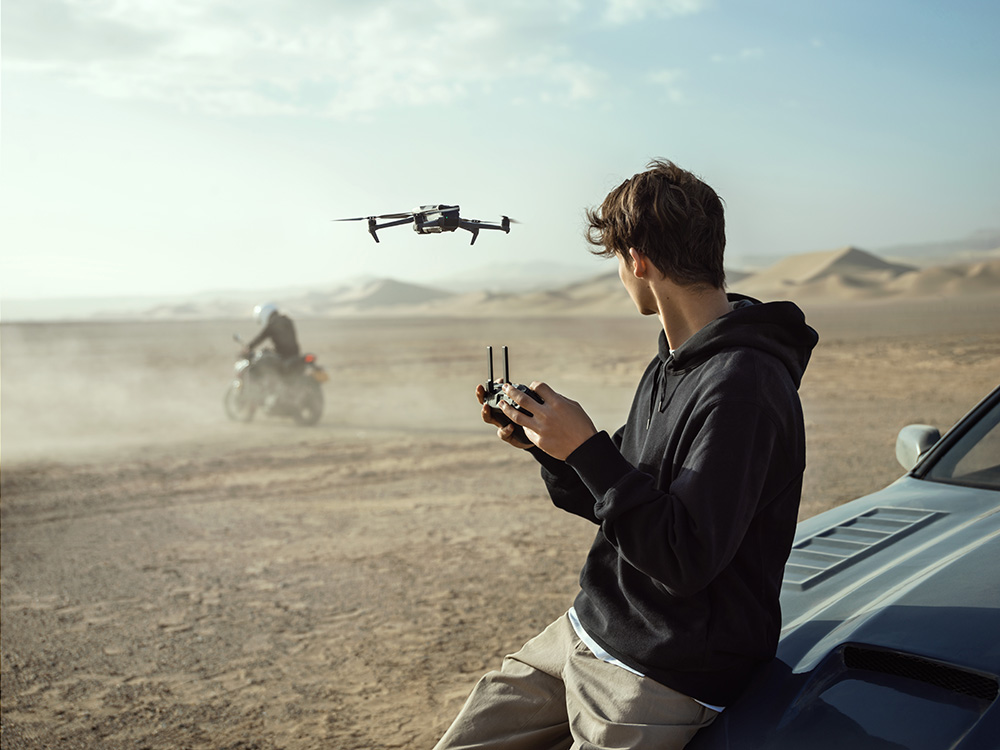
What are a pilot’s main responsibilities?
As a drone pilot, you need to know how to fly your drone safely, and within the law – you’re legally responsible for every flight and must ensure that you’re following drone flying rules. Keeping your drone in sight and staying below 400ft is a must for ensuring a good, safe flight. Always observe the distance regulations outlined previously too.
Outside of legal obligations, being a responsible drone pilot involves thinking ahead. If, for example, you lose control or your drone fails, you need to know where it may land or if you’re far away enough from others to avoid causing a hazard. While being a drone pilot brings a new level of freedom to your photography and videography, you need to think hard about where you’re shooting and what to do if something goes wrong. Modern drones like the DJI Mavic 4 Pro are starting to implement advanced safety features like route planning and an automatic return to home (RTH) ability for peace of mind.
Do you have to register a drone in the UK?
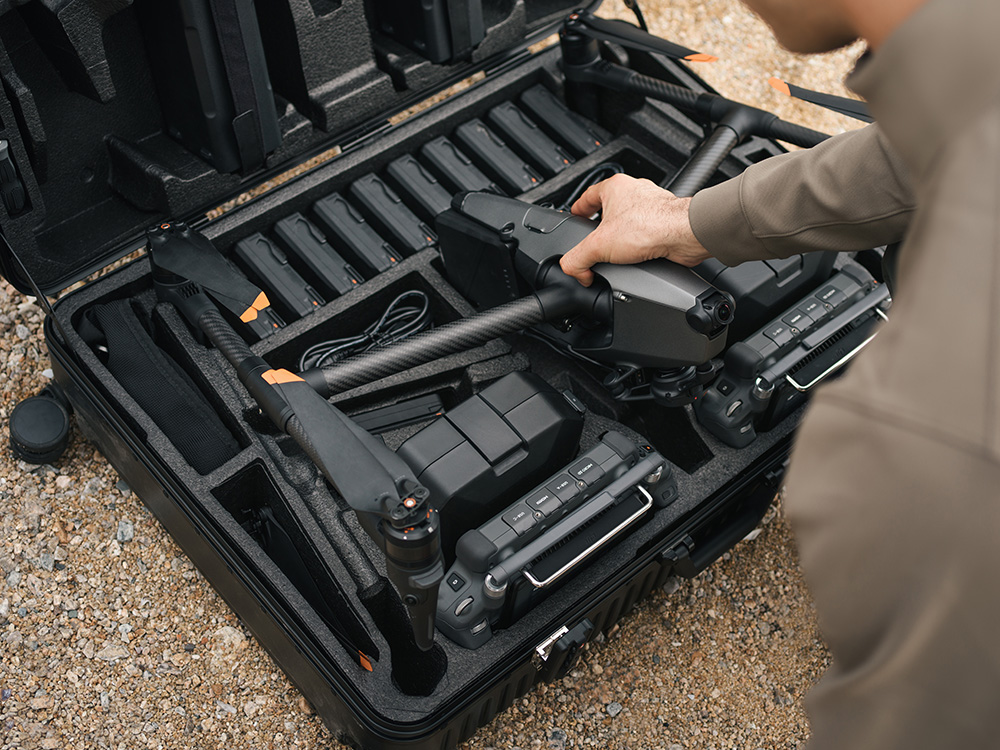
Everyone should be able to reap the benefits of aerial photography, but you need to register (and in certain cases take a test) before you fly to ensure you’re responsible and willing to follow the rules for flying drones in the UK. As a drone owner, you need to register for an Operator ID, which must be renewed annually. If you don’t own a drone but want to borrow someone else’s, you still need to apply for a flyer ID, which is fortunately free, and will last 5 years.
Note that from 1 January 2026, anyone flying a drone over 100g must hold a Flyer ID, regardless of whether they own the drone or are borrowing it.
Drone Weight Law
UK drone rules vary depending on the maximum take-off weight of the drone and the category in which it is flown. Lighter drones are generally subject to fewer restrictions, while heavier drones must be operated with greater separation from people and built-up areas.
Drones weighing less than 250g, such as the Mini series, can be flown in the Open A1 category, which allows flight closer to people than heavier drones. While these drones may fly near and, in some circumstances, briefly over uninvolved people, pilots must not fly over crowds and must always avoid endangering anyone on the ground.
Drones weighing 250g or more, such as the Mavic Pro, are subject to stricter separation rules when flown without additional qualifications. Pilots who obtain an A2 Certificate of Competency may fly closer to uninvolved people than is otherwise permitted, but they must still avoid flying directly over people and comply with the specific distance limits set out by the UK Civil Aviation Authority.
Regardless of drone weight, all pilots are responsible for flying safely, maintaining appropriate distances, and following the rules of the Open category under which their drone is being operated.
What are the three Open, Specific and Certified categories?
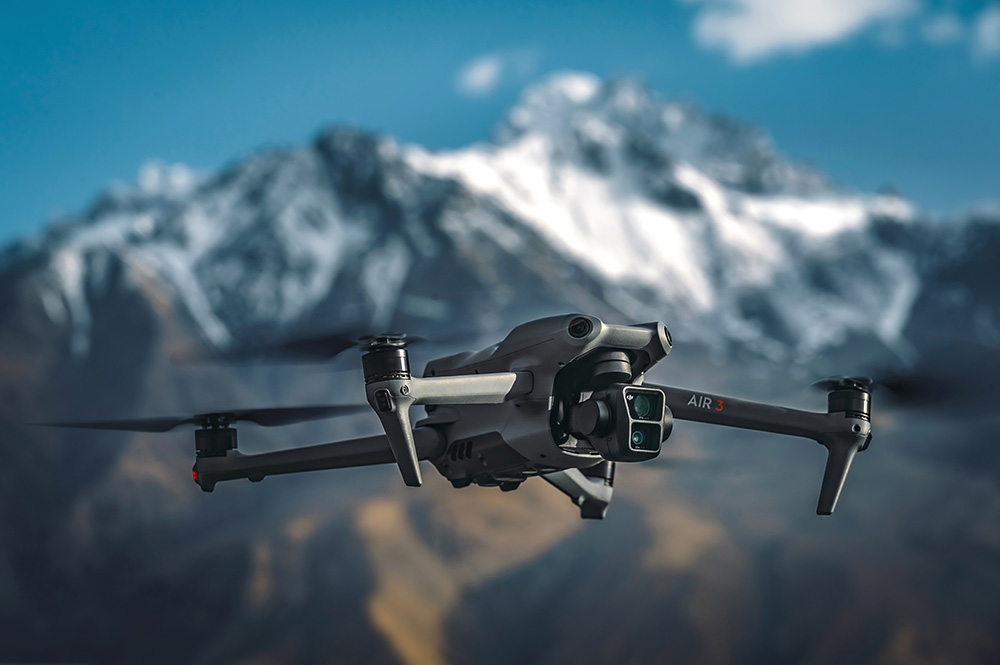
Based on what you want to use your drone for, you need to adhere to different regulations surrounding your drone. The categories are as follows:
- Open A1 and A3 is the starting point for anyone wanting to fly a drone. This category surrounds basic, low-risk flying.
- Open A2 involves more risk than A1 and A3, so if you’re looking to do more advanced flying with this category you need to apply for an A2 Certificate of Competency (CofC).
- Specific involves moderate risk, for example flying over an urban area – the key part of this is that the operator needs to hold an authorisation granted by the CAA. You must do a risk assessment of what you plan on doing with the drone.
- Certified is the highest category – this involves operations that present a risk to aviation, and only applies to a very specific group of drone operators.
ID and drone registration
Before flying a drone outdoors in the UK, you may need one or two forms of registration, depending on the weight of your drone or model aircraft, whether it is classed as a toy, and whether it has a camera.
A Flyer ID confirms that you have passed the UK Civil Aviation Authority’s online theory test and understand the Drone Code. This ID relates to the person flying the drone, not the drone itself.
An Operator ID is required for the person responsible for the drone and must be clearly displayed on the aircraft. The Operator ID applies if the drone or model aircraft weighs 100g or more, or if it is equipped with a camera, unless it is classed as a toy.
In many cases, particularly for camera-equipped drones, you will need both a Flyer ID and an Operator ID. The exact combination depends on the drone’s weight, design, and how it is used.
Registration and testing are managed by the UK Civil Aviation Authority, and pilots should always check the latest guidance to confirm which IDs are required before flying.
Flying weight requirements table
Please note: From 1 January 2026, a Flyer ID is required for anyone flying a drone over 100g, even where previous exemptions applied.
|
Flying weight |
Flyer ID |
Operator ID |
|
Below 100g – toy |
No |
No |
|
Below 100g – not a toy – no camera |
No |
No |
|
Below 100g – not a toy – with camera |
No |
Yes |
|
100g to 249g |
Yes |
Yes |
|
250g and above |
Yes |
Yes |
What Is Remote ID?
Remote ID is a requirement being introduced by the UK Civil Aviation Authority from 1 January 2026 for certain drones and types of operation. It allows a drone to broadcast basic identification information during flight, similar to a digital number plate, so authorised parties can identify what is operating nearby.
Remote ID requirements apply depending on the drone’s classification and the way it is flown, rather than to all drones universally. The CAA has introduced Remote ID as part of a phased update to improve airspace awareness and accountability, particularly in areas where drones and other airspace users may operate in close proximity.
In most cases, Remote ID functionality will be built into newer drones through manufacturer firmware or software. Pilots should check whether their specific drone requires Remote ID and ensure it is enabled where applicable.
The purpose of Remote ID is to support safer airspace use and responsible flying, without preventing lawful recreational drone operations.
Using a drone for work
As of 2020, there is no longer any distinction between flying commercially and flying for pleasure or recreation, so you don’t need to be approved to use your drone for your business. You should still carefully adhere to the rules on proximity to others and receive the correct authorisation for your category of drone operations.
Ensuring you know the drone flying rules in the UK is the key to a successful experience with your drone. By knowing what you’re doing, thinking ahead and exercising caution, you can quickly become a responsible drone pilot.
Discover our range of drones here - whether you’re a complete beginner or a more experienced pilot, our comprehensive selection of drones and accessories caters to all uses and budgets. When buying or operating your drone, our customer service team is happy to answer any further questions that may arise.
Disclaimer:
This guide is intended for general information only and may not reflect the latest UK drone regulations. Rules can change, and requirements may vary depending on your drone and how it is used. Always check the most up-to-date guidance with the UK Civil Aviation Authority before flying.
Share this post:
By Nick Dautlich on 16/08/2023

Nick Dautlich
Senior Content Writer and Product Reviewer
Nick Dautlich is the Senior Content Writer and Product Reviewer at Park Cameras, with over 15 years of photography experience. A Sony Imaging Professional and expert reviewer, Nick has worked with major brands such as Canon, Sony and Nikon. His work is also featured on Vanguard World UK’s website, Capture Landscapes, and Shutter Evolve. Nick’s photography includes National Trust projects and magazine covers and he is passionate about landscapes and storytelling. Nick also enjoys hiking and teaching his children about nature. Learn more on his profile page.
Trade in your old equipment
Fast and easy trade in service ensures your old gear is collected efficiently and you are paid quickly! It's very simple to trade in your unwanted photography gear. Just head over to our dedicated Sell or Part Exchange page, fill out the details, and we'll get back to you with an offer for your old gear. Take the cash, or put it towards the cost of your new gear. It's up to you! Find out more
sign up to the newsletter
Keep up to date on the latest photography news, events and offers. Sign up now