- Call us 01444 237070

-
- Back
- Used Cameras
- Used Accessories
- Used Lenses
- Back
- Used Canon Lenses
- Used Nikon Lenses
- Used Fujifilm Lenses
- Used Sony Lenses
- Used Micro 4/3rds Lenses
- Used Leica Lenses
- Used Panasonic Lenses
- Used Pentax Lenses
- Used Samyang Lenses
- Used Sigma Lenses
- Used Tamron Lenses
- Used Tokina Lenses
- Used Voigtlander Lenses
- Used Zeiss Lenses
- Used Hasselblad Lenses
- Used Video
- Used Film Equipment
- Used Stock Alert
- Used Blank Test
- Sell or Part Exchange
- Used Clearance
- Recently Added Used Equipment
- Park Picks
- Faulty
- Trade-In
- Blog
- New in
- Call us
- Contact us
- Stores
- Sign in
- Categories
- Tips & Inspiration
- Reviews
- News
- Events
- Features
- Buying Guides
- Competitions
January Astrophotography Highlights UK And NI
The storms we have seen this past December have made it very difficult to do some sensible imaging. As such I have been out maybe 4 or 5 times, but not for the full night as I would like, but for a few hours. As such I have had to be quite selective with the targets I have chosen, adding data to various projects as it has been optimal to do so.
The monthly challenge
So as you may have read last month I attempted to image the Squid Nebula, in our Bortle 4 skies! I have added some more data to this, however have cut a lot out and replaced it with better data, so overall I am now at around 4hrs great data rather than 4hrs 26mins ok data. Whilst we can now see the faint outline of the 0III Squid, we are still someway off getting what I would call a respectable image, but some way further forward than we were this time last month. Sadly, the window of opportunity to image this target once again has escaped us, and so it wont be until late spring where it is interesting to image this again (please see last months blog which explains in detail why).
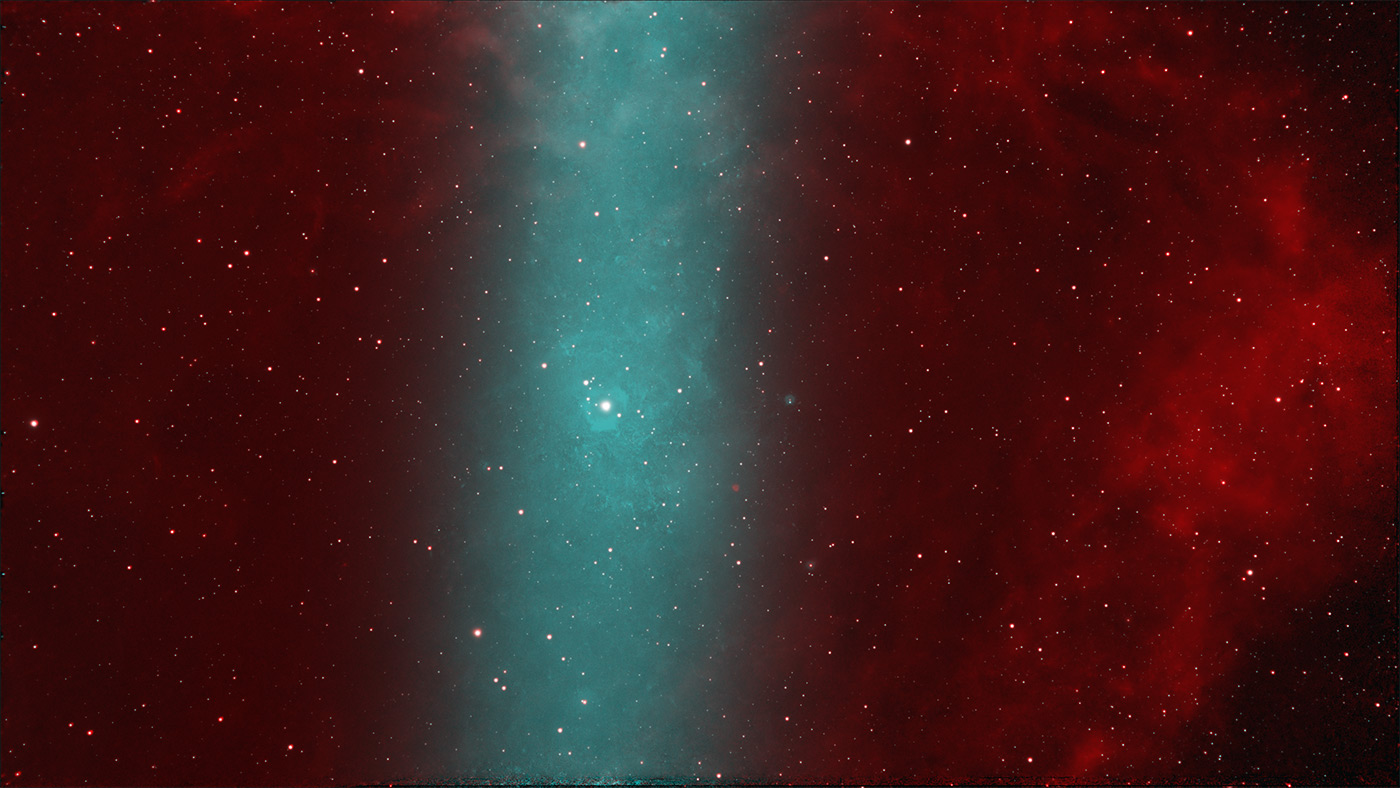
EXIF
Camera: ZWO ASI585MC Pro.
Telescope: Altair Astro 70ED Telescope (420mm).
Mount: Sky-Watcher EQ5 Pro
Filter: Optolong L eNHance
Guide Camera: ZWO ASI120mm-s
Guide Scope: SVBony 30mm (f4)
Computer: ZWO ASIAIR pro
Method:
Lights: 120 x 120s Gain 252 (Unity).
Total usable: 4 hrs.
Darks: 0
Flats: 0
Bias: 0
Stacked in Deep Sky Stacker, Processed in Pixinsight with RC-Astro Suite of tools.
However, There is so much I can learn from attempting to capture these faint targets, and so will go after another hard faint one which is in the optimal window for the next month or so. This is the Garlic Nebula or Medulla Nebula (LDN 576 or CTB 1). Here is the progress so far... I imaged it for 2 hrs, but chucked out most of the frames, only 44 mins was worth keeping and even then I was pushing the limits of acceptability. However you can see the faint outline of this supernova remnant. I shall continue capturing data on this target whenever it is in the 'golden zone' and share my results.
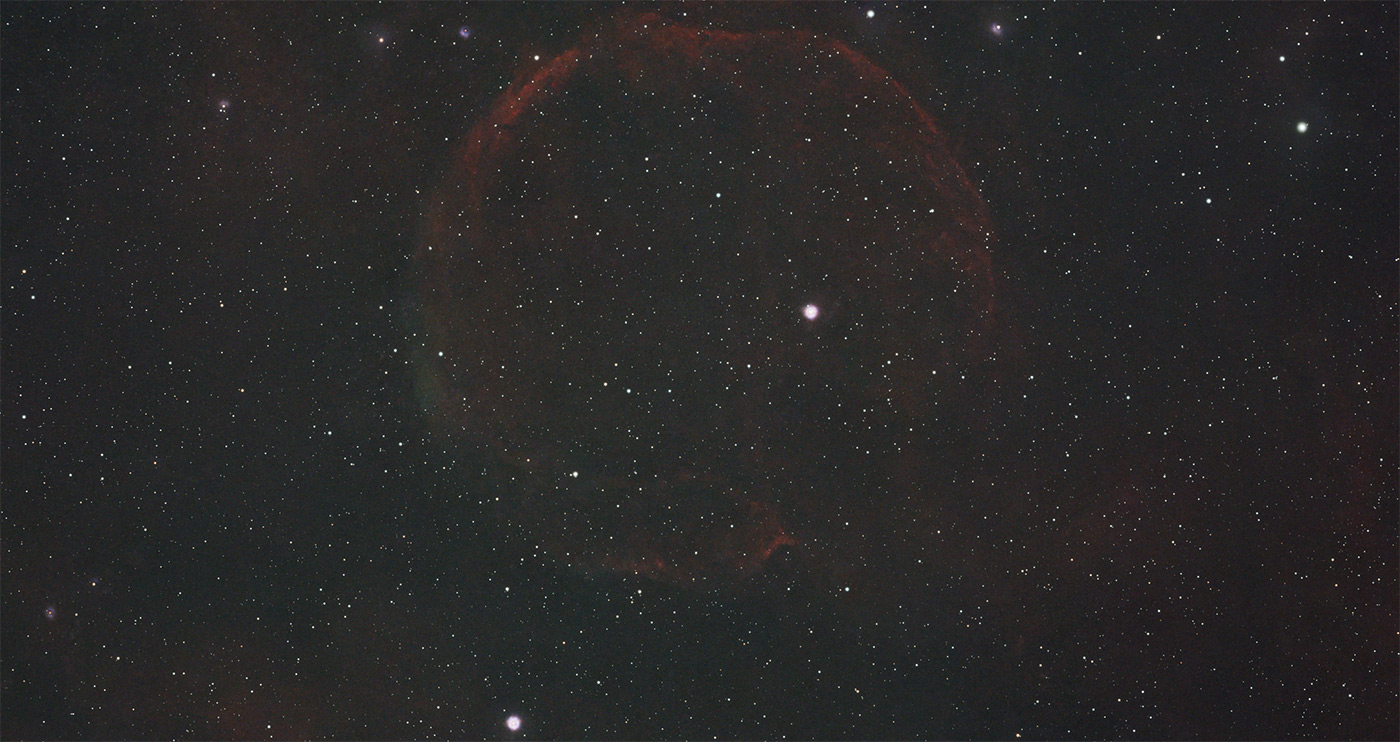
EXIF
Camera: ZWO ASI585MC Pro.
Telescope: Altair Astro 70ED Telescope (420mm).
Mount: Sky-Watcher EQ5 Pro
Filter: Optolong L eNHance
Guide Camera: ZWO ASI120mm-s
Guide Scope: SVBony 30mm (f4)
Computer: ZWO ASIAIR pro
Method:
Lights: 60 x 120s Gain 252 (Unity).
Total usable: 44 mins.
Darks: 0
Flats: 0
Bias: 0
Stacked in Deep Sky Stacker, Processed in Pixinsight with RC-Astro Suite of tools.
This months challenge: Moon Phase
Rather than go after a really faint target, I want to create a set of images which are quite special, not only does the full moon appear on my birthday, but also it is quite tricky to complete this due to our weather here in the UK, not to mention how much I loathe imaging the moon! The plan is simple capture the moon in every phase for the next month, that means imaging the moon once every two days, and because of my equipment I will need to stitch together two images of the moon each night so as to get the whole thing in one picture! Sounds easy you say?...lets find out! Here is my plan:
|
Date |
Culmination time (GMT) |
Altitude at culmination (°) |
Azimuth at culmination (°) |
Phase |
Moonrise (GMT) |
Moonset (GMT) |
Notes |
|
22 Dec 2025 |
~15:40 |
~17 |
~178–182 (near S) |
Waxing Crescent |
09:57 |
18:53 |
Daylight transit; observe after sunset |
|
24 Dec 2025 |
~16:30 |
~19 |
~178–182 (near S) |
Waxing Crescent |
10:52 |
21:22 |
Low but improving; near twilight |
|
26 Dec 2025 |
~17:20 |
~24 |
~178–182 (near S) |
Waxing Crescent |
11:32 |
23:50 |
Early evening; practical elevation |
|
28 Dec 2025 |
~18:10 |
~29 |
~178–182 (near S) |
First Quarter |
12:11 |
01:04 (29 Dec) |
Evening; good altitude |
|
30 Dec 2025 |
~19:00 |
~34 |
~178–182 (near S) |
Waxing Gibbous |
12:59 |
03:33 (31 Dec) |
Bright and rising toward full |
|
1 Jan 2026 |
~19:50 |
~39 |
~178–182 (near S) |
Waxing Gibbous |
~13:30 |
~04:45 (2 Jan) |
Evening; excellent visibility |
|
3 Jan 2026 |
~20:40 |
~62 |
~178–182 (near S) |
Full Moon |
~16:10 |
~08:20 (4 Jan) |
Highest of the run; rises near sunset |
|
5 Jan 2026 |
~21:30 |
~59 |
~178–182 (near S) |
Waning Gibbous |
~17:30 |
~10:20 (6 Jan) |
Very high; still bright |
|
7 Jan 2026 |
~22:20 |
~54 |
~178–182 (near S) |
Waning Gibbous |
~18:45 |
~12:00 (8 Jan) |
Late evening; high |
|
9 Jan 2026 |
~23:10 |
~49 |
~178–182 (near S) |
Waning Gibbous |
~19:55 |
~13:30 (10 Jan) |
Late evening; solid height |
|
11 Jan 2026 |
~00:00 (12 Jan) |
~44 |
~178–182 (near S) |
Waning Gibbous |
~21:05 |
~14:55 (12 Jan) |
Near midnight; good altitude |
|
13 Jan 2026 |
~00:40 (14 Jan) |
~39 |
~178–182 (near S) |
Last Quarter |
~22:15 |
~16:10 (14 Jan) |
After midnight; shrinking illumination |
|
15 Jan 2026 |
~01:30 |
~29 |
~178–182 (near S) |
Waning Crescent |
~23:26 |
~17:19 (16 Jan) |
After midnight; thinner crescent |
|
17 Jan 2026 |
~02:20 |
~19 |
~178–182 (near S) |
Waning Crescent |
~00:40 (18 Jan) |
~18:23 (18 Jan) |
Early morning; thin near dawn |
Lunar
If you are wondering how I capture the moon please have a look at this blog. Broadly I take a video of around 30 secs, then use Autostakkert to process the video and output a very sharp image.
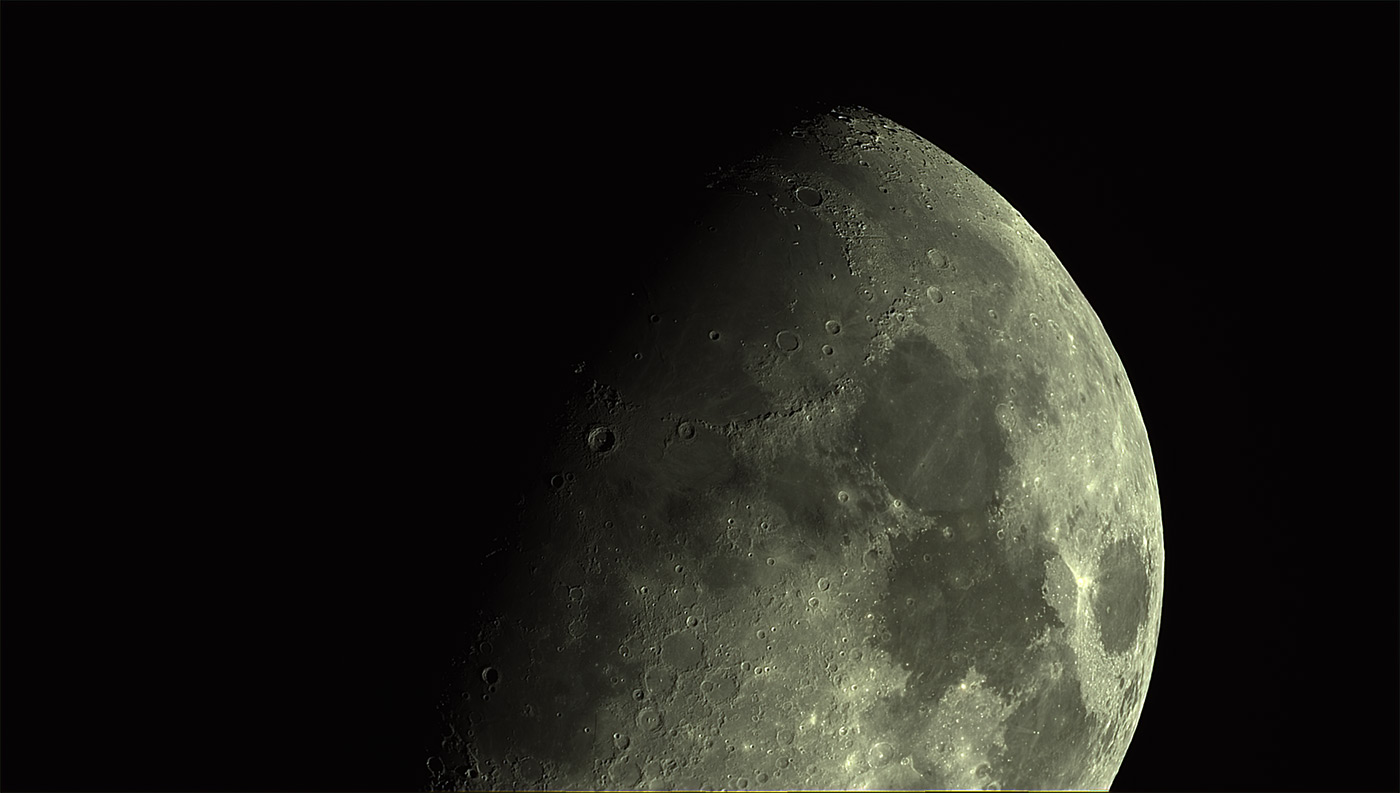
EXIF
Camera: ZWO ASI585MC Pro.
Telescope: Altair Astro 70ED Telescope (420mm).
Mount: Sky-Watcher EQ5 Pro
Filter: Optolong L eNHance
Guide Camera: ZWO ASI120mm-s
Guide Scope: SVBony 30mm (f4)
Computer: ZWO ASIAIR pro
Method:
Lights: 30 sec video.
Darks: 0
Flats: 0
Bias: 0
Stacked in Deep Sky Stacker, Processed in Pixinsight with RC-Astro Suite of tools.
The lunar calendar for January can be seen here: https://www.spaceweatherlive.com/en/moon-phases-calendar/2026/01.html
Deep Sky
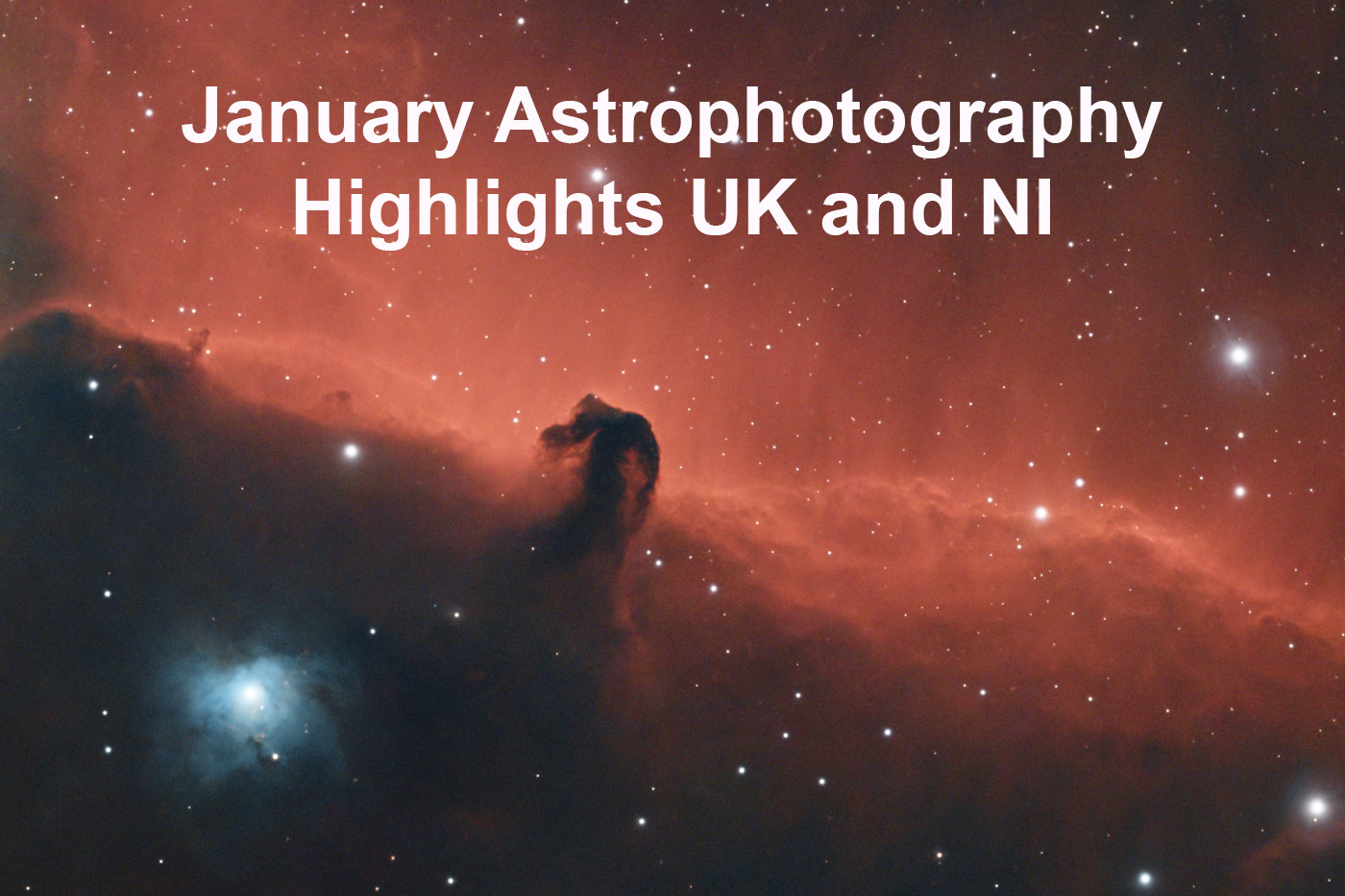
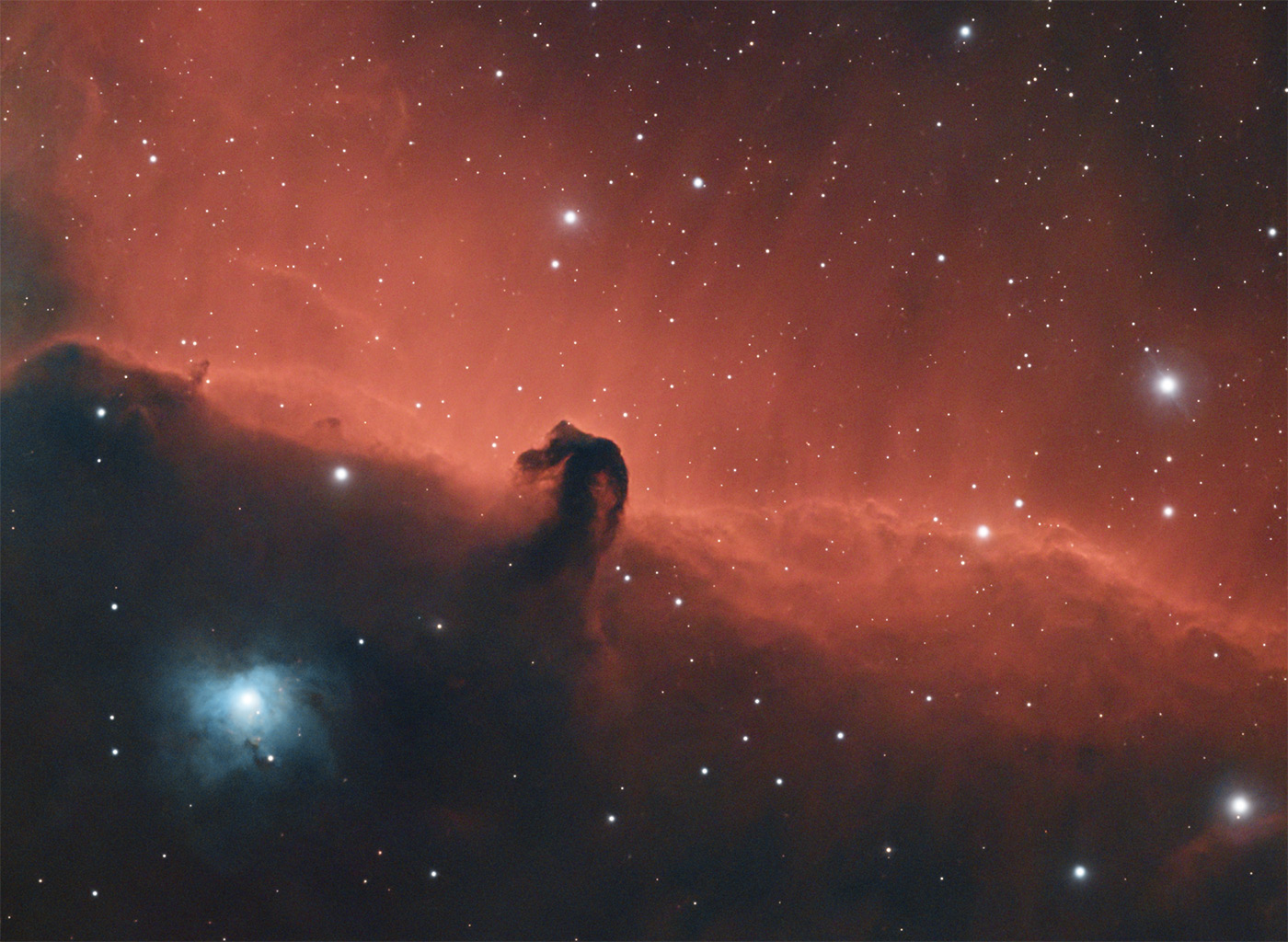
The Horsehead Nebula (IC 434)
The Horsehead Nebula feels like a cosmic silhouette caught mid‑gesture, a dark shape leaning forward against a backdrop of glowing hydrogen. It isn’t bright in the way many nebulae are; instead, it stands out by refusing to shine at all. A dense column of dust blocks the starlight behind it, carving out that unmistakable profile that looks almost sculpted rather than formed by chance.
What makes it compelling isn’t just the shape, but the contrast. Behind the nebula, radiation from nearby massive stars floods the region, lighting the gas like a red curtain on a stage. The Horsehead sits in front of it, calm and opaque, as if it’s quietly resisting the chaos around it. It’s a reminder that even in a place as turbulent as Orion’s Belt, structure can emerge from disorder, and beauty can come from shadow just as much as from light.
One thing to watch when imaging this target, and I have left it out of the field of view quite deliberately is the massive star Alnitak which lies between the Flame and the Horsehead Nebula, this star over powers the exposure, so I deliberately kept it out of frame. Soon I shall image The Flame Nebula using the same method and then finally embrace Alnitak and try my best to keep it under control and then stitch the 3 images together.
EXIF
Camera: ZWO ASI585MC Pro.
Telescope: Altair Astro 70ED Telescope (420mm).
Mount: Sky-Watcher EQ5 Pro
Filter: Optolong L eNHance
Guide Camera: ZWO ASI120mm-s
Guide Scope: SVBony 30mm (f4)
Computer: ZWO ASIAIR pro
Method:
Lights: 157 x 120s at -10C and gain 252.
Darks: 0
Flats: 0
Bias: 0
Stacked in Deep Sky Stacker, Processed in Pixinsight with RC-Astro Suite of tools, HOO simulation using PixelMath.
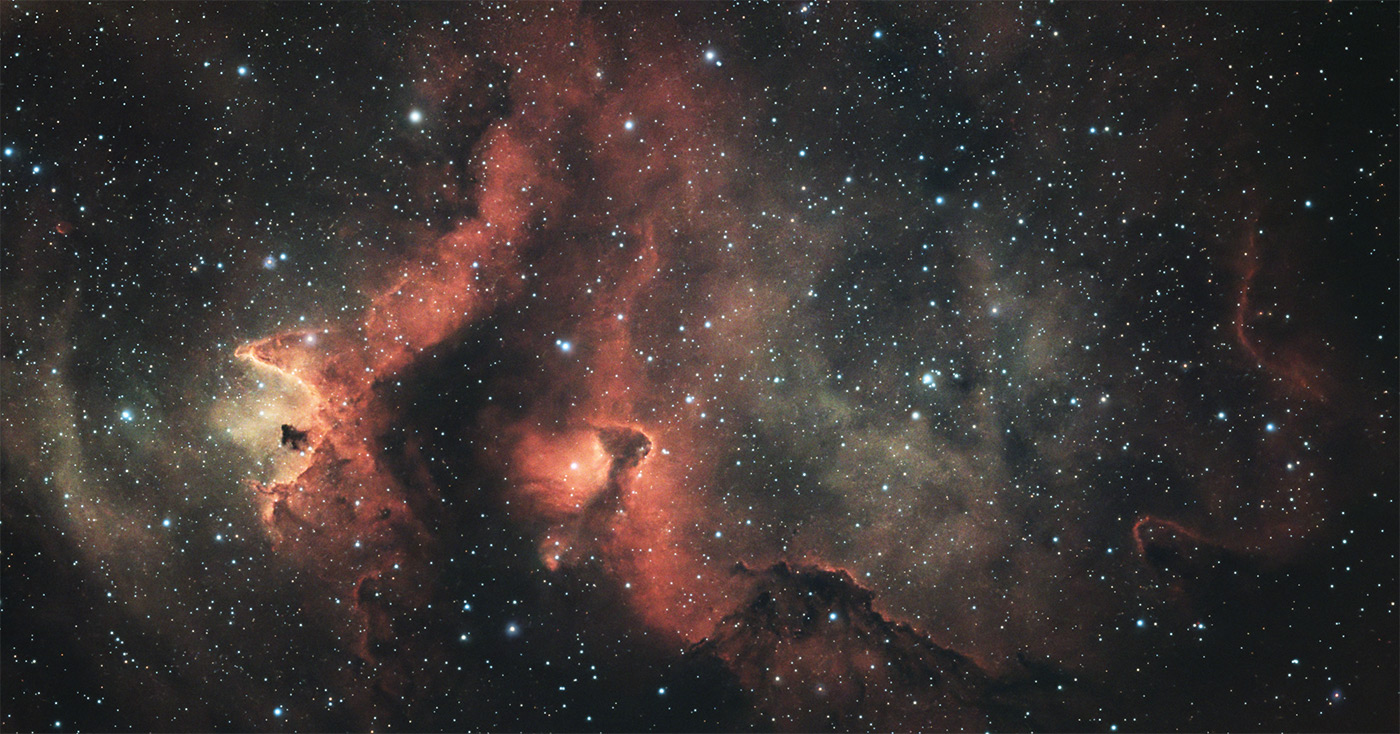
'The Heart of' The Soul Nebula (IC 1848 / IC 1971)
One night whilst looking through NASA's Astronomy Picture of the Day website, I noticed this wondrous image called 'The Heart of the Soul Nebula' (https://apod.nasa.gov/apod/ap251209.html). This image is way better than the level I am at, but I believe from constant self re-evaluation, inspiration gained from others and learning of the methods they use I can become a better astrophotographer. Having seen as I am sure we all have 1,000s of images of the Soul Nebula, and have never thought it particularly interesting, this image and composition changed that opinion, and so at my earliest opportunity I set about imaging it.
The Soul Nebula has a quiet confidence to it. It doesn’t shout for attention the way some brighter nebulae do; instead, it spreads out in a broad, soft glow, shaped by clusters of young stars that are still carving their way out of the gas that formed them. There’s a sense of motion frozen in place — cavities where radiation has pushed the material aside, filaments where dust hangs on a little longer, and pockets where new stars are just beginning to warm their surroundings.
What makes the Soul Nebula compelling is its scale. It’s wide, open, and almost serene, like a landscape rather than a single object. You can trace the faint curves and ridges and imagine the slow, patient processes that sculpted them over millions of years. It feels less like a dramatic event and more like a long, deep breath in the fabric of the sky. Paired with its neighbour, the Heart Nebula, it creates the impression of a cosmic duet — two vast shapes sharing the same region of space, each with its own character.
EXIF
Camera: ZWO ASI585MC Pro.
Telescope: Altair Astro 70ED Telescope (420mm).
Mount: Sky-Watcher EQ5 Pro
Filter: Optolong L eNHance
Guide Camera: ZWO ASI120mm-s
Guide Scope: SVBony 30mm (f4)
Computer: ZWO ASIAIR pro
Method:
Lights: 102 x 120s Gain 252 (Unity) - 3hrs usable.
Darks: 0
Flats: 0
Bias: 0
Stacked in Deep Sky Stacker, Processed in Pixinsight with RC-Astro Suite of tools, stitched the trapezium and nebula together in Photoshop.
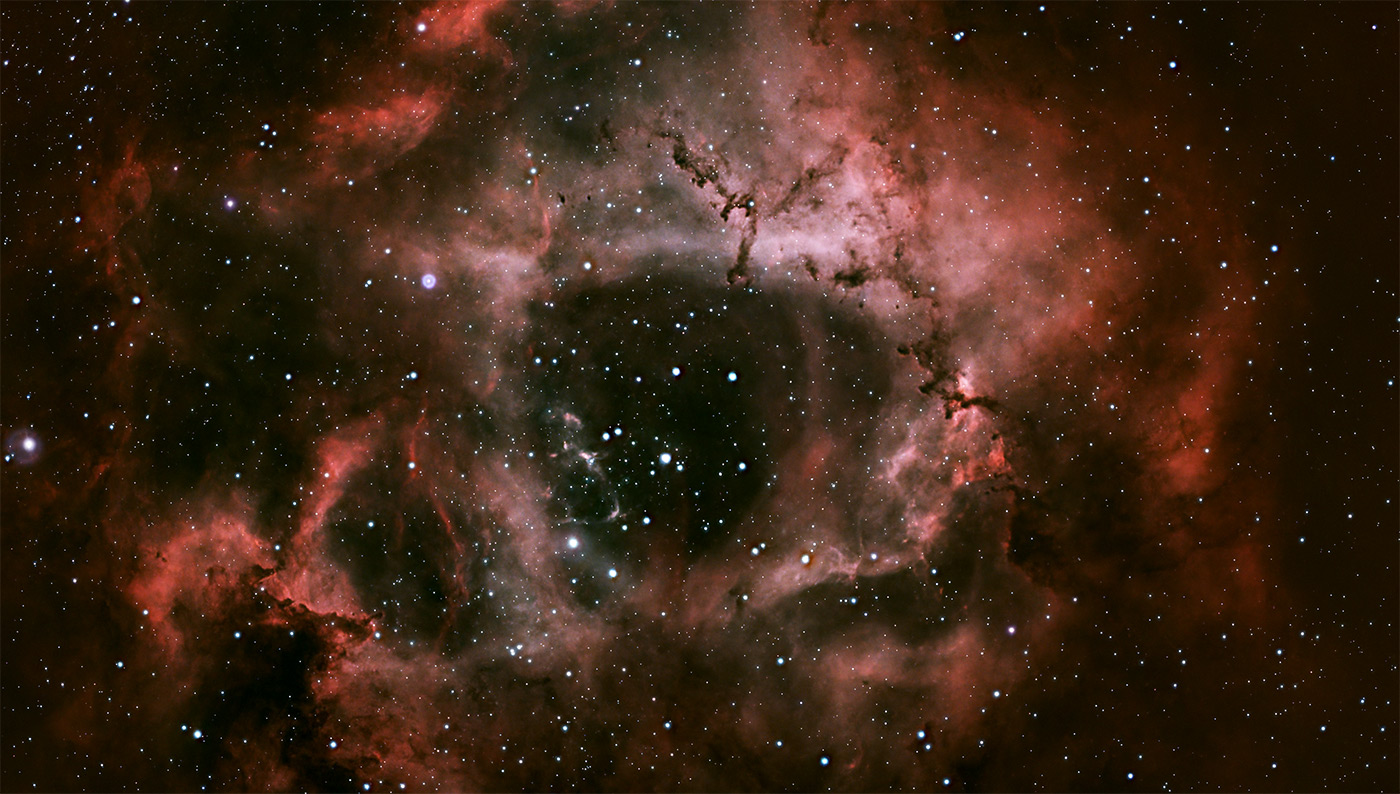
Rosette Nebula (Caldwell 49)
The Rosette Nebula feels like a place where structure and chaos coexist in a kind of quiet agreement. At first glance it looks almost delicate — a broad, circular bloom of gas and dust — but the closer you look, the more you see the power behind it. A cluster of young, energetic stars sits at the centre, and their radiation has carved out a hollow, pushing the surrounding material into sweeping arcs and textured ridges. It’s as if the nebula is being sculpted from the inside out.
What makes the Rosette stand out is its sense of depth. You can trace the folds and cavities and imagine how each one formed over time, shaped by winds, gravity, and the slow churn of star formation. It’s not a single object so much as a whole environment — a nursery, a shell, and a canvas of subtle colour gradients all at once. When you look at it, you get the impression of something alive in a geological sense: slow, patient, and constantly reshaping itself.
EXIF
Camera: ZWO ASI585MC Pro.
Telescope: Altair Astro 70ED Telescope (420mm).
Mount: Sky-Watcher EQ5 Pro
Filter: Optolong L eNHance
Guide Camera: ZWO ASI120mm-s
Guide Scope: SVBony 30mm (f4)
Computer: ZWO ASIAIR pro
Method:
Lights: 48 x 120s Gain 252 (Unity).
Darks: 0
Flats: 0
Bias: 0
Stacked in Deep Sky Stacker, Processed in Pixinsight with RC-Astro Suite of tools, stitched the trapezium and nebula together in Photoshop.
The Jellyfish Nebula (IC 443)
So this I guess is learning in the making... having taken what I have learnt with the Squid and Garlic Nebula, I have put it to good use processing a much easier target, but similar in that it is mainly Ha and OIII, and tricky to process. As such, after 3 hours of imaging I can share this image.
What makes the Jellyfish compelling is the contrast between its shape and its origin. The curved “head” feels almost calm, while the trailing strands look like they’re being pulled or swept by some invisible current. In reality, it’s the aftermath of violence: expanding gas, magnetic fields twisting the material, and radiation from nearby stars lighting it all up. Yet the result is strangely graceful, like a drifting creature suspended in the dark. It’s one of those objects that reminds you how beauty can emerge from events that were anything but gentle.

EXIF
Camera: ZWO ASI585MC Pro.
Telescope: Altair Astro 70ED Telescope (420mm).
Mount: Sky-Watcher EQ5 Pro
Filter: Optolong L eNHance
Guide Camera: ZWO ASI120mm-s
Guide Scope: SVBony 30mm (f4)
Computer: ZWO ASIAIR pro
Method:
Lights: 60 x 120s, 12 x 300s at -10C and gain 253.
Darks: 0
Flats: 0
Bias: 0
Stacked in Deep Sky Stacker, Processed in Pixinsight with RC-Astro Suite of tools
Next month...
We shall see the results or lack of, for my lunar challenge! Hopefully a more detailed look at the Garlic Nebula along with some other galactic wonders!
Share this post:
By Jonathan Penberthy on 24/12/2025

Jonathan Penberthy
Cosmic Shutter Seeker and Star Programmer
Jonathan Penberthy is the Cosmic Shutter Seeker and Star Programmer at Park Cameras, with over 20 years of experience as a software engineer. His career journey has spanned industries, but a move to Park Cameras sparked a passion for astrophotography. Jonathan’s interest began while working on a lens selection app, leading him to explore the night sky with a Canon 7D. When he’s not programming or photographing the stars, he enjoys sailing and navigating by the cosmos. Learn more on his profile page.
Trade in your old equipment
Fast and easy trade in service ensures your old gear is collected efficiently and you are paid quickly! It's very simple to trade in your unwanted photography gear. Just head over to our dedicated Sell or Part Exchange page, fill out the details, and we'll get back to you with an offer for your old gear. Take the cash, or put it towards the cost of your new gear. It's up to you! Find out more
sign up to the newsletter
Keep up to date on the latest photography news, events and offers. Sign up now