- Call us 01444 237070

-
- Back
- Used Cameras
- Used Accessories
- Used Lenses
- Back
- Used Canon Lenses
- Used Nikon Lenses
- Used Fujifilm Lenses
- Used Sony Lenses
- Used Micro 4/3rds Lenses
- Used Leica Lenses
- Used Panasonic Lenses
- Used Pentax Lenses
- Used Samyang Lenses
- Used Sigma Lenses
- Used Tamron Lenses
- Used Tokina Lenses
- Used Voigtlander Lenses
- Used Zeiss Lenses
- Used Hasselblad Lenses
- Used Video
- Used Film Equipment
- Used Stock Alert
- Used Blank Test
- Sell or Part Exchange
- Used Clearance
- Recently Added Used Equipment
- Park Picks
- Faulty
- Trade-In
- Blog
- New in
- Call us
- Contact us
- Stores
- Sign in
Call us: 01444 237070
Search terms
Brands
Category
Products
[[{name}]]
[[{attributes.Price}]]
- Categories
- Tips & Inspiration
- Reviews
- News
- Events
- Features
- Buying Guides
- Competitions
December Astrophotography Highlights UK And NI
Often I write these blogs retrospectively, comprised of the best images I have captured in the previous month and a little bit about my struggle to achieve them. This month I am going to try something different. Some may well say impossible, others ambitious, and for me as long as the theory makes sense I am giving it a go! More on that later!
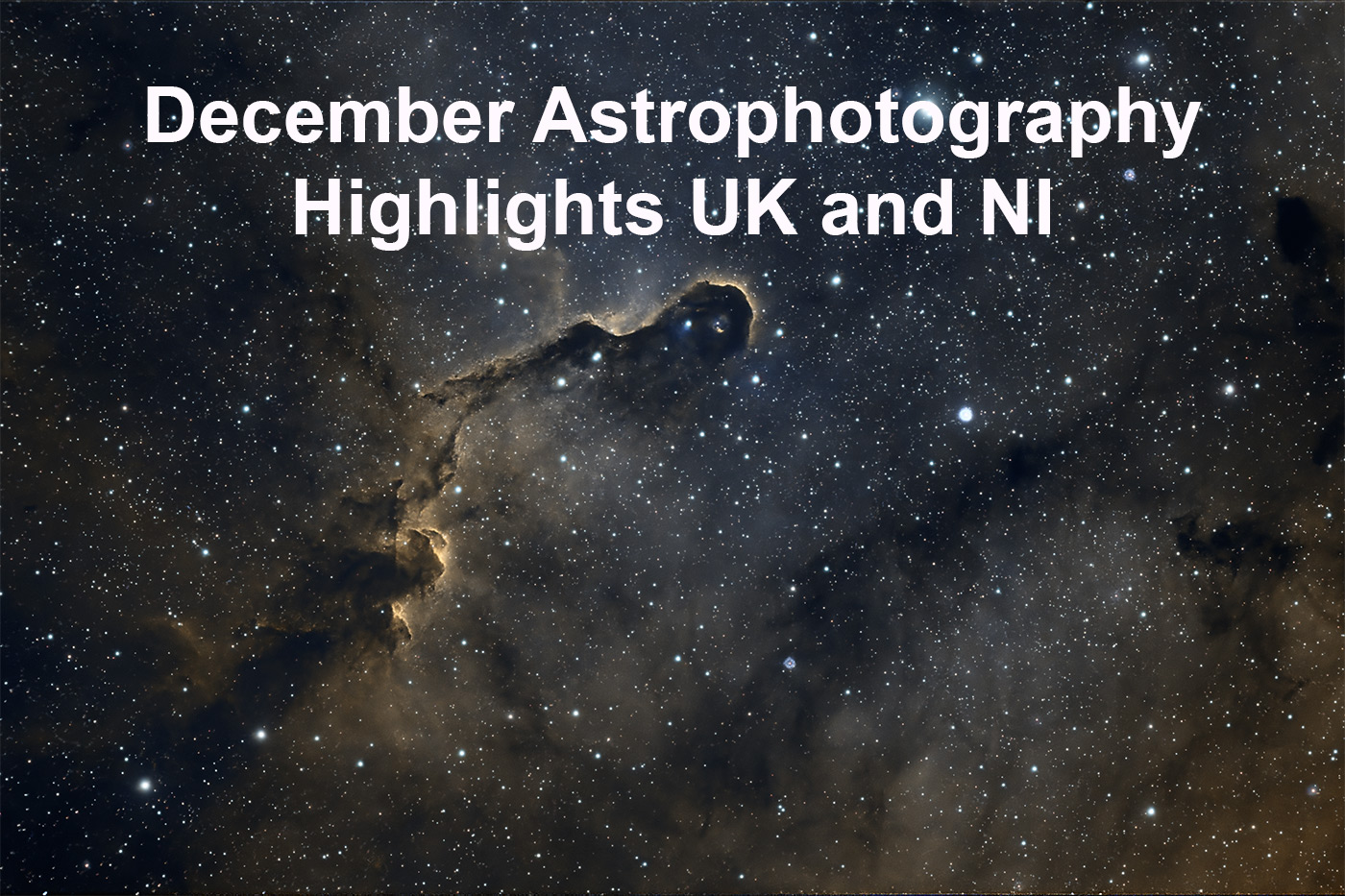
December see's targets like Orion, Spaghetti and Rosette Nebulae and all that are in that region in an early evening friendly night sky. I love this time of year because you can still image the rich array of objects in Cygnus early on if you want to capture a few extra hours data before they disappear until late spring, yet have the possibility to image all night on something like the Horsehead Nebula, and you can get out right after work and pack in a good 5 hours imaging and be in bed at a reasonable hour!
A monthly challenge
I'll see how this goes, this may well become a regular feature where I set myself a ludicrous goal and see if I can achieve it! Crucially the goal must be difficult, borderline impossible with my kit, it must be defined before I embark on it, and I must print my results good or bad, as well as any conclusions and crucially learnings.
So, this is written before I have embarked on this project, and whether I succeed or fail we shall find out in due course (well for you just scroll down a bit) for me at the time of writing it will be probably tomorrow evening I will know!
The challenge target is the Squid Nebula Ou4, which is in the Constellation Cepheus, about 2,300 light-years away. It was only discovered in 2011 by French astro-imager Nicolas Outters while imaging Sh2‑129 the Flying Bat Nebula which really engulfs it. I can hear you laughing already! This nebula as you know is incredibly faint, well to be more specific it is a massive bipolar outflow which started about 90,000 years ago, but regardless of what it actually is, it is faint.
With my kit, that being my OSC ZWO ASI585MC pro camera an Optolong L eNhance filter and my Altair Astro Starwave 70ED scope, it may be a photon too far...many would say impossible.
Well, here is my theory, that I shall tonight put it into practise.
1. The Optolong L eNhance is a sort of Narrowband filter, it captures HA and OIII at 7nm only. Not as narrow as some filters, nor indeed individual filters that a mono camera would achieve, but it is still restricting the light to those wave lengths where this nebula lurks.
2. As you can see in the table below, we can maximise the capture of narrowband data by understanding how altitude impacts transmission. Essentially the closer a target is to the horizon, the more atmosphere you need to image through, the more mass that air has, the more distorted and compromised the photons in that band become.
|
Altitude (°) |
Air Mass |
OIII Transmission (%) |
Hα Transmission (%) |
SII Transmission (%) |
|
90 |
1.00 |
87.0 |
90.0 |
91.5 |
|
60 |
1.15 |
84.0 |
88.0 |
89.6 |
|
45 |
1.41 |
80.0 |
86.0 |
87.5 |
|
30 |
2.00 |
76.0 |
82.0 |
84.0 |
|
20 |
2.92 |
66.7 |
76.0 |
78.0 |
|
10 |
5.60 |
46.2 |
63.0 |
65.0 |
3. Tonight (19th Nov 2025), in Worthing West Sussex, the Squid Nebula is at the following altitudes:
|
Time (GMT) |
Altitude (°) |
|
18:00 |
72 |
|
18:30 |
70 |
|
19:00 |
67 |
|
19:30 |
64 |
|
20:00 |
61 |
|
20:30 |
58 |
|
21:00 |
55 |
|
21:30 |
52 |
|
22:00 |
49 |
|
22:30 |
46 |
|
23:00 |
43 |
|
23:30 |
40 |
|
00:00 |
37 |
So not optimal, but I should be able to guide well, and for two to three hours between 1800 - 2100 be able to image around 80% of that faint OIII signal. As you can see OIII drops far quicker than Ha and SII. This is key, the height of the Squid Nebula tonight may just give me the edge to capture something, although 6 - 12 hours is thought to be a reasonable amount of time to see anything.
4. I guess you will say, that's all well and good, but this thing is faint, super faint, how on earth are you going to make any sense of that data? Well this is where Pixinsight will shine, instead of processing the image as I would any other OSC image, I am going to try to split the channels using ChannelExtraction, so that we get 3 grayscale images, R,G and B.
5. Taking these we can roughly assume that R is HA because it is generally red. Therefore G and B must be OIII, remember the filter only allows two 7nm bands to pass.
Using PixelMath I will average these two channels G and B, probably something like (G + B) / 2, or if it is only present in one of the channels then go with that.
6. Then process the OIII channel independently of Ha, and stretch it further to really bring out that faint detail.
7. Recombine the image using PixelMath. I am thinking something like this to really get the teal colour to come out:
Ha, OIII * 1.2, OIII * 1.2
Let's see whether I have wasted a clear night or not, or have at the very least set the foundations so that I can capture even more precious OIII data using this 'technique'!
Results
So after collecting the first 3 hours data, I really couldn't see much in the extracted channel images, a very faint hue of the structure I was after perhaps, but then again it may be my imagination. Not wanting to give up just yet, on the evening of 23rd November 2025, I spent another 3 hours on this target, whilst it was at its optimal altitude.
Stacked all the images in Deep Sky Stacker (DSS), unfortunately due to poor seeing (cloud) I had to throw out 1 hour 34 mins worth of data. However, with the remaining 4 hours 26 mins, whilst I wasnt able to see the Squid in the stacked image, after I had split the channels, run Blur Exterminator, Noise Exterminator and Star Exterminator (using the wondrous suite of tools, Russell you are a legend!), there lurking in the green channel (called OIII_g in the images below) I could make part of it out. The blue channel it is much fainter (OIII_b). So I made the decision to stretch the green channel aggressively (OIII_g), red (Ha) normally and discard the blue completely. Then recompile the image with the Ha going in the red channel, and the OIII being multiplied by 1.2 and then put in the green and blue channels in the new image.

Conclusion (well a new beginning!):
As you can see below this picture isn't the best, it isn't even really good. But it does show that faint Squid is beginning to appear, and so if you haven't guessed already, for as long as that Squid is in the 'golden zone' I shall try and get as much data on it as I can. Hopefully by next month I may have something more interesting to share... but if not, then we will have to wait until summer 2026! I think based on what I have now, I will need about 16 hours of excellent data, which will translate into 20 - 30 hours of actual imaging time, that is unless the whole of Sussex has a power cut one clear night!
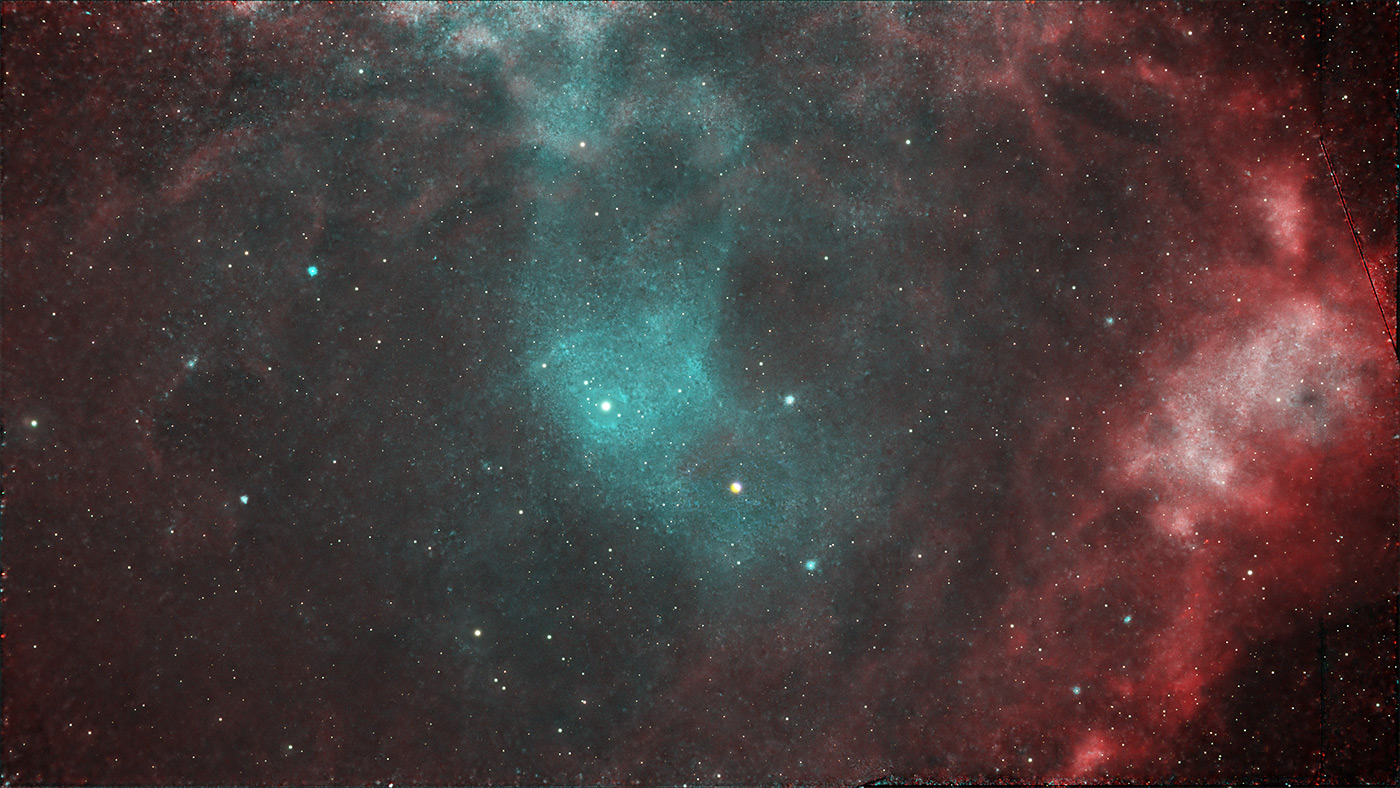
EXIF
Camera: ZWO ASI585MC Pro.
Telescope: Altair Astro 70ED Telescope (420mm).
Mount: Sky-Watcher EQ5 Pro
Filter: Optolong L eNHance
Guide Camera: ZWO ASI120mm-s
Guide Scope: SVBony 30mm (f4)
Computer: ZWO ASIAIR pro
Method:
Lights: 180 x 120s Gain 252 (Unity).
36 x 300s Gain 253 (Unity + 1).
Total usable: 29,760 seconds or 4 hrs 26 mins.
Darks: 0
Flats: 0
Bias: 0
Stacked in Deep Sky Stacker, Processed in Pixinsight with RC-Astro Suite of tools.
Lunar
One evening, whilst waiting for it to get dark enough to do some Deep Sky Imaging, I thought I would have a look at the moon. With lunar imaging (as you can read about in this blog), taking a video of the moon will lead to far better image results than individual images in a short space of time because of a concept called 'Lucky Imagining', so I told my ASIAir to video the moon for 30 secs, and in that period by sheer chance a plane flew in front of it! Whilst it isnt the sharpest image, to enhance it, I stacked all the subs in the video to get the sharpest moon image possible, and then took the sharpest single frame with the plane in a pleasing position and added it in to the stack. So it is a composite of sorts.
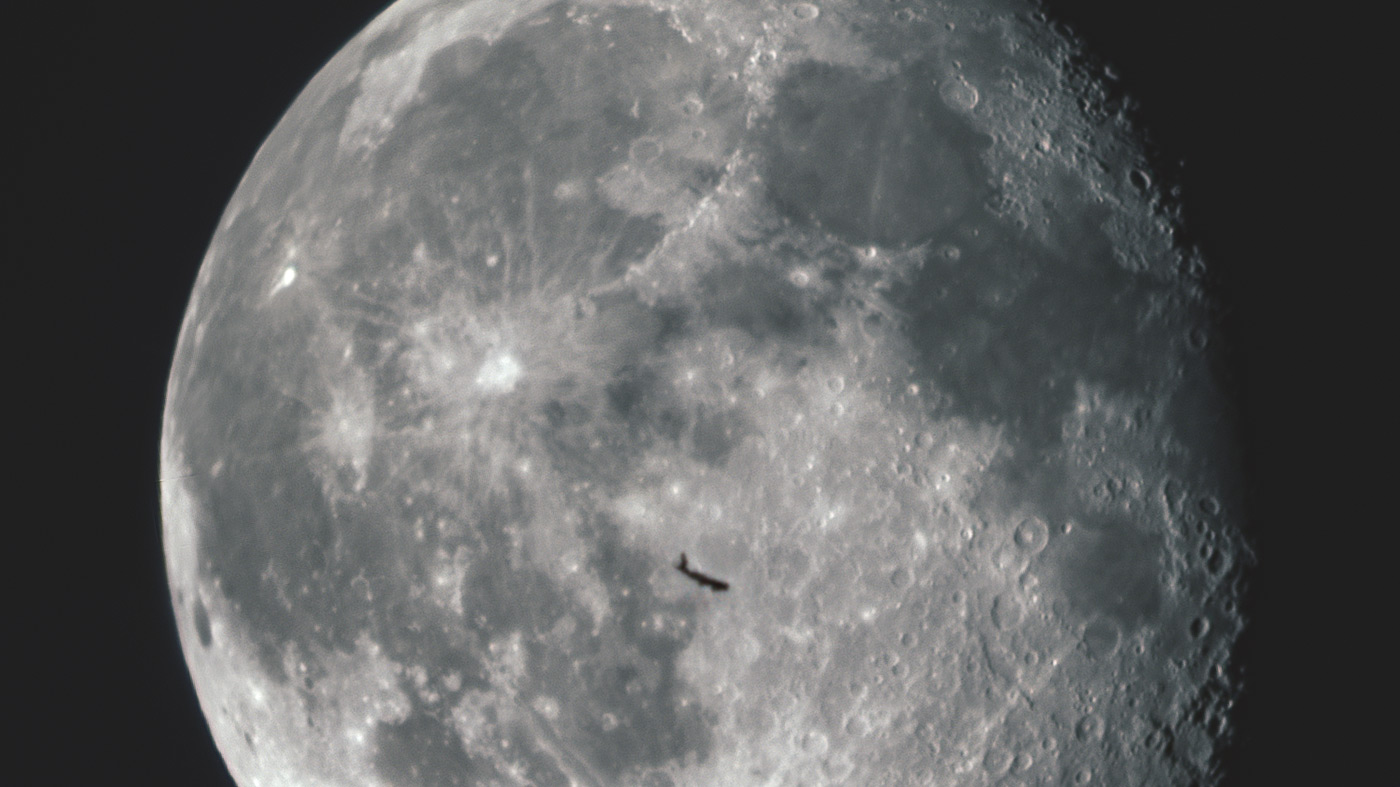
EXIF
Camera: ZWO ASI585MC Pro.
Telescope: Altair Astro 70ED Telescope (420mm).
Mount: Sky-Watcher EQ5 Pro
Filter: Optolong L eNHance
Guide Camera: ZWO ASI120mm-s
Guide Scope: SVBony 30mm (f4)
Computer: ZWO ASIAIR pro
Method:
Lights: 30 sec video.
Darks: 0
Flats: 0
Bias: 0
Stacked in Deep Sky Stacker, Processed in Pixinsight with RC-Astro Suite of tools.
The lunar calendar for December can be seen here
Deep Sky
The Elephants Trunk Nebula (IC 1396A)
A dense, elongated cloud of gas and dust within the larger IC 1396 region in Cepheus, about 2,400 light years away. Illuminated and compressed by nearby massive stars, it is an active stellar nursery where young protostars form inside its dark trunk‑like structure. You can see many stars being born in it (apparently 250!).
We last looked at this target in the June 2025 edition of this blog. Of course it is only natural that when we get new kit and develop new techniques and skills we want to image our favourite targets once again. Since the images in the June blog were taken I have made three massive changes to my set up, and here you can see the impact of those. The first is having the mount StellarTuned by David Woods (https://www.darkframeoptics.com/), the second is buying a dedicated astro camera, and the third is using Pixinsight, RC Astro tools along with implementing the recommendations of one of my colleagues. In my opinion this really has taken my imaging to the next level. The difference in contrast, detail and sharpness is plain for all to see... and in case you are wondering I have been playing with PixelMath and have changed the colours to simulate an HOO "Hubble Palette", I shall talk about this in a few editions time!
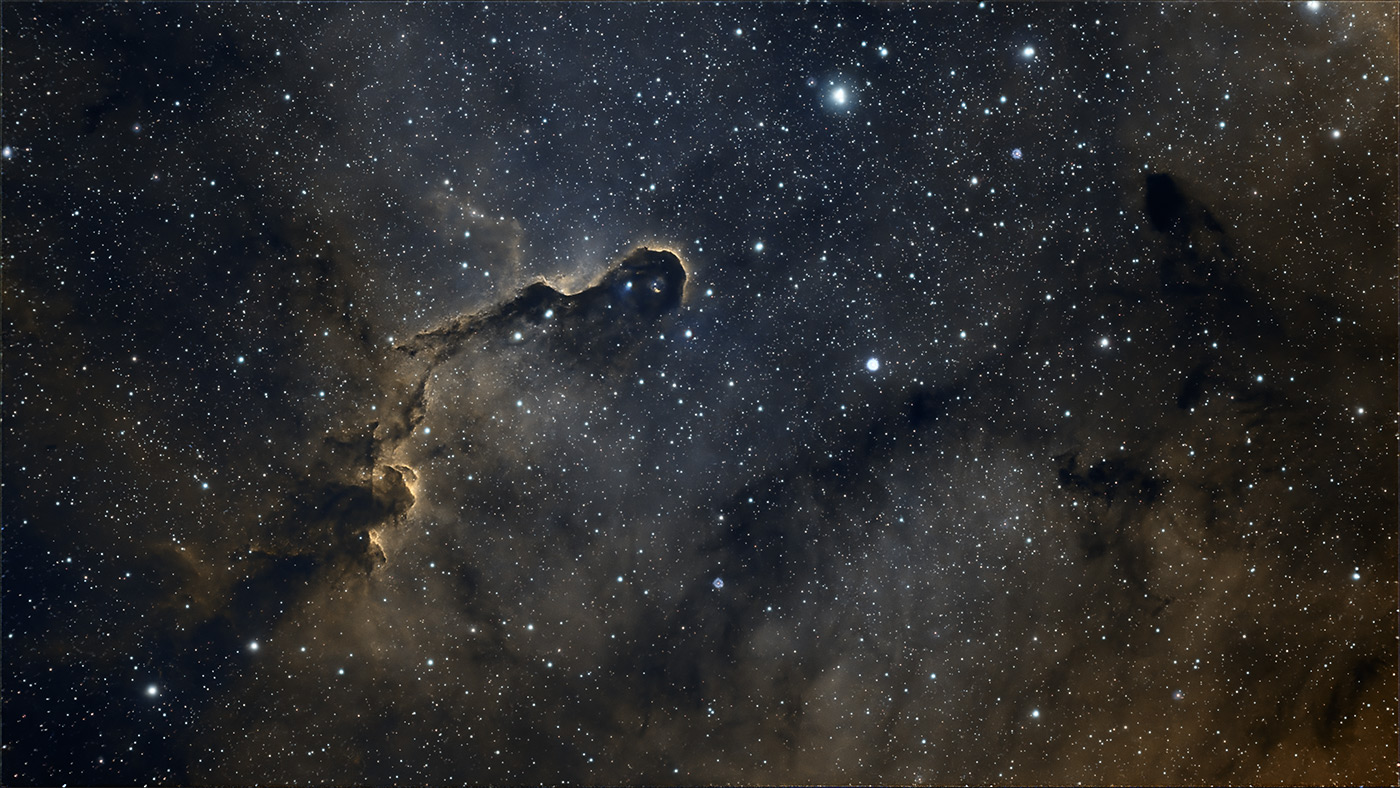
EXIF
Camera: ZWO ASI585MC Pro.
Telescope: Altair Astro 70ED Telescope (420mm).
Mount: Sky-Watcher EQ5 Pro
Filter: Optolong L eNHance
Guide Camera: ZWO ASI120mm-s
Guide Scope: SVBony 30mm (f4)
Computer: ZWO ASIAIR pro
Method:
Lights: 92 x 120s at -10C and gain 252.
Darks: 0
Flats: 0
Bias: 0
Stacked in Deep Sky Stacker, Processed in Pixinsight with RC-Astro Suite of tools, HOO simulation using PixelMath.
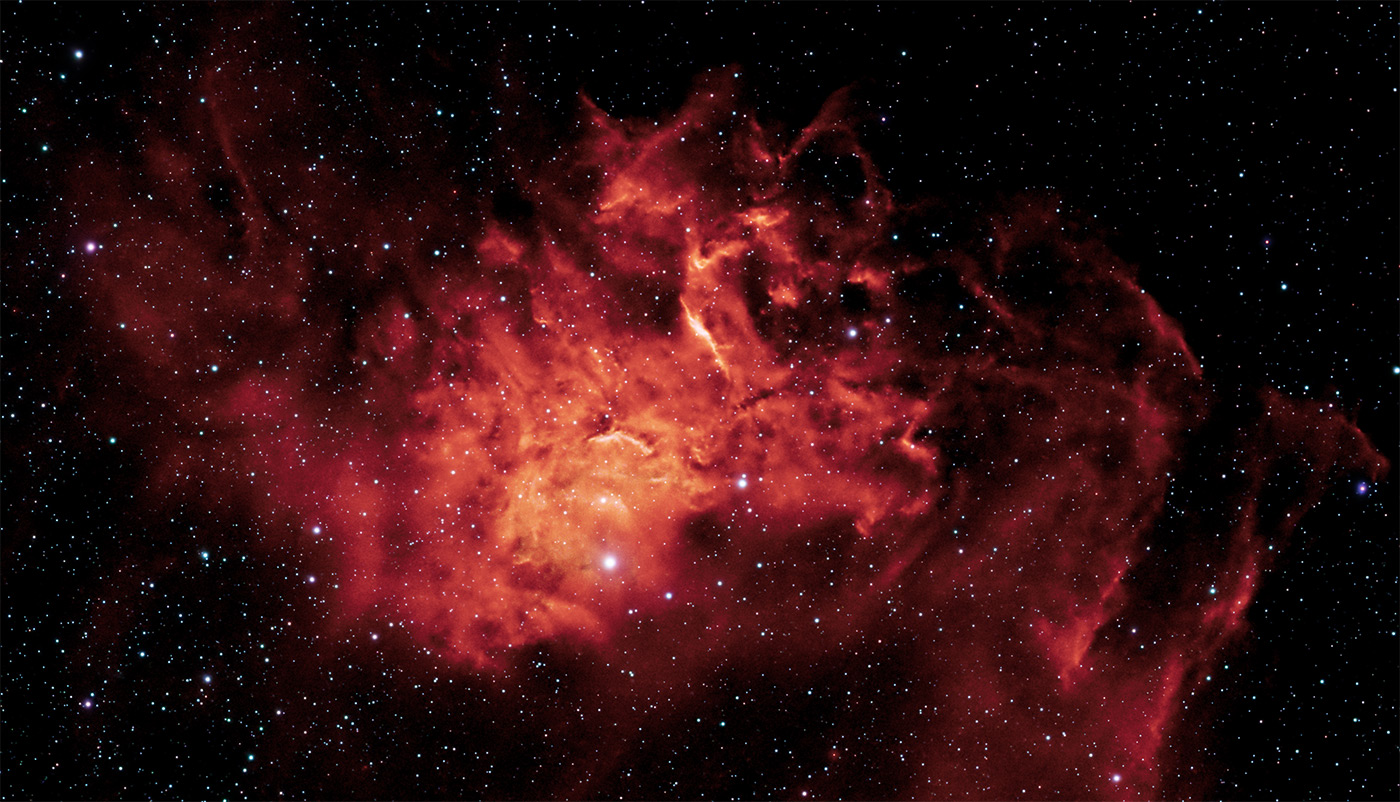
The Flaming Star Nebula (IC 405)
A glowing cloud of gas and dust in Auriga about 1,500 light years away, where starlight and interstellar material interact in dramatic fashion. It surrounds the hot, blue star AE Aurigae, whose intense radiation both illuminates the nebula and sculpts its smoky filaments.
IC 405 is unusual because it is both an emission nebula and a reflection nebula. In some regions, hydrogen atoms are ionised by AE Aurigae’s ultraviolet light, producing the characteristic red glow of hydrogen emission. In other areas, the dust simply reflects the star’s blue light, creating striking contrasts of colour. Where these effects overlap, the nebula takes on purple tones, giving astrophotographers a palette that looks almost painted across the sky.
The nebula spans roughly five light years across, and its appearance has earned it the nickname “Flaming Star” because long-exposure images make AE Aurigae look like it is engulfed in fire. In reality, the star is not physically bound to the nebula—it is a runaway star, likely ejected from the Orion region millions of years ago, now passing through this cloud and lighting it up as it goes. This chance encounter is what makes IC 405 so visually dramatic.
For observers, IC 405 is faint but rewarding, visible in dark skies with medium telescopes and spectacular in astrophotography. Narrowband imaging highlights the red hydrogen emission, while broadband captures the delicate reflection component. Scientifically, IC 405 is a reminder of how stellar motion and interstellar clouds can combine to create transient, beautiful structures, visible only because of the timing of a star’s journey through space.
EXIF
Camera: ZWO ASI585MC Pro.
Telescope: Altair Astro 70ED Telescope (420mm).
Mount: Sky-Watcher EQ5 Pro
Filter: Optolong L eNHance
Guide Camera: ZWO ASI120mm-s
Guide Scope: SVBony 30mm (f4)
Computer: ZWO ASIAIR pro
Method:
Lights: 92 x 120s at -10C and gain 252.
Darks: 0
Flats: 0
Bias: 0
Stacked in Deep Sky Stacker, Processed in Pixinsight with RC-Astro Suite of tools.
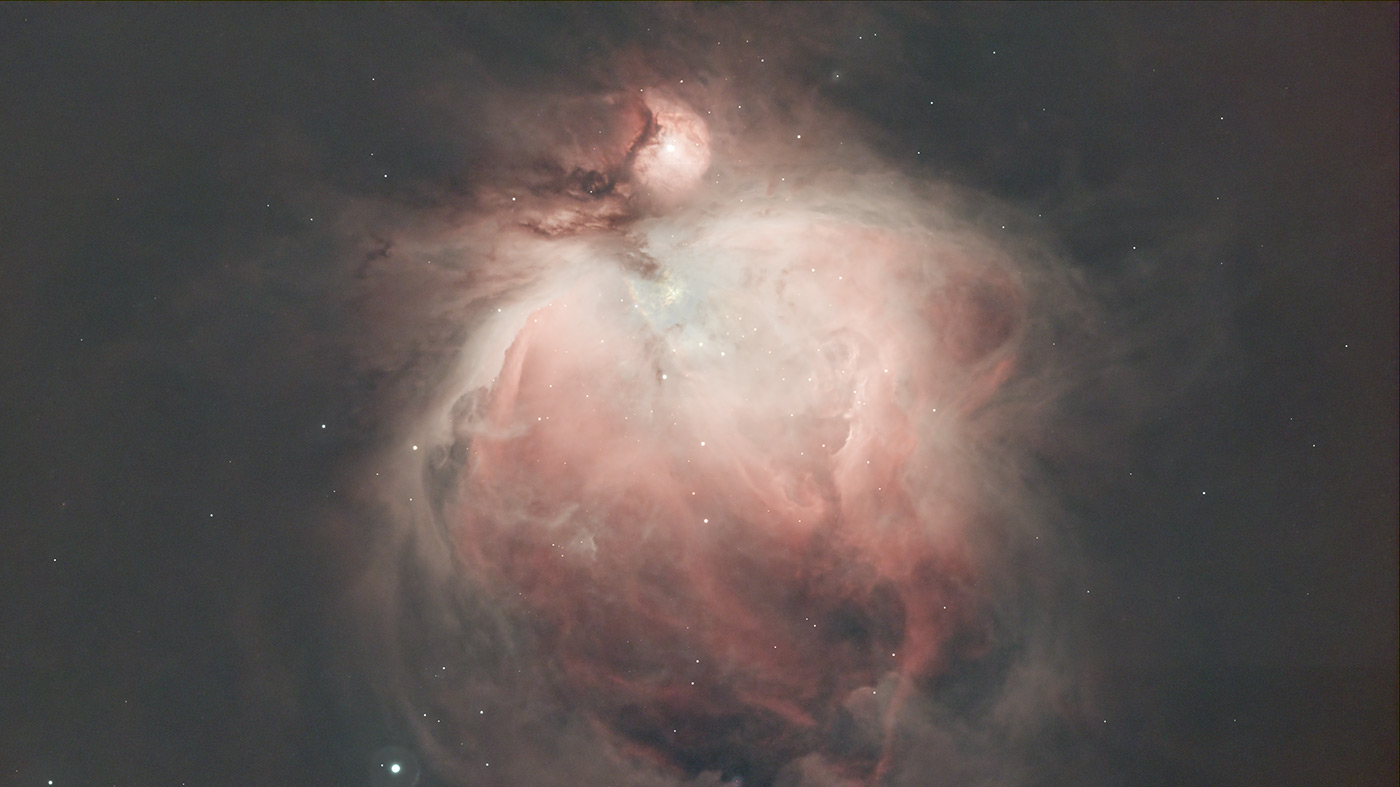
The Great Orion Nebula (M42)
We last saw this most bright of targets in this blog in April as a sort of fair well for summer (https://www.parkcameras.com/blog/tips-and-inspiration/april-astrophotography-highlights-in-the-uk_a-04), here it is again as a welcome back! This time again with the new kit and techniques. This time I paid particular attention to the trapezium, the 4 stars that are very bright at the core of this nebula. Last time I completely blew them out, this time I took 5 x 1 sec subs and then using photoshop carefully replaced the blown out region with them. Many an astrophotographer that I know make an annual mission to image this target, and I guess I am not different!
Located about 1,350 light years away in the sword of Orion, it is a vast cloud of gas and dust where new stars are actively being born.
At its heart lies the Trapezium Cluster, a group of young, massive stars whose intense radiation lights up the surrounding hydrogen, giving the nebula its vivid glow. The interplay of glowing gas, dark dust lanes, and newly forming stars makes M42 both a spectacular visual target for observers and a key laboratory for astronomers studying how stars and planetary systems emerge from interstellar material.
EXIF
Camera: ZWO ASI585MC Pro.
Telescope: Altair Astro 70ED Telescope (420mm).
Mount: Sky-Watcher EQ5 Pro
Filter: Optolong L eNHance
Guide Camera: ZWO ASI120mm-s
Guide Scope: SVBony 30mm (f4)
Computer: ZWO ASIAIR pro
Method:
Lights: 60 x 120s at -10C and gain 252.
5 x 1s at -10C and gain 252 for the trapezium.
Darks: 0
Flats: 0
Bias: 0
Stacked in Deep Sky Stacker, Processed in Pixinsight with RC-Astro Suite of tools, stitched the trapezium and nebula together in Photoshop.
Next month...
For my challenge, I think I am going to try the Spaghetti Nebula (Sh2‑240), not the whole thing as it is massive taking up around 3 degrees of the sky! But a very faint part of this massive supernova remnant which my kit will theoretically capture (based on the Squid) but it wont be quick, and processing will require some rather special techniques!
As it is Christmas... here is a bonus image...
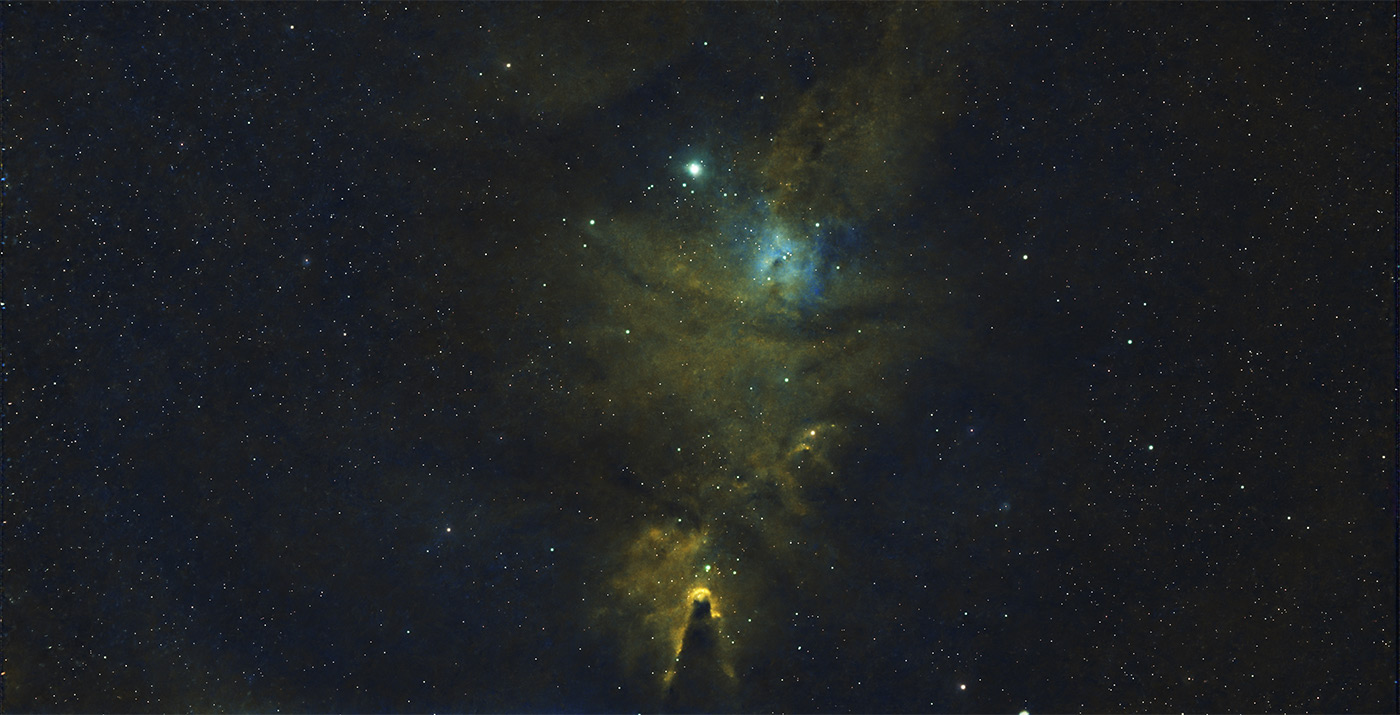
Christmas Tree Cluster and Cone Nebula (NGC 2264)
Located about 2,300–2,500 light years away in the constellation Monoceros, this region combines a young open cluster of stars shaped like a Christmas tree with a striking pillar of dark gas and dust known as the Cone Nebula.
NGC 2264 is a textbook example of how massive stars sculpt their environment. The Cone Nebula’s shape is carved by radiation pressure, while the Christmas Tree Cluster continues to produce new stars within the surrounding emission nebula. For astrophotographers, it’s a winter highlight: the triangular star pattern and glowing nebulae make for a scene that truly resembles a cosmic holiday decoration.
EXIF
Camera: ZWO ASI585MC Pro.
Telescope: Altair Astro 70ED Telescope (420mm).
Mount: Sky-Watcher EQ5 Pro
Filter: Optolong L eNHance
Guide Camera: ZWO ASI120mm-s
Guide Scope: SVBony 30mm (f4)
Computer: ZWO ASIAIR pro
Method:
Lights: 45 x 120s at -10C and gain 252.
Darks: 0
Flats: 0
Bias: 0
Stacked in Deep Sky Stacker, Processed in Pixinsight with RC-Astro Suite of tools, HOO simulation using PixelMath.
Wishing you all this seasons greetings and a happy new year! Let's hope Santa brings loads of astro kit this year!!! (that is a hint, you know who you are!)
Share this post:
By Jonathan Penberthy on 01/12/2025

Jonathan Penberthy
Cosmic Shutter Seeker and Star Programmer
Jonathan Penberthy is the Cosmic Shutter Seeker and Star Programmer at Park Cameras, with over 20 years of experience as a software engineer. His career journey has spanned industries, but a move to Park Cameras sparked a passion for astrophotography. Jonathan’s interest began while working on a lens selection app, leading him to explore the night sky with a Canon 7D. When he’s not programming or photographing the stars, he enjoys sailing and navigating by the cosmos. Learn more on his profile page.
Trade in your old equipment
Fast and easy trade in service ensures your old gear is collected efficiently and you are paid quickly! It's very simple to trade in your unwanted photography gear. Just head over to our dedicated Sell or Part Exchange page, fill out the details, and we'll get back to you with an offer for your old gear. Take the cash, or put it towards the cost of your new gear. It's up to you! Find out more
sign up to the newsletter
Keep up to date on the latest photography news, events and offers. Sign up now