- Call us 01444 237070

-
- Back
- Used Cameras
- Used Accessories
- Used Lenses
- Back
- Used Canon Lenses
- Used Nikon Lenses
- Used Fujifilm Lenses
- Used Sony Lenses
- Used Micro 4/3rds Lenses
- Used Leica Lenses
- Used Panasonic Lenses
- Used Pentax Lenses
- Used Samyang Lenses
- Used Sigma Lenses
- Used Tamron Lenses
- Used Tokina Lenses
- Used Voigtlander Lenses
- Used Zeiss Lenses
- Used Hasselblad Lenses
- Used Video
- Used Film Equipment
- Used Stock Alert
- Used Blank Test
- Sell or Part Exchange
- Used Clearance
- Recently Added Used Equipment
- Park Picks
- Faulty
- Trade-In
- Blog
- New in
- Call us
- Contact us
- Stores
- Sign in
Call us: 01444 237070
Search terms
Brands
Category
Products
[[{name}]]
[[{attributes.Price}]]
- Categories
- Tips & Inspiration
- Reviews
- News
- Events
- Features
- Buying Guides
- Competitions
How to Use Laowa 17mm f/4 Tilt-Shift Lenses
Tilt-shift lenses are among the most specialised photography lenses, offering a unique level of control that differentiates them entirely from standard lenses. By adjusting the optical alignment of the lens vs the camera sensor, photographers can correct for perspective, which is useful when photographing buildings or other features that benefit from being perfectly aligned. Tilt shift lenses can also adjust the plane of focus, enabling front to back sharpness at wider apertures than typical, and to create miniature effects, which you have probably come across.
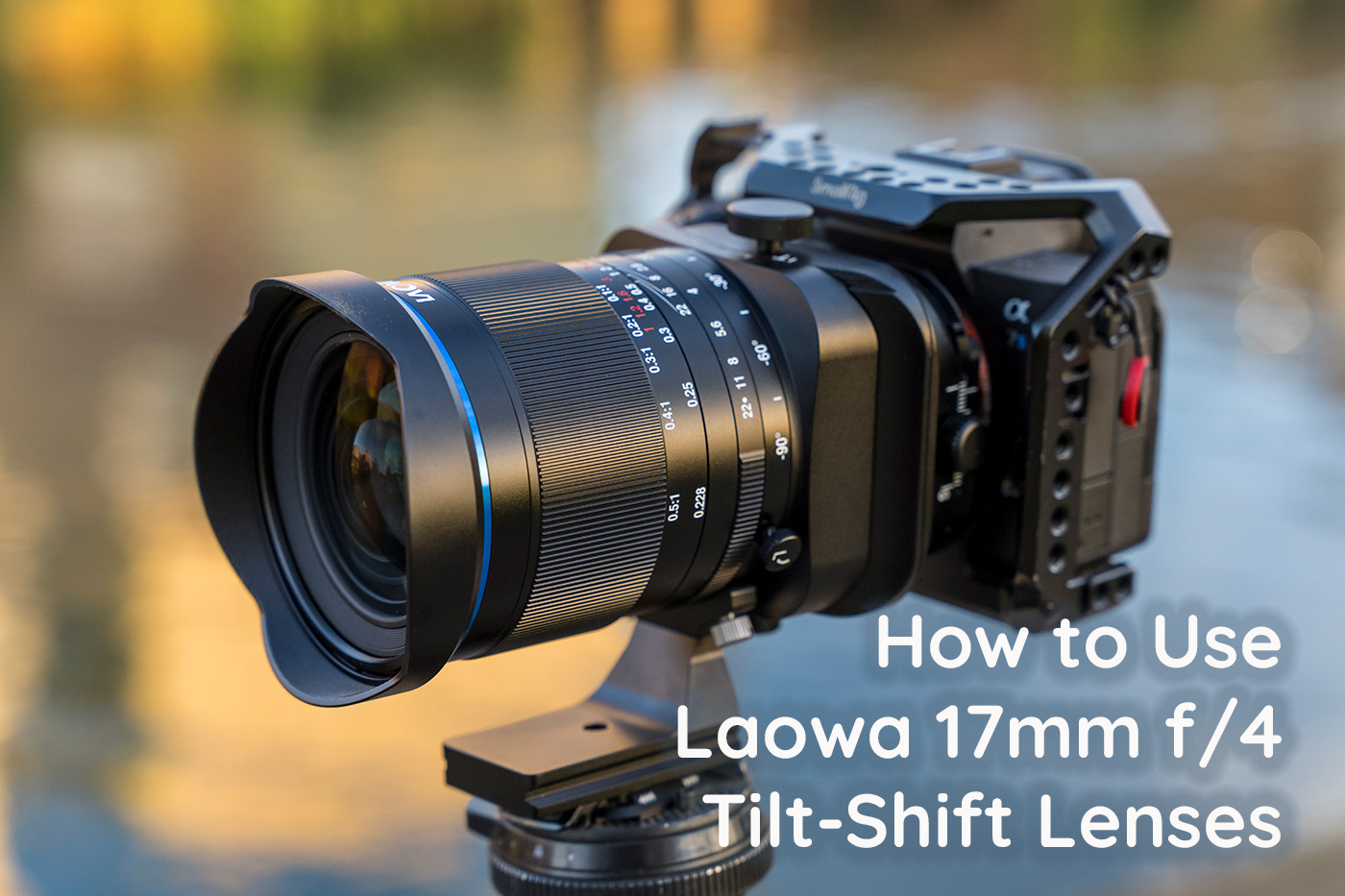
Despite their usefulness, many photographers have never tried a tilt shift lens, and the concept of how they work can seem confusing at first.
The recent addition of Laowa 17mm f/4 Zero-D Shift and Tilt-Shift lenses provided the perfect opportunity to explore tilt shift lenses in more detail, and in this guide we discover what a tilt shift lens does, how the shift and tilt mechanisms work, and share 10 tips to help you get the most from the Laowa 17mm f/4, and this type of photography generally.
Let’s begin with a quick look at what these Laowa lenses cost and how they fit into the range.
What are Laowa 17mm f/4 Zero-D Tilt-Shift and Shift Lenses?
Laowa is perhaps best known for their range of macro and unusual probe lenses, so what exactly are shift and tilt-shift lenses? They are manual, full-frame ultra-wide primes that allow photographers to control perspective and focus. While they share a 17mm focal length and optical design, each offers a level of control for unique results.
The shift version allows the lens to move up or down relative to the camera sensor, which is useful when photographing buildings, interiors and other scenes with vertical lines. By keeping the camera level and shifting the lens instead, photographers can correct converging vertical lines and maintain straight geometry in-camera.
Adding a tilt mechanism, the tilt-shift is perhaps more traditional, changing the angle of the plane of focus as well as the ability to shift. The plane of focus can be used to increase depth of field without using smaller apertures, which can cause diffraction, and can also creatively isolate a narrow band of focus within a scene.
These movements give photographers control over composition, perspective and focus that is difficult with conventional lenses or software corrections. You can of course correct converging lines in post, but at the cost of reducing file sizes by cropping, and potentially distorting other parts of the image.
The table below highlights all of the mounts and versions available in this range, together with their price here in the UK.
|
£1269.00 |
|
|
£1269.00 |
|
|
£1269.00 |
|
|
£1269.00 |
|
|
£1269.00 |
|
|
£1049.00 |
|
|
£1049.00 |
|
|
£1049.00 |
|
|
£1049.00 |
|
|
£1049.00 |
Why do Buildings Look like they are Leaning Backwards in Photos?
If you’ve ever taken a photo which has buildings and wondered why they appear to be leaning backwards, it’s because of perspective distortion. This occurs when the camera is tilted upwards to include the top of a structure in the frame.
When a camera sensor is not parallel to a building, the vertical lines of the structure begin to converge towards the top of the image. This creates an effect where buildings appear to taper or fall backwards, which is particularly noticeable when shooting with a wide-angle lens.
The effect is not caused by the lens, but by the position and angle of the camera relative to the subject. The closer you are to the building, the more you have to tilt the camera upwards, which in turn makes distortion more pronounced.
Architecture and interior photographers avoid this by keeping the camera level and using the shift mechanism to move the lens upwards instead of tilting the camera. This allows the entire building to fit into the frame while keeping lines correctly vertical.
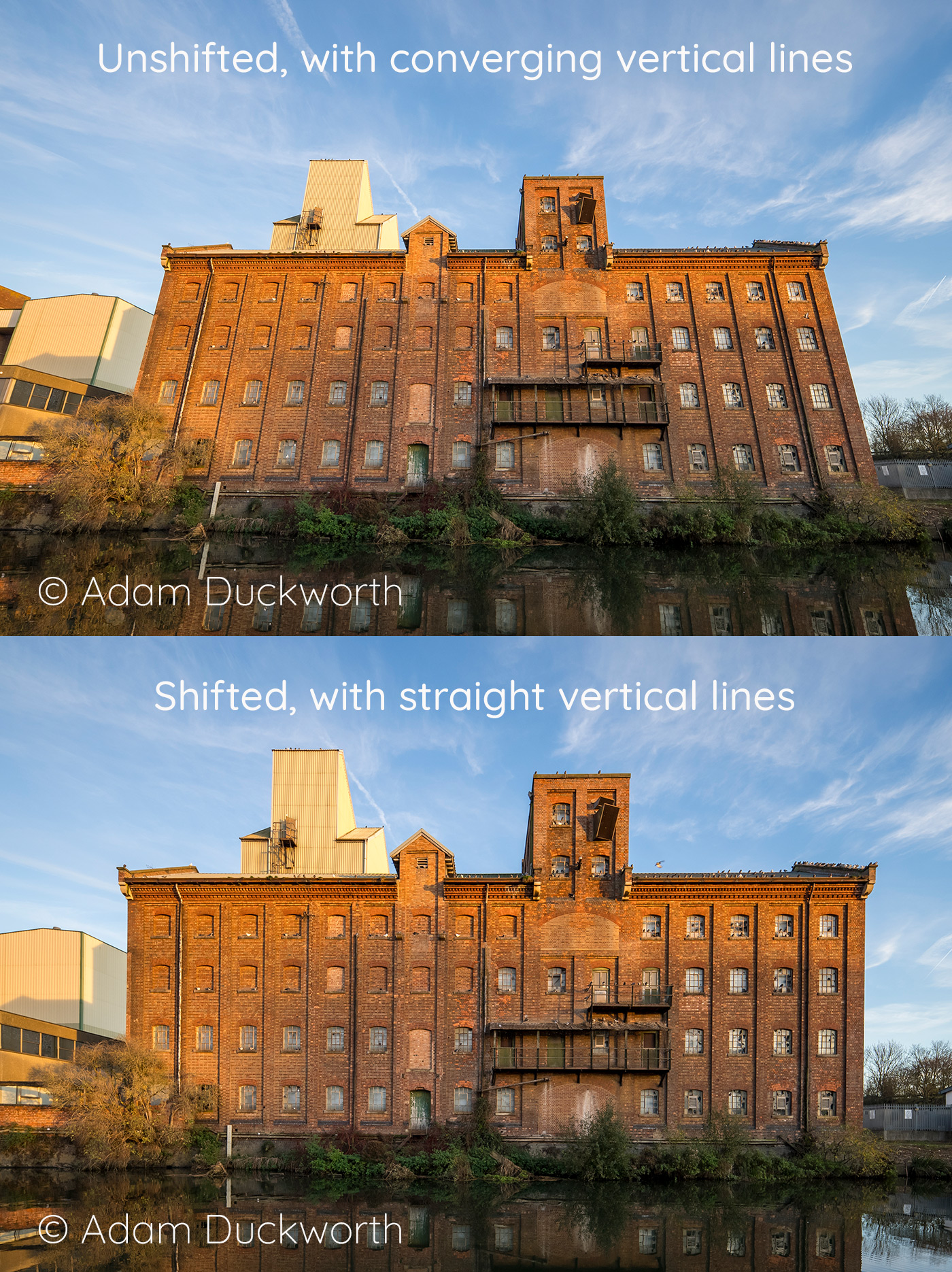
Example of shifted and unshifted building, with converging vertical lines © Adam Duckworth
What does a Shift Lens Do?
A shift lens is able to move vertically or horizontally relative to the camera sensor while keeping the camera body in a fixed position, moving the lens instead of changing camera angle.
In architectural and interior photography this allows more of a building or room to be included in the frame, which is useful if shooting interiors or in confined spaces, as well as for achieving straight lines as mentioned earlier.
Shift can also be used to create panoramic images. By shifting the lens left, right, up or down while keeping the camera fixed on a tripod, photographers can capture multiple frames that stitch together into a panorama without perspective inconsistencies that can occur if rotating the camera.
Because the camera has not been moved, perspective is consistent between each frame, which reduces parallax errors. This means you may be able to make panoramas without a nodal slide or panoramic rail, by just using a shift lens.
How is a Tilt-Shift Different?
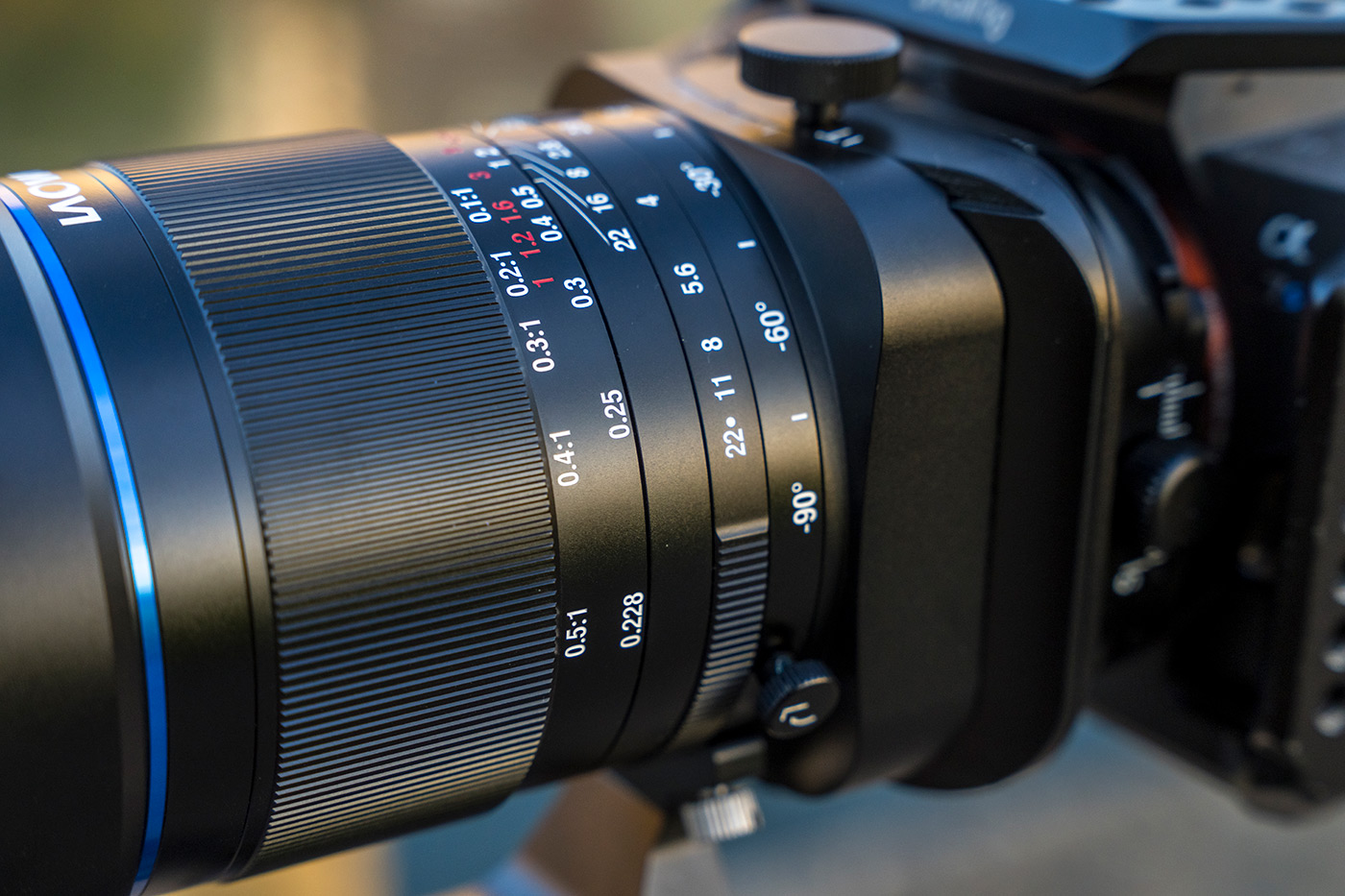
A tilt-shift lens combines both tilt and shift mechanisms. While shifting mainly controls perspective, a tilt-shift lens adds the ability to adjust the angle of the plane of focus. This is what makes a tilt shift lens even more useful in architectural, landscape and product photography, for example.
Tilting the lens changes how the lens and the camera sensor align, allowing you to change the plane of focus. This means a tilt shift photography lens can keep more of a scene sharp at wider apertures, so you can capture the foreground and background sharply in a single frame, instead of focus stacking or using small f-stop values that can cause diffraction.
While the theory might sound complicated, in practice it creates front-to-back sharpness quite easily and can be used to isolate a narrow band of focus for miniature-style effects.
Because a tilt-shift lens also includes shift movement, it keeps the ability to control perspective when photographing buildings or interiors. In other words, a tilt and shift lens combines both perspective correction and focus control in a single tilt shift camera lens. So with this in mind, next we look at which might be best for your needs.
A while ago I was shooting seascapes at the beach using a tilt-shift lens, when the opportunity appeared to capture another photographer on the beach some way off. I was able to capture the very close foreground in pin-sharp focus, as well as the silhouetted figure around 30 metres away, all at f/4.5, which allowed for a sharp image from front to back at a far quicker shutter speed. I’ve included the example here so you can see how a tilt-shift lens helped in this instance.
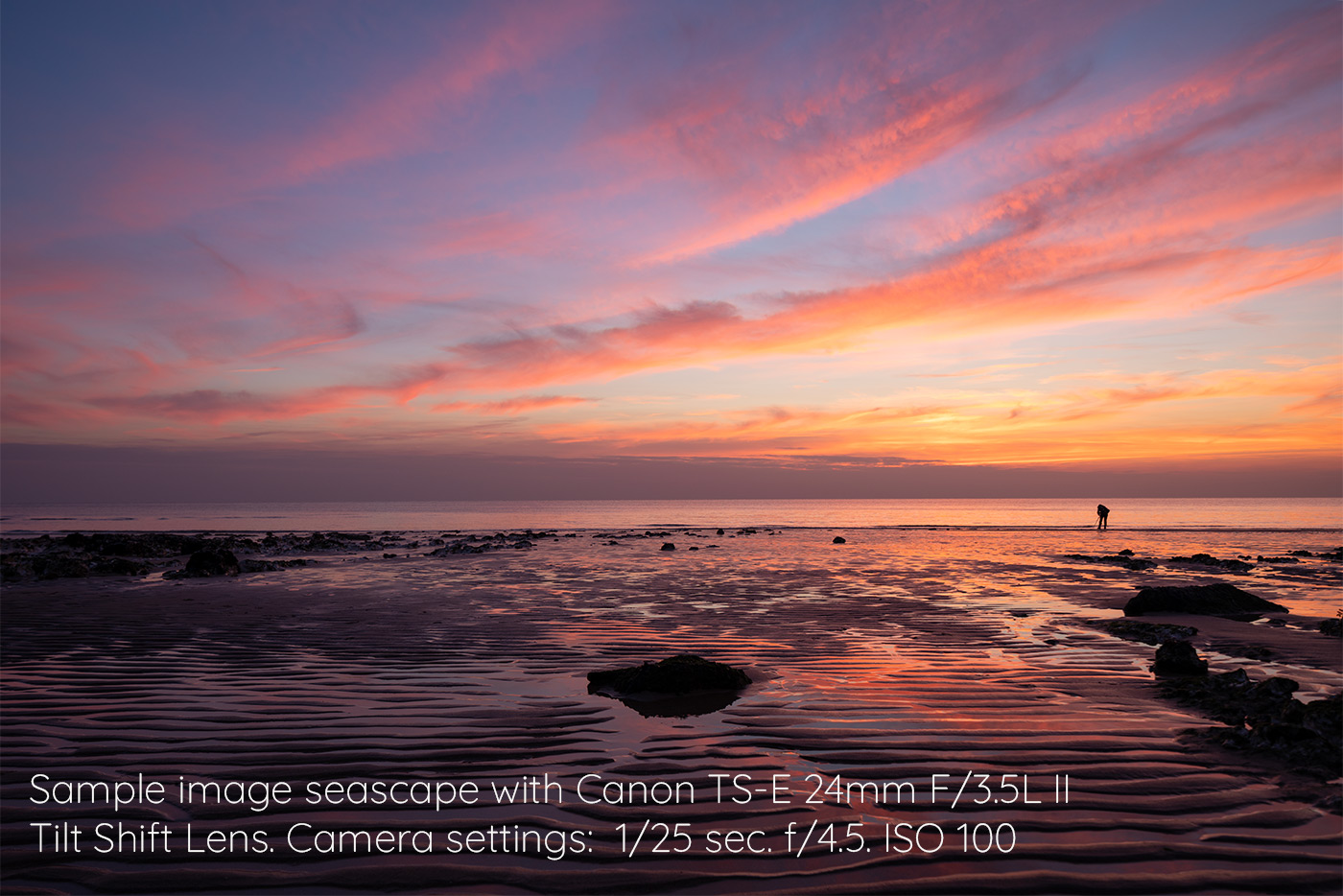
Example beach shot with depth of field at f/4.5 ©Nick Dautlich
Which Do You Need between a Tilt-Shift vs Shift Only?
Choosing between a shift-only and a tilt-shift lens depends on how much control you want over depth of field. Both lenses allow you to correct perspective, but a tilt-shift also controls the plane of focus.
A shift-only lens is often perfect for architectural, real estate and interior photography where the main goal is to keep verticals straight and avoid converging lines. However if you shoot close to a foreground or capture landscapes, a tilt shift adds a useful element of focus control. If you like creating miniature world effects, that is only possible with the tilt shift.
Out of the two, a tilt-shift lens is arguably more versatile as it allows for both depth of field and perspective control, which can save time compared to focus stacking techniques that landscape and architectural photographers sometimes rely on.
Why is 17mm Useful for Architecture and Interiors?
A fixed 17mm lens is generally considered an ultra-wide, so why is it useful for tricky subjects where barrel distortion typically shows up so noticeably? Firstly, you can fit a lot into the frame at 17mm. When you shift, you gain even more effective space, allowing tall buildings to fit more readily than with a 24mm, for example.
Wide focal lengths like 17mm also produce deeper depth of field, which is valuable for these types of photography. It means you can keep more of a scene sharp without needing extremely small apertures, using the tilt mechanism only as much as necessary.
Laowa does also offer 15mm and 20mm tilt-shift lenses, but 17mm strikes a balance between field of view and perspective distortion. A wider focal length such as 15mm may capture more of a scene but can exaggerate perspective, while a slightly longer focal length such as 20mm may feel more natural but provide less coverage in confined spaces.
Their Zero-D optical design also helps minimise distortion across the frame, which is particularly beneficial where straight lines are concerned.
Like the majority of tilt-shift lenses, the Laowa 17mm is manual focus only, which suits the typical workflow of architectural and interior photography. You can still take advantage of in-camera focusing aids such as focus peaking and magnification, where available, which help you achieve pin-sharp focus precisely where it is most critical.
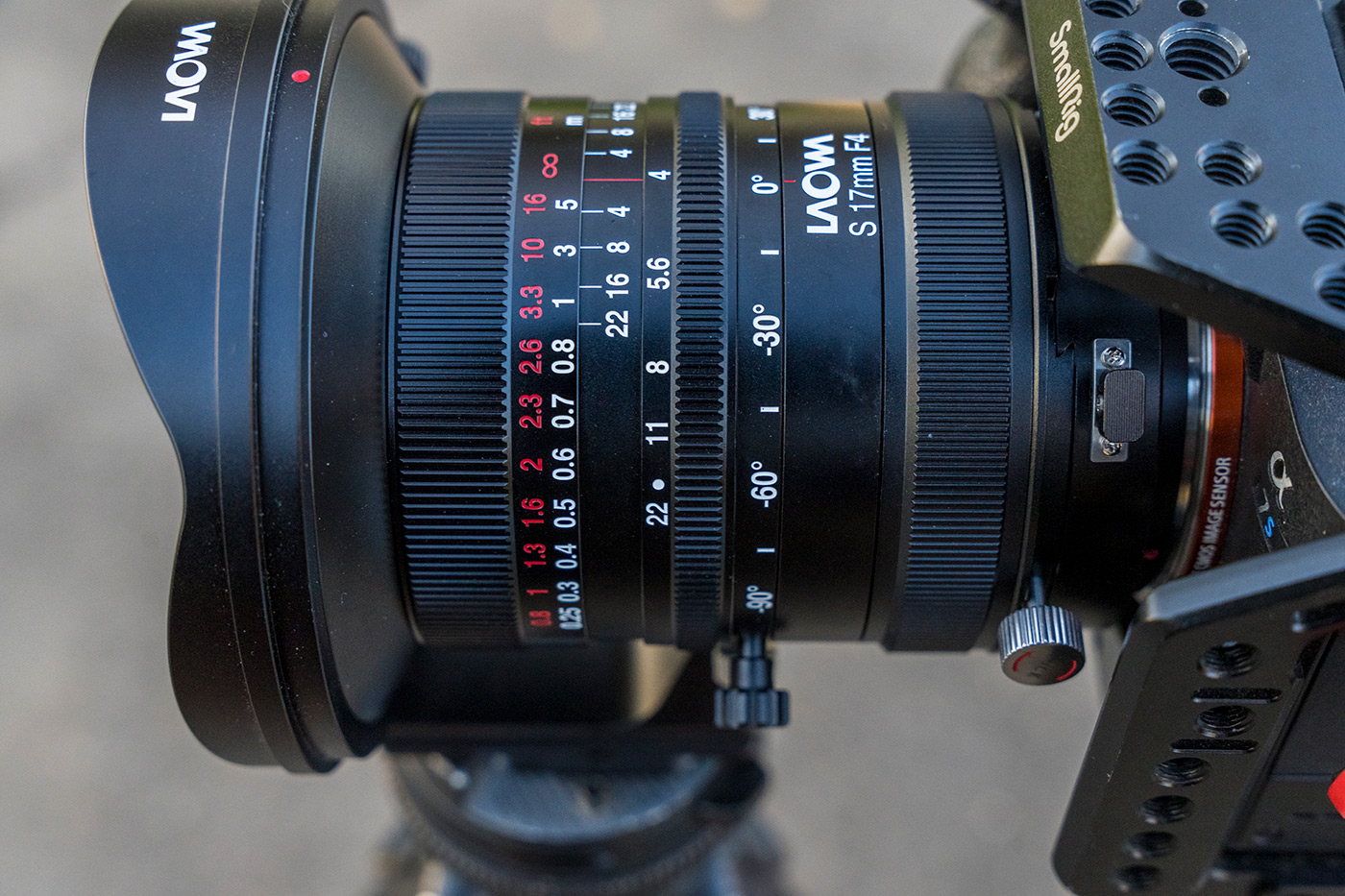
10 Tips for Using Laowa 17mm f/4 Tilt-Shift Lenses
If you’re new to using this type of lens, our 10 tips will help you get the most out of it, and help you to understand how to use tilt and shift movements more effectively for real-world shooting.
- Use a sturdy tripod. Tilt-shift photography often involves very small adjustments to tilt, shift and focus. A sturdy tripod keeps the camera stable while you fine-tune these movements without accidentally changing your composition.
- Keep the camera level. Before even touching the shift mechanism, make sure the camera is level by using a tripod spirit level or the live view level on the LCD. If the camera is already tilted, shifting the lens won’t correct perspective properly.
- Shift before recomposing. When capturing buildings, shift the lens to frame the subject rather than moving the camera at all.
- Use live view when applying tilt. Tilting the lens changes where focus is in the frame, so magnified live view is extremely helpful when achieving accurate focus.
- Small adjustments can make a big difference. You rarely need large tilt movements. Even a small adjustment can change the plane of focus significantly.
- Use tilt to follow the direction of the subject. If you are capturing something like a shoreline, path or table surface, tilting the lens slightly can align the focus plane with the subject.
- Shift for panoramas. By shifting the lens left and right (or up and down for a vertical pano) you can capture multiple frames without rotating the camera. This may well stitch together more cleanly than rotating the ball head or whichever support you’re using because perspective is consistent.
- Check your frame corners carefully. The edges of the frame become increasingly important for architecture and interiors where everything is aligned, and it’s worth reviewing the entire frame before taking a shot.
- Try using tilt creatively to produce a narrow band of focus, creating the well-known miniature effect. Tilt-shift lenses can also be used effectively (and selectively) for video, portraits and other genres. Experimenting with tilt in different situations can produce unusual and distinctive results that can set your images apart.
- Take your time and learn the adjustments. Tilt-shift lenses can appear complicated at first, so take your time and practise the controls, depth of field and tilting, which all affect how the final image looks. When you become familiar, you’ll be able to adjust your shot quickly and confidently, achieving the results you want in-camera.
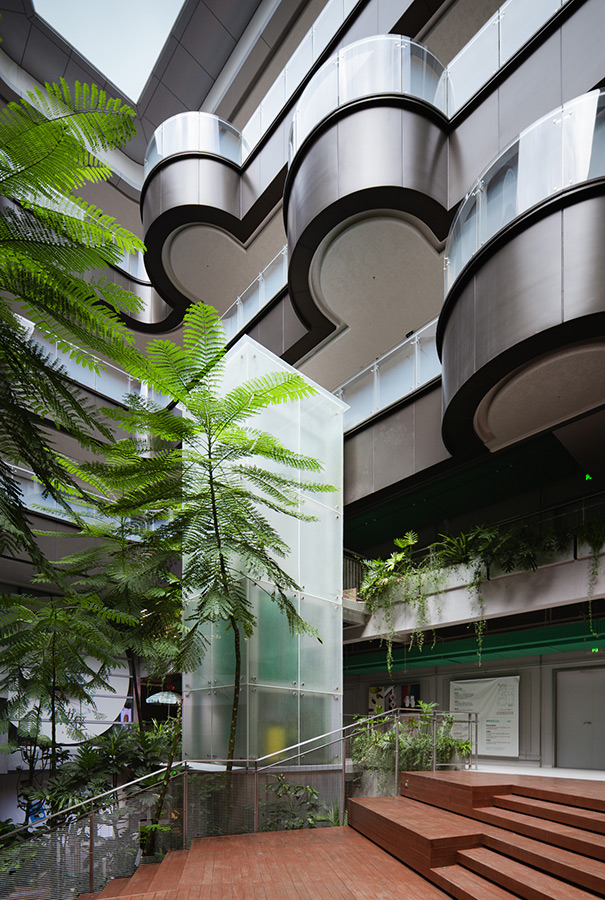
Example of architectural interior no Exif data
Is Tilt-Shift Still Relevant in Photography?
If you like to spray and pray, a shift or tilt-shift probably isn’t the best choice, but for architectural, interior and even landscape photography where precise control over perspective and focus is important, these lenses can become integral to your workflow.
While editing software can correct some distortion after a photo is taken, optical corrections often produce more natural results and certainly avoid image stretching or heavy cropping that can occur during editing adjustments.
With all that in mind, let’s find out why Laowa’s lenses should be on your radar.
Why choose Laowa 17mm Shift and Tilt-Shift Lenses?
The Laowa 17mm f/4 Zero-D lenses bring tilt-shift and shift photography to a wider range of mirrorless mounts, and at a far more accessible price point than first-party equivalent lenses. Both of Laowa’s models offer the same ultra-wide 17mm focal length and Zero-D optical design, both are manual focus and support large image circles to accommodate lens movements, even covering medium format needs with the GFX version.
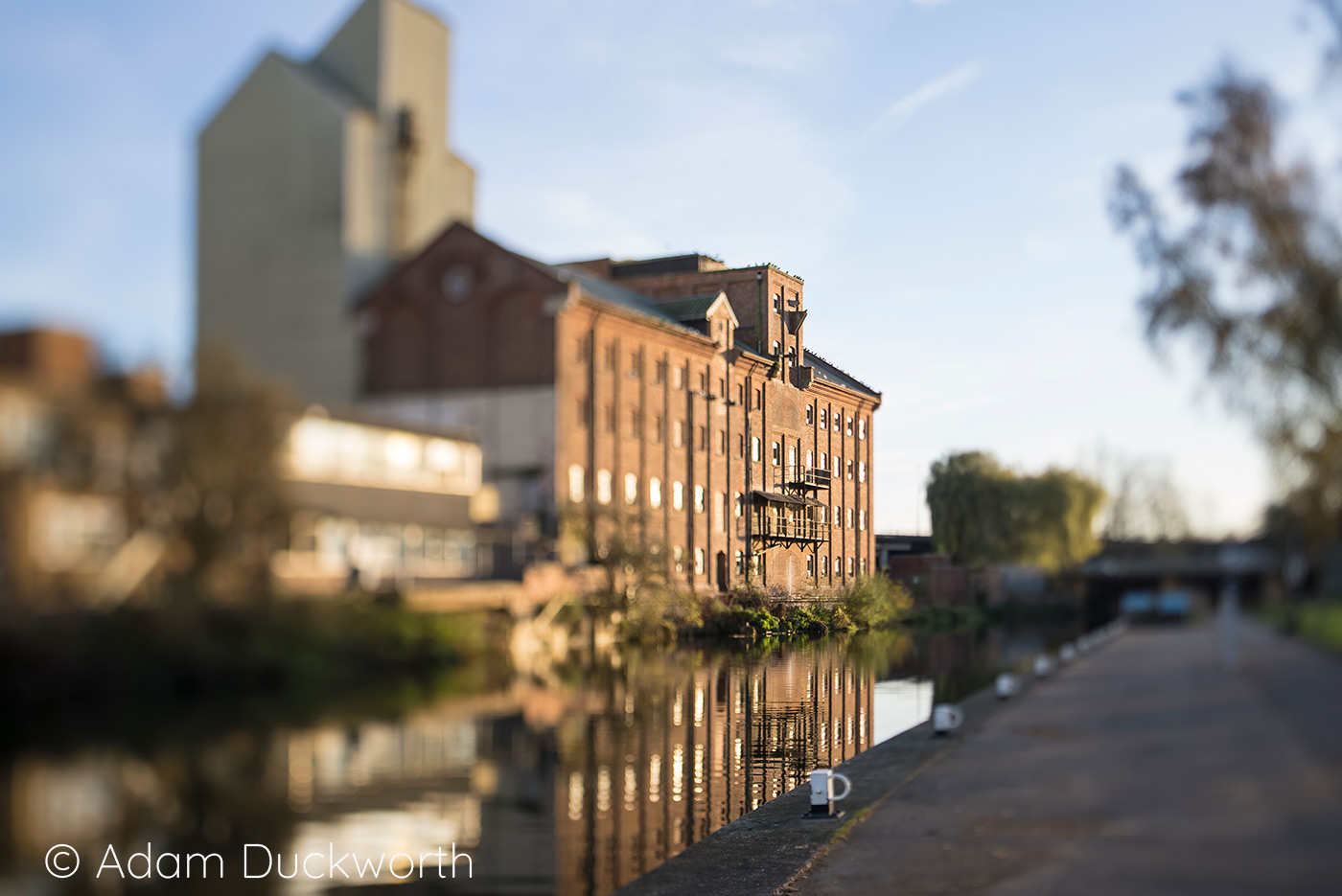
Creative plane of focus © Adam Duckworth
Key features include:
- Zero-D optical design, which minimises distortion
- A standard screw-in filter thread, which unusually for this type of lens allows regular lens filters to be attached, although beware of vignetting if using thicker filters or when stacking
- Tilt adjustment of ±10° on the tilt-shift version for focus plane control
- Shift movement of up to ±12mm for perspective correction (when used on full-frame cameras)
Shift and tilt-shift versions are available for a range of mirrorless mounts, allowing photographers to choose the level of control that best suits their work. Whether you photograph architecture, interiors, landscapes, or just want to experiment with creative effects, these offer precise control that is hard to replicate.
Explore our range of Laowa lenses in more detail to find the perfect option for your camera mount.
Share this post:
By Nick Dautlich on 10/03/2026

Nick Dautlich
Senior Content Writer and Product Reviewer
Nick Dautlich is the Senior Content Writer and Product Reviewer at Park Cameras, with over 15 years of photography experience. A Sony Imaging Professional and expert reviewer, Nick has worked with major brands such as Canon, Sony and Nikon. His work is also featured on Vanguard World UK’s website, Capture Landscapes, and Shutter Evolve. Nick’s photography includes National Trust projects and magazine covers and he is passionate about landscapes and storytelling. Nick also enjoys hiking and teaching his children about nature. Learn more on his profile page.

Trade in your old equipment
Fast and easy trade in service ensures your old gear is collected efficiently and you are paid quickly! It's very simple to trade in your unwanted photography gear. Just head over to our dedicated Sell or Part Exchange page, fill out the details, and we'll get back to you with an offer for your old gear. Take the cash, or put it towards the cost of your new gear. It's up to you! Find out more
sign up to the newsletter
Keep up to date on the latest photography news, events and offers. Sign up now