- Call us 01444 237070

-
- Back
- Used Cameras
- Used Accessories
- Used Lenses
- Back
- Used Canon Lenses
- Used Nikon Lenses
- Used Fujifilm Lenses
- Used Sony Lenses
- Used Micro 4/3rds Lenses
- Used Leica Lenses
- Used Panasonic Lenses
- Used Pentax Lenses
- Used Samyang Lenses
- Used Sigma Lenses
- Used Tamron Lenses
- Used Tokina Lenses
- Used Voigtlander Lenses
- Used Zeiss Lenses
- Used Hasselblad Lenses
- Used Video
- Used Film Equipment
- Used Stock Alert
- Used Blank Test
- Sell or Part Exchange
- Used Clearance
- Recently Added Used Equipment
- Park Picks
- Faulty
- Trade-In
- Blog
- New in
- Call us
- Contact us
- Stores
- Sign in
- Categories
- Tips & Inspiration
- Reviews
- News
- Events
- Features
- Buying Guides
- Competitions
A Total Guide to the Next UK Solar Eclipse
The last total solar eclipse viewable from the UK was on August 11th, 1999, so there's a great deal of buzz around the next eclipse, which is due August 12th, 2026. Excitingly, if there's no cloud cover it should be visible to different degrees from anywhere, whether you’re in London or Glasgow, Cornwall or Sussex. The further southwest, the more coverage you’ll see, up to about 95% in Cornwall.
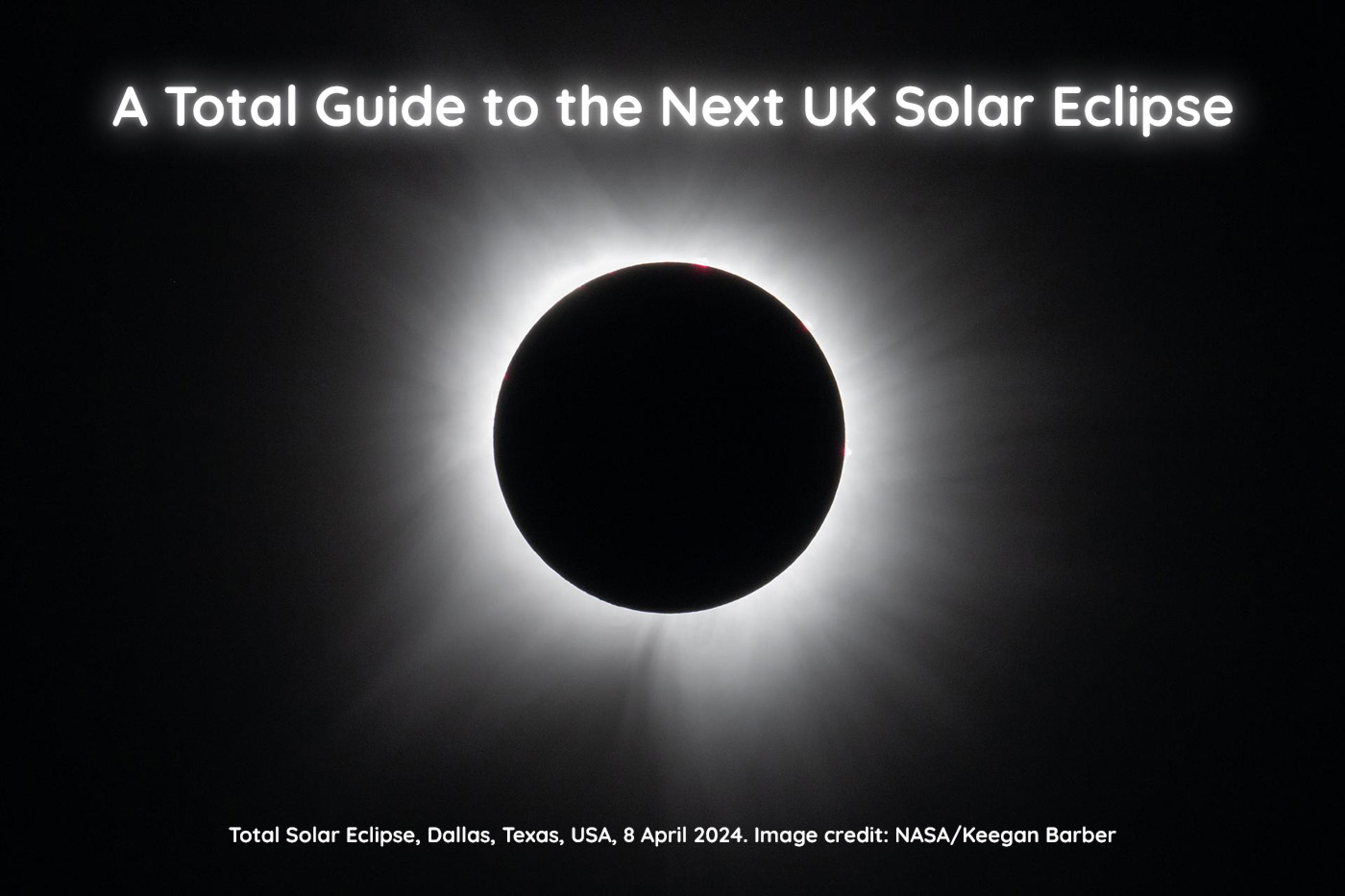
With that in mind, we thought a total guide to the next UK Solar Eclipse would be handy, so that you can safely enjoy this unique experience. We include a beginner's guide to photographing the solar eclipse, discussing some of the most important lenses and accessories to bring for your camera or telescope, in order to make the most of this rare celestial event.
We also cover how to plan your location, where to go for the best experience and how to come away with memorable images.
So without further ado, let's tuck into some solar background, before getting onto the nitty gritty.
Where and when is the next solar eclipse in the UK?
ℹ️ The Royal Observatory website has comprehensive details about where and how to see the 12 August 2026 partial solar eclipse. Although this will be a partial eclipse, the moon will cover around 90% of the sun, so it should look spectacular to the amateur eclipse observers among us.
We recommend getting to your location for around 6pm, although the exact time will depend on where in the UK you are. It is anticipated to end at around 8pm. But why is this so rare? Wasn't there an eclipse just a couple of years ago?
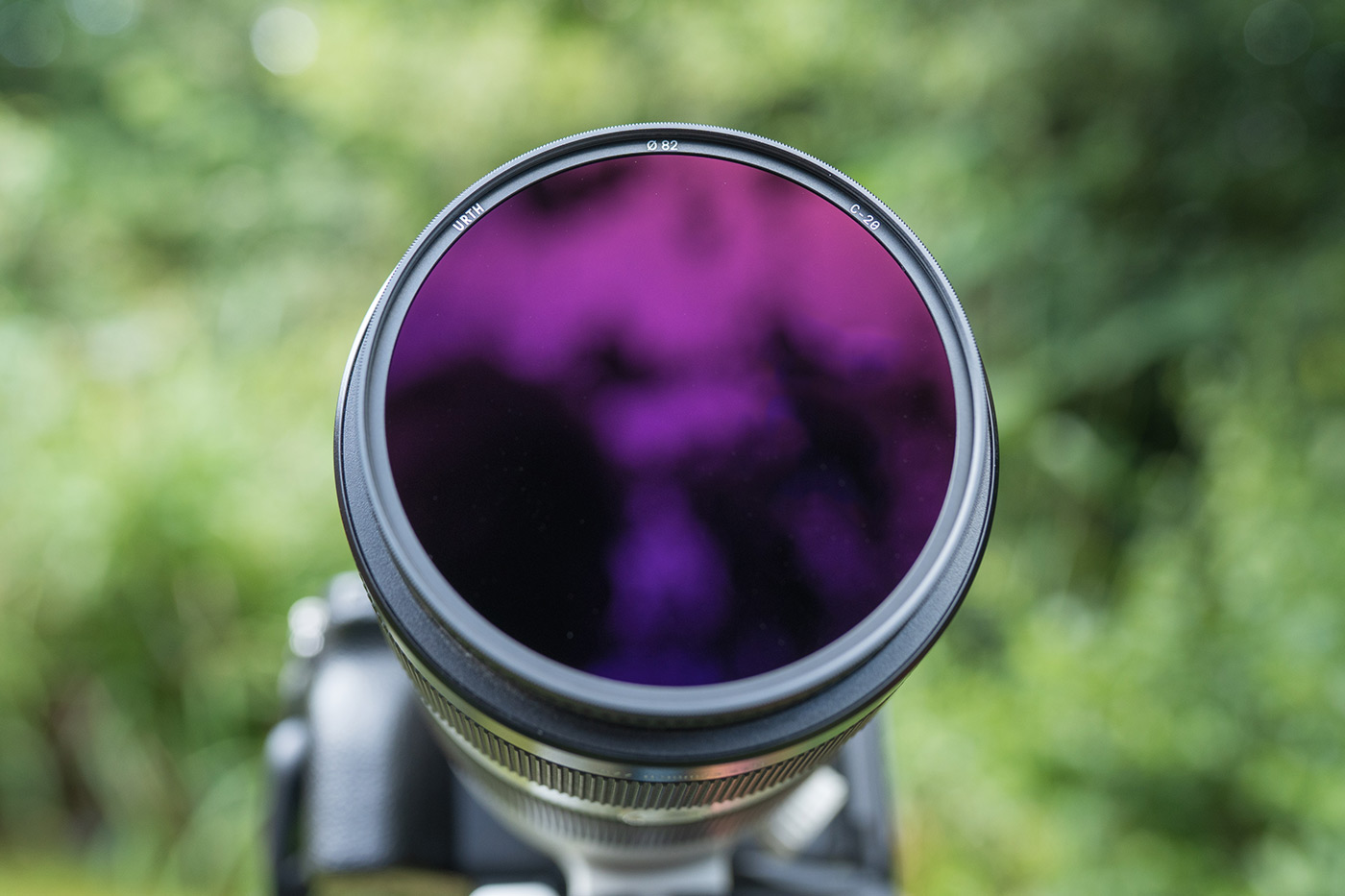
Pictured: Urth 82mm Solar Filter Plus+ (ND100000 (16.6 Stop))
When was the last solar eclipse in Britain?
Despite several partial and total solar eclipses occurring around the world, it really has been almost 27 years for anyone in the UK. As some of the incredible NASA photos show, 2024 and 2017 were both notable eclipses in the US, but we missed both, sadly.
Is it worth seeing?
Yes! A solar eclipse is a very rare event that will draw crowds and should make for a great evening for all the family. If you enjoy photography, why not head to a landscape or cityscape to capture unique images, create a timelapse, or stack multiple photos like the example included.
The Time and Date website lists the next Eclipses in the United Kingdom. From what I’ve read, we won’t see this level of solar coverage again until 2090, which makes this one worth making time for.
With that covered, let's take a look at what you might need to enjoy watching and photograph the solar eclipse.
Interactive eclipse survival guide
Surviving The Solar Eclipse
Select each hotspot to see what to pack, wear and remember before heading out.
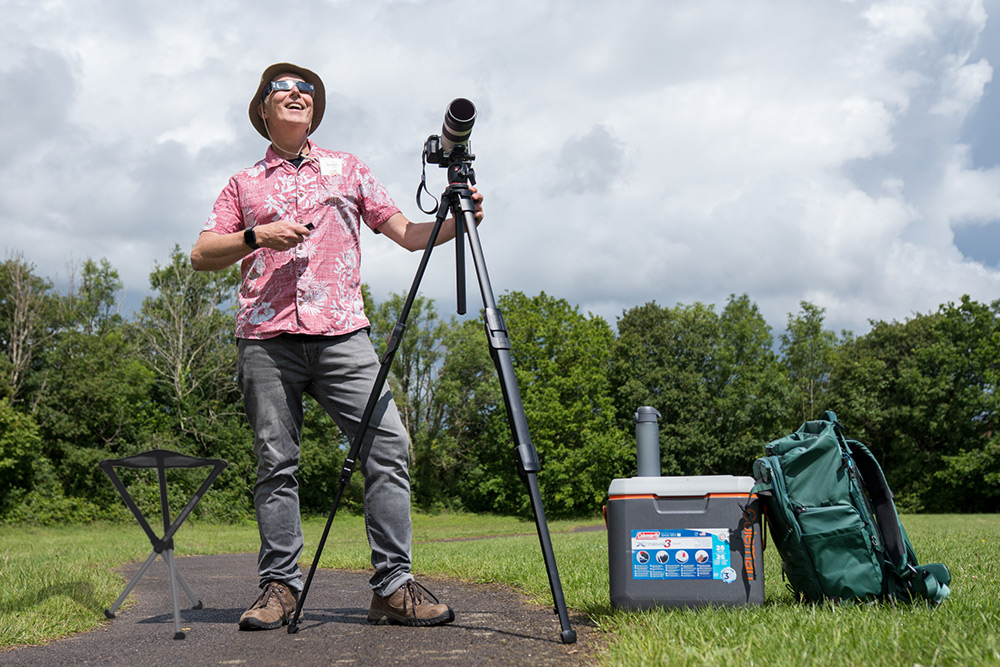
Celestron has produced a short video explaining the difference between total and partial eclipses, how solar filters work, and why eye protection is essential, which is well worth a watch next.
Have a Location Plan (and a backup)
Follow the landscape photography rule about locations. Use an app to plan, arrive late and flap about like a headless chicken. No, not that plan. Instead, know exactly where you're going and arrive early to set up and get the lay of the land.
ℹ️ Once you've arrived and settled in, check that the sun is roughly where you anticipated. Using the excellent Photographer's Ephemeris app takes much of the guesswork out of planning your location, thanks to the insightful article explaining how to read solar eclipse maps.
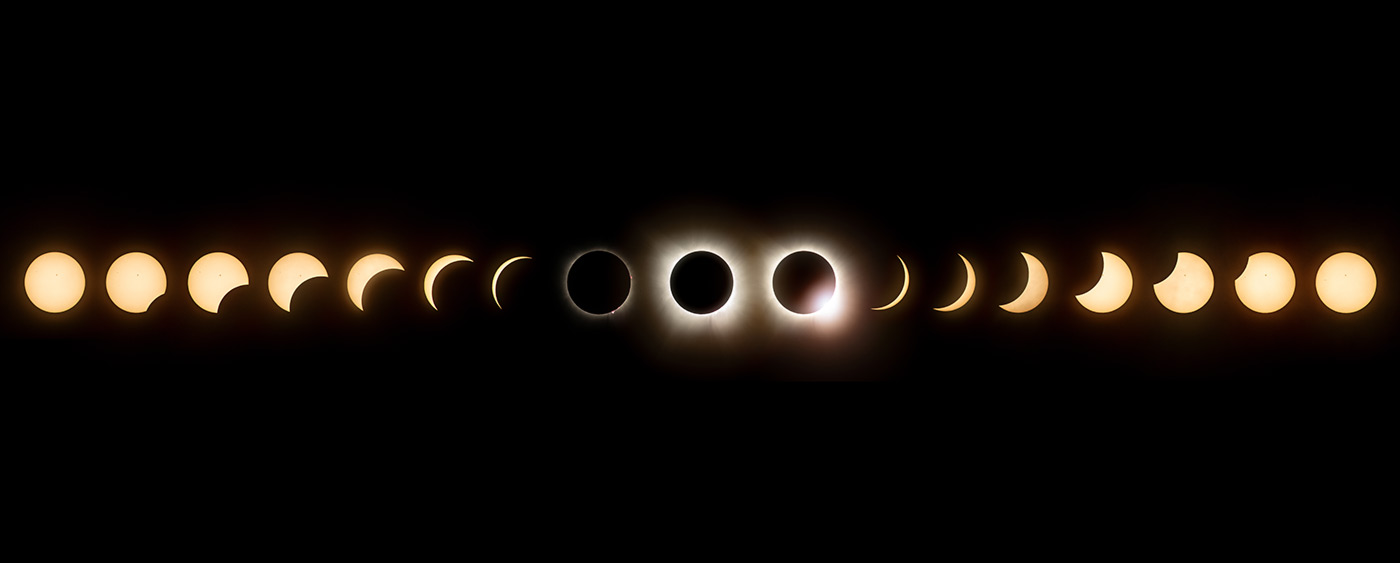
2024 Total Solar Eclipse-Composite © NASA NASA/GRC/Jordan Salkin. Nikon D850. Lens unknown. Camera settings: 1/500 sec. ISO 500
Which lens is best to photograph the solar eclipse?
Choosing which lens to photograph the solar eclipse comes down to the style of shot you want to capture. If you want to fill the frame with the sun's corona you'll need a super telephoto zoom, generally between 400-600mm.
I’ll be bringing my 100-400mm zoom, which is portable enough to hike around to a few locations and get pretty close without actually filling the frame.
To include the sun within a landscape scene, opt for a 24-70mm or another general zoom lens. I'd recommend bringing a couple of options so you can switch compositions if you're somewhere with interesting scenery or skylines.
ℹ️ Jim Koepnick wrote an inspiring blog post with some handy tips for photographing a solar eclipse with Sigma telephoto lenses, although you could apply his tips to any telephoto lens. The eclipse will reach maximum coverage for only a short period, so it’s worth getting everything set up in advance. Continue using the solar filter and glasses throughout the event.
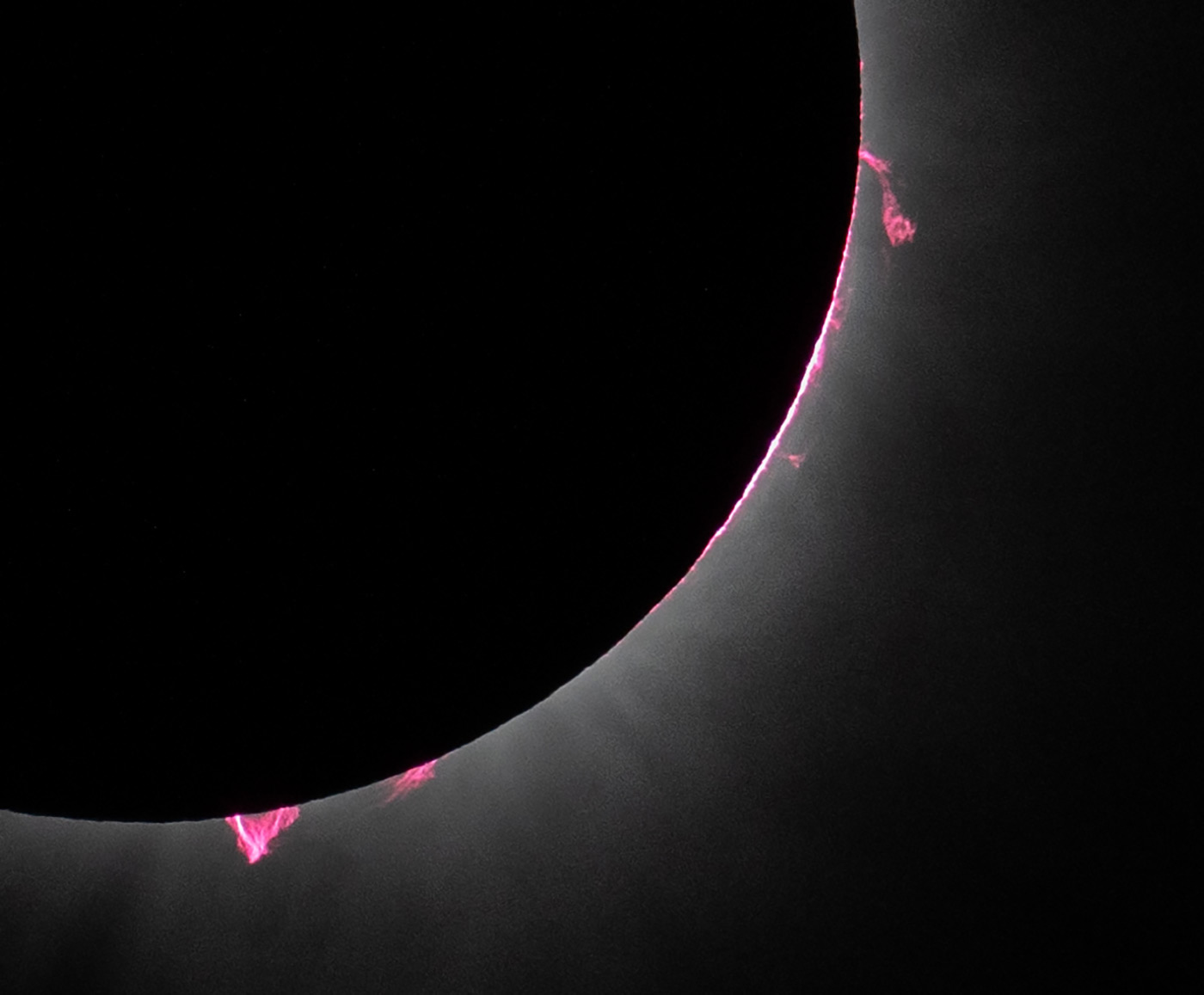
Total Solar Eclipse, Dallas, Texas, USA, 8 April 2024. Image credit: NASA/Keegan Barber. Nikon Z9 with Nikon Z 400mm f/2.8 TC VR S Lens @ 560mm. Camera settings: 1/1250 sec. f/11. ISO 800
Telescopes for observing the sun
Protection isn’t only essential for your camera and lens, it’s also needed if you choose to use a telescope, as they are designed for night time astronomy. Luckily there are solar-ready telescopes, meaning they arrive with the filters needed for observing a solar eclipse.
Choose between:
- At just 840g, the DWARF Mini Smart Telescope is easy to bring to your viewing location and it includes a solar ND filter for observing the sun.
- Upgrade to the DWARF 3 Smart Telescope and it includes magnetic solar filters as well as the ability to be used for birdwatching, panoramas and daytime photography.
- ZWO’s Seestar S30 Pro combines a dual-lens imaging system with a dedicated solar filter, allowing users to observe and photograph the eclipse easily.
- The Seestar S30 All-in-One Smart Telescope comes with snap-on solar filters and boasts a compact design that’s easy to transport.
If you already have a scope, the Celestron EclipSmart Solar Filter for 6-Inch SCT could be all you need to safely witness this celestial event with a 6-inch Schmidt-Cassegrain telescope.
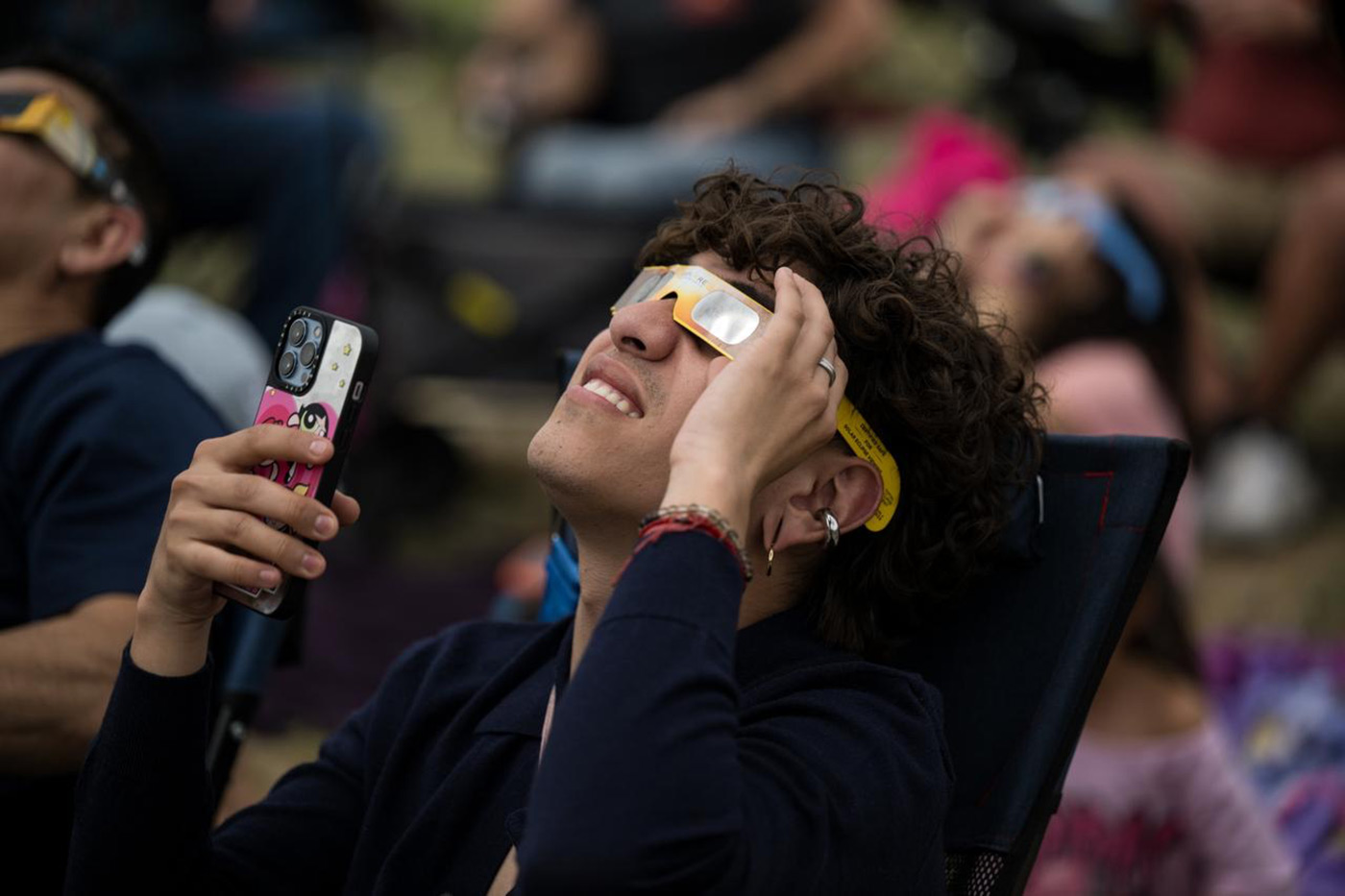
People are seen as they watch a total solar eclipse through protective glasses in Kerrville. NASA/Aubrey Gemignani
General tips
Even if you’re not photographing the sun itself, keep an eye on the landscape while you’re out and about. The changing light caused by an eclipse can create unusual images of people, buildings and the surrounding scenery. Look beneath trees and you might notice hundreds of tiny crescent-shaped images of the sun projected onto the ground through gaps in the leaves. It’s one of the strangest and easiest effects to observe, and makes for some unusual photographs too.
ℹ️ Our resident astrophotographer Jonathan Penberthy captured some really detailed images of a recent partial solar eclipse, which he highlights in this post from last May.
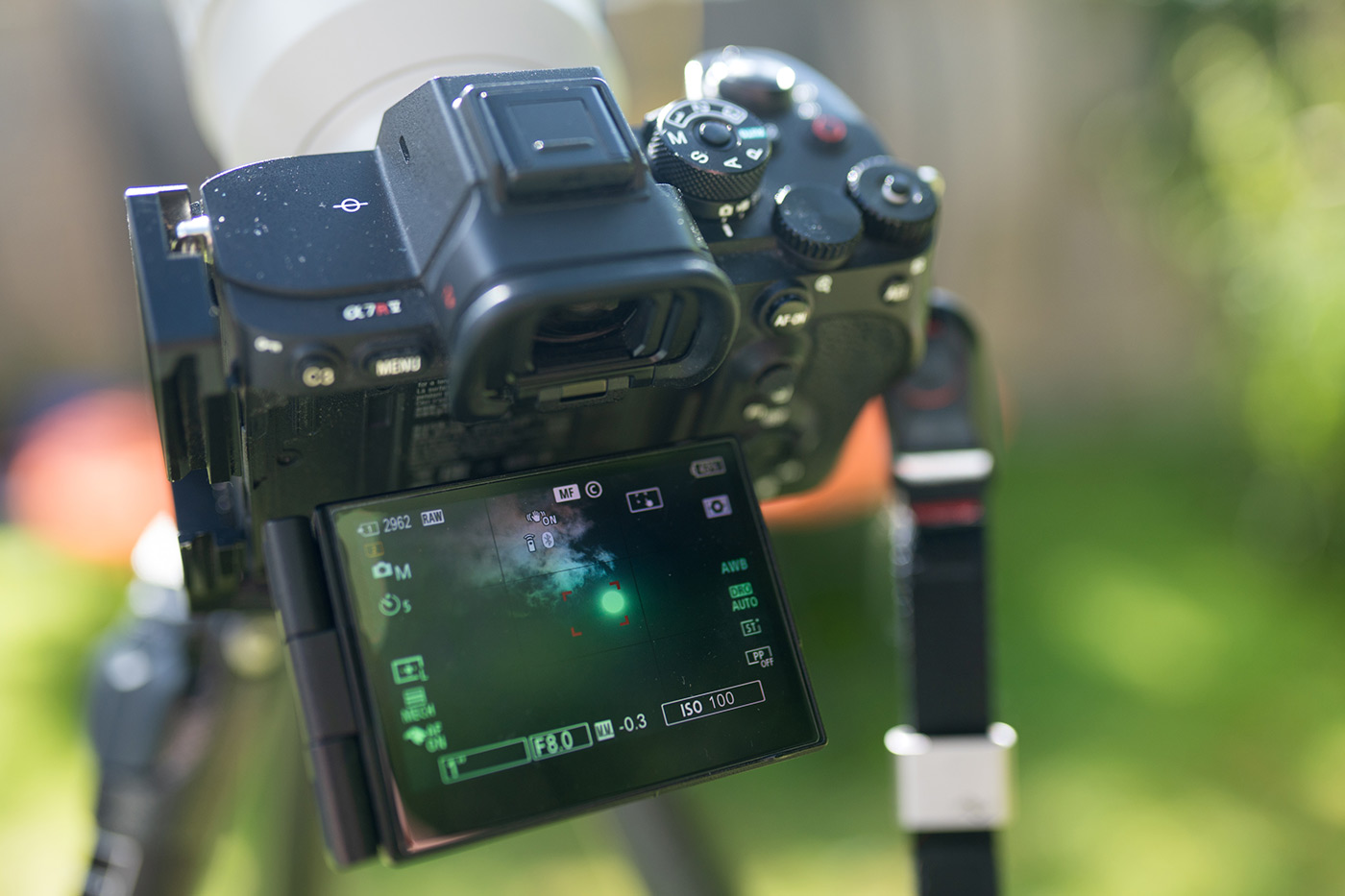
What you can expect to see through the LCD screen on your camera when the solar filter is attached. (Sony A7R V with Sony 100-400mm GM lens and Urth Solar Filter)
Specific Solar Eclipse Photography Tips
- Focus manually before the eclipse reaches peak coverage. Autofocus will struggle with the dark solar filter and the last thing you want is your camera hunting around at the crucial moment.
- If your lens doesn’t have an infinity focus marker, magnify on a distant object (such as a radio mast, church spire or the edge of the moon) before the event begins. Zoom in to make adjustments until details appear sharp.
- Consider also shooting in manual exposure mode, as the light changes, automatic settings can produce inconsistent results, especially if capturing a time-lapse or stacking.
- Shoot in RAW if you can, which will provide flexibility when recovering highlights and adjusting exposure.
- Remember not to spend the entire eclipse looking at the rear screen. Take some time to enjoy the experience for yourself!
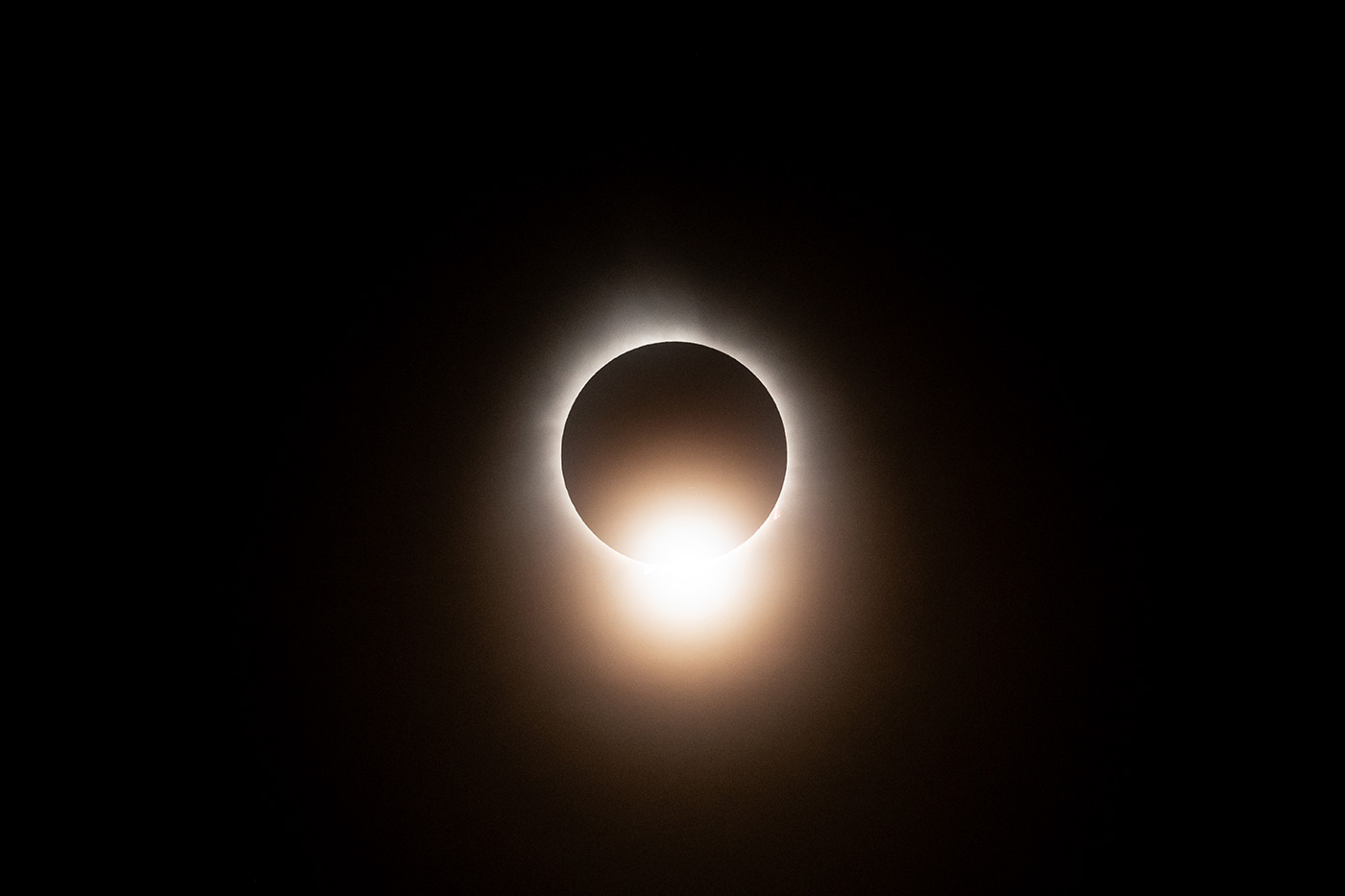
2024 Total Solar Eclipse seen from NASA's Glenn Research Center, Monday, April 8, 2024, in Cleveland, Ohio. NASA/GRC/Jordan Salkin. Nikon D850. Nikon 200-400mm f/4 Lens @260mm. Camera settings: 1/125 sec. f/10. ISO 400
Whether you’re a serious photographer with a 600mm prime, an astronomy enthusiast, or someone looking for an excuse to spend a summer evening outdoors, the 12 August 2026 eclipse promises to be one of the most memorable visible from the UK in decades.
Just don’t forget the solar filter. Or the eclipse glasses. Or the sunscreen. Or the stool.
If you’re heading out to photograph the eclipse, we’d love to see your results. Share your images on Instagram so we can see how you got on.
Share this post:
By Nick Dautlich on 10/06/2026

Nick Dautlich
Senior Content Writer and Product Reviewer
Nick Dautlich is the Senior Content Writer and Product Reviewer at Park Cameras, with over 15 years of photography experience. A Sony Imaging Professional and expert reviewer, Nick has worked with major brands such as Canon, Sony and Nikon. His work is also featured on Vanguard World UK’s website, Capture Landscapes, and Shutter Evolve. Nick’s photography includes National Trust projects and magazine covers and he is passionate about landscapes and storytelling. Nick also enjoys hiking and teaching his children about nature. Learn more on his profile page.
Trade in your old equipment
Fast and easy trade in service ensures your old gear is collected efficiently and you are paid quickly! It's very simple to trade in your unwanted photography gear. Just head over to our dedicated Sell or Part Exchange page, fill out the details, and we'll get back to you with an offer for your old gear. Take the cash, or put it towards the cost of your new gear. It's up to you! Find out more
sign up to the newsletter
Keep up to date on the latest photography news, events and offers. Sign up now