- Call us 01444 237070

-
- Back
- Used Cameras
- Used Accessories
- Used Lenses
- Back
- Used Canon Lenses
- Used Nikon Lenses
- Used Fujifilm Lenses
- Used Sony Lenses
- Used Micro 4/3rds Lenses
- Used Leica Lenses
- Used Panasonic Lenses
- Used Pentax Lenses
- Used Samyang Lenses
- Used Sigma Lenses
- Used Tamron Lenses
- Used Tokina Lenses
- Used Voigtlander Lenses
- Used Zeiss Lenses
- Used Hasselblad Lenses
- Used Video
- Used Film Equipment
- Used Stock Alert
- Used Blank Test
- Sell or Part Exchange
- Used Clearance
- Recently Added Used Equipment
- Park Picks
- Faulty
- Trade-In
- Blog
- New in
- Call us
- Contact us
- Stores
- Sign in
Call us: 01444 237070
Search terms
Brands
Category
Products
[[{name}]]
[[{attributes.Price}]]
- Categories
- Tips & Inspiration
- Reviews
- News
- Events
- Features
- Buying Guides
- Competitions
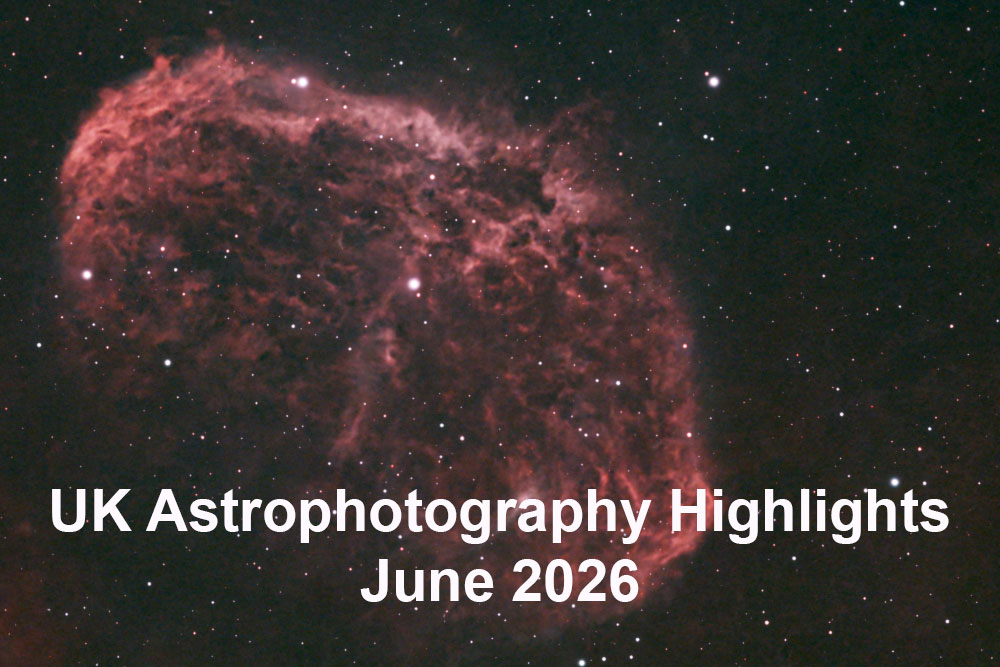
UK Astrophotography Highlights June 2026
Images ©Jonathan Penberthy
Sadly despite the great weather we have had in late May, due to the utterly poor seeing and hazy skies caused by the humidity the opportunity for any serious astrophotography has been limited, and not to mention the Moon! That giant headlamp in the sky which keeps us from being able to image those Deep Sky Wonders. For those of you who like reading these blogs, you will find a new addition to our Features section where I have written about the 'History of Astrophotography'.
Fortunately Galaxy season is behind us now and the Milkyway core is visible from around 01:00 am in June. I dream of taking a good widefield image of it using my trusty Canon 7D, and I am also going to try Rho Ophiuchi again, I am determined to get some whispering hint of this nebula from our northern latitudes, I have seen that others have done this from the UK, I am thinking the 50mm f1.8 lens as it will quickly capture any stray photons that emanate from this colourful complex. Of course using my main rig, targets like the Pillars of Creation (Eagle Nebula), Swan Nebula and Lagoon Nebula are just a few of the many gems that are in our night sky over the next few months, and they too will fill this blog with content. The most annoying thing about this time of year is that night and especially Astro-Dark hours are very limited, by the summer solstice we will only be able to image for around 2 hrs a night between midnight and 2am before the Sun cracks the darkness. However, the day after 21st June the nights start getting longer again, with each day giving about an extra 1 minute/day increasing to around 5 mins/day of darkness by the time of the autumn equinox in September. Very exciting summer ahead!
Lunar
One thing I do like about a Waxing Moon in the spring/summer is that you can image it and it will set before it is dark enough to do deep sky, and so I think of it as the warm up act before the main event!
Here are two pictures I took of the Moon on such a night.
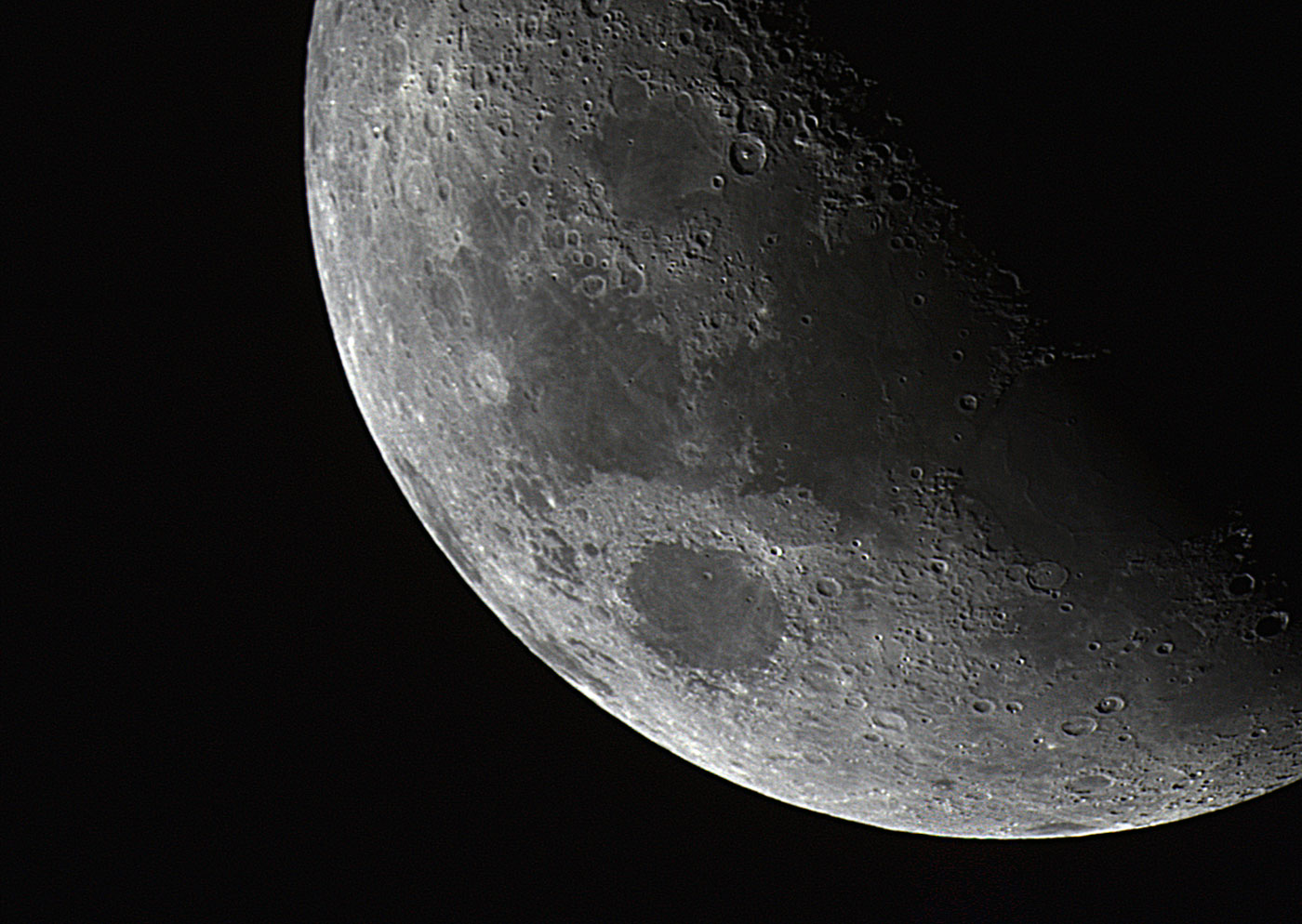
Exif
Camera: ZWO ASI585MC Pro.
Telescope: Altair Astro 70ED Telescope (420mm).
Mount: Sky-Watcher EQ5 Pro
Filter: UV/IR Cut
Guide Camera: ZWO ASI120mm-s
Guide Scope: SVBony 30mm (f4)
Computer: ZWO ASIAIR pro
Method:
Lights: 1 x 30 second videos.
Darks: 0
Flats: 0
Bias: 0
Stacked in Autostakkert individually, finishing touches and combining in Photoshop.
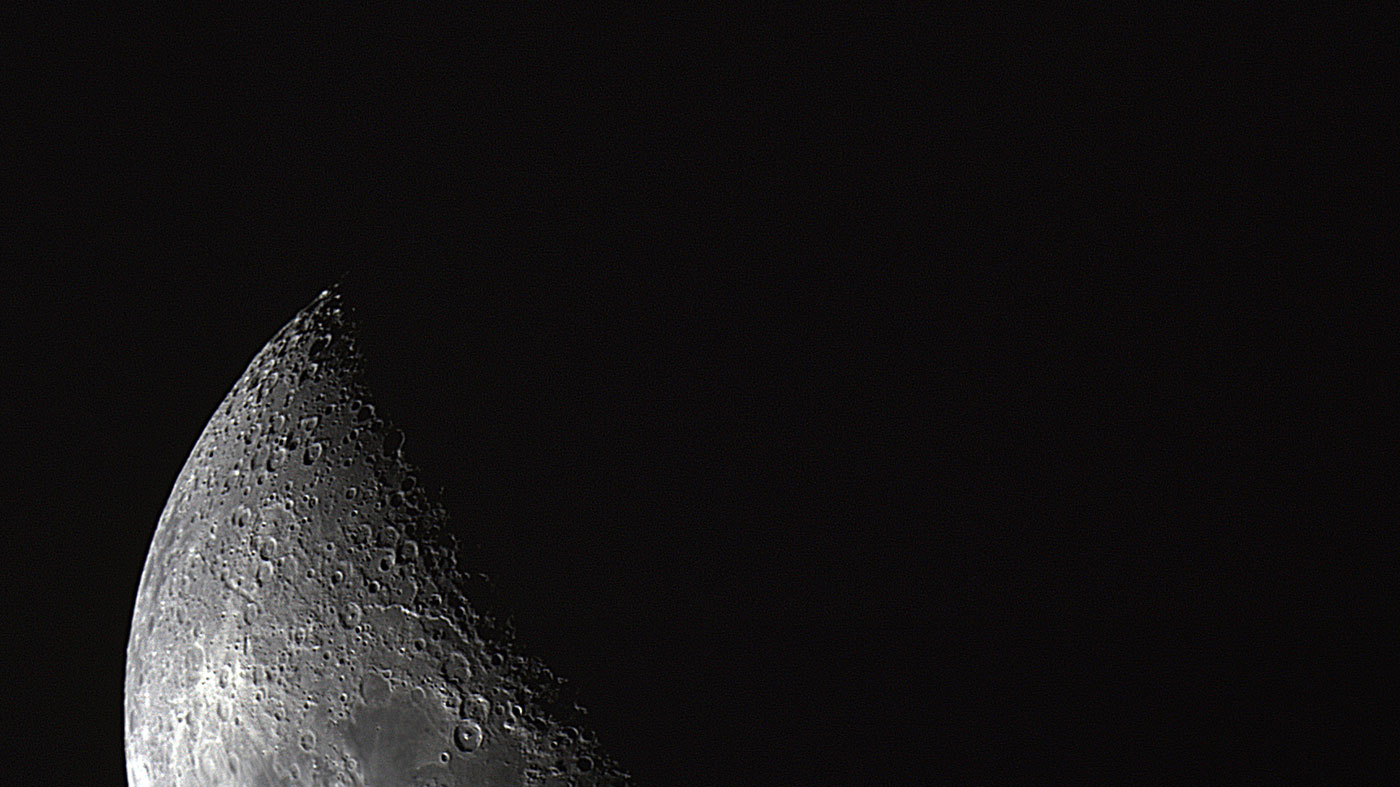
Exif
Camera: ZWO ASI585MC Pro.
Telescope: Altair Astro 70ED Telescope (420mm).
Mount: Sky-Watcher EQ5 Pro
Filter: UV/IR Cut
Guide Camera: ZWO ASI120mm-s
Guide Scope: SVBony 30mm (f4)
Computer: ZWO ASIAIR pro
Method:
Lights: 1 x 30 second videos.
Darks: 0
Flats: 0
Bias: 0
Stacked in Autostakkert individually, finishing touches and combining in Photoshop.
If you are interested in how I like to capture the moon and process the images, here is a guide.
Planetary
On the 22nd May we saw an alignment of sorts with Jupiter, Venus and Mercury visible before dusk, and then Mars and Saturn in the early morning before sunrise. Whilst I do not have the kit to be able to capture these solar system companions with any more definition than a bright star, I can with some patience and fortune just about capture Jupiter and her moons.
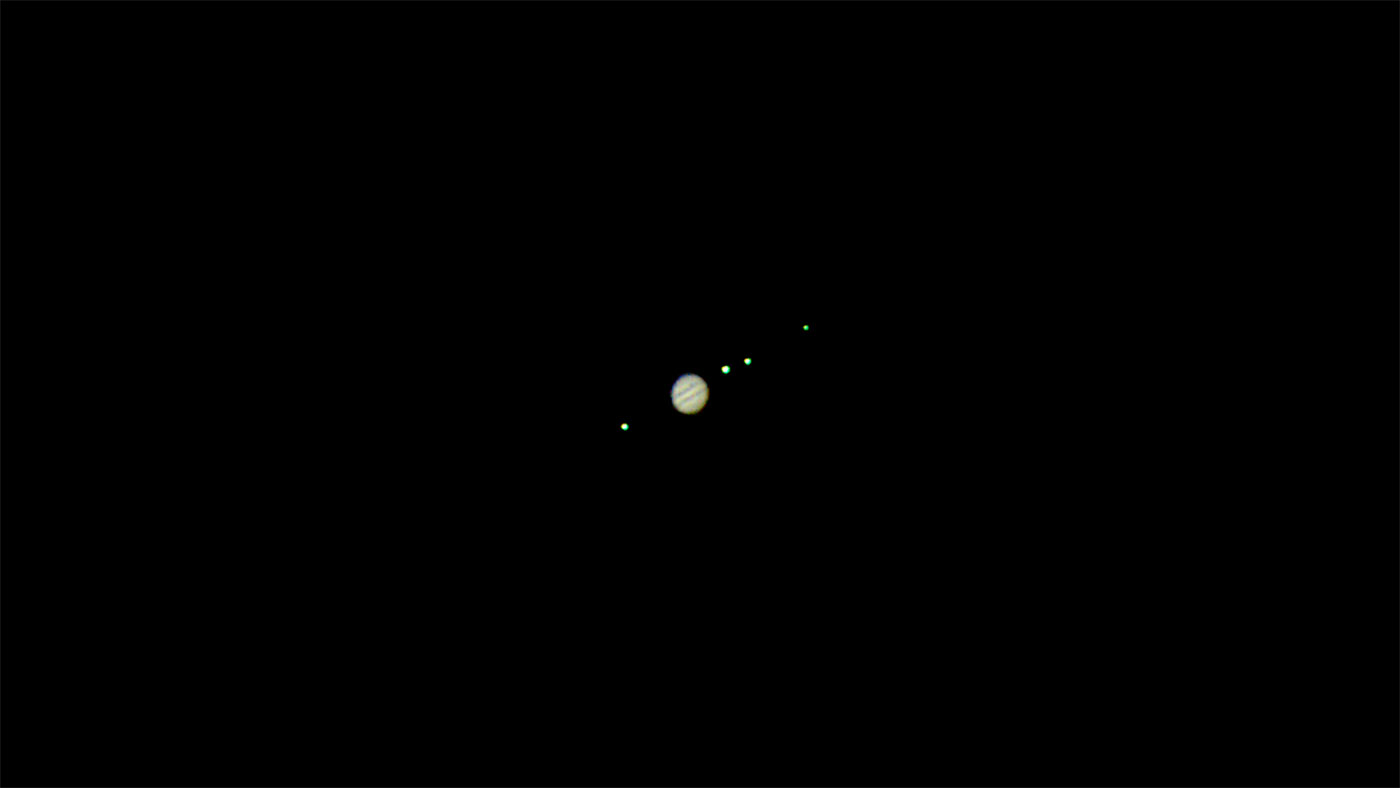
Exif
Camera: ZWO ASI585MC Pro.
Telescope: Altair Astro 70ED Telescope (420mm).
Mount: Sky-Watcher EQ5 Pro
Filter: UV/IR Cut
Guide Camera: ZWO ASI120mm-s
Guide Scope: SVBony 30mm (f4)
Computer: ZWO ASIAIR pro
Method:
Lights: 1 x 30 second video for Jupiter.
1 x 5 sec image for Moons.
Darks: 0
Flats: 0
Bias: 0
Stacked in Autostakkert individually, finishing touches and combining in Photoshop.
The Whirlpool Galaxy - M101
Whilst it is lovely to be out of galaxy season, within the confines of every minute of dark sky counting, sometimes when you have a partially cloudy sky and light pollution ruling our a particular direction, the targets are chosen for us, and this is the here. Straight up was the only possibility, and it wasn’t as clear and crisp as I would have liked either, but the 30 mins that I did have available I managed to take this image, with the wrong filter!
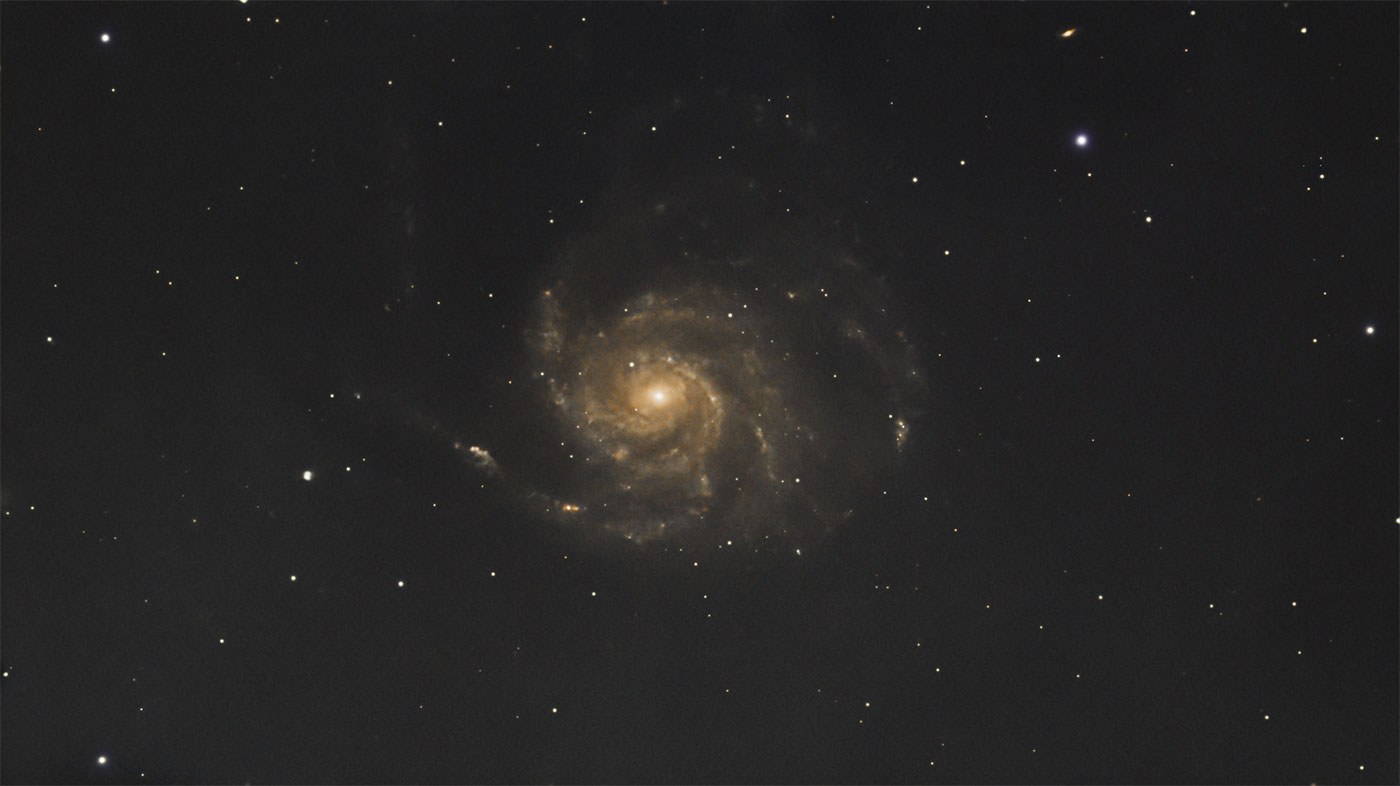
Exif
Camera: ZWO ASI585MC Pro.
Telescope: Altair Astro 70ED Telescope (420mm).
Mount: Sky-Watcher EQ5 Pro
Filter: Optolong L eNhance filter.
Guide Camera: ZWO ASI120mm-s
Guide Scope: SVBony 30mm (f4)
Computer: ZWO ASIAIR pro
Method:
Lights: 15 x 120 sec Gain 252.
Darks: 0
Flats: 0
Bias: 0
Stacked in DSS, Processed in Pixinsight with RC-Astro Suite of tools. Finishing touches in Photoshop.
The Crescent Nebula (NGC 6888)
I often like to reflect on my astrophotography journey, see how I have improved (in my opinion!), what works better and what I can do besides more integration time to improve the output. Again this target was selected by the opportunity and not the desire (I actually wanted to finish the image of the Pelican Nebula I started last month, but despite how close these targets are in the night sky, persistent cloud hid the North America Nebula region from view, but yet the Crescent was clear). So I took the opportunity, lets get the Crescent and switch to the Pelican when the time comes... four hours later, the sun came up and the stretch of cloud had not moved enough for the Pelican. I don't know much or anything at all about meteorology, but I have noticed that sometimes when I am on top of a hill one side of the sky seems to have cloud and the other does not.
In an aid to show how I have grown in this discipline and my kit has evolved...
**Canon 500D (Astro Mod), EQ5 Pro Mount, SV Bony CLS filter - 28th July 2024**
Back when I used an Astro-mod Canon 500D and a EQ5 Pro Mount, here is the image after 2 hours:
Critique:
- Obviously quite a wide field of view, which brings out the nebulous structures adorning the Crescent.
- The stars are far from sharp, and slightly elongated, meaning that polar alignment and the mount were not at their best.
- Detail in the Crescent is absent.
- Despite 2 hours of integration time the image is still noisy, which would lean towards the need for dark frames.
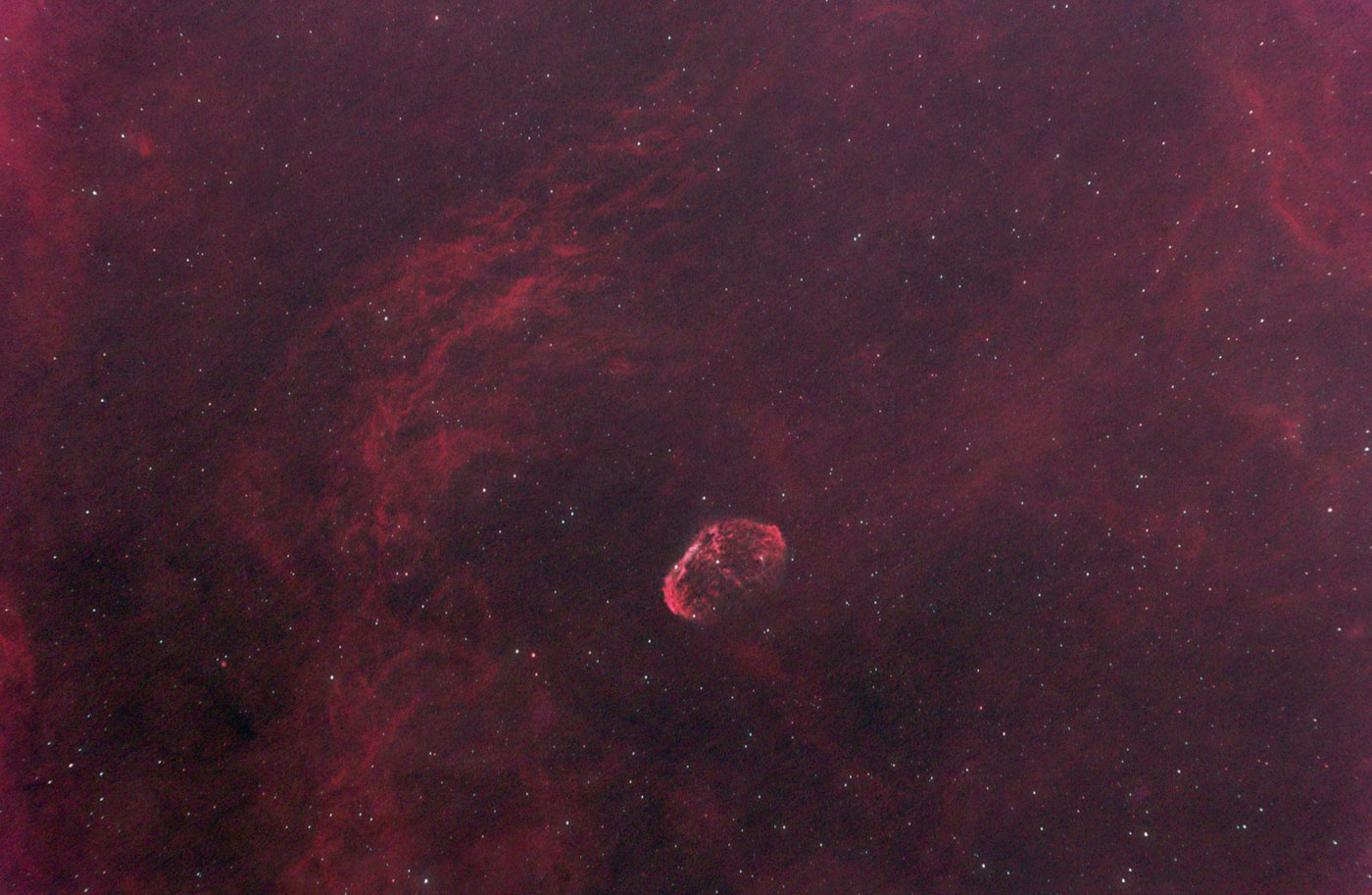
EXIF
Camera: ZWO ASI585MC Pro.
Telescope: Altair Astro 70ED Telescope (420mm) + 0.8 reducer.
Mount: Sky-Watcher EQ5 Pro StellaTuned.
Filter: SV Bony CLS filter
Guide Camera: ZWO ASI120mm-s
Guide Scope: SVBony 30mm (f4)
Computer: ZWO ASIAIR pro
Method:
Lights: 120 x 120s Gain 252 (Unity).
Darks: 0
Flats: 0
Bias: 0
Stacked in Deep Sky Stacker, Siril for Photometric Colour Calibration and StarNet++ for star removal. Stretched, recompiled and edited in Photoshop
**ZWO 585MC Pro, EQ5 Pro Mount, Optolong L eNhance filter - 14th September 2025**
Critique:
- Much more of a cropped in view due to the tiny sensor that the 585MC Pro has, the tremendous well depth of this camera shows in the array of colours.
- The stars are still not sharp, and slightly elongated, meaning that polar alignment and the mount were not at their best, and the cropped in view has intensified this issue.
- Detail in the Crescent is better.
- Noise is reduced, but not perfect.
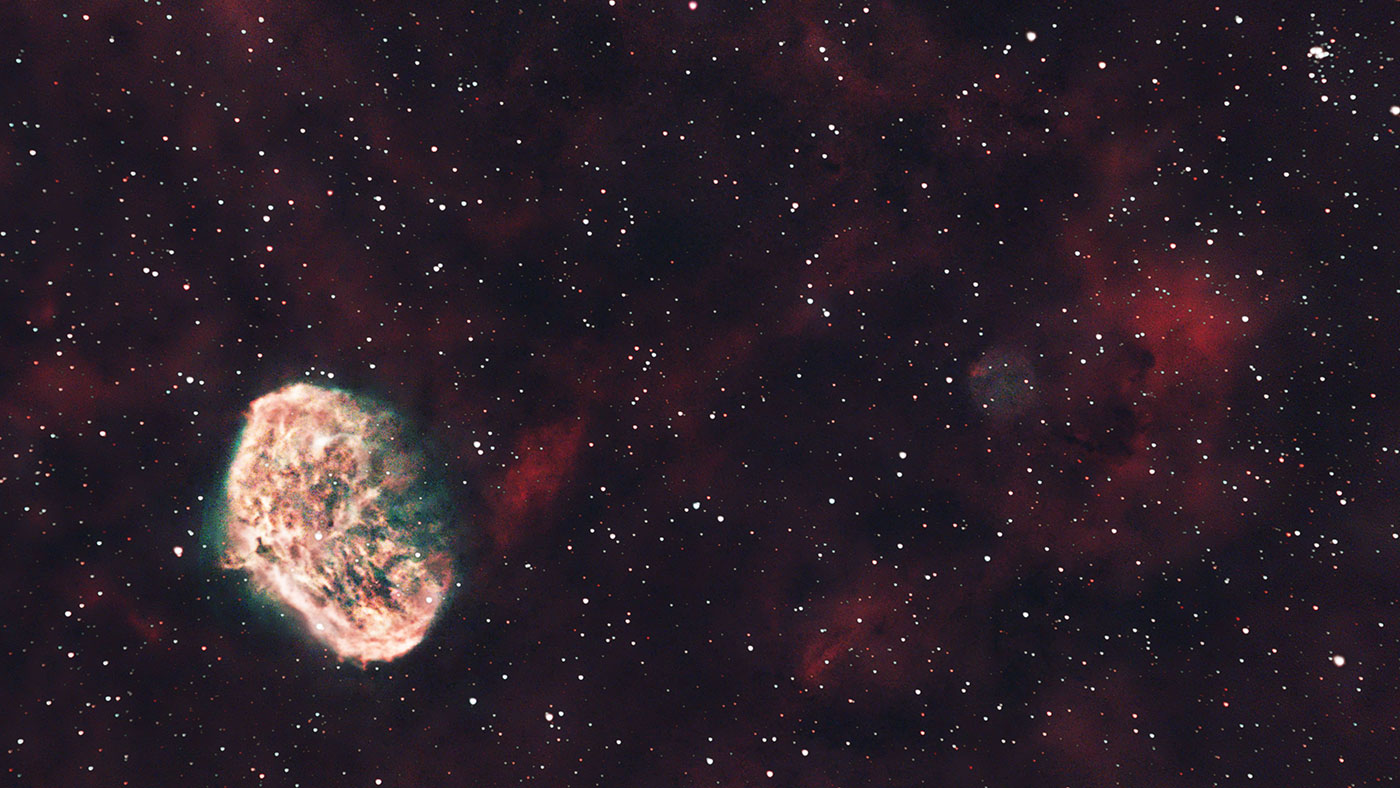
EXIF
Camera: ZWO ASI585MC Pro.
Telescope: Altair Astro 70ED Telescope (420mm) + 0.8 reducer.
Mount: Sky-Watcher EQ5 Pro StellaTuned.
Filter: Optolong L eNHance
Guide Camera: ZWO ASI120mm-s
Guide Scope: SVBony 30mm (f4)
Computer: ZWO ASIAIR pro
Method:
Lights: 120 x 120s Gain 252 (Unity).
Darks: 0
Flats: 0
Bias: 0
Stacked in Deep Sky Stacker, Siril for Photometric Colour Calibration and StarNet++ for star removal. Stretched, recompiled and edited in Photoshop
**ZWO 585MC Pro, Juwei 17 Mount, Optolong L eNhance filter - 22nd May 2026**
Critique:
- The stars are round and sharp, so we can see the issues in the other images were fixed by the harmonic drive mount.
- Detail in the Crescent is better, giving a real sense of a photograph rather than image. The nebulous wisps of dust can be seen. These improvements are a combination of Pixinsight, RC-Astro Suite of tools and the mount.
- Noise is far reduced, but not perfect, and the blue (OIII) areas are just coming into view (this I believe is due to the poor seeing, as OIII signal is the first to go in tough conditions).
- Improvers: I would like to increase the OIII signal, capture more of the background nebulosity, and bring the image more to life by increasing the detail. Of course the next kit upgrade should be a telescope!
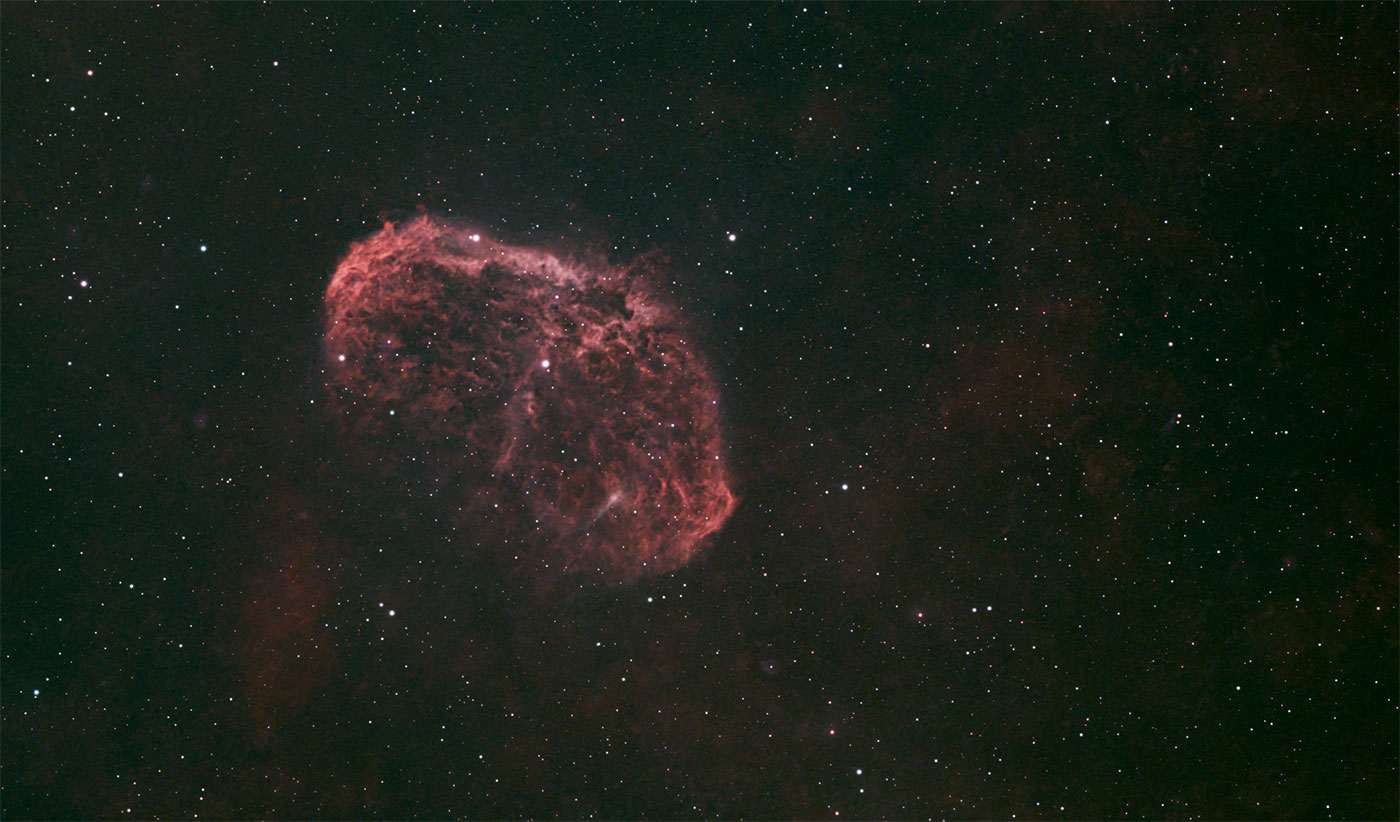
EXIF
Camera: ZWO ASI585MC Pro.
Telescope: Altair Astro 70ED Telescope (420mm).
Mount: Juwei 17 Mount Similar: ZWO New AM5N Harmonic Drive
Filter: Optolong L eNhance
Guide Camera: ZWO ASI120mm-s
Guide Scope: SVBony 30mm (f4)
Computer: ZWO ASIAIR pro
Method:
Lights: 120 x 120 sec Gain 251.
Darks: 0
Flats: 0
Bias: 0
Stacked in DSS, Processed in Pixinsight with RC-Astro Suite of tools.
Conclusion
It’s clear that great astrophotography comes from a blend of factors: technical understanding, experience, better equipment and software, and a bit of ambition and determination. None of these alone make an image great — it’s the combination that forms the ‘science’ behind the craft. The rest is pure art, something you can’t prescribe, only practise in the moment. So that’s where I’m focusing next: improving composition, understanding when to crop, using leading lines, the rule of thirds — and maybe even adding a new telescope into the mix.
Share this post:
By Jonathan Penberthy on 01/06/2026

Jonathan Penberthy
Cosmic Shutter Seeker and Star Programmer
Jonathan Penberthy is the Cosmic Shutter Seeker and Star Programmer at Park Cameras, with over 20 years of experience as a software engineer. His career journey has spanned industries, but a move to Park Cameras sparked a passion for astrophotography. Jonathan’s interest began while working on a lens selection app, leading him to explore the night sky with a Canon 7D. When he’s not programming or photographing the stars, he enjoys sailing and navigating by the cosmos. Learn more on his profile page.
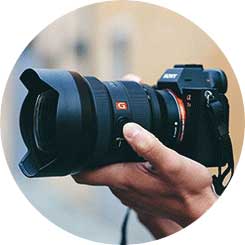
Trade in your old equipment
Fast and easy trade in service ensures your old gear is collected efficiently and you are paid quickly! It's very simple to trade in your unwanted photography gear. Just head over to our dedicated Sell or Part Exchange page, fill out the details, and we'll get back to you with an offer for your old gear. Take the cash, or put it towards the cost of your new gear. It's up to you! Find out more
sign up to the newsletter
Keep up to date on the latest photography news, events and offers. Sign up now