- Call us 01444 237070

-
- Back
- Used Cameras
- Used Accessories
- Used Lenses
- Back
- Used Canon Lenses
- Used Nikon Lenses
- Used Fujifilm Lenses
- Used Sony Lenses
- Used Micro 4/3rds Lenses
- Used Leica Lenses
- Used Panasonic Lenses
- Used Pentax Lenses
- Used Samyang Lenses
- Used Sigma Lenses
- Used Tamron Lenses
- Used Tokina Lenses
- Used Voigtlander Lenses
- Used Zeiss Lenses
- Used Hasselblad Lenses
- Used Video
- Used Film Equipment
- Used Stock Alert
- Used Blank Test
- Sell or Part Exchange
- Used Clearance
- Recently Added Used Equipment
- Park Picks
- Faulty
- Trade-In
- Blog
- New in
- Call us
- Contact us
- Stores
- Sign in
- Categories
- Tips & Inspiration
- Reviews
- News
- Events
- Features
- Buying Guides
- Competitions
LK Samyang AF 60-180mm f/2.8 FE Review
Designed as an alternative to a traditional 70-200mm f/2.8, the LK Samyang AF 60-180mm f/2.8 FE for Sony is the third lens in Schneider-Kreuznach x Samyang’s co-engineered trinity of zooms.
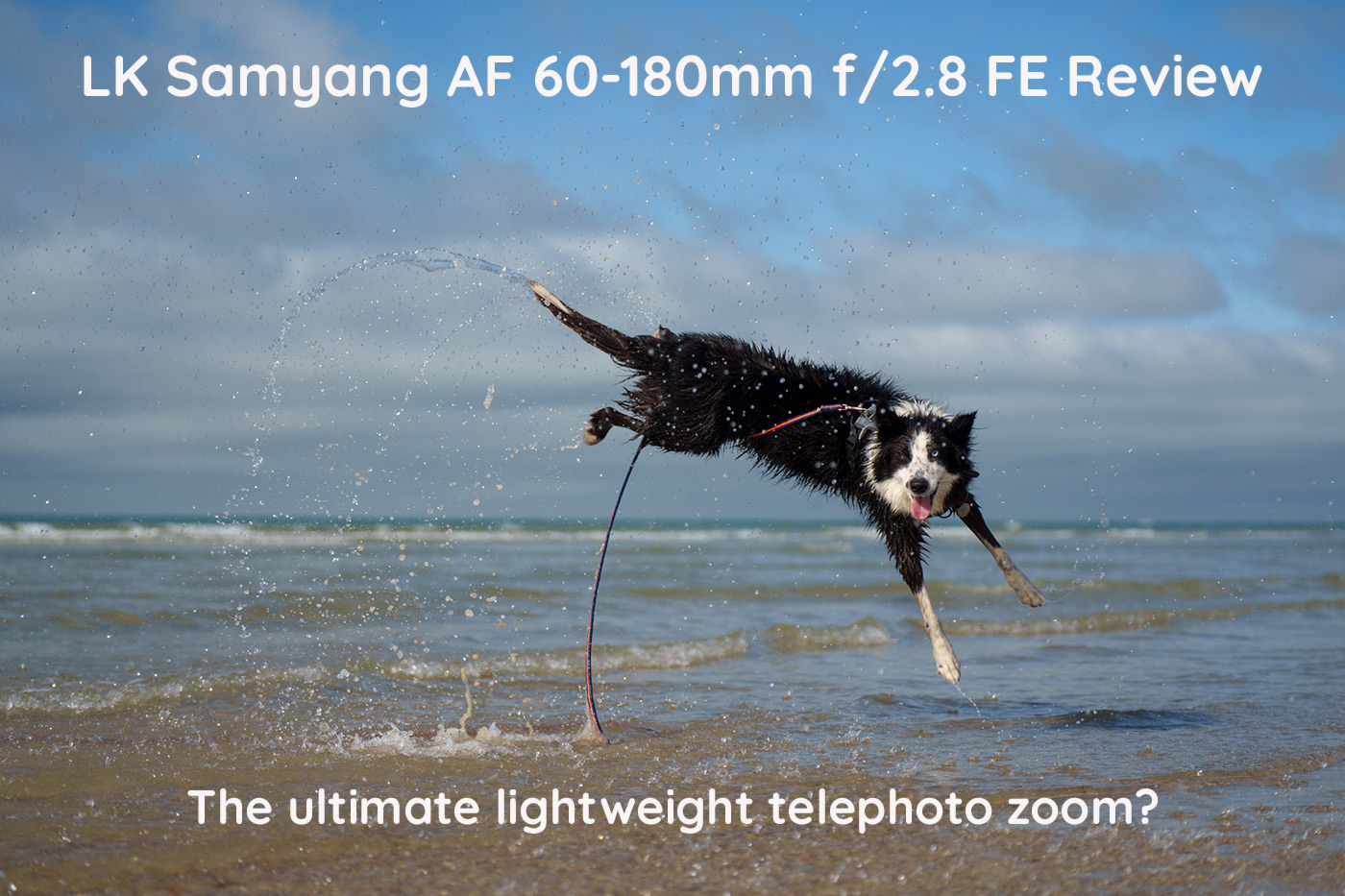
After reviewing the Samyang AF 14-24mm F/2.8 in 2025, I was keen to discover whether the 60-180mm lightweight telephoto zoom could deliver similar value. At 730g without the hood, it is noticeably lighter than most first-party 70-200mm alternatives while offering close focusing, high magnification and a compact size for everyday photography.
Join us for this LK Samyang AF 60-180mm f/2.8 FE review, which is packed with sample images and first hand experience of this unique lens, to help you decide whether it could be your next short telephoto Sony zoom.
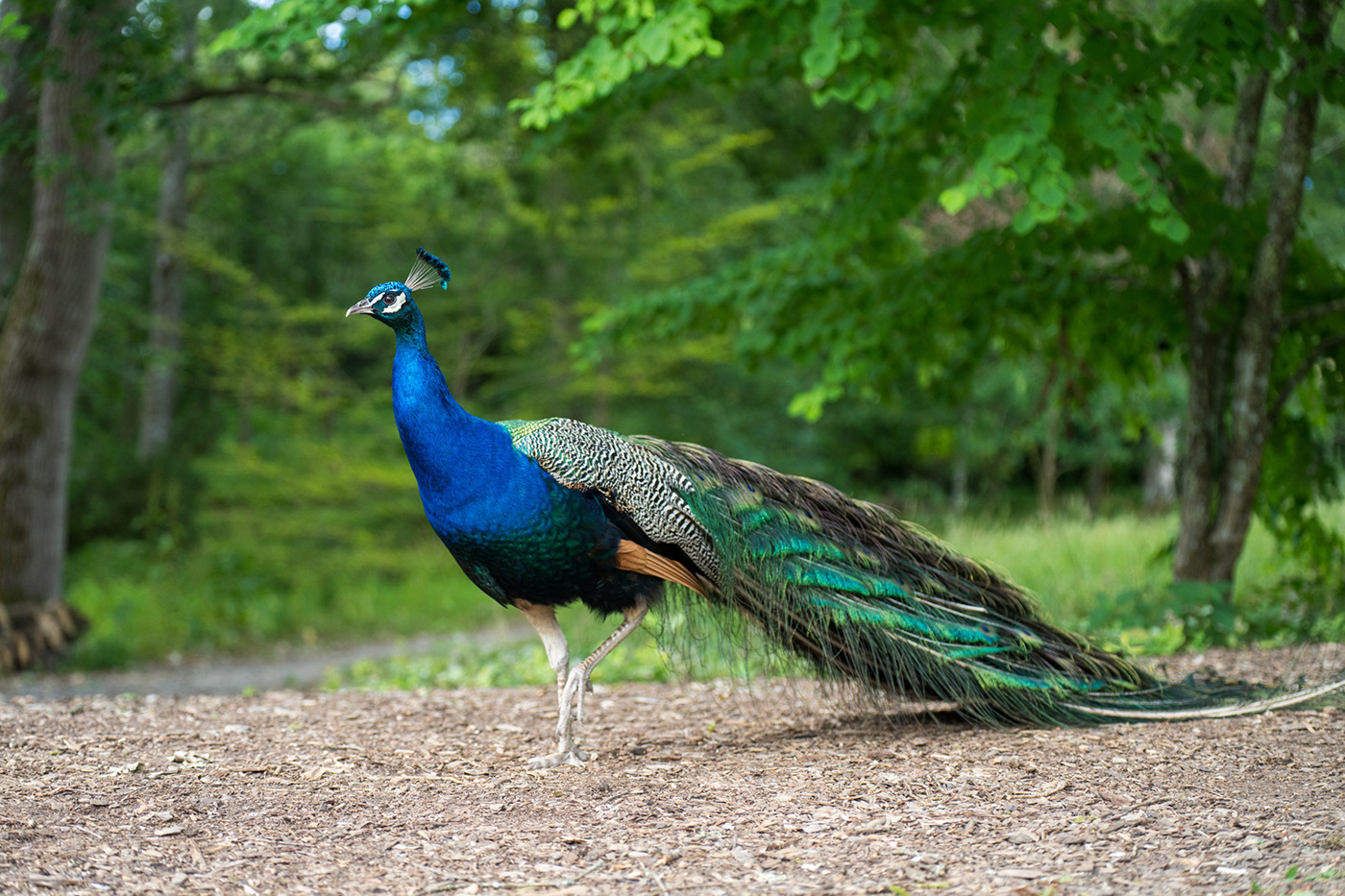
Sample 01 Free-roaming peacock @60mm. Camera settings: 1/500 sec. f/2.8. ISO 800
Key Features at a Glance
- 60-180mm constant f/2.8 telephoto zoom with Sony E-mount
- Schneider-Kreuznach co-engineered optical design
- Lightweight 730g body with weather sealing
- Close focusing to 35cm with up to 0.26x magnification
- Linear STM autofocus with floating focus system
- 77mm filter thread
- USB-C port for firmware updates
- Compatible with Sony AI subject recognition and Eye AF
Next, a quick look at the sample images and editing process.
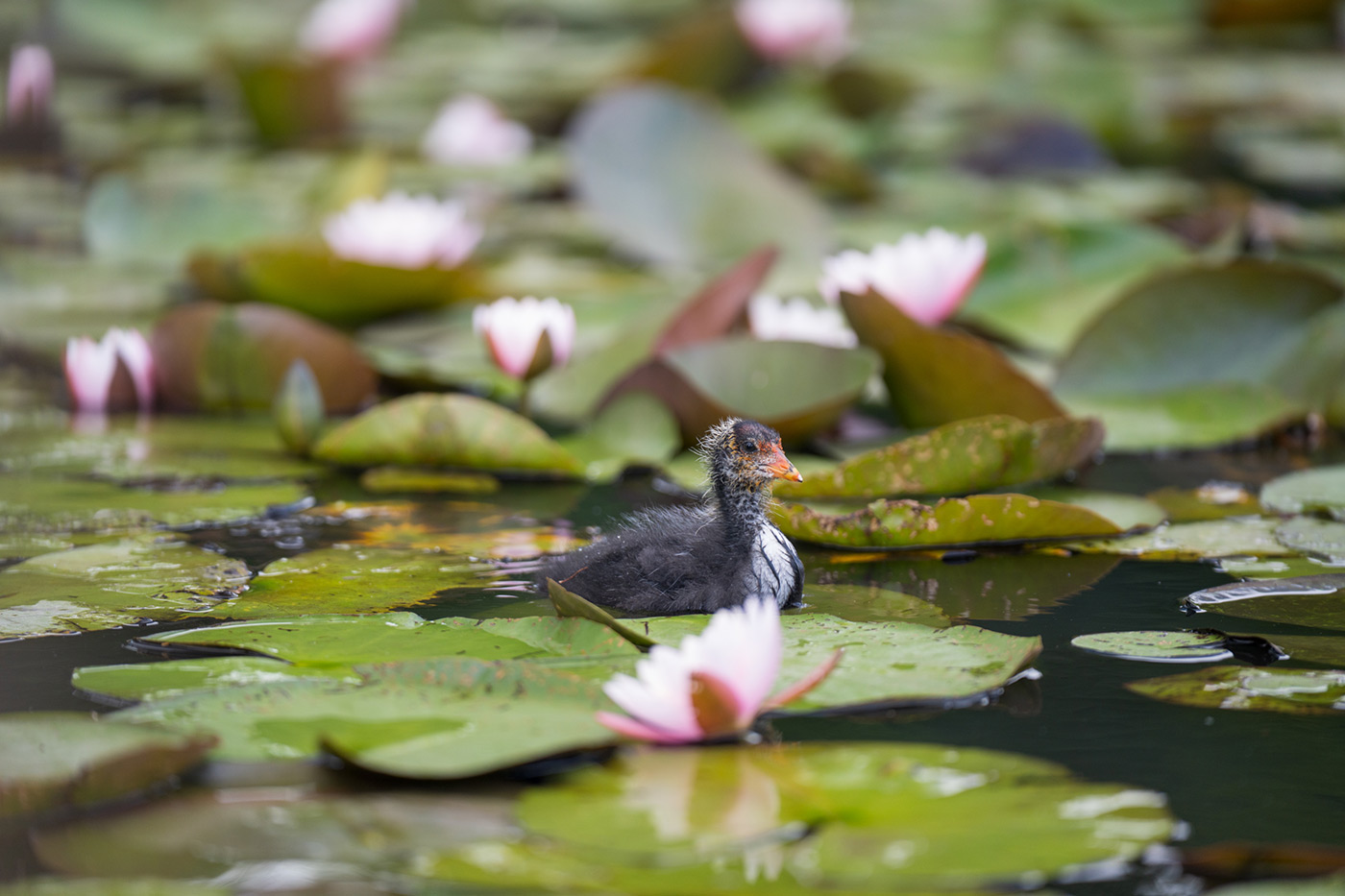
Sample 02 Juvenile Eurasian Coot swimming among water lilies @180mm. Camera settings: 1/500 sec. f/2.8. ISO 320
LK Samyang AF 60-180mm sample images
ℹ️ Right click to enlarge images
When combined with a fast constant aperture, this zoom range is extremely popular due to its versatility. It’s obviously for portraiture, but also suits a wide variety of other genres, which is what I aimed to showcase with the samples.
Over six or seven shoots with a used Sony A7R V I photographed wildlife, insects, people, close-ups and everyday subjects to reflect how this lens performs across a range of photography. Editing has been kept to a minimum, with no noise reduction, no cropping unless stated, and only basic adjustments to colour, contrast and vibrance. Lightroom had no lens profile available at the time, so the images remain uncorrected for distortion, vignetting or other optical flaws, giving a result very close to what comes straight out of camera.
With that out of the way, let's take a look at where this lens fits into the range, along with its price and availability.
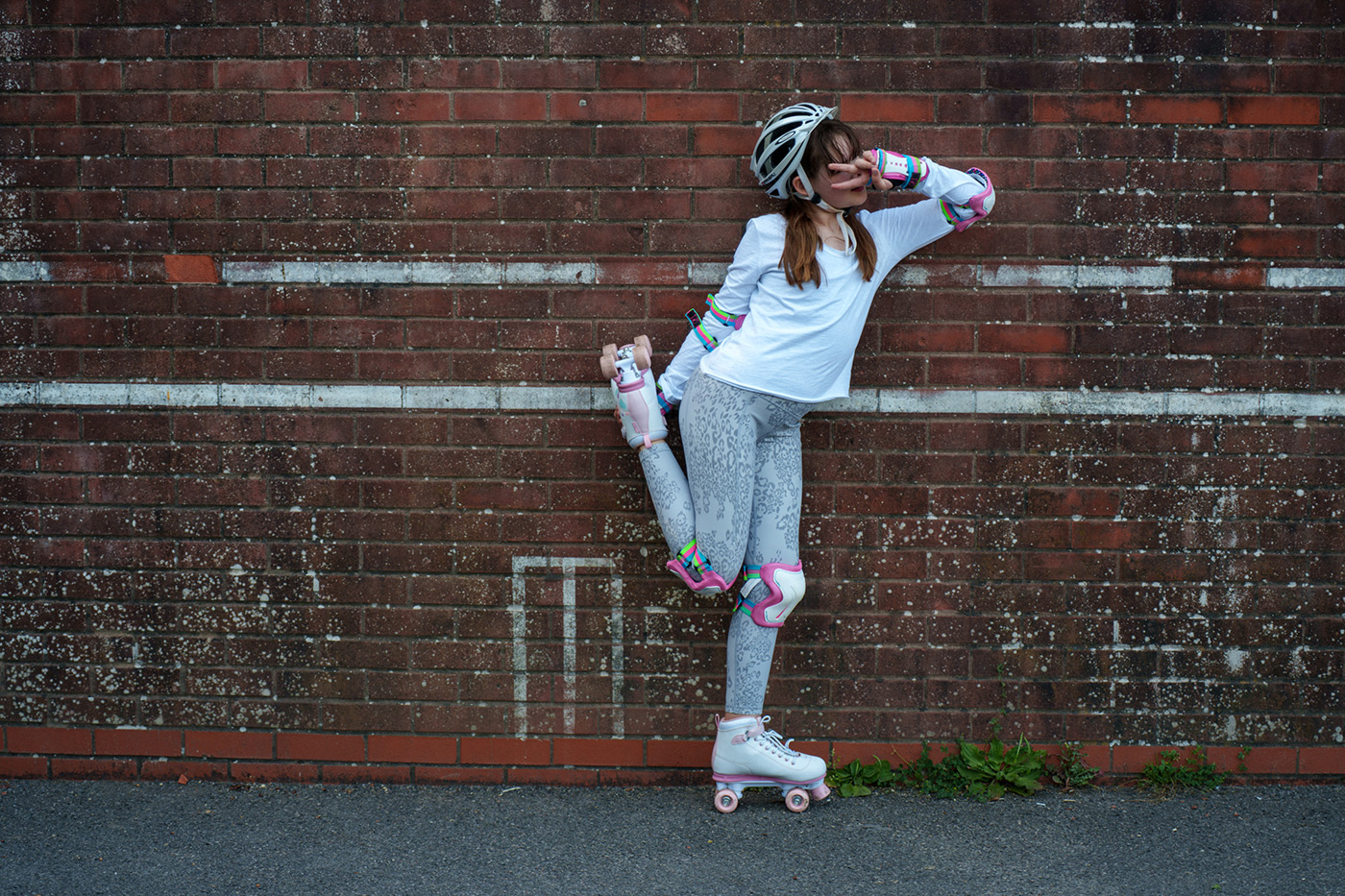
Sample 03 Juvenile roller skater @64mm. Camera settings: 1/500 sec. f/2.8. ISO 160
LK Samyang AF 60-180mm f/2.8 Price
Released in the UK on 25 June 2026, the LK Samyang AF 60-180mm f/2.8 FE for Sony E-mount costs £899. This undercuts first-party equivalents by over £1,000 and sits in the middle of the Schneider-Kreuznach x LK Samyang trio price.
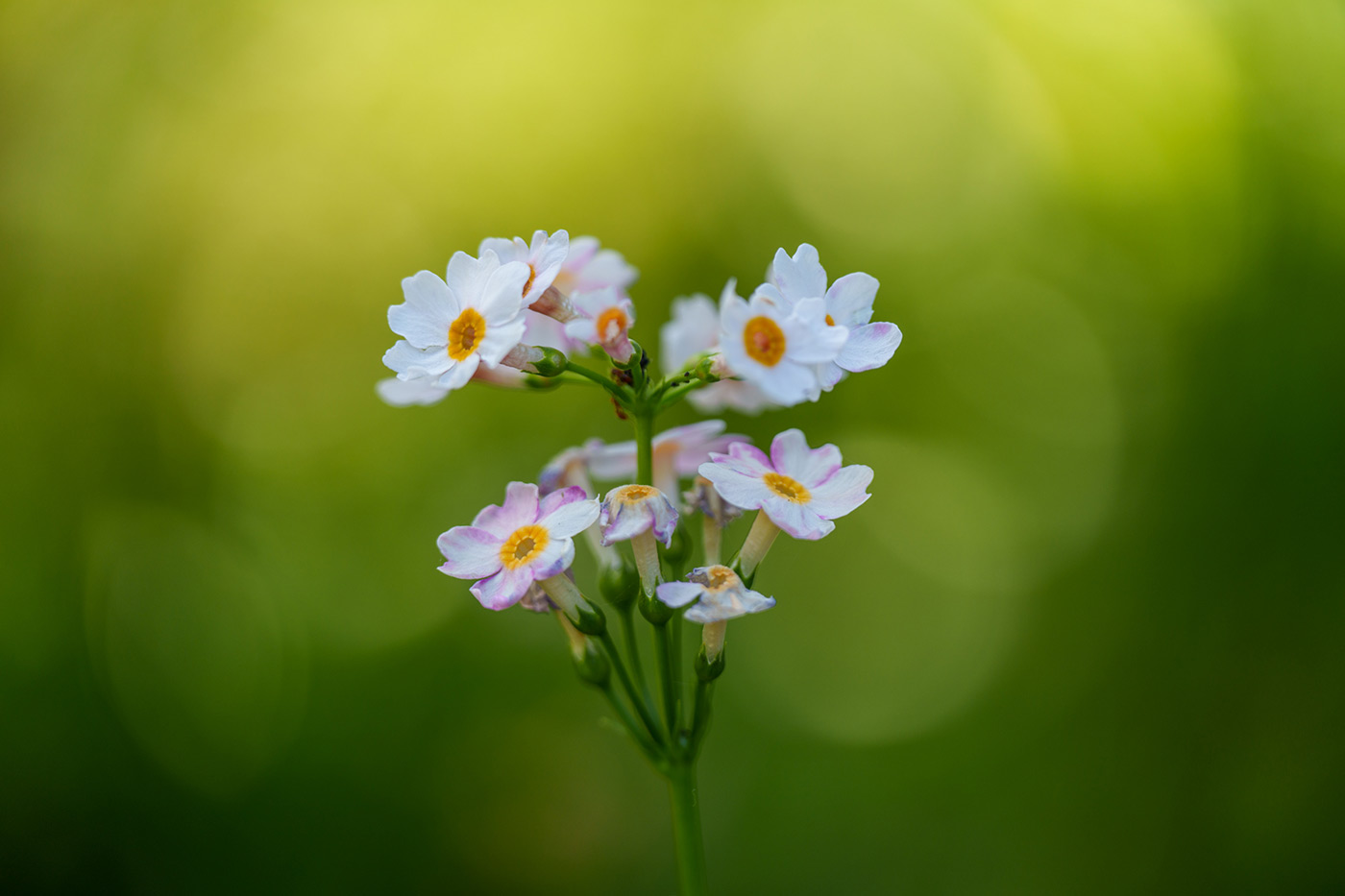
Sample 04 Japanese Primrose close-up @140mm. Camera settings: 1/250 sec. f/2.8. ISO 160
How does the Samyang Holy Trinity of lenses compare?
Samyang’s mirrorless trinity is made up of the AF 14-24mm f/2.8 FE, AF 24-60mm f/2.8 FE and AF 60-180mm f/2.8 FE, which cover 14mm to 180mm with constant f/2.8 aperture lenses. Together they weigh around 1,668g, considerably less than first-party trinity kits, while also costing significantly less. The focal lengths overlap without awkward gaps.
Two of these have 77mm filter threads, with the 24-60mm using 72mm, allowing for cost-effective lens filters to be shared across the range, with a 72-77mm step-up ring for the middle lens.
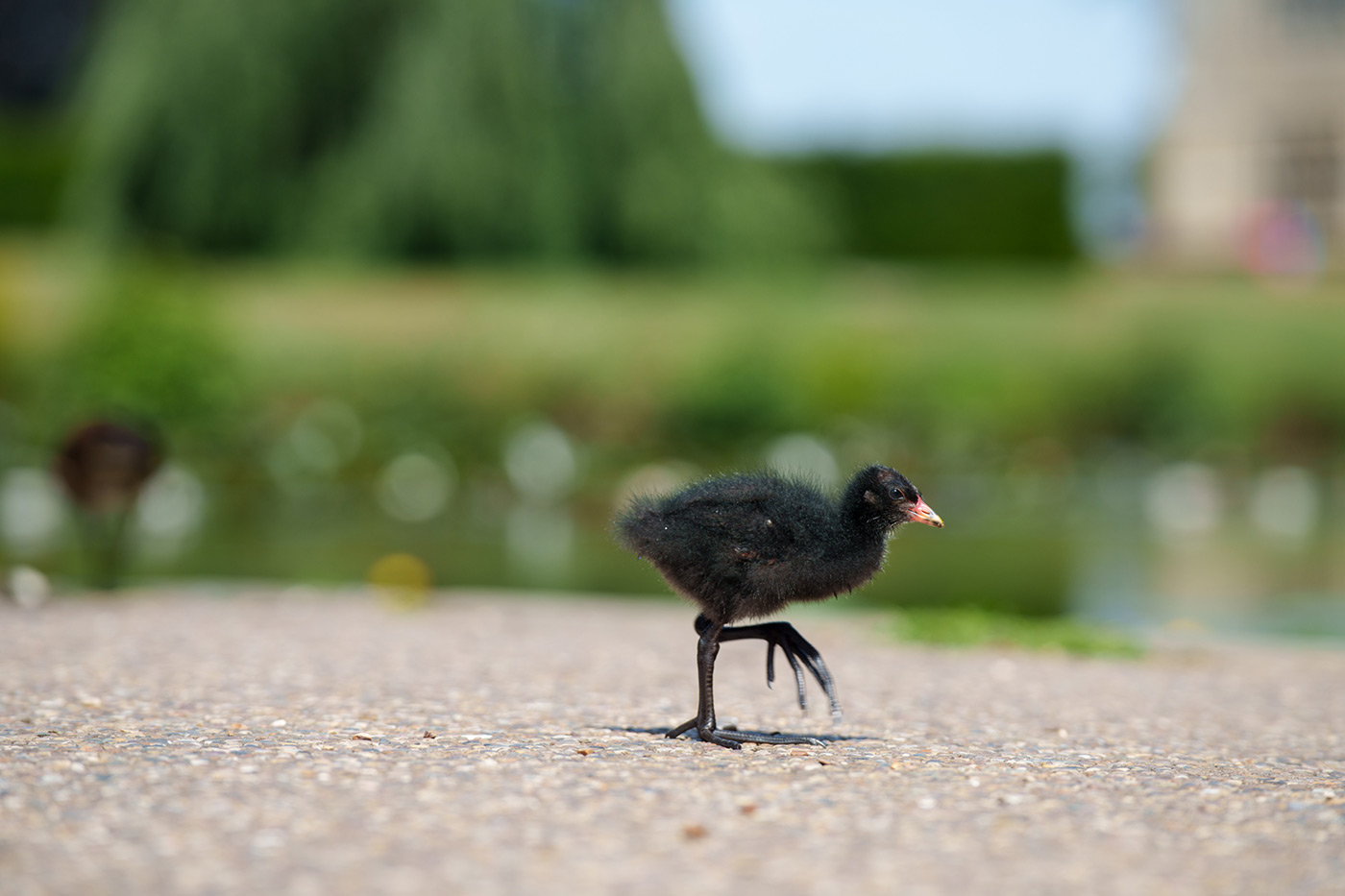
Sample 05 Common Moorhen chick @152mm. Camera settings: 1/500 sec. f/4.5. ISO 125
Lens design and portability
This Samyang zoom is around 315g lighter than Sony's 70-200mm GM, and measures 149mm long, extending to about 174mm when fully zoomed in. This size and weight make it a great match not only for larger A7 or A9 series bodies, but also Sony's compact mirrorless cameras such as the A7C series.
Despite this, it feels suitably robust when mounted to the camera. It never felt front heavy even when zoomed in and outdoor users benefit from comprehensive weather sealing around the mount, rings and switches. There are also enough physical controls on the barrel to suit a more advanced workflow.
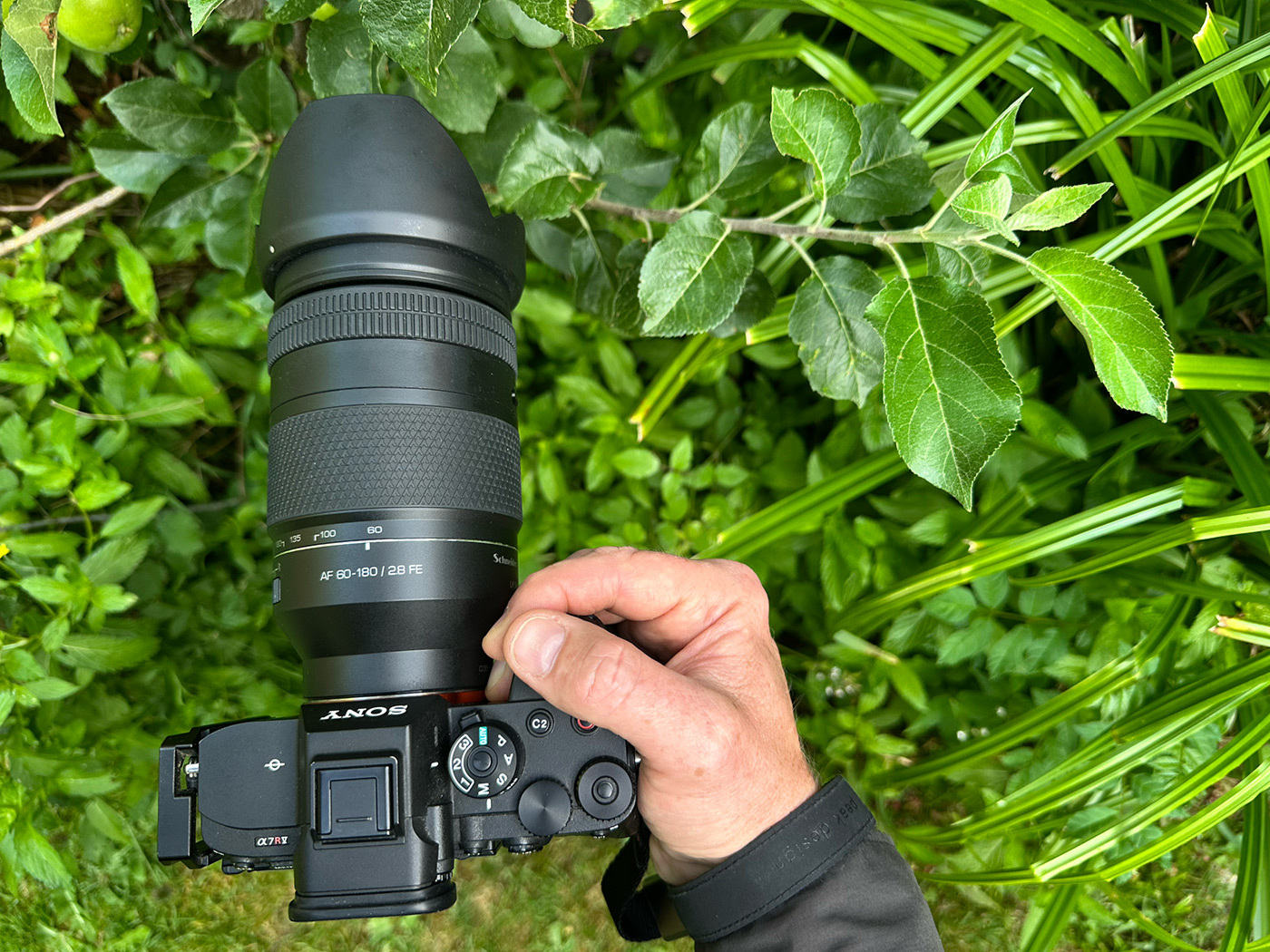
These include an AF/MF switch, a custom focus hold button, and a convenient USB-C port for firmware updates. On Sony cameras, enabling DMF lets you override autofocus simply by turning the focus ring, which is handy if you momentarily lose focus or need to punch in around obstacles.
In the field the lens is very easy to shoot with, and small enough that it fit easily into my everyday sling bag. The zoom throw is short, so you can rack from near to far in an instant, and the manual focus ring is responsive, allowing for quick changes whenever needed.
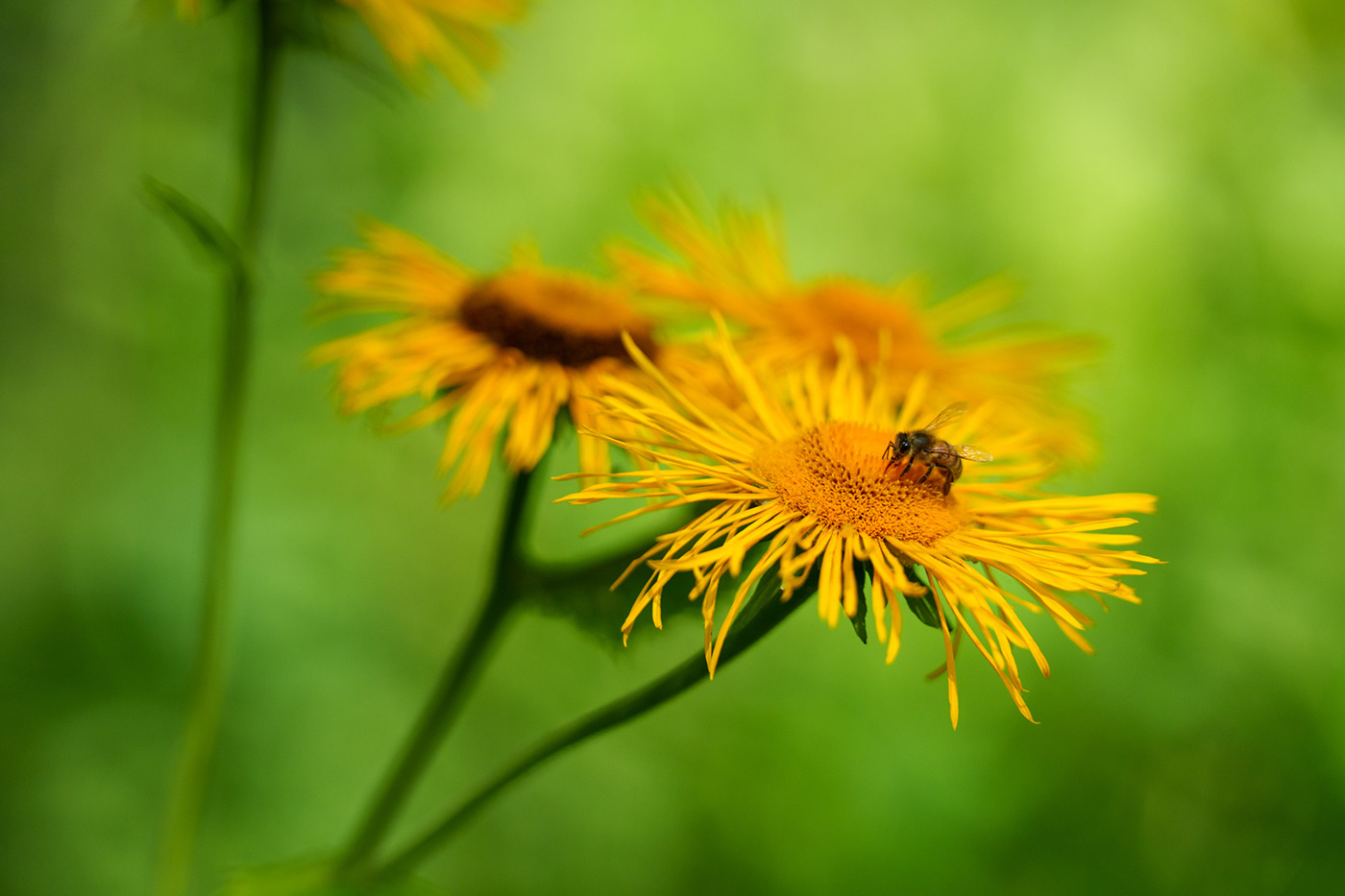
Sample 06 Elecampane with bee @180mm. Camera settings: 1/1000 sec. f/4. ISO 800
What is a 60-180mm zoom range best for?
This zoom range covers several popular portrait focal lengths, including 75mm, 85mm, 100mm and 135mm, making it well suited to portraits, food, products, fashion, events and lifestyle photography. It also suits wedding and corporate photographers who need the flexibility to frame a variety of subjects without changing lenses.
Aside from people photography, the 60-180mm is equally useful for pets, close-range wildlife, nature, travel and everyday photography. It has enough reach for larger animals, environmental wildlife images and local sporting events, but isn’t long enough for small birds or distant safari subjects. Unlike Sony lenses, it isn’t compatible with teleconverters, so maximum reach is limited to 180mm.
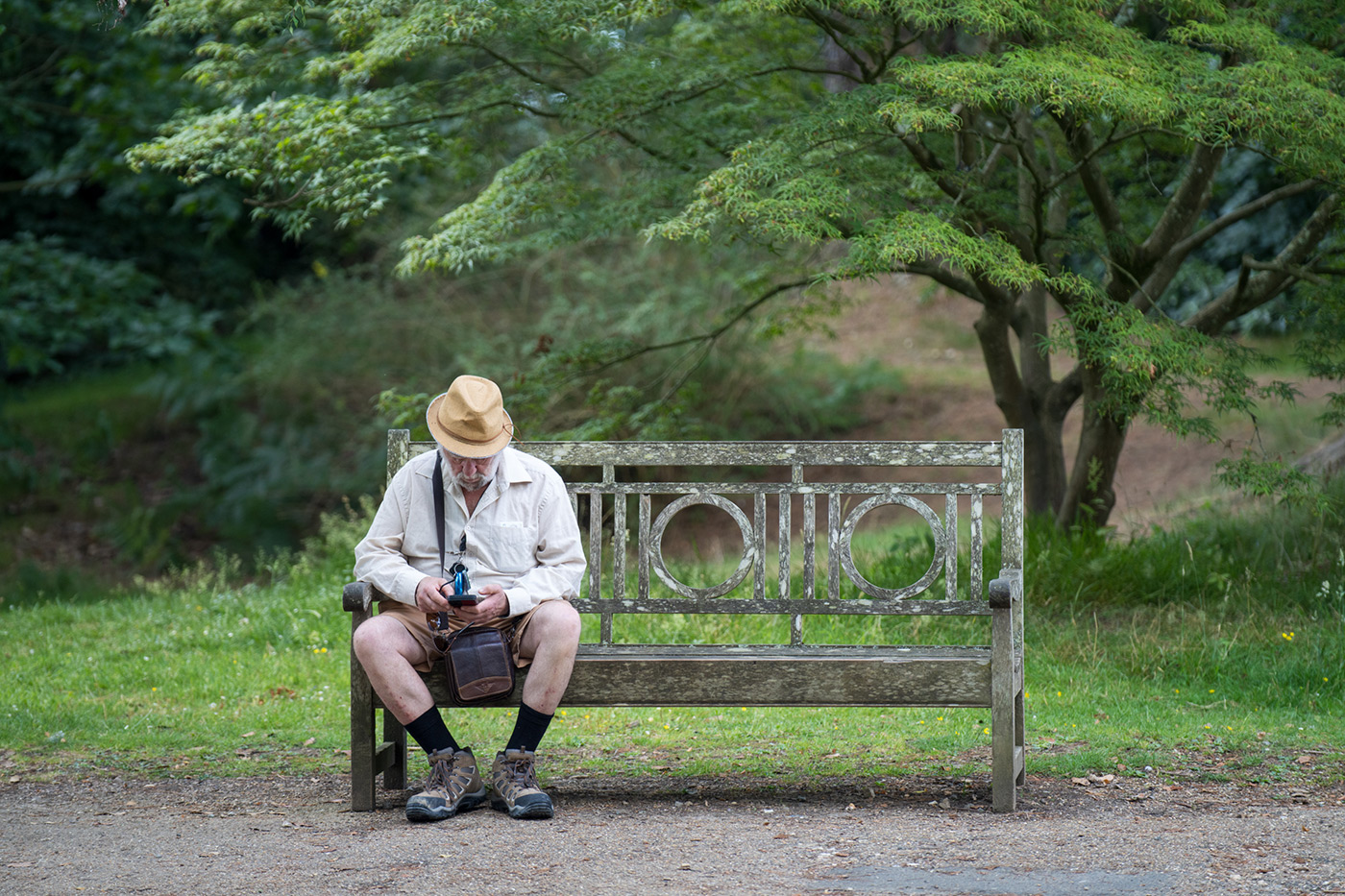
Sample 07 Engrossed @128mm. Camera settings: 1/250 sec. f/2.8. ISO 500
Close focusing is another strength. At 60mm the minimum focusing distance is just 35cm with 0.26x maximum magnification, changing to 79cm and 0.21x at 180mm. Although it doesn’t reach true macro magnification, it’s capable of detailed close-up images, as several of my sample photographs demonstrate.
At longer focal lengths the lens produces attractive compression, separating subjects from distracting backgrounds while maintaining a natural perspective. Combined with the constant f/2.8 aperture, it creates smooth, pleasing bokeh that I found particularly effective for portraits, flowers and detail shots. Stopping down also provides enough depth of field for landscapes and other scenic subjects.
Autofocus performance is equally important for many of these subjects, which is where the lens was generally very impressive during testing.
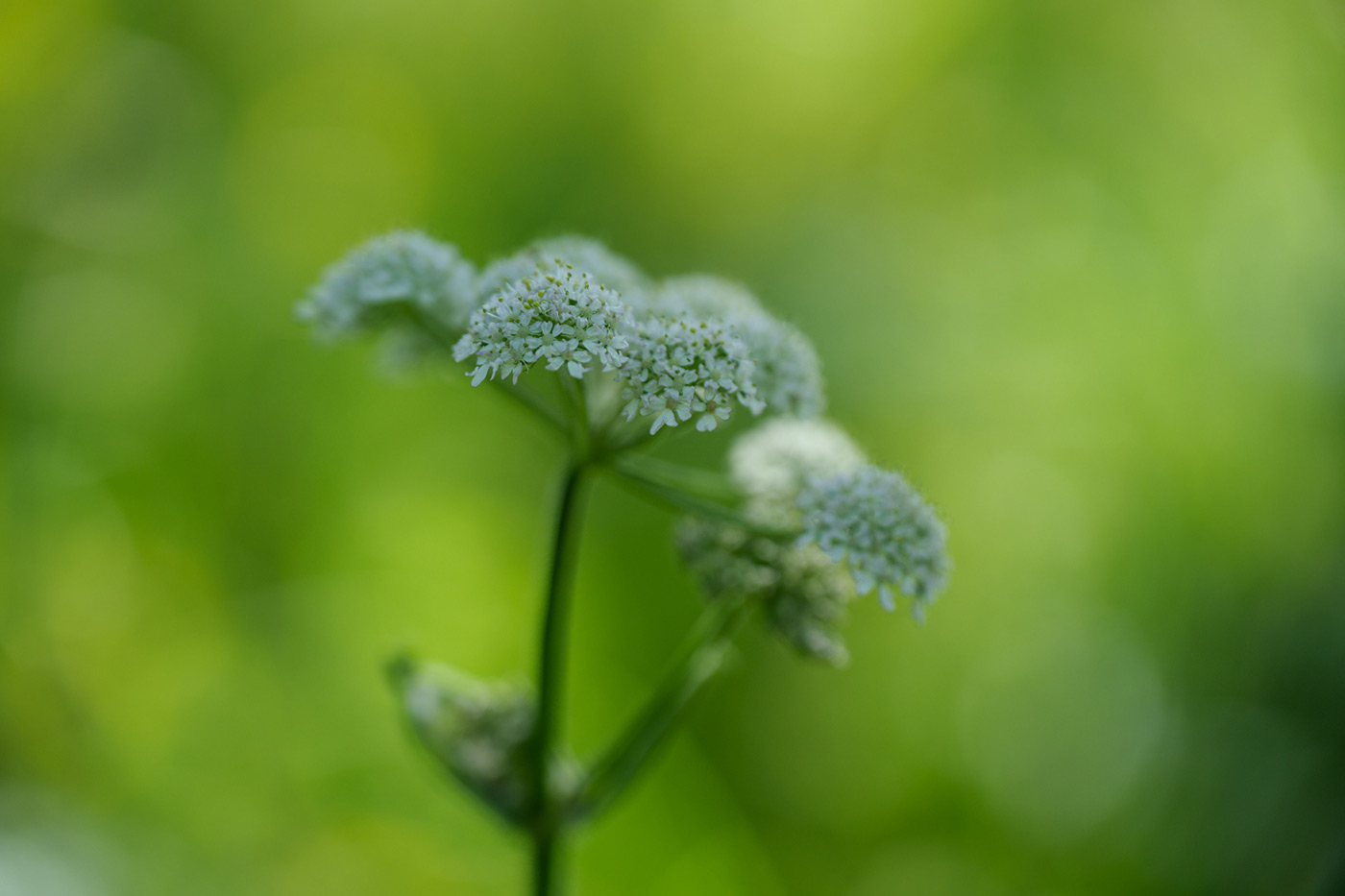
Sample 08 Hemlock water dropwort @109mm. Camera settings: 1/500 sec. f/2.8. ISO 200
Is AF fast enough?
Many of the subjects suited to this zoom range require fast, accurate focusing, so does the Samyang AF 60-180mm f/2.8 FE with a Linear STM floating focus motor live up to the task? When paired with the Sony A7R V, it achieved a very high hit rate and kept up well when tracking most subjects, most of the time.
One example was the sheepdog, which is pictured jumping at water droplets on the beach. I tracked and captured this fun subject for around five minutes, and the majority of frames in every sequence were perfectly sharp. Occasionally, if I missed focus before the dog ran or jumped, it wouldn't recover in time, but for such a demanding task, the lens handled itself extremely well overall.
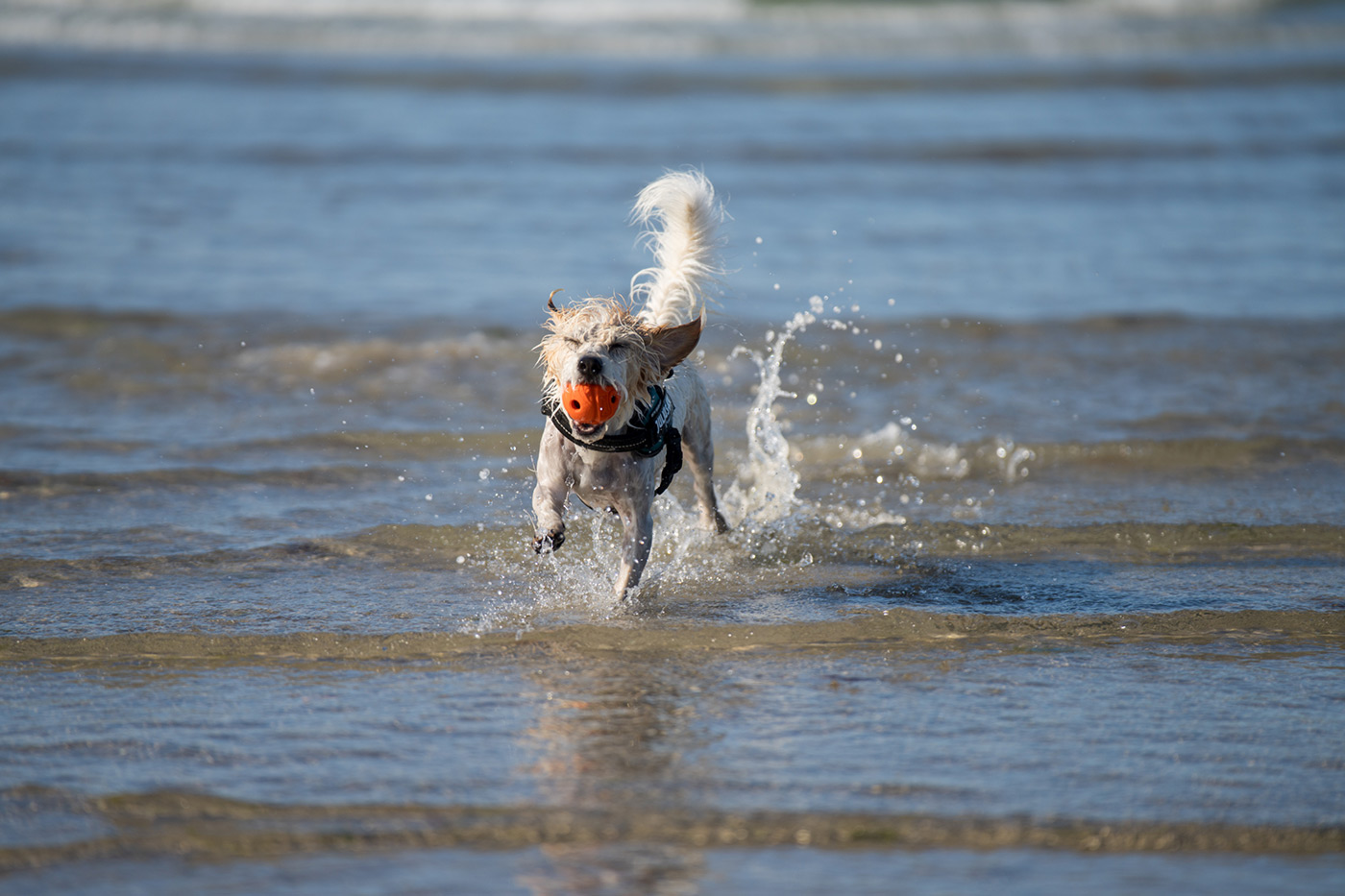
Sample 09 Terrier mix running at the beach @157mm. Camera settings: 1/1250 sec. f/2.8. ISO 100
The same was true for people on the beach, birds and for general nature shots, where the AF system worked quickly and quietly, with Sony Eye AF maintaining a high hit rate.
The only consideration I noticed was that zooming while focusing could cause the lens to lose subject lock before reacquiring focus. It’s worth bearing in mind if you frequently recompose a shot while focusing. This is also something that could potentially be refined through a future firmware update, which leads nicely onto image quality, which we investigate next.
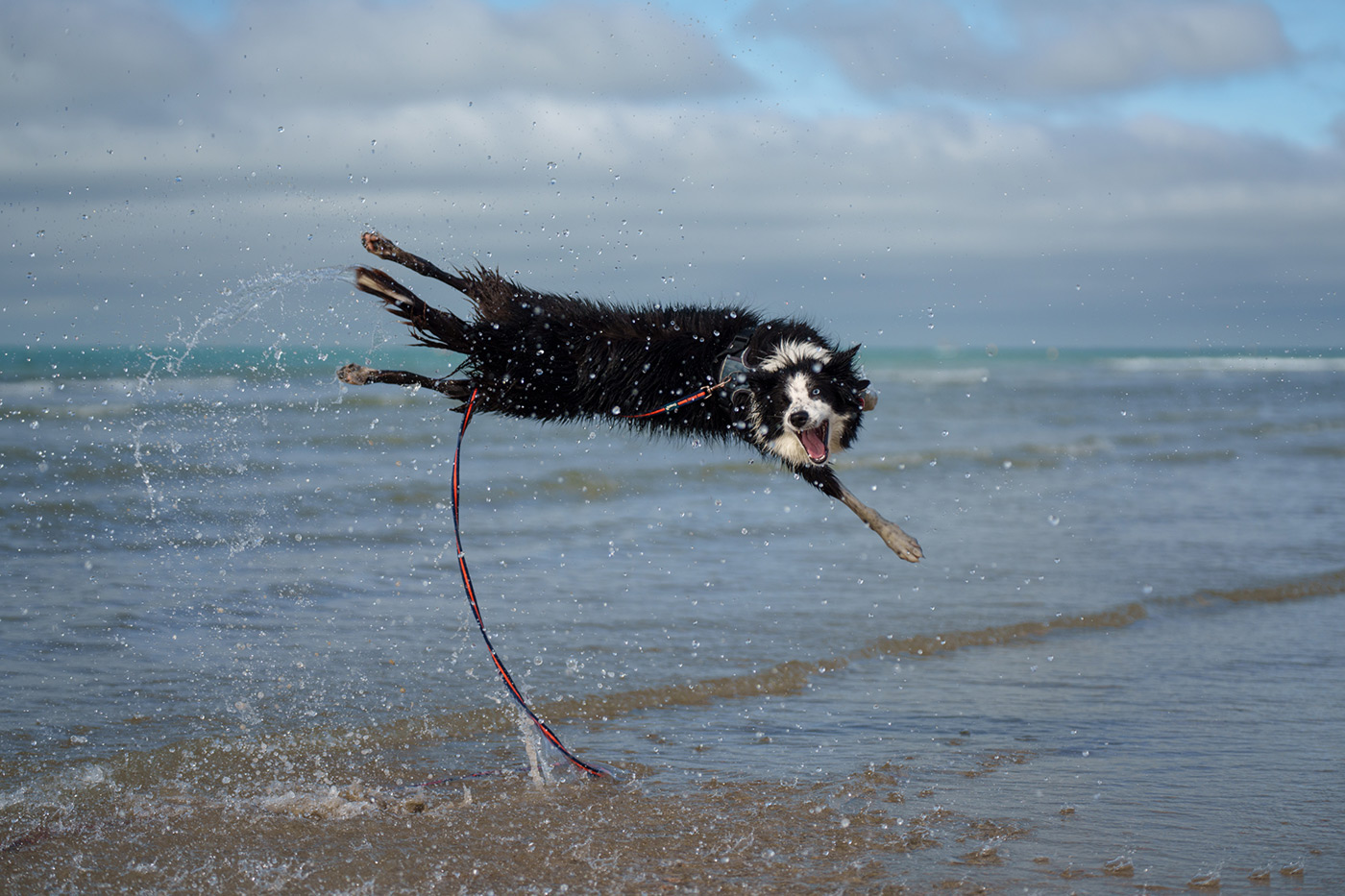
Sample 10 Sheep dog jumping at the beach @78mm. Camera settings: 1/2000 sec. f/2.8. ISO 125
How is image quality?
I had high expectations for the 60-180mm zoom, having reviewed and subsequently purchased the Samyang 85mm F/1.8 P FE lens for myself, a beginner-friendly portrait option. Generally, I look for aspects of image quality such as sharpness, chromatic aberration, coma and bokeh quality among others.
There's more good news here, as the AF 60-180mm resolved 60+ megapixels with ease, showing high sharpness in the centre of the frame all the way from 60mm through to 180mm. The edges also resolved well at the wider end, though softness creeps in slightly when zoomed in.
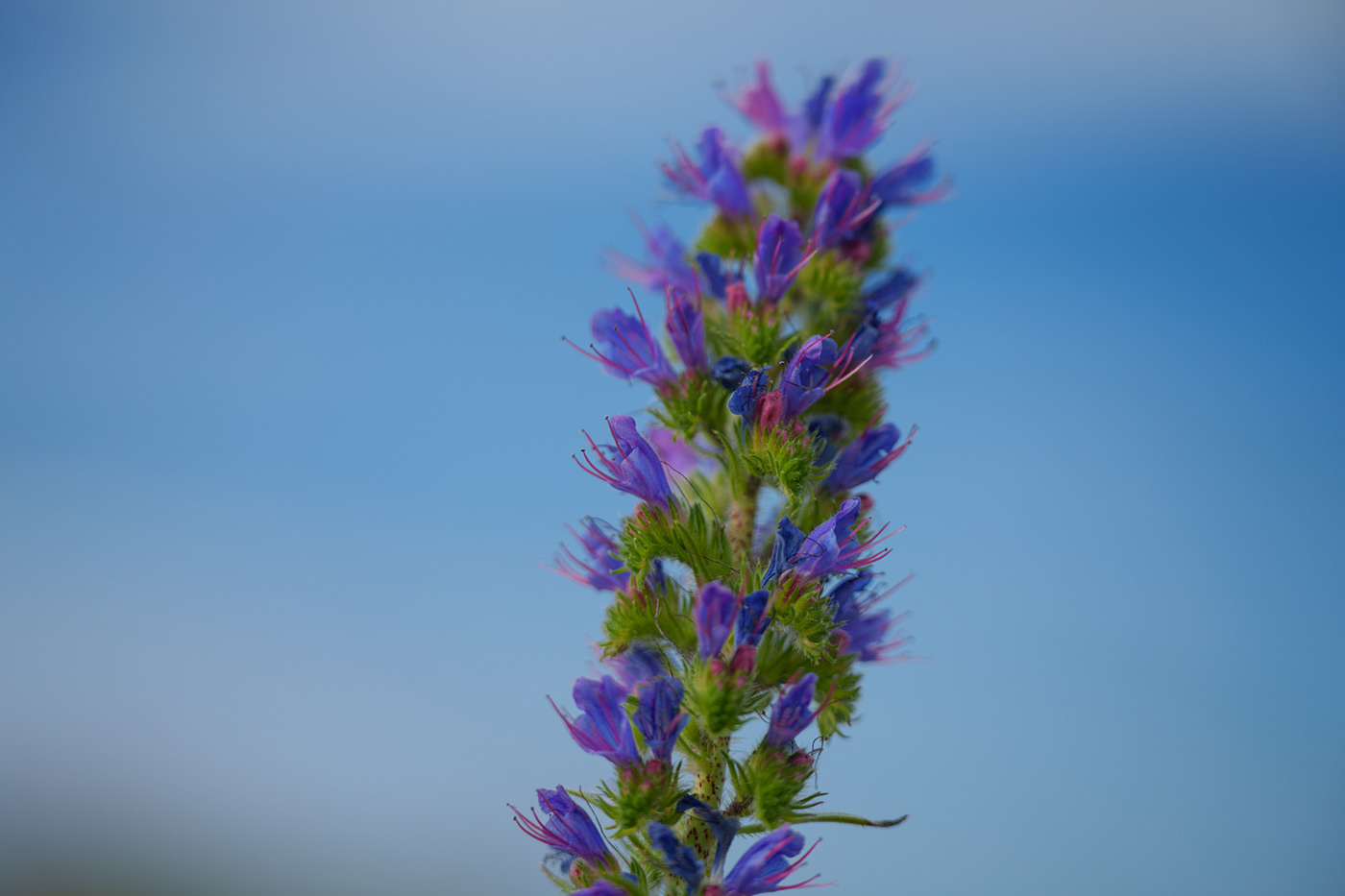
Sample 11 Viper's bugloss @147mm. Camera settings: 1/800 sec. f/2.8. ISO 100
This isn't something I mind for most subjects, and I was perfectly happy shooting this lens wide open almost all of the time. When you do need extra edge resolution, simply stopping down will satisfy landscape photographers and others who need it.
Contrast is outstanding across the whole range, with excellent global sharpness, punchy results and strong colour separation throughout. I saw virtually no colour fringing (chromatic aberration), and I did not notice longitudinal chromatic aberration, which can be problematic.
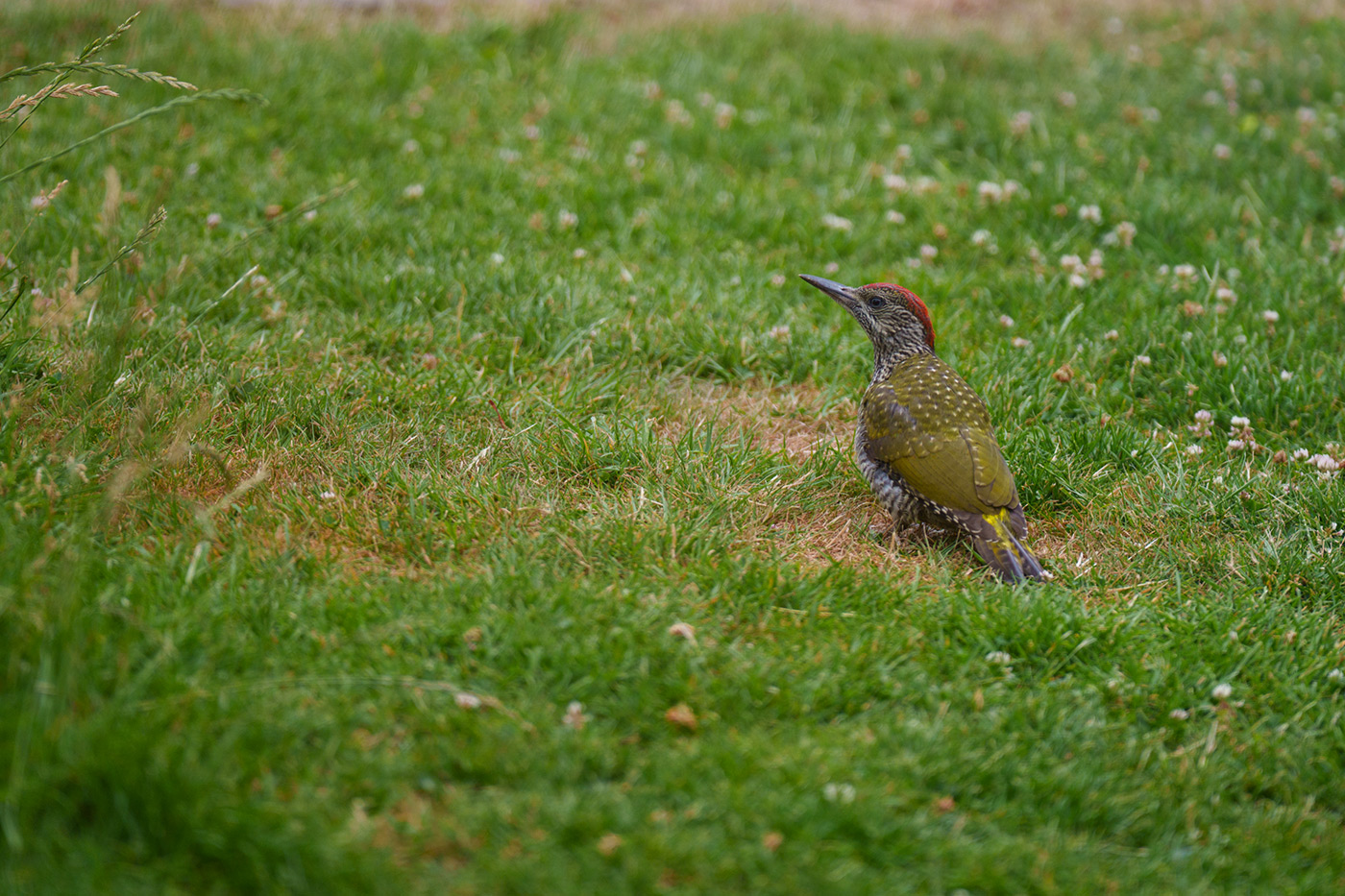
Sample 12 juvenile European green woodpecker (cropped) @180mm. Camera settings: 1/500 sec. f/2.8. ISO 250
The close focusing ability mentioned earlier will be of particular interest to photographers capturing detail shots, such as wedding bands, plates of food or fashion details.
Other aspects of image quality are equally pleasing, including the soft out-of-focus areas rendered by the bright, constant f/2.8 aperture and 9-blade diaphragm. Resilience to flare and ghosting is also very good, aided by Samyang's UMC coating, and there was very little vignetting or distortion across most of my images, a real positive for this type of zoom lens.
All in all, anyone from beginner through to professional should be suitably impressed by the image quality achievable when pointing this lens at a variety of subjects.
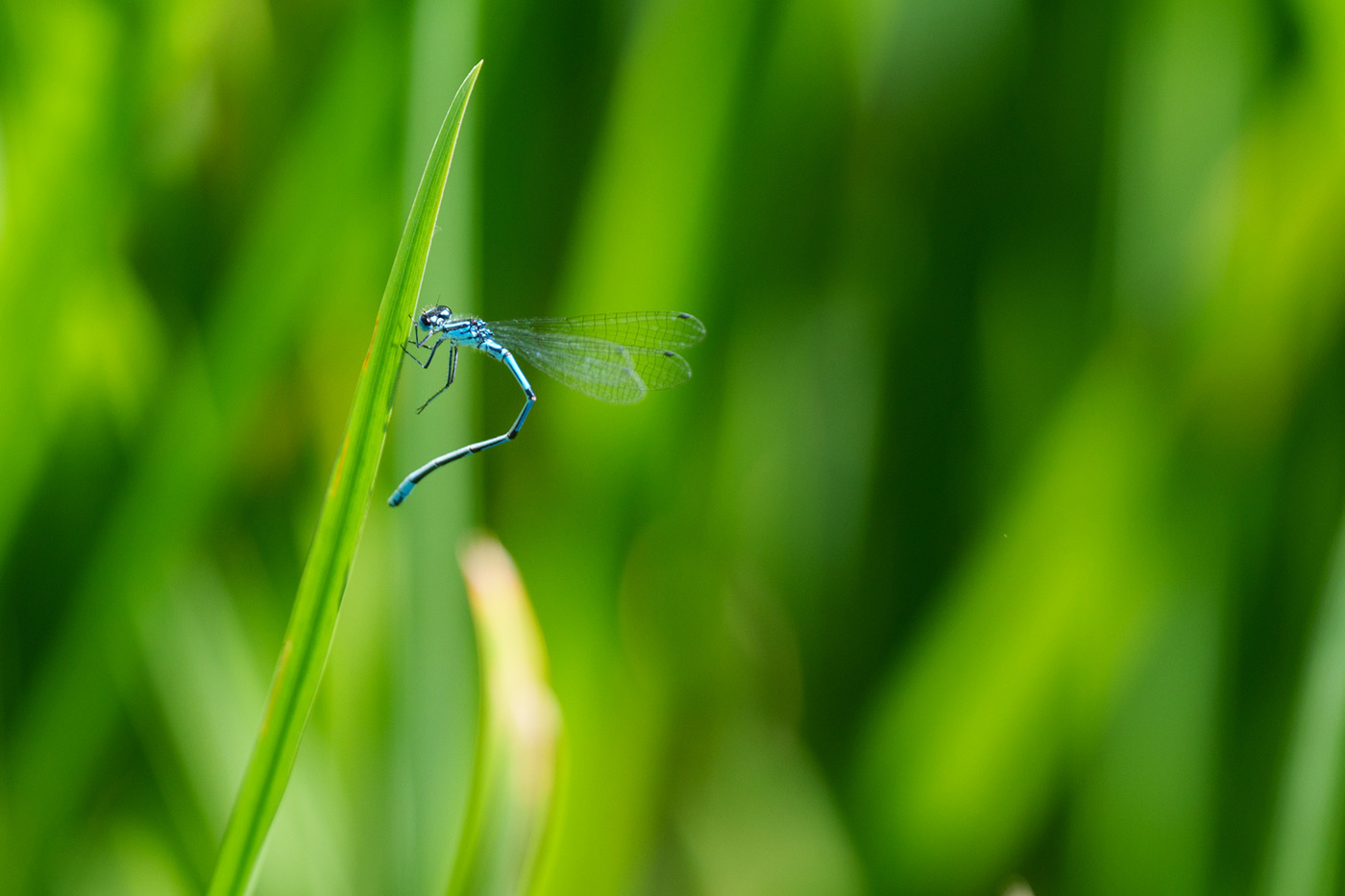
Sample 13 Azure Damselfly (cropped) @180mm. Camera settings: 1/500 sec. f/4. ISO 400
Is it suitable for video?
I didn’t have the opportunity to test video, butSamyang states that the floating focus system suppresses focus breathing, and the Linear STM motor was virtually silent during stills shooting. On that basis, I’d expect it to perform well for video recording, although the lack of an aperture ring may be missed by some filmmakers.
Although it sacrifices 20mm of reach at the long end, the 60-180mm f/2.8 delivers excellent image quality in a significantly smaller and lighter package than traditional zooms.
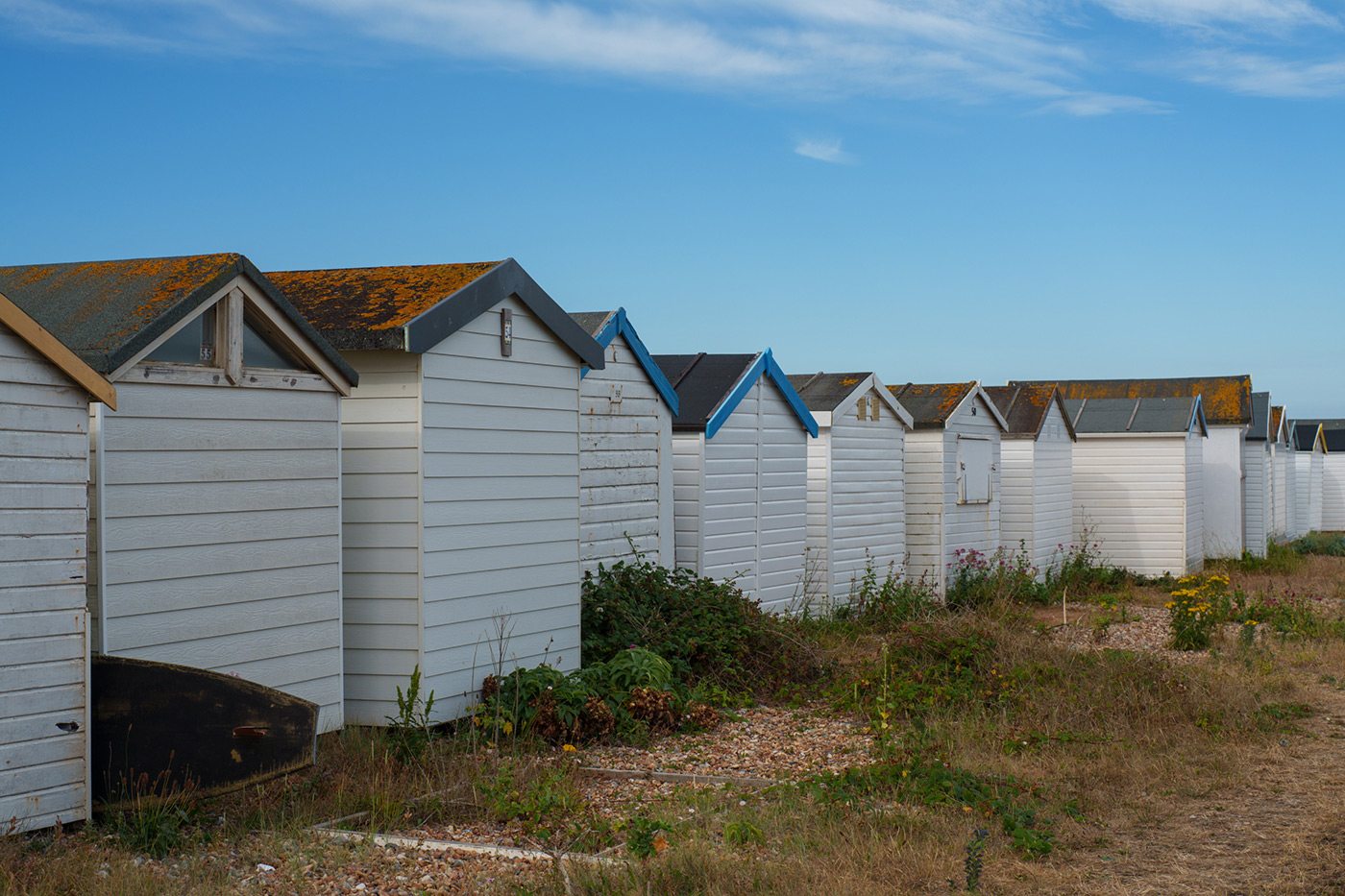
Sample 14 Beach huts @60mm. Camera settings: 1/500 sec. f/5.6. ISO 160
It produced consistently sharp, contrast-rich results, focused accurately and handled everything I tried, including close-ups and portraits to pets, and wildlife with ease. It completes an impressively compact trio of co-engineered Schneider-Kreuznach f/2.8 zooms, making a 14-180mm kit attractive to carry.
Photographers who need greater reach or the highest edge-to-edge performance may still choose a first-party 70-200mm. For others, this is an excellent alternative that combines portability, performance and excellent value, making it one of the most compelling lightweight telephoto zooms for Sony E-mount.
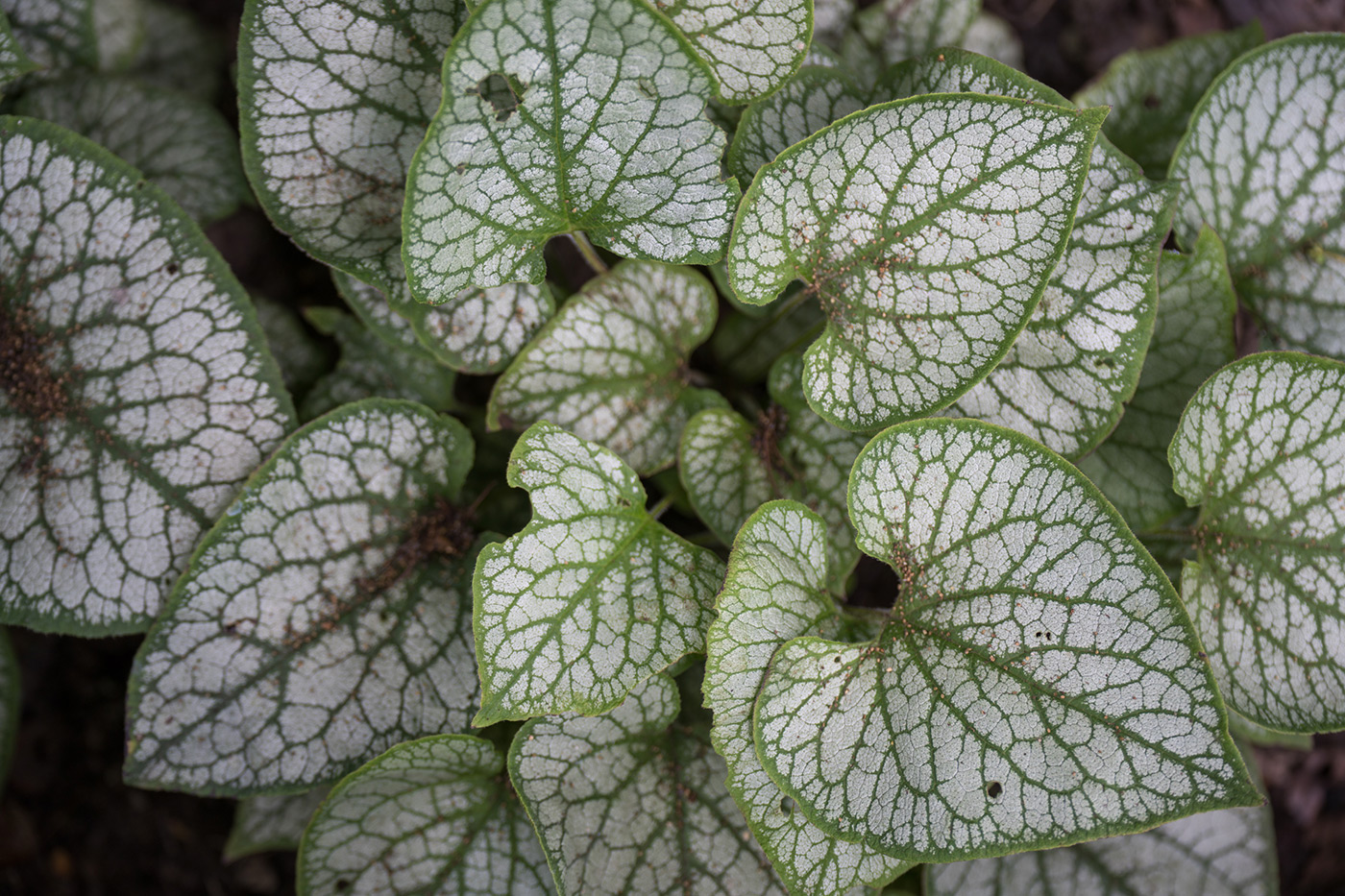
Sample 15 Siberian bugloss @80mm. Camera settings: 1/125 sec. f/2.8. ISO 100
Explore the LK Samyang AF 60-180mm f/2.8 FE lens for Sony in more detail and discover how the Holy Trinity can elevate your creativity without weighing you down.
Share this post:
By Nick Dautlich on 07/07/2026

Nick Dautlich
Senior Content Writer and Product Reviewer
Nick Dautlich is the Senior Content Writer and Product Reviewer at Park Cameras, with over 15 years of photography experience. A Sony Imaging Professional and expert reviewer, Nick has worked with major brands such as Canon, Sony and Nikon. His work is also featured on Vanguard World UK’s website, Capture Landscapes, and Shutter Evolve. Nick’s photography includes National Trust projects and magazine covers and he is passionate about landscapes and storytelling. Nick also enjoys hiking and teaching his children about nature. Learn more on his profile page.
Trade in your old equipment
Fast and easy trade in service ensures your old gear is collected efficiently and you are paid quickly! It's very simple to trade in your unwanted photography gear. Just head over to our dedicated Sell or Part Exchange page, fill out the details, and we'll get back to you with an offer for your old gear. Take the cash, or put it towards the cost of your new gear. It's up to you! Find out more
sign up to the newsletter
Keep up to date on the latest photography news, events and offers. Sign up now