- Call us 01444 237070

-
- Back
- Used Cameras
- Used Accessories
- Used Lenses
- Back
- Used Canon Lenses
- Used Nikon Lenses
- Used Fujifilm Lenses
- Used Sony Lenses
- Used Micro 4/3rds Lenses
- Used Leica Lenses
- Used Panasonic Lenses
- Used Pentax Lenses
- Used Samyang Lenses
- Used Sigma Lenses
- Used Tamron Lenses
- Used Tokina Lenses
- Used Voigtlander Lenses
- Used Zeiss Lenses
- Used Hasselblad Lenses
- Used Video
- Used Film Equipment
- Used Stock Alert
- Used Blank Test
- Sell or Part Exchange
- Used Clearance
- Recently Added Used Equipment
- Park Picks
- Faulty
- Trade-In
- Blog
- New in
- Call us
- Contact us
- Stores
- Sign in
Call us: 01444 237070
Search terms
Brands
Category
Products
[[{name}]]
[[{attributes.Price}]]
- Categories
- Tips & Inspiration
- Reviews
- News
- Events
- Features
- Buying Guides
- Competitions
Drone Parts Explained A Beginners Guide
Camera drones look relatively simple from the outside, but they can house a surprising amount of technology in a compact aircraft design. Cameras, sensors, motors, batteries and wireless systems work together to help the aircraft fly more safely, capture your aerial footage and maintain the most stable transmission while in the air.
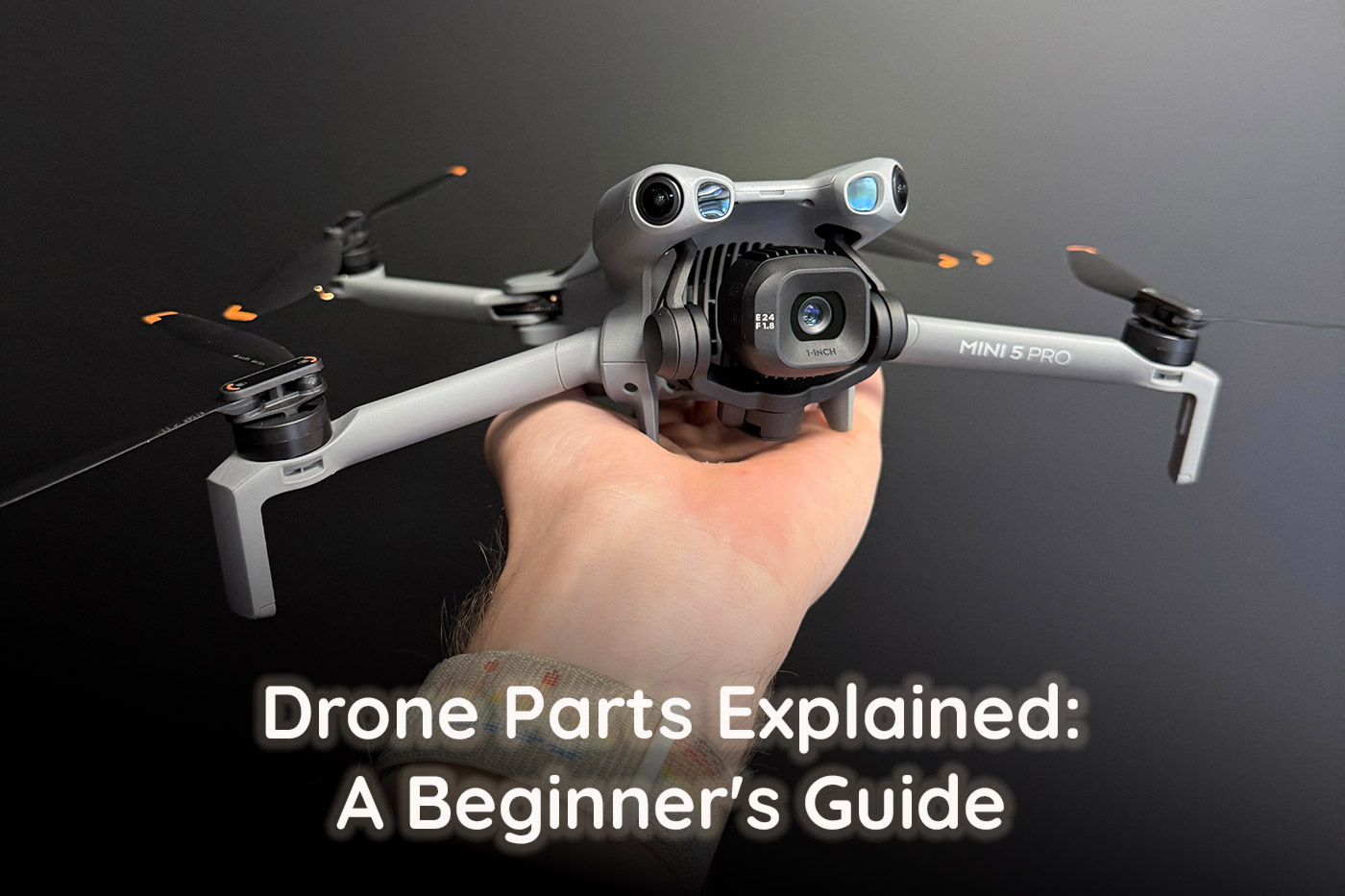
Whether you've recently bought your first drone or are researching before choosing the best beginner drone to buy, understanding the different parts of a drone can help you become more confident with your choice. Knowing what each part does also makes it easier to perform essential pre-flight checks, understand safety features and troubleshoot common issues.
Use our beginner's interactive guide to drone parts to explore the main components you'll come across. Click on each hotspot to learn what it does, why it is relevant and to read tips that beginners should know before taking to the skies.
While this guide uses the DJI Mini 5 Pro as an example, most of these parts are found on other modern drones. Whether you're looking at a DJI Mini, Air or Mavic series, or an aircraft from another manufacturer, you'll find many of these systems working behind the scenes.
Interactive beginner guide
What Are The Parts Of A Drone?
Switch between the front, top and underside views, then select each hotspot to learn what the main components do.
Tap the orange circles to explore each part of the drone. Switch between the front, top and underside views to discover more parts.
How Drone Parts Affect your experience and image quality
Camera and Gimbal
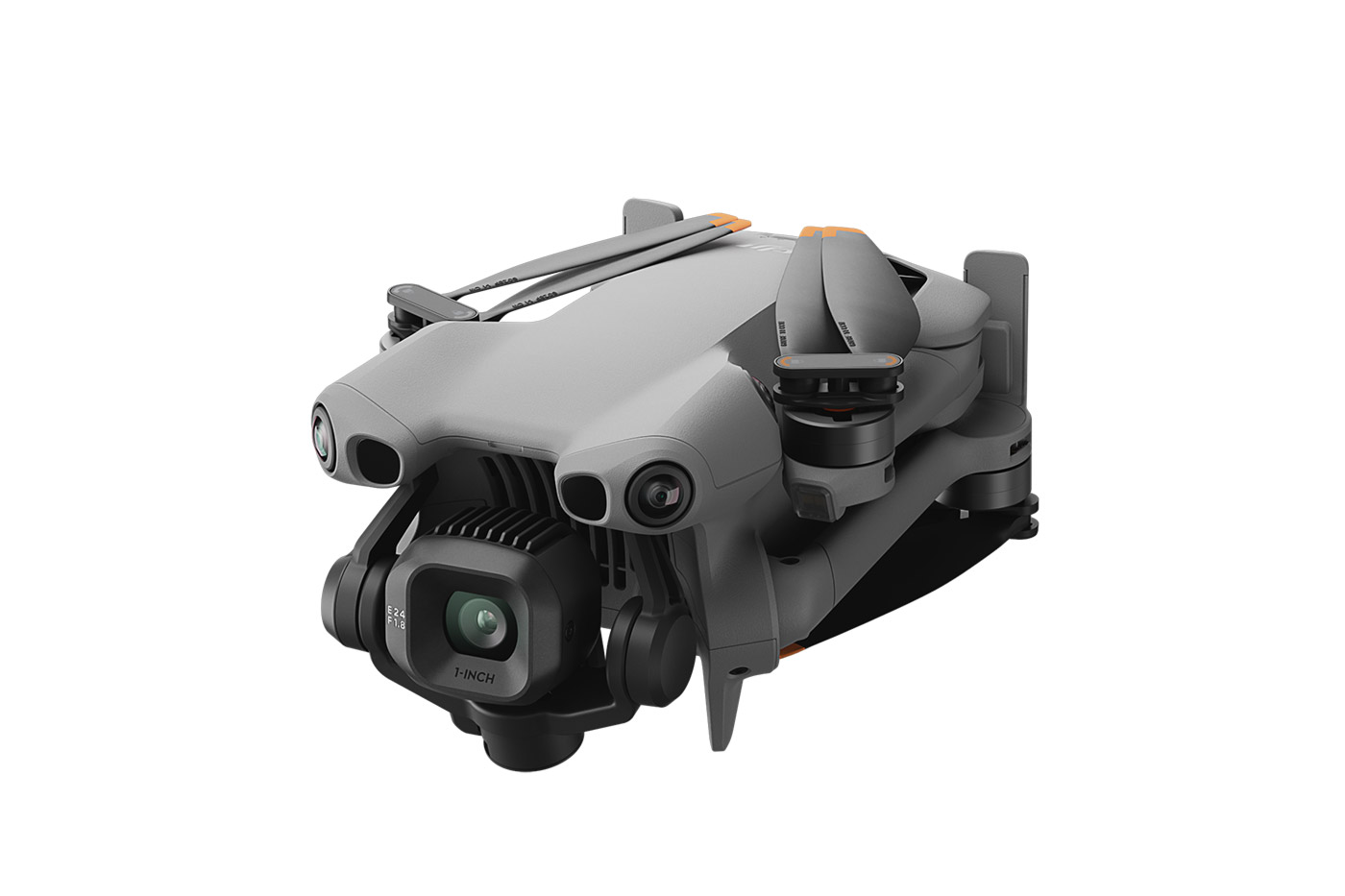
The camera and gimbal system have the biggest impact on the image quality a drone can capture, and are why they're one of the most important elements to consider when choosing one. While many entry-level models are 4K drones, sensor size varies considerably, and a professional drone may include more than one camera, just like a smartphone.
A larger sensor generally captures more light, which can improve image quality in low-light conditions like sunrise and sunset, helping to preserve detail in highlights and shadows. Newer drones such as the DJI Mini 5 Pro have a large 1-inch sensor for up to 14 stops of dynamic range, HDR video and colour profiles, giving aerial creators more flexibility when editing footage.
The gimbal is equally important. Most camera drones use a 3-axis gimbal, which compensates for pitch, roll and yaw to produce stable footage. Without a gimbal, even small corrections made by the aircraft would be visible in shaky footage.
Propellers
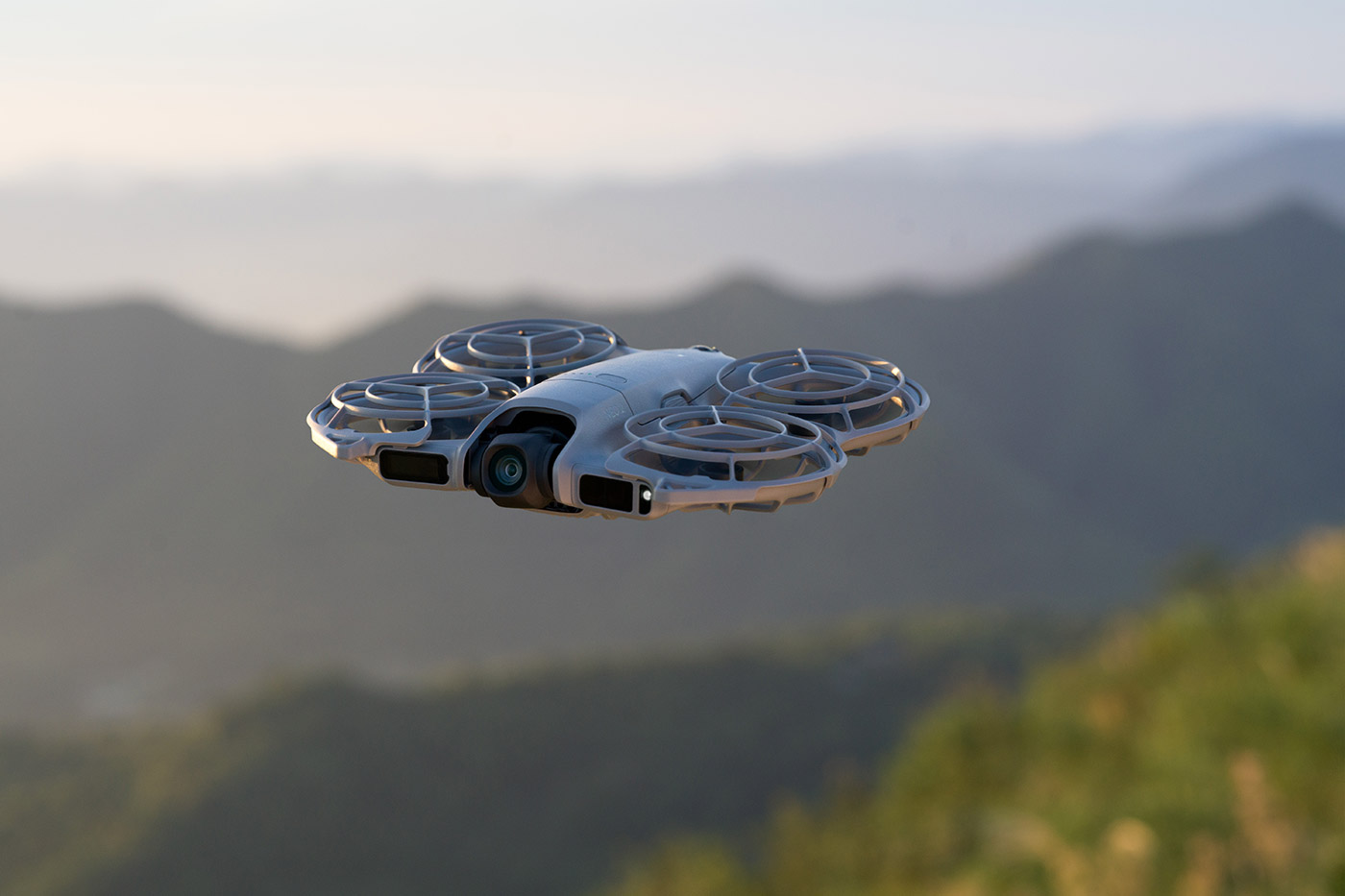
Propellers and motors function as the flight system. Larger propellers can generate more lift and improve efficiency, while higher-performance motors may provide greater wind resistance and more responsive handling, as seen in FPV racing drones for example.
Most use brushless motors because they are quieter, more efficient and require less maintenance than older designs. Manufacturers quote maximum flight speed and wind resistance figures, which are heavily influenced by the motor and propeller combination.
When comparing drones, it is worth looking at more than simply flight times alone. An aircraft capable of maintaining stable flight in stronger winds may be more useful if you fly in coastal areas, or on location to produce landscape and travel content, rather than one with a slightly longer battery life.
Bear in mind that the larger the propellers, the noisier they'll be, and the easier it is to clip surrounding obstacles. Some aircraft propellers now have built-in replaceable bumpers that can help reduce impacts.
Battery and Flight Time
Aircraft battery capacity is measured in milliamp hours (mAh) or watt hours (Wh), and manufacturers often publish a maximum flight time under quite specific ideal conditions. In reality, factors such as wind speed, temperature, flying style and load can significantly affect endurance.
For example, an advertised 45-minute flight time may realistically achieve closer to 30 to 35 minutes during normal photography flights involving movement, obstacle avoidance and video recording.
Many creators will carry spare batteries, particularly when travelling or filming in more distant locations, but you can also use car chargers and power banks if away from a mains socket for longer.
Obstacle Detection Systems
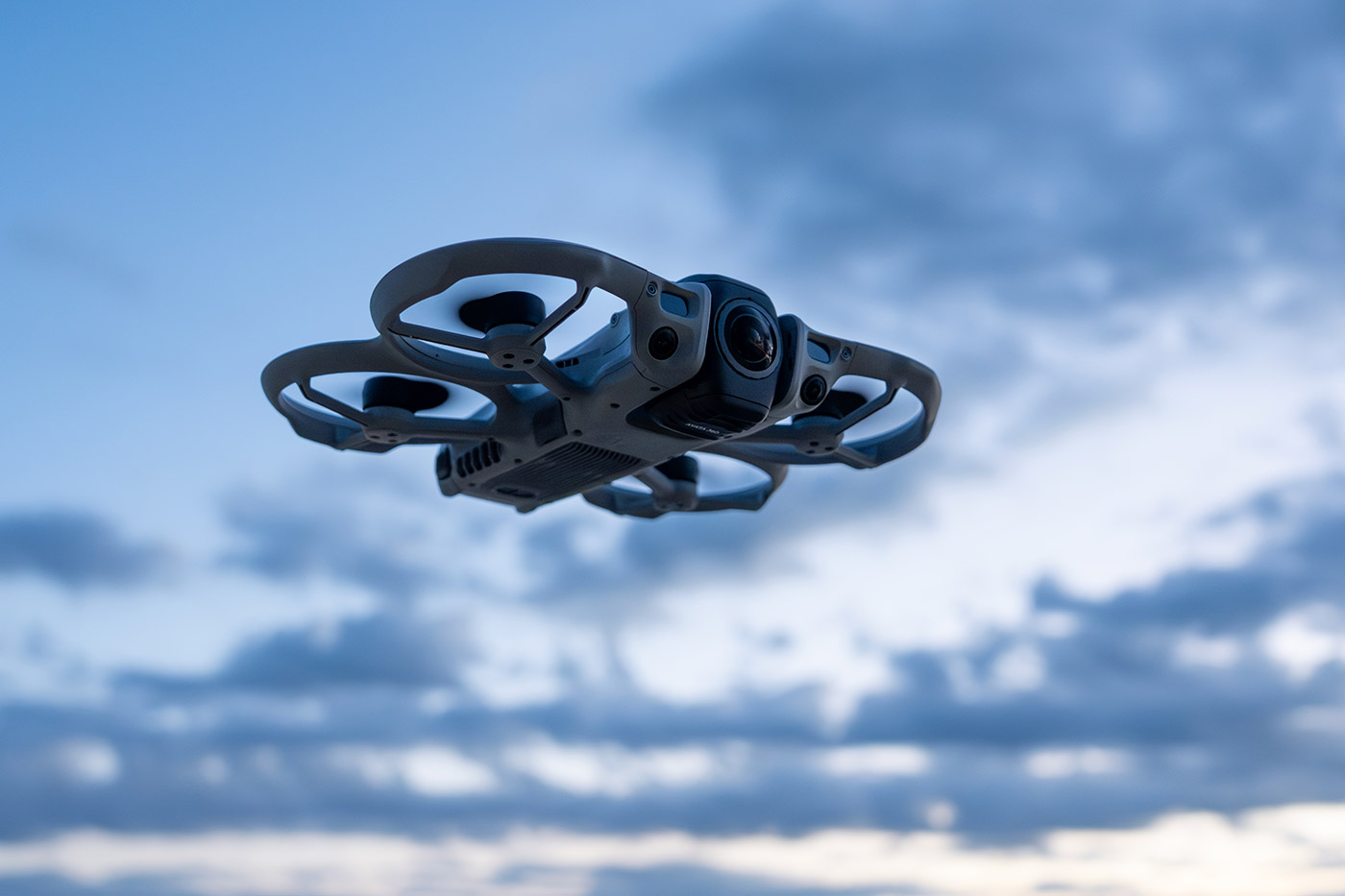
Camera drones use a combination of cameras, infrared sensors, ultrasonic sensors and, increasingly, LiDAR technology to detect obstacles around the aircraft. These reduce collisions and support automated flight features such as ActiveTrack, Return to Home and intelligent subject tracking.
Not all obstacle avoidance systems are equal, and notably, entry-level drones may only provide forward-facing sensors, while more advanced models offer omnidirectional sensing that monitors obstacles above, below, in front, behind and to the sides of the aircraft.
LiDAR (Light Detection and Ranging) is becoming more common in drones because it can build a detailed map of the environment using laser pulses rather than relying on cameras. This can improve obstacle detection in lower light conditions, allowing for automated Return to Home when ambient light is limited.
Even the most advanced sensing systems are only a safety aid and do not guarantee against collisions. Branches, wires, fast-moving subjects and challenging lighting can still create situations where obstacle sensors may not react as hoped.
Downward Vision Sensors
Downward vision sensors play a vital role during take-off, hovering and landing. Rather than looking for obstacles, these monitor the ground below and help the drone understand its relative position.
Combined with GPS data, they allow the drone to hover more accurately, perform precise landings and maintain stability when flying at lower altitudes, which is particularly useful in areas where satellite reception may be weaker.
Why Understanding Drone Parts is Useful
Although flying most modern drones is quite straightforward, you can become a safer and more confident pilot by understanding the main components. It helps with spotting damage, checking parts are correctly installed and recognising potential issues, which prevents accidents and subsequent repairs.
Combined with GPS data, they allow the drone to hover more accurately, perform precise landings and maintain stability when flying at lower altitudes, which is particularly useful in areas where satellite reception may be weaker.
A basic understanding of your drone also makes it easier to interpret warnings, perform basic maintenance and get the best possible results from the camera and flight systems. Carrying out a few simple pre-flight checks before every flight is one of the easiest ways to protect your equipment and improve reliability, which we look at next.
Drone Parts Pre-Flight Checklist
Just as you should check tyre pressure and brakes before a bike ride, it's worth spending a minute inspecting your drone before every flight. A quick pre-flight checklist can help identify damaged components, prevent issues and reduce the risk of interruptions.
Many of these checks become second nature over time, but they are particularly important for beginners who are still becoming familiar with their equipment.
- Battery sufficiently charged and securely installed
- Propellers free from cracks, chips or excessive wear
- Foldable arms fully unfolded and in position
- Camera lens clean
- Gimbal protector removed
- Correct ND filter strength for conditions
- Obstacle and vision sensors clean
- Memory card installed
- Home point recorded correctly
- Weather and wind conditions suitable
Frequently Asked Questions about Drone Parts
Why is my drone asking for a compass calibration?
It may request a compass calibration after travelling a significant distance, after a firmware update or if magnetic interference is detected. Avoid calibrating near vehicles, metal structures or reinforced concrete unless prompted by the drone.
Why won't it take off?
Common causes include insufficient GPS signal, low battery charge, a missing memory card, a flight restriction zone or an error detected during the drone's pre-flight checks. Always check any warning messages displayed in the app before attempting to fly.
What should I do if my drone says the home point has not been updated?
Wait for a sufficient GPS lock before take-off and confirm that the home point has been recorded correctly. This ensures Return to Home functions accurately if activated during flight.
Why does it drift while hovering?
Minor movement can be normal in windy conditions. However, excessive drifting may indicate weak GPS reception, poor lighting affecting the vision sensors, or flying over reflective surfaces such as water.
How often should propellers be replaced?
Propellers should be replaced if they show cracks, chips, bends or other signs of damage. Even small defects can affect flight performance and image stability.
Why does my aerial footage look shaky?
Shaky footage is often caused by a gimbal protector being left fitted, a damaged propeller, strong wind conditions or a gimbal calibration issue. Always inspect the gimbal before flight and check for any warnings in the app.
Do obstacle sensors prevent every crash?
No. Obstacle sensors are designed to assist pilots, but they can struggle with thin branches, wires, reflective surfaces and poor lighting conditions. Pilots should always maintain visual awareness of their surroundings.
Do I need to register my drone in the UK?
It depends on the weight and how you intend to use it. Most camera drones require either an operator ID or a flyer ID registration with the Civil Aviation Authority before you can fly legally. Read our guide to Understanding UK Drone Flying Rules for everything you need to know.
Understanding the main parts of a drone can make you a safer, more confident pilot while getting the best possible results from your time in the air. From the camera and gimbal to the motors, sensors and battery systems, each plays an important role in performance, image quality and reliability.
Whether you're buying your first drone or upgrading to a more advanced model, knowing what these parts do will help you compare specifications, carry out effective pre-flight checks and make the most of the technology available today.
If you're ready to capture your own aerial photos and cinematic video, browse our range of camera drones and accessories today.
Share this post:
By Nick Dautlich on 03/06/2026

Nick Dautlich
Senior Content Writer and Product Reviewer
Nick Dautlich is the Senior Content Writer and Product Reviewer at Park Cameras, with over 15 years of photography experience. A Sony Imaging Professional and expert reviewer, Nick has worked with major brands such as Canon, Sony and Nikon. His work is also featured on Vanguard World UK’s website, Capture Landscapes, and Shutter Evolve. Nick’s photography includes National Trust projects and magazine covers and he is passionate about landscapes and storytelling. Nick also enjoys hiking and teaching his children about nature. Learn more on his profile page.
Trade in your old equipment
Fast and easy trade in service ensures your old gear is collected efficiently and you are paid quickly! It's very simple to trade in your unwanted photography gear. Just head over to our dedicated Sell or Part Exchange page, fill out the details, and we'll get back to you with an offer for your old gear. Take the cash, or put it towards the cost of your new gear. It's up to you! Find out more
sign up to the newsletter
Keep up to date on the latest photography news, events and offers. Sign up now